
What Are Key Performance Indicators (KPIs) in Facility Management?
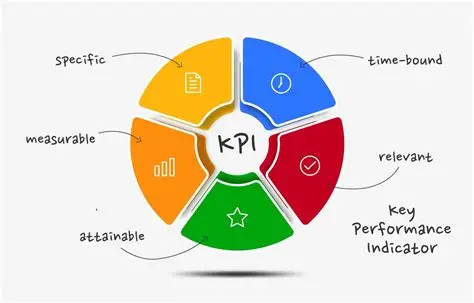
Key Performance Indicators (KPIs) in facility management are measurable values used to evaluate how effectively a facility is being operated and maintained. They help facility managers track performance, identify inefficiencies, and make data-driven decisions to improve building operations.
Because facility management covers many areas—maintenance, energy, safety, space, and services—KPIs provide a structured way to measure success across all these functions.
Understanding KPIs in Facility Management
KPIs are specific metrics that reflect the performance of facility operations over time. They convert complex facility activities into clear, measurable data points.
In facility management, KPIs are used to:
- Monitor operational efficiency
- Measure service quality
- Track costs and savings
- Improve decision-making
They act as a performance “scorecard” for facilities.
Importance of KPIs in Facility Management
KPIs are essential because they help organizations understand whether their facilities are operating effectively.
They provide benefits such as:
- Performance visibility: Clear insight into operations
- Accountability: Defines expectations for teams and vendors
- Cost control: Identifies inefficiencies and waste
- Continuous improvement: Supports long-term optimization
Without KPIs, facility management becomes reactive rather than strategic.
Categories of Facility Management KPIs
Facility management KPIs can be grouped into several categories.
1. Maintenance KPIs
These measure the effectiveness of maintenance operations.
Common examples include:
- Mean time to repair (MTTR)
- Mean time between failures (MTBF)
- Preventive maintenance compliance rate
- Work order completion time
These KPIs help improve equipment reliability.
2. Financial KPIs
Financial KPIs track costs and budget performance.
Examples include:
- Cost per square meter
- Maintenance cost per asset
- Energy cost per unit area
- Budget variance
These indicators help control facility expenses.
3. Energy and Sustainability KPIs
These measure environmental performance and resource efficiency.
Examples include:
- Energy consumption per square meter
- Water usage per occupant
- Carbon emissions
- Recycling rate
They support sustainability goals.
4. Space Utilization KPIs
These measure how effectively space is used.
Examples include:
- Occupancy rate
- Workspace utilization rate
- Vacancy rate
- Desk sharing ratio
These KPIs help optimize real estate usage.
5. Service Quality KPIs
These measure user satisfaction and service performance.
Examples include:
- Response time to service requests
- Customer satisfaction score
- Number of unresolved tickets
- Service completion rate
These reflect the quality of facility services.
How KPIs Are Measured
Facility managers collect data from multiple sources to measure KPIs.
These include:
- CMMS (Computerized Maintenance Management Systems)
- CAFM (Computer-Aided Facility Management systems)
- IoT sensors and smart devices
- Energy management systems
Data is analyzed to produce meaningful insights.
Role of Technology in KPI Tracking
Technology plays a major role in KPI monitoring.
Modern systems provide:
- Real-time dashboards
- Automated reporting
- Predictive analytics
- Data visualization tools
This makes KPI tracking more accurate and efficient.
Setting Effective KPIs
Not all KPIs are useful unless they are properly defined.
Effective KPIs should be:
- Specific: Clearly defined
- Measurable: Quantifiable
- Achievable: Realistic goals
- Relevant: Aligned with business objectives
- Time-bound: Measured over a set period
These are often referred to as SMART KPIs.
Using KPIs for Decision-Making
KPIs help facility managers make informed decisions.
For example:
- High energy KPIs may trigger efficiency upgrades
- Poor maintenance KPIs may indicate staffing issues
- Low space utilization may lead to workspace redesign
Data-driven decisions improve outcomes.
Benchmarking KPIs
Benchmarking involves comparing KPIs against:
- Industry standards
- Historical performance
- Similar organizations
This helps identify strengths and weaknesses.
Challenges in KPI Management
Facility managers may face challenges such as:
- Inaccurate or incomplete data
- Lack of integration between systems
- Difficulty defining meaningful KPIs
- Resistance to performance tracking
Overcoming these challenges improves effectiveness.
Strategic Importance of KPIs
KPIs are not just operational tools—they are strategic instruments.
They help organizations:
- Improve efficiency
- Reduce costs
- Enhance sustainability
- Align facility performance with business goals
Future Trends in KPI Management
The future of facility KPIs will be driven by technology.
Key trends include:
- AI-powered analytics
- Predictive performance KPIs
- Real-time KPI dashboards
- Automated optimization systems
These advancements will make performance management more intelligent.
Conclusion
Key Performance Indicators (KPIs) are essential tools in facility management that provide measurable insights into performance, efficiency, and cost control. They help organizations track maintenance, energy use, space utilization, and service quality.
By using KPIs effectively, facility managers can make informed decisions, improve operations, and support long-term organizational goals. In modern facility management, KPIs are the foundation of performance measurement and continuous improvement.
- Arts
- Business
- Computers
- Jeux
- Health
- Domicile
- Kids and Teens
- Argent
- News
- Personal Development
- Recreation
- Regional
- Reference
- Science
- Shopping
- Society
- Sports
- Бизнес
- Деньги
- Дом
- Досуг
- Здоровье
- Игры
- Искусство
- Источники информации
- Компьютеры
- Личное развитие
- Наука
- Новости и СМИ
- Общество
- Покупки
- Спорт
- Страны и регионы
- World

 English
 Russian
 Spanish
 Portuguese
 Deutsch
 Turkish
 Dutch
Dutch
 Italiano
 Arabic
 Romaian
 Portuguese (Brazil)
 Greek
Greek