
How Does Inflation Affect the Economy?
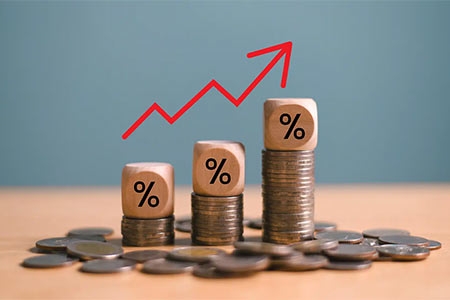
How Does Inflation Affect the Economy?
Inflation—defined as the general rise in prices over time—is a fundamental force shaping any economy. While moderate inflation is often seen as a sign of a growing economy, high or unpredictable inflation can disrupt financial stability, distort decision-making, and reduce overall welfare. Understanding how inflation affects the economy requires looking at its impact on consumers, businesses, governments, and financial markets.
1. Inflation and Purchasing Power
One of the most immediate effects of inflation is the erosion of purchasing power. As prices rise, each unit of currency buys fewer goods and services. This means that even if people’s incomes remain the same, they effectively become poorer in real terms.
For example, if inflation rises by 5% annually and wages do not increase at the same rate, households can afford less than they could before. Essential goods such as food, housing, and energy become more expensive, disproportionately affecting low- and middle-income families who spend a larger share of their income on necessities.
2. Impact on Consumers and Spending Behavior
Inflation influences how consumers behave. When prices rise steadily:
-
Consumers may spend more quickly, expecting prices to increase further. This can temporarily boost economic activity.
-
Alternatively, high inflation may reduce confidence, leading consumers to cut back on spending, especially on non-essential items.
This shift in behavior can create instability. Businesses may find it difficult to predict demand, which complicates production and investment decisions.
3. Effects on Businesses
Inflation affects businesses in multiple ways, both positive and negative.
Rising Costs:
Businesses often face higher input costs, such as raw materials, wages, and transportation. If they cannot pass these costs on to consumers through higher prices, their profit margins shrink.
Pricing Uncertainty:
Unpredictable inflation makes it harder for businesses to set prices and plan long-term investments. This uncertainty can reduce economic growth, as firms delay or cancel expansion plans.
Debt Advantage:
On the positive side, inflation can benefit businesses with fixed-rate debt. As prices and revenues rise, the real value of their debt decreases, making it easier to repay.
4. Wage Dynamics and Employment
Inflation has a complex relationship with wages and employment.
-
If wages rise with inflation, workers can maintain their standard of living.
-
If wages lag behind inflation, real incomes fall, reducing consumption and economic well-being.
In some cases, inflation can lead to a wage-price spiral, where rising wages increase production costs, leading to higher prices, which then prompt further wage demands. This cycle can sustain high inflation and create economic instability.
Regarding employment, moderate inflation is sometimes associated with lower unemployment (as suggested by the Phillips Curve), but this relationship is not stable in the long run. High inflation can ultimately harm job creation by increasing uncertainty and reducing investment.
5. Interest Rates and Monetary Policy
Central banks play a key role in managing inflation through monetary policy. When inflation rises above target levels, central banks typically increase interest rates to slow down economic activity.
Higher interest rates lead to:
-
Reduced borrowing by consumers and businesses
-
Lower investment and spending
-
Slower economic growth
Conversely, when inflation is too low or the economy is weak, central banks may lower interest rates to encourage borrowing and stimulate growth.
However, aggressive rate hikes to control inflation can risk pushing the economy into a recession. This creates a delicate balancing act for policymakers.
6. Impact on Savings and Investments
Inflation significantly affects savings and investment decisions.
Savings:
Inflation reduces the real value of money held in savings accounts, especially if interest rates are lower than the inflation rate. This discourages saving and encourages spending or investing instead.
Investments:
Different assets respond differently to inflation:
-
Stocks may perform well if companies can pass higher costs to consumers.
-
Real estate often benefits, as property values and rents tend to rise with inflation.
-
Bonds, especially fixed-rate ones, lose value because their returns are eroded by rising prices.
Investors must adjust their strategies to protect their wealth from inflation, often seeking assets that provide returns above the inflation rate.
7. Government Finances and Public Debt
Inflation also affects government budgets and debt.
Revenue Effects:
As prices and incomes rise, governments may collect more tax revenue, especially from income and sales taxes.
Debt Burden:
Like businesses, governments benefit from inflation if they have fixed-rate debt. The real value of their obligations decreases over time.
However, high inflation can increase the cost of borrowing if investors demand higher interest rates to compensate for inflation risk. This can strain public finances, especially in countries with large deficits.
8. Redistribution of Income and Wealth
Inflation does not affect everyone equally. It redistributes income and wealth across different groups:
-
Borrowers benefit, as they repay loans with money that is worth less.
-
Lenders and savers lose, as the real value of repayments and savings declines.
-
Fixed-income earners (such as pensioners) are particularly vulnerable if their incomes are not indexed to inflation.
This redistribution can increase inequality and create social and political tensions.
9. International Competitiveness
Inflation can influence a country’s position in the global economy.
If a country experiences higher inflation than its trading partners:
-
Its exports become more expensive
-
Its imports become relatively cheaper
This can lead to a trade deficit and weaken the domestic currency. A weaker currency can, in turn, make imports more expensive, further fueling inflation—a feedback loop that can destabilize the economy.
10. Hyperinflation and Economic Breakdown
In extreme cases, inflation can spiral out of control, leading to hyperinflation. This is characterized by rapid and uncontrollable price increases, often exceeding 50% per month.
Hyperinflation can:
-
Destroy savings and financial systems
-
Disrupt economic activity
-
Lead to barter systems replacing currency
-
Cause widespread social and political instability
While rare, such episodes highlight the importance of maintaining stable and predictable inflation.
11. The Role of Expectations
Inflation is not just about current prices—it is also shaped by expectations.
If people expect inflation to rise:
-
Workers demand higher wages
-
Businesses raise prices preemptively
-
Consumers accelerate purchases
These behaviors can actually cause inflation to increase, making expectations self-fulfilling. This is why central banks emphasize credibility and clear communication to anchor inflation expectations.
Conclusion
Inflation is a powerful and multifaceted force in the economy. Moderate inflation can support growth by encouraging spending and investment, but high or unpredictable inflation can undermine economic stability, reduce purchasing power, and distort financial decisions.
Its effects ripple through every part of the economy—from households and businesses to governments and global trade. Managing inflation requires careful policy decisions, particularly from central banks, to strike a balance between growth and stability.
Ultimately, stable and predictable inflation is essential for a healthy economy. It allows individuals and businesses to plan for the future with confidence, supports sustainable growth, and helps maintain social and economic balance.
- Arts
- Business
- Computers
- Games
- Health
- Home
- Kids and Teens
- Money
- News
- Personal Development
- Recreation
- Regional
- Reference
- Science
- Shopping
- Society
- Sports
- Бизнес
- Деньги
- Дом
- Досуг
- Здоровье
- Игры
- Искусство
- Источники информации
- Компьютеры
- Личное развитие
- Наука
- Новости и СМИ
- Общество
- Покупки
- Спорт
- Страны и регионы
- World

 Russian
 French
 Spanish
 Portuguese
 Deutsch
 Turkish
 Dutch
Dutch
 Italiano
 Arabic
 Romaian
 Portuguese (Brazil)
 Greek
Greek