
What is a capsule wardrobe?
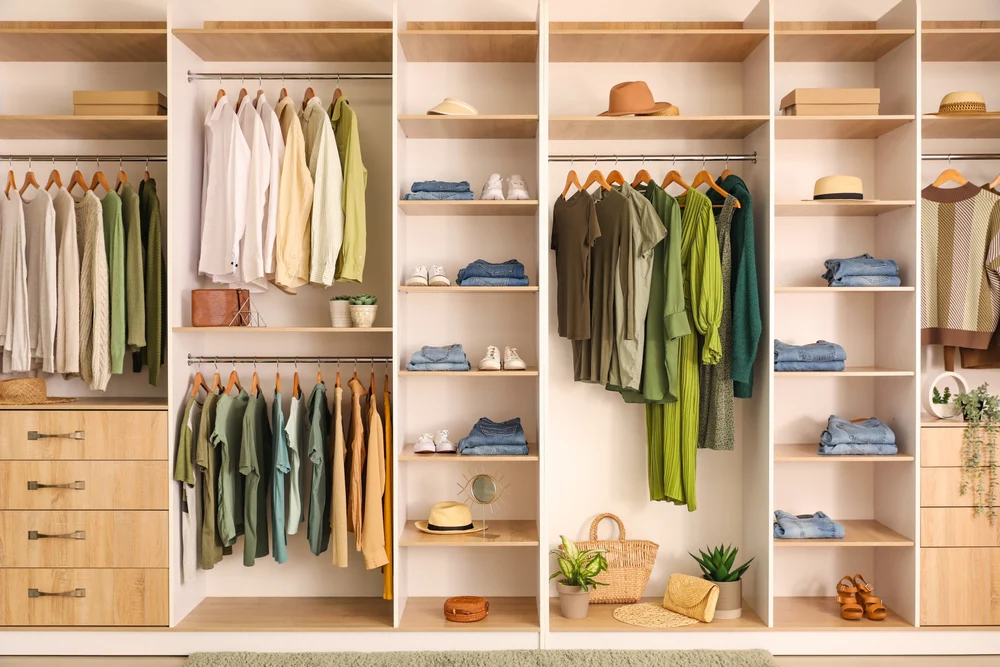
What Is a Capsule Wardrobe?
A capsule wardrobe is a deliberately curated collection of clothing designed to maximize versatility, minimize excess, and simplify the process of getting dressed. Instead of owning a large, constantly changing assortment of clothes, a capsule wardrobe focuses on a smaller number of carefully selected pieces that can be mixed and matched to create a wide variety of outfits.
At its core, the concept is not about restriction for its own sake. It is about intentionality: choosing clothing that aligns with personal style, daily needs, and lifestyle demands while eliminating redundancy and decision fatigue.
Although the term has become popular in modern minimalist culture, the idea has existed in various forms for decades. Today, it is widely associated with minimalism, sustainable fashion, and simplified living.
1. Core Definition of a Capsule Wardrobe
A capsule wardrobe can be defined as:
A small, cohesive collection of clothing items that are interchangeable and sufficient for a defined period or lifestyle.
Typically, a capsule wardrobe includes:
-
Tops (shirts, blouses, sweaters)
-
Bottoms (pants, jeans, skirts)
-
Outerwear (jackets, coats)
-
Shoes (limited selection for different purposes)
-
A small number of accessories
The defining feature is not the exact number of items, but the interchangeability and intentional selection of each piece.
Most capsule wardrobes range from:
-
20 to 40 items (excluding underwear, sleepwear, and sometimes workout clothes)
However, the exact number varies depending on climate, profession, and personal needs.
2. The Philosophy Behind a Capsule Wardrobe
A capsule wardrobe is built on several key principles:
1. Intentionality
Every item serves a purpose and is chosen deliberately.
2. Versatility
Clothing pieces are selected so they can be combined in multiple ways.
3. Simplicity
Fewer items reduce complexity in decision-making.
4. Quality over quantity
Durable, well-made items are preferred over fast fashion or disposable clothing.
5. Personal alignment
The wardrobe reflects individual lifestyle needs rather than trends.
This philosophy aligns closely with minimalist thinking, where the goal is not deprivation but optimization.
3. How a Capsule Wardrobe Works
The functionality of a capsule wardrobe is based on combinatorial flexibility.
Instead of having many unique outfits built from many unique pieces, a capsule wardrobe uses fewer items that combine in multiple ways.
For example:
-
10 tops
-
5 bottoms
-
3 jackets
This can produce dozens of outfit combinations, even though the total number of items is small.
The key idea is modularity—each piece is designed to work with multiple others.
4. Why Capsule Wardrobes Reduce Decision Fatigue
One of the most significant benefits of a capsule wardrobe is the reduction of decision fatigue.
Every day, people make dozens of small decisions about clothing:
-
What to wear
-
What matches what
-
What is appropriate for the occasion
While individually minor, these decisions accumulate and consume cognitive energy.
A capsule wardrobe reduces this burden by:
-
Limiting clothing choices
-
Ensuring most items already match
-
Removing unnecessary complexity
This results in:
-
Faster morning routines
-
Less mental strain
-
More cognitive energy for important decisions later in the day
In cognitive terms, it reduces load on working memory and executive control systems.
5. The Role of Versatility in Capsule Wardrobes
Versatility is the structural foundation of a capsule wardrobe.
Each item is selected based on:
-
Color compatibility
-
Style consistency
-
Functional adaptability
For example, a neutral-colored jacket can be worn in both casual and formal settings. A simple pair of jeans can pair with multiple tops.
This ensures that:
-
Every item has multiple uses
-
Few items go unused
-
Outfits can be created effortlessly
The more versatile the items, the smaller the wardrobe can be without limiting outfit variety.
6. Capsule Wardrobe and Minimalism
Capsule wardrobes are closely associated with minimalism, but they are not identical.
Minimalism is a broader philosophy of reducing excess in all areas of life, while a capsule wardrobe is specifically focused on clothing.
However, they share key principles:
-
Removing unnecessary items
-
Prioritizing function over accumulation
-
Reducing cognitive and physical clutter
A capsule wardrobe is often one of the first practical applications of minimalism because clothing is a highly visible and frequently used domain.
7. Environmental and Sustainability Benefits
Beyond personal convenience, capsule wardrobes have environmental implications.
The fashion industry is one of the largest contributors to:
-
Waste production
-
Water consumption
-
Carbon emissions
A capsule wardrobe reduces environmental impact by:
-
Encouraging fewer purchases
-
Extending the lifespan of clothing
-
Reducing reliance on fast fashion cycles
By buying fewer, higher-quality items, individuals contribute to a more sustainable consumption pattern.
8. Psychological Impact of a Capsule Wardrobe
A capsule wardrobe can significantly affect mental well-being.
Key psychological benefits include:
Reduced stress
Fewer clothing choices reduce daily decision pressure.
Increased clarity
A simplified wardrobe reduces visual and mental clutter.
Improved confidence
Knowing that all items fit well and match reduces uncertainty.
Greater satisfaction
Intentional clothing selection increases appreciation of what is owned.
Clothing is closely tied to self-image, so simplifying it can have broader effects on self-perception and confidence.
9. How Capsule Wardrobes Improve Efficiency
Efficiency is one of the most practical benefits of a capsule wardrobe.
Morning routines become:
-
Faster
-
More predictable
-
Less cognitively demanding
Instead of evaluating dozens of options, individuals choose from a small, curated set of reliable outfits.
This saves time and reduces friction at the start of the day, which can influence overall productivity.
10. Common Structure of a Capsule Wardrobe
While there is no universal formula, a typical capsule wardrobe might include:
-
5–10 tops
-
3–5 bottoms
-
2–5 outer layers
-
2–4 pairs of shoes
-
A few accessories
Some versions are seasonal, meaning they change 3–4 times per year. Others are year-round and adapted for layering.
The structure depends on:
-
Climate (cold vs warm regions)
-
Work environment (formal vs casual)
-
Personal lifestyle (active vs sedentary)
11. Capsule Wardrobe vs Traditional Wardrobe
A traditional wardrobe often includes:
-
Large number of items
-
Frequent trend-based purchases
-
Redundant or unused clothing
-
High decision complexity
A capsule wardrobe contrasts this by:
| Feature | Traditional Wardrobe | Capsule Wardrobe |
|---|---|---|
| Number of items | High | Low to moderate |
| Decision complexity | High | Low |
| Versatility | Variable | High |
| Intentionality | Low | High |
| Waste | Higher | Lower |
The key difference is not size alone, but structure and purpose.
12. Challenges of a Capsule Wardrobe
Despite its benefits, capsule wardrobes are not without challenges.
1. Initial effort
Creating a capsule wardrobe requires time and evaluation.
2. Emotional attachment
Letting go of clothing can be difficult due to sentimental value.
3. Style limitations
Without careful planning, options may feel limited.
4. Lifestyle mismatch
Highly variable lifestyles may require more flexibility.
These challenges are manageable but require intentional design and adaptation.
13. How to Build a Capsule Wardrobe (Conceptual Steps)
While this is not a step-by-step guide, the conceptual process involves:
1. Assessing lifestyle needs
Understanding daily activities, work requirements, and climate.
2. Identifying core styles
Defining preferred colors, fits, and aesthetics.
3. Selecting foundational pieces
Choosing versatile, neutral items as the base.
4. Ensuring compatibility
Making sure all items can be combined easily.
5. Removing redundancy
Eliminating duplicate or rarely used items.
The goal is coherence, not restriction.
14. The Long-Term Impact of a Capsule Wardrobe
Over time, maintaining a capsule wardrobe leads to:
-
More mindful purchasing habits
-
Reduced clothing-related spending
-
Stronger personal style identity
-
Lower cognitive load in daily life
It also shifts the relationship with clothing from accumulation to curation.
Instead of constantly adding new items, individuals refine what they already have.
Conclusion
A capsule wardrobe is more than a fashion concept; it is a system for simplifying one of the most routine yet cognitively repetitive aspects of daily life: choosing what to wear.
By reducing excess, increasing versatility, and emphasizing intentionality, it offers practical and psychological benefits, including reduced decision fatigue, improved efficiency, and greater clarity.
At its core, the capsule wardrobe reflects a broader principle found in many minimalist systems:
Fewer, better things lead to more freedom, not less.
It is not about limitation, but about removing unnecessary complexity so that attention, energy, and time can be directed toward what truly matters.
- Arts
- Business
- Computers
- Spiele
- Health
- Startseite
- Kids and Teens
- Geld
- News
- Personal Development
- Recreation
- Regional
- Reference
- Science
- Shopping
- Society
- Sports
- Бизнес
- Деньги
- Дом
- Досуг
- Здоровье
- Игры
- Искусство
- Источники информации
- Компьютеры
- Личное развитие
- Наука
- Новости и СМИ
- Общество
- Покупки
- Спорт
- Страны и регионы
- World

 English
 Russian
 French
 Spanish
 Portuguese
 Turkish
 Dutch
Dutch
 Italiano
 Arabic
 Romaian
 Portuguese (Brazil)
 Greek
Greek