
How does social media affect focus?
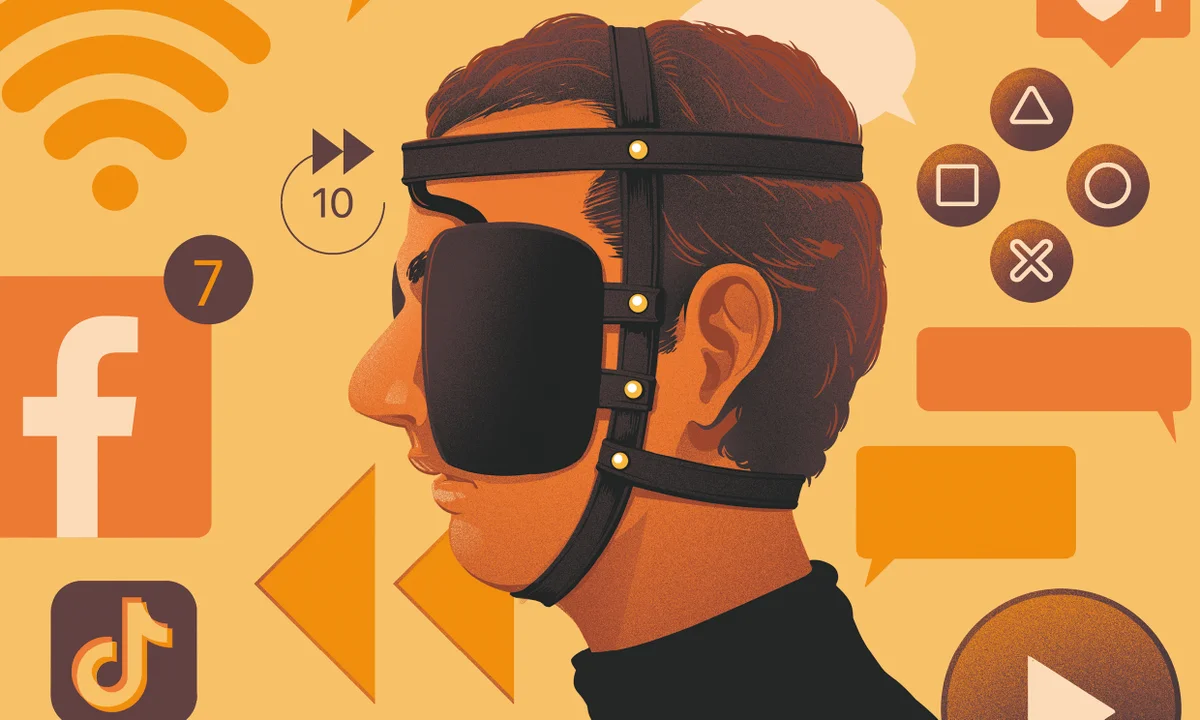
How Does Social Media Affect Focus?
Social media has become one of the most influential forces shaping modern attention. Platforms like Instagram, TikTok, X (Twitter), Facebook, and YouTube are not just communication tools—they are attention-optimization systems designed to capture and retain cognitive focus for as long as possible.
To understand how social media affects focus, we need to analyze it through cognitive psychology, neuroscience, and behavioral economics. The key issue is not simply that social media is distracting, but that it systematically reshapes how attention is allocated, sustained, and switched.
In short:
Social media does not just interrupt focus—it trains the brain to expect interruption.
1. Attention as a Limited Cognitive Resource
Human attention is finite. At any given moment, the brain can only process a limited amount of information.
Concentration depends on:
-
Sustained attention (maintaining focus over time)
-
Selective attention (filtering irrelevant stimuli)
-
Executive control (managing task switching)
Social media directly competes with all three systems.
Each notification, scroll, or video acts as a competing stimulus that pulls attention away from the current task.
The more frequently attention is diverted, the harder it becomes to maintain deep focus.
2. The Dopamine Feedback Loop
One of the most important mechanisms behind social media’s impact on focus is the dopamine reward system.
Social media platforms are engineered around:
-
Variable rewards (unpredictable likes, comments, content)
-
Rapid content delivery (short videos, endless scroll)
-
High novelty frequency
This creates a reinforcement loop:
-
User opens app
-
Receives small unpredictable reward
-
Brain releases dopamine
-
Behavior is reinforced
-
User repeats behavior
Over time, the brain begins to prioritize:
-
Immediate stimulation
over -
Delayed, effortful tasks
This makes sustained concentration on non-rewarding tasks significantly harder.
3. Reduced Attention Span and Task Switching
Frequent use of social media encourages rapid task switching, which has direct consequences for focus.
When the brain constantly switches between:
-
Videos
-
Messages
-
Posts
-
Notifications
It develops a pattern of fragmented attention.
This leads to:
-
Reduced ability to sustain focus on a single task
-
Increased cognitive fatigue
-
Lower tolerance for slow or complex tasks
The brain begins to expect constant novelty, making static or slow-paced activities feel uncomfortable.
4. Cognitive Residue and Attention Recovery Delay
When switching from social media to focused work, attention does not immediately reset.
Instead, the brain carries “cognitive residue”:
-
Lingering thoughts from content consumed
-
Emotional reactions to posts or messages
-
Residual stimulation from fast-paced content
This residual load reduces the efficiency of re-entering deep focus.
As a result:
-
It takes longer to regain concentration
-
Work feels mentally heavier
-
Focus is more easily disrupted again
Even short social media breaks can significantly delay cognitive recovery.
5. The Habit of Micro-Distraction
Social media promotes micro-distraction behavior patterns.
These include:
-
Checking phone “for a moment”
-
Scrolling during short breaks
-
Switching tasks impulsively
-
Responding to notifications immediately
Over time, these micro-actions become habitual.
This creates:
-
Automatic attention fragmentation
-
Reduced ability to tolerate boredom
-
Constant partial attention state
The brain becomes conditioned to expect frequent interruptions, even when none are present.
6. Impact on Deep Work Capacity
Deep work refers to sustained, uninterrupted concentration on cognitively demanding tasks.
Social media reduces deep work capacity by:
-
Training the brain to expect frequent interruptions
-
Lowering tolerance for monotony
-
Increasing sensitivity to external stimuli
As a result:
-
Long-form concentration becomes harder
-
Complex tasks feel more exhausting
-
Focus sessions become shorter and less productive
Even when distractions are removed, the learned patterns of interruption remain.
7. Attention Fragmentation and Cognitive Load
Attention fragmentation increases overall cognitive load.
When attention is split between:
-
Work
-
Notifications
-
Background awareness of social media
The brain must continuously allocate resources to multiple streams of information.
This leads to:
-
Mental fatigue
-
Reduced working memory efficiency
-
Slower problem-solving
-
Lower task accuracy
Even passive awareness of social media availability reduces cognitive efficiency.
8. Emotional Interference in Focus
Social media is not only cognitively distracting—it is emotionally activating.
Content often triggers:
-
Social comparison
-
Emotional reactions (anger, excitement, anxiety)
-
Curiosity loops
-
Validation seeking
These emotional responses interfere with concentration by:
-
Increasing internal dialogue
-
Reducing emotional neutrality required for focus
-
Pulling attention toward external validation
Emotionally charged states are incompatible with stable deep focus.
9. Fear of Missing Out (FOMO) and Attention Drift
FOMO is a psychological driver that keeps attention partially anchored to social media.
It creates:
-
Anxiety about missing updates
-
Compulsive checking behavior
-
Difficulty staying fully engaged in offline tasks
Even without active use, awareness of social media creates background cognitive distraction.
This reduces:
-
Task immersion
-
Mental presence
-
Sustained engagement
10. Short-Form Content and Attention Conditioning
Short-form content (e.g., reels, shorts, TikTok videos) has a strong conditioning effect on attention.
Characteristics:
-
Extremely high novelty rate
-
Fast reward cycles
-
Rapid topic switching
This conditions the brain to:
-
Expect constant stimulation
-
Lose interest quickly in slow content
-
Prefer passive consumption over active engagement
Over time, this shifts baseline attention preferences.
11. Decreased Tolerance for Boredom
Focus requires the ability to tolerate low-stimulation periods.
However, social media reduces boredom tolerance by providing instant stimulation.
This leads to:
-
Immediate escape from uninteresting tasks
-
Reduced persistence during difficult work
-
Increased dependency on external stimulation
Without boredom tolerance, sustained concentration becomes significantly harder.
12. Social Validation and Attention Hijacking
Social media platforms are built around social feedback loops:
-
Likes
-
Comments
-
Shares
-
Follows
These signals activate reward pathways in the brain, making them highly attention-grabbing.
This creates:
-
Continuous monitoring of social validation
-
Distraction from internal tasks
-
Prioritization of external feedback over internal goals
Attention becomes externally driven rather than internally directed.
13. Multitasking Illusion
Social media encourages multitasking behavior, such as:
-
Working while checking messages
-
Studying while scrolling
-
Watching videos while doing other tasks
However, cognitive science shows that true multitasking is largely an illusion. The brain is rapidly switching attention rather than processing multiple tasks simultaneously.
This results in:
-
Reduced performance quality
-
Increased errors
-
Slower completion times
-
Lower retention of information
Multitasking conditions weaken sustained attention over time.
14. Reversibility: Can Focus Recover?
The effects of social media on focus are not permanent, but recovery requires deliberate effort.
Recovery strategies include:
-
Reducing exposure duration
-
Creating distraction-free environments
-
Rebuilding sustained attention habits
-
Practicing deep work sessions
The brain is plastic, meaning attention systems can adapt in both directions:
-
Fragmentation through excessive social media use
-
Restoration through structured focus training
15. The Core Mechanism: Attention Rewiring
The fundamental effect of social media on focus is not just distraction—it is attention conditioning.
Over time, the brain learns:
-
Fast stimulation is normal
-
Interruptions are expected
-
Long focus is uncomfortable
-
Novelty is required for engagement
This rewiring changes baseline cognitive behavior.
Conclusion
Social media affects focus by reshaping how attention is trained, rewarded, and sustained. It does not simply interrupt concentration—it systematically conditions the brain toward fragmentation, novelty-seeking, and rapid task switching.
The key mechanisms include:
-
Dopamine-driven reward loops
-
Fragmented attention patterns
-
Reduced deep work capacity
-
Increased cognitive load
-
Emotional and social interference
-
Lower boredom tolerance
Ultimately, social media shifts attention from deep, sustained engagement to rapid, reactive consumption. However, because attention is a trainable cognitive system, its effects can be reversed through intentional behavior, reduced exposure, and structured focus practice.
- Arts
- Business
- Computers
- Juegos
- Health
- Home
- Kids and Teens
- Money
- News
- Personal Development
- Recreation
- Regional
- Reference
- Science
- Shopping
- Society
- Sports
- Бизнес
- Деньги
- Дом
- Досуг
- Здоровье
- Игры
- Искусство
- Источники информации
- Компьютеры
- Личное развитие
- Наука
- Новости и СМИ
- Общество
- Покупки
- Спорт
- Страны и регионы
- World

 English
 Russian
 French
 Portuguese
 Deutsch
 Turkish
 Dutch
Dutch
 Italiano
 Arabic
 Romaian
 Portuguese (Brazil)
 Greek
Greek