
Is procrastination a bad habit or a mental issue?
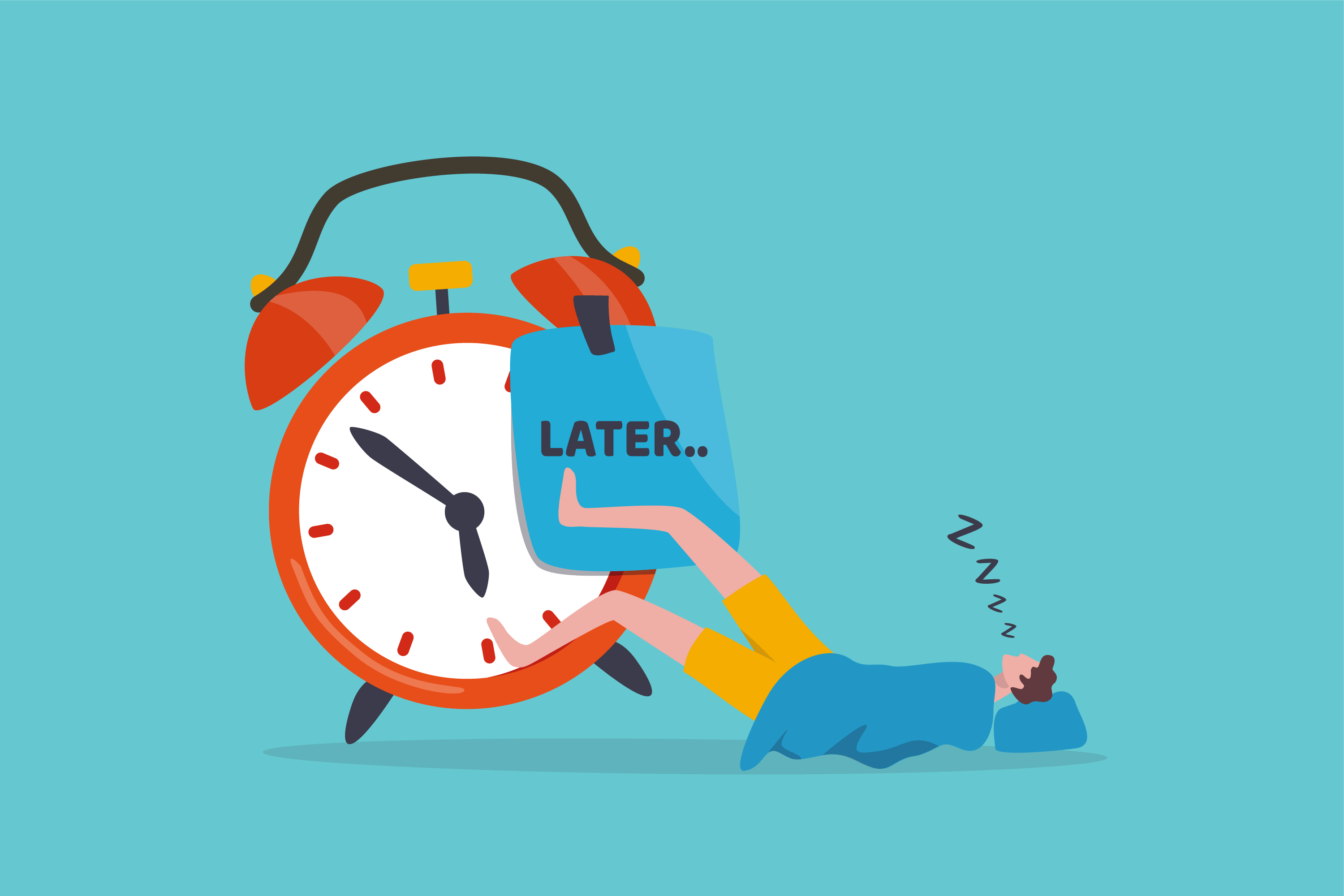
Is Procrastination a Bad Habit or a Mental Issue?
Procrastination sits in a grey area between behavior, cognition, and mental health. It is often casually labeled a “bad habit,” implying a simple pattern of poor discipline. At the same time, it is also strongly associated with anxiety, depression, ADHD, and other psychological conditions, which makes it feel closer to a “mental issue.”
The most accurate answer is that procrastination is not strictly one or the other. It exists on a spectrum: for some people it is primarily a learned behavioral habit, while for others it is a symptom or manifestation of underlying psychological or neurocognitive processes. In many cases, it is both simultaneously.
To understand this properly, we need to examine what procrastination actually is, how habits form, how mental health conditions influence behavior, and where the boundary between “habit” and “disorder” becomes blurred.
1. What Procrastination Actually Is
Procrastination is defined in psychology as:
The voluntary delay of an intended action despite expecting negative consequences from the delay.
This definition highlights three key elements:
-
The person intends to act
-
The action is delayed voluntarily
-
The delay is recognized as harmful
This makes procrastination fundamentally a self-regulation failure, not simply a lack of awareness or ability.
However, self-regulation failures can arise from multiple sources:
-
Learned behavior patterns (habitual procrastination)
-
Emotional avoidance strategies
-
Cognitive control limitations
-
Clinical conditions affecting attention or motivation
This is why classification is not straightforward.
2. Procrastination as a Habit
From a behavioral psychology perspective, procrastination often functions as a learned habit loop.
A habit forms through repeated cycles:
-
A task creates discomfort (boredom, anxiety, effort)
-
The person avoids the task
-
Relief or short-term pleasure is experienced
-
The brain reinforces the avoidance behavior
Over time:
-
Avoidance becomes automatic
-
Starting tasks feels increasingly difficult
-
Delay becomes the default response
In this sense, procrastination behaves like a habit because:
-
It is triggered automatically
-
It provides short-term reinforcement
-
It becomes less conscious over time
Key characteristics of habit-based procrastination:
-
Occurs in predictable situations (e.g., boring tasks)
-
Improves temporarily under pressure (deadlines)
-
Can be modified through behavioral changes
-
Does not necessarily involve clinical symptoms
Many people fall into this category: they procrastinate due to environment, distraction, or learned avoidance patterns rather than deeper psychological conditions.
3. Procrastination as an Emotional Regulation Strategy
Modern research strongly suggests that procrastination is not just about time management, but about mood management.
People procrastinate to avoid:
-
Anxiety
-
Boredom
-
Fear of failure
-
Frustration
-
Overwhelm
In this model, procrastination is a coping strategy:
It reduces negative emotions in the short term, even if it worsens outcomes later.
This is important because emotional regulation patterns can be:
-
Habitual (learned behavior)
-
Or symptomatic (linked to anxiety disorders, depression, etc.)
This creates overlap between “habit” and “mental issue.”
4. When Procrastination Becomes a Mental Health Symptom
Procrastination can also be associated with clinical conditions.
1. Anxiety disorders
Anxiety can cause procrastination through:
-
Fear of failure
-
Fear of judgment
-
Overthinking and avoidance
-
Cognitive paralysis
Here, procrastination is driven by threat perception, not laziness or habit alone.
2. Depression
Depression contributes through:
-
Low motivation
-
Reduced energy
-
Anhedonia (lack of pleasure)
-
Cognitive slowing
In this case, procrastination is often a symptom of reduced psychological activation, not a learned behavior.
3. ADHD (Attention-Deficit/Hyperactivity Disorder)
ADHD-related procrastination is strongly linked to:
-
Executive dysfunction
-
Difficulty initiating tasks
-
Time blindness
-
Dopamine regulation differences
Here, procrastination is tied to neurological differences in attention and motivation systems, not just behavioral conditioning.
4. Chronic stress and burnout
High stress environments can impair:
-
Working memory
-
Decision-making
-
Task initiation
Leading to avoidance behavior that resembles procrastination but is driven by cognitive overload and fatigue.
5. The Neurocognitive Layer: Why Both Views Overlap
Procrastination is rooted in brain systems that regulate:
-
Reward processing (dopamine system)
-
Threat detection (amygdala)
-
Executive control (prefrontal cortex)
-
Memory and planning (working memory networks)
When these systems are imbalanced, procrastination becomes more likely.
Habit model:
-
Emphasizes learned behavior loops
-
Focuses on reinforcement and repetition
Mental health model:
-
Emphasizes neural regulation differences
-
Focuses on emotional and cognitive dysfunction
In reality, both operate simultaneously.
For example:
-
A habit can form more easily in someone with anxiety
-
ADHD can increase susceptibility to avoidance learning
-
Depression can reinforce habitual inactivity
This is why strict categorization fails.
6. Behavioral vs Clinical Procrastination: A Spectrum
It is more accurate to view procrastination on a spectrum:
Mild / behavioral procrastination:
-
Occasional delay
-
Linked to distractions or preferences
-
Improves with structure
-
No major emotional distress
Moderate procrastination:
-
Frequent avoidance
-
Emotional discomfort involved
-
Impacts productivity
-
Some self-regulation difficulty
Severe / clinical-related procrastination:
-
Chronic avoidance patterns
-
Significant distress or impairment
-
Linked to anxiety, depression, or ADHD
-
Interferes with daily functioning
This spectrum shows that procrastination is not a binary category.
7. Why “Just a Habit” Is an Oversimplification
Labeling procrastination as “just a bad habit” ignores key psychological realities:
-
Emotional avoidance is often involuntary
-
Cognitive control capacity varies between individuals
-
Mental health conditions influence motivation and attention
-
Neurobiological differences affect task initiation
This oversimplification can lead to:
-
Self-blame
-
Ineffective solutions (e.g., willpower alone)
-
Ignoring underlying mental health issues
Not all procrastination is solved by discipline.
8. Why “Just a Mental Illness” Is Also Incorrect
On the other hand, labeling all procrastination as a mental issue is also inaccurate.
Many cases involve:
-
Poor environment design
-
Learned distraction patterns
-
Lack of structured routines
-
Overuse of instant-reward activities (social media, etc.)
These do not require clinical interpretation and can often be improved through:
-
Behavioral changes
-
Habit restructuring
-
Environmental control
Most people who procrastinate do not meet clinical criteria for a mental disorder.
9. The Interaction Model: Habit + Mental State
The most accurate framework is interaction-based:
Procrastination emerges from the interaction of:
-
Cognitive control capacity
-
Emotional state
-
Environmental triggers
-
Learned behavior patterns
-
Reward system sensitivity
For example:
-
Stress reduces executive function
-
Reduced executive function increases avoidance
-
Avoidance reinforces habit formation
This creates a self-reinforcing loop between habit and mental state.
10. Why Context Matters
Whether procrastination is “habit” or “mental issue” depends heavily on context:
-
In structured, healthy environments → more habit-based
-
Under chronic stress or anxiety → more clinically influenced
-
In ADHD → neurocognitive origin
-
In burnout → physiological and psychological exhaustion
Context determines mechanism.
11. Practical Implication of the Distinction
This distinction matters because it affects solutions:
Habit-based procrastination:
-
Time management
-
Environment design
-
Behavioral conditioning
-
Task structuring
Mental health-related procrastination:
-
Anxiety treatment strategies
-
Therapy (CBT, etc.)
-
Medication in some cases
-
Stress reduction and recovery
Misidentifying the cause leads to ineffective intervention.
Conclusion
Procrastination is neither purely a bad habit nor purely a mental issue. It is best understood as a multi-layered behavioral phenomenon shaped by both learned habits and underlying psychological or neurocognitive states.
-
As a habit, it reflects learned avoidance patterns reinforced over time.
-
As a mental issue, it reflects disruptions in motivation, attention, or emotional regulation.
-
In most real cases, it is a combination of both.
The key insight is that procrastination is not a single cause problem—it is a systems-level outcome of how the brain manages emotion, reward, cognition, and behavior under real-world constraints.
- Arts
- Business
- Computers
- الألعاب
- Health
- الرئيسية
- Kids and Teens
- مال
- News
- Personal Development
- Recreation
- Regional
- Reference
- Science
- Shopping
- Society
- Sports
- Бизнес
- Деньги
- Дом
- Досуг
- Здоровье
- Игры
- Искусство
- Источники информации
- Компьютеры
- Личное развитие
- Наука
- Новости и СМИ
- Общество
- Покупки
- Спорт
- Страны и регионы
- World

 English
 Russian
 French
 Spanish
 Portuguese
 Deutsch
 Turkish
 Dutch
Dutch
 Italiano
 Romaian
 Portuguese (Brazil)
 Greek
Greek