
What causes procrastination?
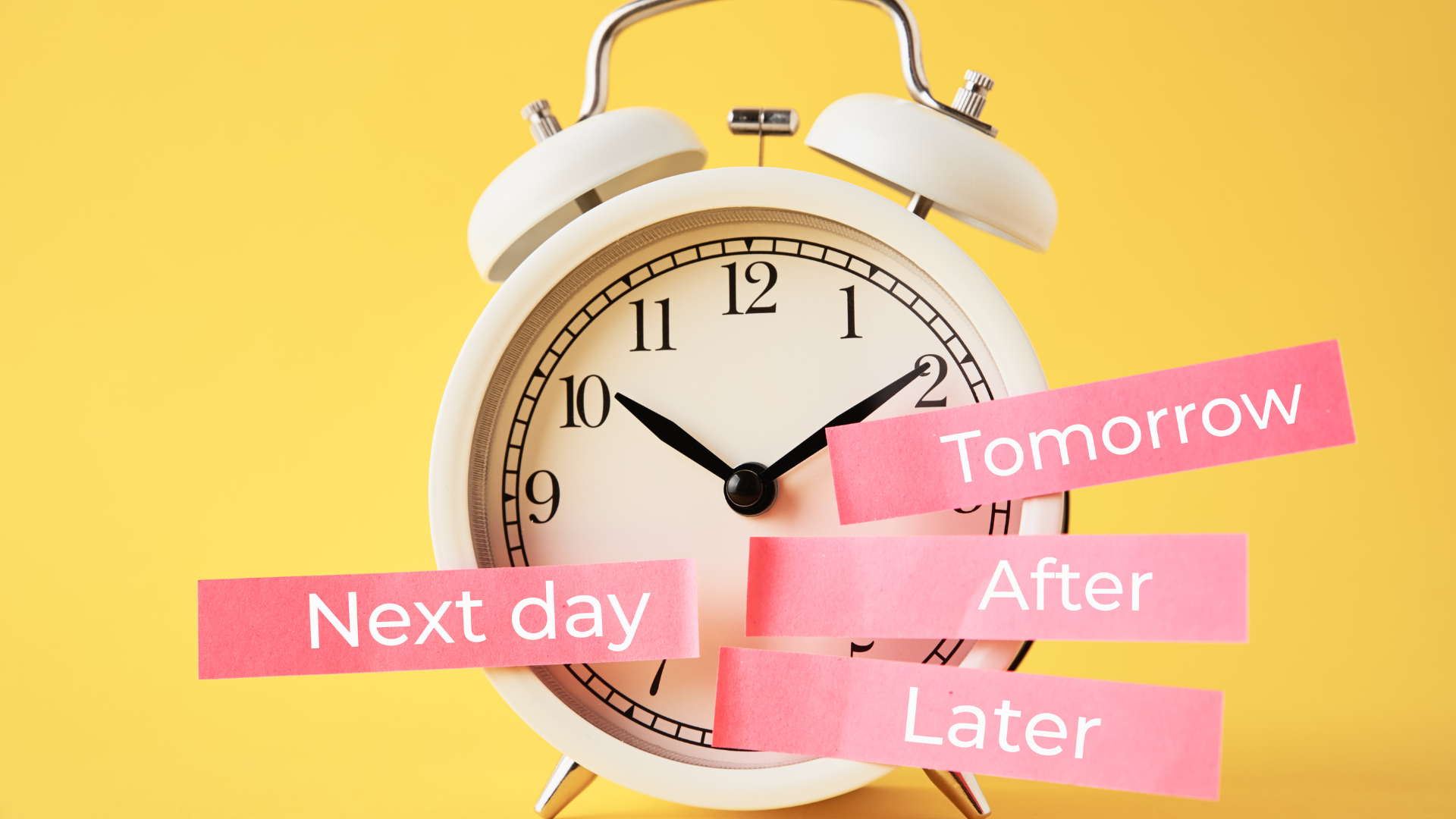
What Causes Procrastination?
Procrastination is a near-universal human behavior: the voluntary delay of an intended course of action despite expecting to be worse off for the delay. While it’s often dismissed as simple laziness or poor time management, research in psychology, neuroscience, and behavioral economics shows that procrastination is far more complex. It is not just about putting things off—it is about how humans regulate emotion, perceive time, evaluate rewards, and cope with internal conflict.
Understanding what causes procrastination requires examining multiple interacting factors: cognitive biases, emotional regulation challenges, personality traits, environmental conditions, and even neurological mechanisms. This article explores these causes in depth, breaking down why procrastination happens and why it can be so difficult to overcome.
1. Emotional Regulation: The Core Driver
At its core, procrastination is not a time management problem—it is an emotional regulation problem.
When people procrastinate, they are often trying to avoid negative emotions associated with a task. These emotions can include:
-
Anxiety (fear of failure, fear of judgment)
-
Boredom (lack of stimulation)
-
Frustration (task difficulty)
-
Self-doubt (low confidence)
-
Overwhelm (task complexity)
Instead of confronting these emotions directly, the brain seeks immediate relief. This leads to “mood repair”—choosing short-term comfort over long-term benefit.
For example, if a student feels anxious about writing an essay, scrolling social media provides instant emotional relief. The procrastination is not about the essay itself; it’s about escaping the discomfort tied to it.
This is why people often procrastinate even when they know it will harm them later. The brain prioritizes immediate emotional relief over future outcomes.
2. Temporal Discounting: The Present Bias
Humans are wired to value immediate rewards more than future rewards—a concept known as temporal discounting.
When faced with a task that offers delayed benefits (like studying for an exam), the reward feels abstract and distant. Meanwhile, distractions offer immediate gratification:
-
Watching a video → instant dopamine
-
Playing a game → immediate engagement
-
Chatting with friends → instant social reward
The brain effectively “discounts” the future reward, making it less motivating.
This creates a conflict:
-
Long-term self: wants to complete the task
-
Short-term self: wants immediate pleasure
Procrastination occurs when the short-term self wins.
3. Task Aversion and Perceived Difficulty
The more unpleasant or difficult a task feels, the more likely it is to be postponed.
Several task-related factors increase procrastination:
a. Lack of Clarity
If a task is vague (“work on project”), the brain struggles to initiate action. Ambiguity creates cognitive friction.
b. High Complexity
Large or complicated tasks trigger overwhelm. Without clear starting points, people default to avoidance.
c. Low Intrinsic Motivation
Tasks that feel meaningless or uninteresting are more likely to be delayed.
d. Delayed Feedback
If a task doesn’t provide immediate feedback or progress signals, it becomes harder to stay engaged.
The brain prefers tasks that are:
-
Clearly defined
-
Achievable in small steps
-
Immediately rewarding
When a task lacks these qualities, procrastination becomes more likely.
4. Fear of Failure and Perfectionism
One of the most powerful drivers of procrastination is fear—particularly fear of failure.
When a task is tied to self-worth, people may avoid it to protect their identity. This is common in:
-
Academic performance
-
Creative work
-
Career-related tasks
Perfectionism intensifies this effect. A perfectionist may think:
-
“If I can’t do this perfectly, I shouldn’t do it at all.”
-
“Starting means risking failure.”
This leads to avoidance as a defense mechanism.
Ironically, procrastination becomes a way to preserve self-esteem:
-
If you fail after procrastinating, you can blame the delay.
-
If you try your best and fail, it feels more personal.
Thus, procrastination can function as psychological self-protection.
5. Low Self-Efficacy
Self-efficacy refers to a person’s belief in their ability to complete a task successfully.
When self-efficacy is low:
-
Tasks feel more difficult than they are
-
Effort feels less likely to pay off
-
Motivation decreases
This leads to a cycle:
-
Low confidence → avoidance
-
Avoidance → lack of progress
-
Lack of progress → reinforces low confidence
People who doubt their abilities are significantly more likely to procrastinate, especially on tasks that challenge their perceived weaknesses.
6. Impulsivity and Executive Function
Procrastination is closely linked to impulsivity—the tendency to act on immediate urges rather than long-term goals.
This is tied to executive function, a set of cognitive processes that include:
-
Planning
-
Attention control
-
Inhibition
-
Working memory
Weak executive function makes it harder to:
-
Resist distractions
-
Stay focused
-
Initiate tasks
This is why procrastination is more common in individuals with conditions like ADHD. The issue is not a lack of intention but difficulty in regulating attention and behavior.
7. Reward System and Dopamine
The brain’s reward system plays a critical role in procrastination.
Dopamine is released when we anticipate or receive rewards. Activities like:
-
Social media
-
Video games
-
Streaming content
are engineered to provide rapid, frequent dopamine spikes.
In contrast, tasks like studying or working often:
-
Provide delayed rewards
-
Require sustained effort
-
Lack immediate gratification
This creates a mismatch. The brain becomes conditioned to prefer high-dopamine, low-effort activities.
Over time, this can reduce tolerance for effortful tasks, making procrastination more habitual.
8. Habit Formation and Conditioning
Procrastination is not just a one-time decision—it can become a learned behavior.
Each time someone procrastinates and experiences relief, the behavior is reinforced. This creates a feedback loop:
-
Task → discomfort
-
Avoidance → relief
-
Relief → reinforces avoidance
Eventually, the brain associates tasks with avoidance automatically.
This is classical conditioning:
-
Task = negative emotion
-
Distraction = relief
Breaking this pattern requires rewiring these associations, which is not easy.
9. Environmental Factors
The environment can significantly influence procrastination.
a. Easy Access to Distractions
Modern environments are filled with distractions:
-
Smartphones
-
Notifications
-
Social media
These reduce the cost of procrastination to near zero.
b. Lack of Structure
Unstructured environments make it harder to initiate tasks. Without clear schedules or deadlines, people rely on internal discipline—which is often unreliable.
c. Social Influences
If peers or colleagues are also disengaged, procrastination can spread socially.
10. Decision Fatigue and Cognitive Load
Every decision consumes mental energy. When people experience decision fatigue, their ability to initiate tasks decreases.
This is especially relevant when:
-
Tasks require many decisions
-
There are competing priorities
-
The person is already mentally exhausted
Procrastination becomes a default because it requires less cognitive effort than deciding what to do next.
11. Identity and Self-Concept
How a person sees themselves can influence procrastination.
If someone identifies as:
-
“lazy”
-
“bad at focusing”
-
“a procrastinator”
They are more likely to behave in ways that reinforce that identity.
This is known as self-consistency bias: people act in ways that align with their self-image.
Changing procrastination behavior often requires changing identity:
-
From “I procrastinate” → “I struggle with starting tasks, but I can improve”
12. Stress and Mental Health
Stress, anxiety, and depression all contribute to procrastination.
Anxiety
-
Leads to avoidance of stress-inducing tasks
-
Increases fear-based procrastination
Depression
-
Reduces energy and motivation
-
Makes even simple tasks feel overwhelming
Chronic Stress
-
Impairs executive function
-
Increases reliance on short-term coping behaviors
In these cases, procrastination is not just a habit—it is a symptom of deeper psychological strain.
13. Time Perception Distortion
People often misjudge how long tasks will take or how much time they have.
Common distortions include:
-
“This will only take 10 minutes” (underestimation)
-
“I have plenty of time” (optimism bias)
These distortions delay task initiation until urgency forces action.
When deadlines approach, stress increases, leading to rushed or suboptimal work—reinforcing the cycle.
14. Lack of Immediate Consequences
Procrastination persists because its negative consequences are delayed.
If skipping a task had immediate penalties, behavior would change quickly. But in reality:
-
Deadlines may be flexible
-
Consequences are distant
-
Short-term comfort outweighs long-term cost
This asymmetry allows procrastination to continue unchecked.
Conclusion
Procrastination is not a simple flaw or lack of discipline—it is the result of multiple interacting psychological, neurological, and environmental factors.
Key causes include:
-
Emotional avoidance
-
Present bias and temporal discounting
-
Task aversion and complexity
-
Fear of failure and perfectionism
-
Low self-efficacy
-
Impulsivity and weak executive function
-
Dopamine-driven reward systems
-
Habit formation
-
Environmental distractions
-
Cognitive overload
-
Identity and self-perception
-
Mental health challenges
Understanding these causes reframes procrastination from a moral failing to a behavioral pattern rooted in how the human brain operates.
Addressing procrastination effectively requires targeting these underlying mechanisms—not just trying to “try harder.” Strategies that improve emotional regulation, reduce task friction, restructure environments, and align short-term actions with long-term goals are far more effective than relying on willpower alone.
In short, procrastination is not about laziness—it is about how humans navigate discomfort, uncertainty, and competing rewards in a complex world.
- Arts
- Business
- Computers
- Games
- Health
- Home
- Kids and Teens
- Money
- News
- Personal Development
- Recreation
- Regional
- Reference
- Science
- Shopping
- Society
- Sports
- Бизнес
- Деньги
- Дом
- Досуг
- Здоровье
- Игры
- Искусство
- Источники информации
- Компьютеры
- Личное развитие
- Наука
- Новости и СМИ
- Общество
- Покупки
- Спорт
- Страны и регионы
- World

 Russian
 French
 Spanish
 Portuguese
 Deutsch
 Turkish
 Dutch
Dutch
 Italiano
 Arabic
 Romaian
 Portuguese (Brazil)
 Greek
Greek