
What is globalization in economics?
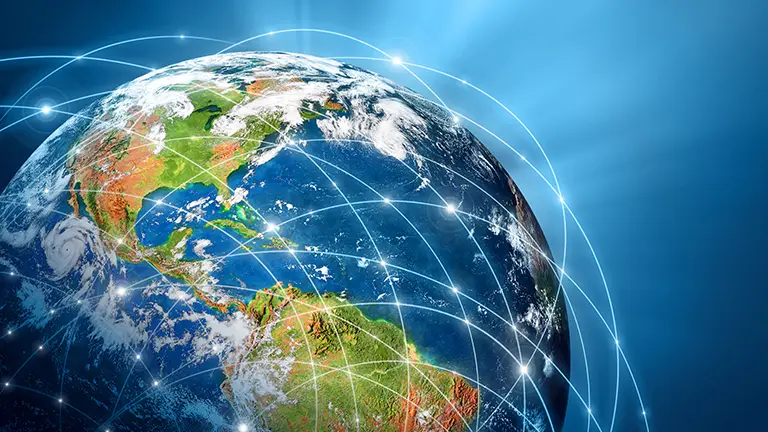
Globalization is one of the defining forces shaping the modern economy. At its core, it refers to the increasing integration of countries through the flow of goods, services, capital, information, and people across borders. While the concept has existed in various forms for centuries, it has accelerated dramatically in recent decades due to technological advances, policy changes, and the expansion of global markets.
Understanding Globalization in Economics
In economic terms, globalization describes how national economies become interconnected and interdependent. This happens through international trade, foreign direct investment, financial markets, and the spread of technology and ideas. Instead of operating in isolation, countries participate in a global system where economic activities in one region can influence outcomes elsewhere.
For example, a company based in one country may manufacture its products in another, source raw materials from a third, and sell to customers worldwide. This interconnected system allows resources to be used more efficiently and opens up new opportunities for businesses and consumers alike.
Key Drivers of Globalization
Several factors have contributed to the growth of globalization:
1. Technological Advancements
Improvements in transportation and communication have made it easier and cheaper to conduct business internationally. The rise of the internet, digital platforms, and advanced logistics systems has enabled real-time coordination across continents.
2. Trade Liberalization
Many countries have reduced tariffs, quotas, and other trade barriers. Agreements between nations encourage the free flow of goods and services, making it easier for businesses to expand globally.
3. Multinational Corporations (MNCs)
Large companies operate in multiple countries, investing in foreign markets and creating global supply chains. These corporations play a central role in spreading capital, technology, and management practices.
4. Financial Integration
Global financial markets allow capital to move quickly across borders. Investors can fund projects in different countries, increasing access to financing and fostering economic growth.
Types of Globalization
Globalization is not limited to trade alone; it encompasses several dimensions:
-
Economic globalization: The integration of national markets through trade, investment, and capital flows.
-
Cultural globalization: The exchange of ideas, values, and cultural practices across countries.
-
Political globalization: Cooperation between governments and international organizations on global issues.
-
Technological globalization: The spread of innovations and technological knowledge worldwide.
Among these, economic globalization is the most directly linked to markets, production, and consumption.
Benefits of Globalization
Globalization has brought numerous advantages to economies around the world:
1. Increased Economic Growth
By opening markets and encouraging competition, globalization can lead to higher productivity and economic expansion. Countries can specialize in producing goods where they have a comparative advantage.
2. Greater Consumer Choice
Consumers benefit from access to a wider variety of goods and services, often at lower prices due to increased competition and efficiency.
3. Job Creation and Investment
Foreign investment can create jobs, improve infrastructure, and stimulate local economies, especially in developing countries.
4. Technology Transfer
Globalization facilitates the sharing of knowledge and innovation. Developing countries can adopt advanced technologies from more developed economies, accelerating their growth.
5. Improved International Relations
Economic interdependence can encourage cooperation between countries, reducing the likelihood of conflicts.
Challenges and Criticisms
Despite its benefits, globalization also presents significant challenges:
1. Income Inequality
While globalization can increase overall wealth, the benefits are not always evenly distributed. Some workers and industries may lose out due to competition from cheaper imports.
2. Job Displacement
Industries that cannot compete globally may decline, leading to unemployment in certain sectors. Workers may need to retrain or relocate to find new opportunities.
3. Environmental Concerns
Increased production and transportation can lead to higher pollution and resource depletion. Some countries may lower environmental standards to attract investment.
4. Cultural Homogenization
Globalization can lead to the dominance of certain cultures, potentially eroding local traditions and identities.
5. Financial Instability
Global financial integration means that economic crises can spread quickly from one country to another, as seen in past financial crises.
The Role of Governments and Institutions
Governments play a crucial role in shaping how globalization affects their economies. They can implement policies to maximize benefits and minimize risks, such as investing in education, supporting displaced workers, and enforcing environmental regulations.
International organizations also influence globalization by setting rules and facilitating cooperation between countries. These institutions help manage trade disputes, promote development, and ensure stability in the global economy.
Globalization in the Modern Era
Today, globalization continues to evolve. Digital globalization, driven by data flows and online platforms, is becoming increasingly important. E-commerce, remote work, and digital services allow even small businesses to participate in global markets.
However, globalization has also faced pushback in recent years. Some countries have adopted protectionist policies, aiming to protect domestic industries and jobs. Events such as pandemics and geopolitical tensions have highlighted vulnerabilities in global supply chains, leading to discussions about reshoring and diversification.
Conclusion
Globalization in economics is a complex and multifaceted process that has reshaped how countries interact and grow. It has brought significant benefits, including economic growth, innovation, and increased access to goods and services. At the same time, it has created challenges such as inequality, environmental concerns, and economic vulnerability.
Understanding globalization is essential for navigating the modern economic landscape. As the world continues to change, the key challenge for policymakers, businesses, and individuals is to ensure that globalization works in a way that is inclusive, sustainable, and beneficial for all.
- Arts
- Business
- Computers
- Jeux
- Health
- Domicile
- Kids and Teens
- Argent
- News
- Personal Development
- Recreation
- Regional
- Reference
- Science
- Shopping
- Society
- Sports
- Бизнес
- Деньги
- Дом
- Досуг
- Здоровье
- Игры
- Искусство
- Источники информации
- Компьютеры
- Личное развитие
- Наука
- Новости и СМИ
- Общество
- Покупки
- Спорт
- Страны и регионы
- World

 English
 Russian
 Spanish
 Portuguese
 Deutsch
 Turkish
 Dutch
Dutch
 Italiano
 Arabic
 Romaian
 Portuguese (Brazil)
 Greek
Greek