
What Is Capitalism vs. Socialism?
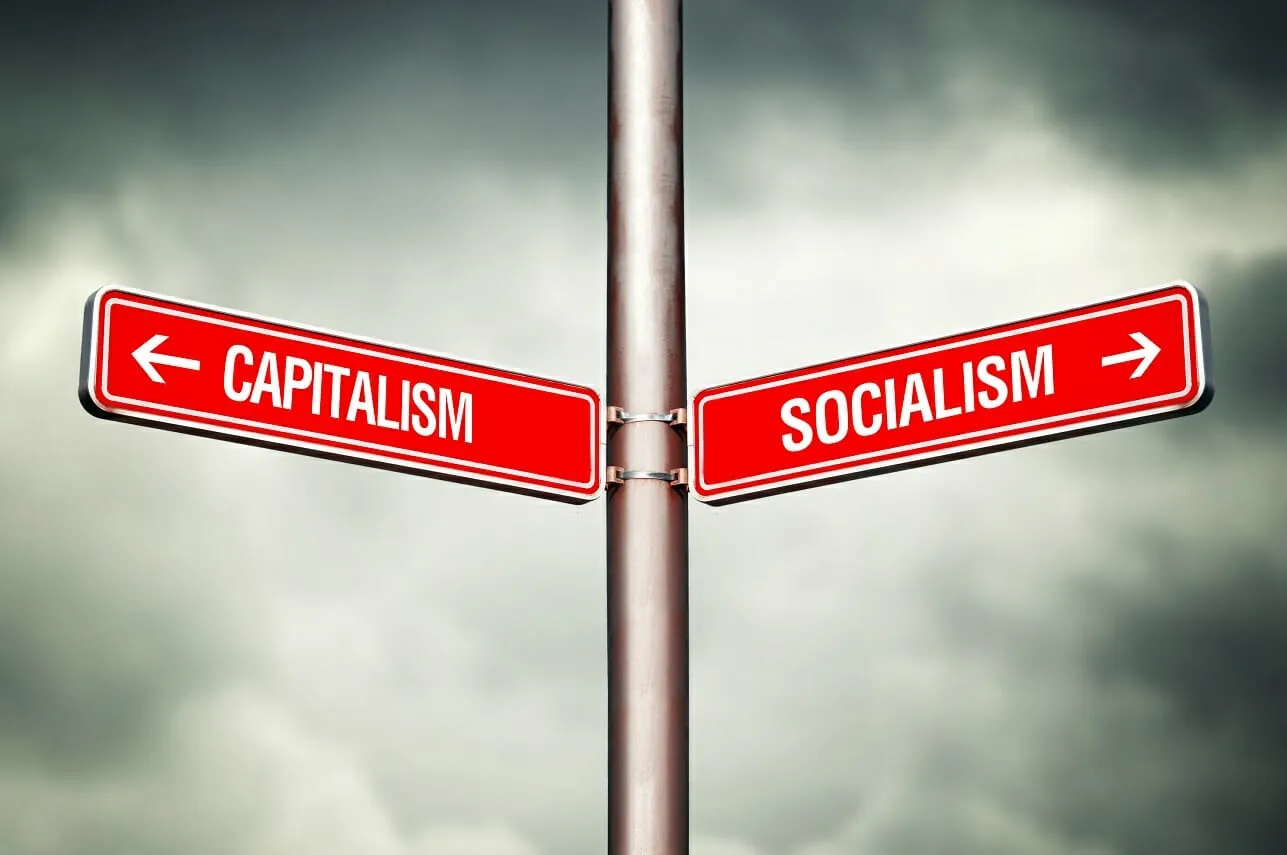
What Is Capitalism vs. Socialism?
The debate between capitalism and socialism has shaped economies, governments, and societies for centuries. These two systems represent different ways of organizing production, distributing resources, and defining the role of the state in economic life. While they are often presented as opposites, the reality is more nuanced: most modern economies blend elements of both. Understanding the core principles behind each system helps clarify how they influence everyday life.
What Is Capitalism?
Capitalism is an economic system based on private ownership of the means of production—such as factories, land, and businesses—and the pursuit of profit. In a capitalist economy, individuals and companies make decisions about what to produce, how to produce it, and at what price to sell it.
The intellectual roots of capitalism are often associated with Adam Smith, whose 1776 book The Wealth of Nations argued that individuals acting in their own self-interest could unintentionally benefit society through what he called the “invisible hand.”
Key Features of Capitalism
1. Private Property
Individuals and businesses own resources and assets. This ownership gives them control over how those resources are used.
2. Free Markets
Prices and production levels are determined by supply and demand rather than government planning.
3. Profit Motive
The main incentive for economic activity is profit. Businesses aim to maximize returns for owners and shareholders.
4. Competition
Firms compete with one another, which can lead to innovation, efficiency, and lower prices for consumers.
5. Limited Government Role
In pure capitalism, the government plays a minimal role, mainly enforcing contracts and protecting property rights.
Advantages of Capitalism
-
Efficiency and Innovation: Competition encourages companies to improve products and reduce costs.
-
Consumer Choice: People can choose from a wide variety of goods and services.
-
Economic Growth: Profit incentives often drive investment and expansion.
Disadvantages of Capitalism
-
Income Inequality: Wealth can become concentrated among a small group of people.
-
Market Failures: Issues like pollution or monopolies may arise without regulation.
-
Economic Instability: Boom-and-bust cycles can lead to recessions and unemployment.
What Is Socialism?
Socialism is an economic system where the means of production are owned or controlled collectively, often by the state. Instead of prioritizing profit, socialism aims to distribute resources more equally and ensure that basic needs are met for all members of society.
The ideas behind socialism are closely linked to Karl Marx and Friedrich Engels, who criticized capitalism for exploiting workers and creating inequality.
Key Features of Socialism
1. Collective or Public Ownership
Factories, land, and resources are owned by the state or the community rather than individuals.
2. Central Planning
Economic decisions—such as what to produce and how much—are often made by the government.
3. Focus on Equality
Socialism emphasizes reducing income inequality and providing equal access to resources.
4. Social Welfare
Public services like healthcare, education, and housing are often provided or heavily subsidized.
5. Reduced Role of Markets
Markets may still exist, but they are usually regulated or guided by government policies.
Advantages of Socialism
-
Reduced Inequality: Wealth and income are distributed more evenly.
-
Basic Needs Guaranteed: Access to healthcare, education, and housing is prioritized.
-
Economic Stability: Central planning can reduce the risk of economic crises.
Disadvantages of Socialism
-
Reduced Incentives: Without profit motivation, innovation and productivity may decline.
-
Inefficiency: Central planning can lead to waste and misallocation of resources.
-
Limited Consumer Choice: Fewer options may be available compared to market-driven systems.
Key Differences Between Capitalism and Socialism
Although both systems aim to organize economic activity, they differ fundamentally in several areas:
Ownership
-
Capitalism: Private individuals and businesses own resources.
-
Socialism: The state or community owns resources.
Decision-Making
-
Capitalism: Decisions are decentralized and driven by markets.
-
Socialism: Decisions are centralized and often made by the government.
Income Distribution
-
Capitalism: Income is based on market outcomes, leading to inequality.
-
Socialism: Income is distributed more evenly.
Role of Government
-
Capitalism: Limited government involvement.
-
Socialism: Strong government role in managing the economy.
Motivation
-
Capitalism: Profit and competition drive activity.
-
Socialism: Social welfare and equality are primary goals.
Mixed Economies: The Real-World Approach
In practice, very few countries follow pure capitalism or pure socialism. Most operate under mixed economies, combining elements of both systems.
For example:
-
Countries like the United States lean toward capitalism but still have government programs such as Social Security and public education.
-
Nations like Sweden and Norway incorporate strong social welfare systems while maintaining market-based economies.
This blending allows governments to harness the efficiency of markets while addressing inequality and providing public goods.
Common Misconceptions
1. Capitalism Means No Government
Even capitalist economies rely on laws, regulations, and institutions to function properly.
2. Socialism Means No Private Property
Some forms of socialism allow private ownership but regulate key industries.
3. One System Is Always Better
Each system has strengths and weaknesses. The effectiveness depends on how policies are implemented.
Modern Debates
Today, the capitalism vs. socialism debate often centers on issues like:
-
Healthcare: Should it be a public service or a private industry?
-
Education: How much should governments subsidize or control it?
-
Income Inequality: Should wealth be redistributed through taxes?
-
Climate Change: Should markets or governments lead environmental efforts?
These debates reflect broader questions about fairness, efficiency, and the role of government in society.
Conclusion
Capitalism and socialism represent two different visions of how an economy should function. Capitalism emphasizes freedom, competition, and profit, while socialism focuses on equality, collective ownership, and social welfare. Neither system is perfect, and most countries adopt a mix of both to balance efficiency with fairness.
Understanding these systems is essential for making sense of political debates, economic policies, and global trends. As societies evolve, the balance between capitalism and socialism continues to shift, shaped by cultural values, historical experiences, and economic challenges.
- Arts
- Business
- Computers
- Games
- Health
- Home
- Kids and Teens
- Money
- News
- Personal Development
- Recreation
- Regional
- Reference
- Science
- Shopping
- Society
- Sports
- Бизнес
- Деньги
- Дом
- Досуг
- Здоровье
- Игры
- Искусство
- Источники информации
- Компьютеры
- Личное развитие
- Наука
- Новости и СМИ
- Общество
- Покупки
- Спорт
- Страны и регионы
- World

 Russian
 French
 Spanish
 Portuguese
 Deutsch
 Turkish
 Dutch
Dutch
 Italiano
 Arabic
 Romaian
 Portuguese (Brazil)
 Greek
Greek