
What Is the Future of Office Automation?
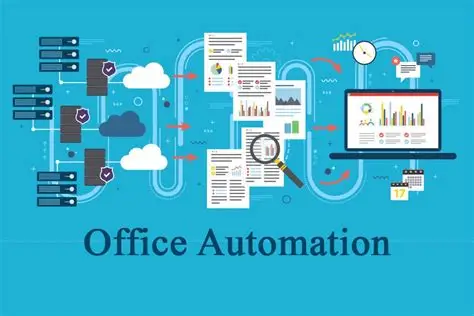
The office has never been a static environment. It evolves quietly, shaped by tools, expectations, and the rhythm of work itself. Automation is simply the latest—and perhaps most transformative—chapter in that evolution.
To ask about the future of office automation is not just to ask what tools will exist, but how work will feel, how decisions will be made, and how people will interact with the systems around them. The future is not a distant concept—it is already forming in the subtle shifts happening today.
From Task Automation to Intelligent Workflows
Early automation focused on repetitive tasks: data entry, scheduling, document routing. These were predictable processes with clear rules.
The future moves beyond tasks into workflows that are adaptive and context-aware. Systems will not just execute instructions—they will interpret situations.
For example, instead of simply forwarding an email, an automated system might prioritize it based on urgency, suggest a response, and schedule a follow-up. The process becomes less about execution and more about assistance.
Automation begins to resemble collaboration.
The Rise of Cognitive Systems
Automation is becoming increasingly tied to artificial intelligence.
Cognitive systems can analyze patterns, learn from data, and improve over time. This shifts automation from static programming to dynamic behavior.
These systems can:
- Recognize trends in communication
- Predict workload fluctuations
- Identify inefficiencies before they escalate
The office becomes more responsive. Instead of reacting to problems, it anticipates them.
Human-Centered Automation
Despite technological advancement, the future of office automation is not about removing people—it is about supporting them.
Human-centered design will play a central role. Systems will be built to enhance clarity, reduce friction, and align with how people naturally work.
This means:
- Interfaces that are intuitive
- Processes that are transparent
- Tools that adapt to individual preferences
Automation will fade into the background, becoming less visible but more impactful.
Seamless Integration Across Platforms
Offices today rely on multiple tools—communication platforms, project management systems, document storage, and more.
The future lies in integration.
Automation will connect these systems seamlessly, allowing information to flow without interruption. A change in one platform will reflect across others instantly.
For instance, updating a project status could automatically notify stakeholders, adjust timelines, and update reports—all without manual input.
The boundaries between tools begin to dissolve.
The Expansion of Remote and Hybrid Work
Automation will continue to support distributed teams.
In remote and hybrid environments, coordination becomes more complex. Automation helps maintain consistency, ensuring that processes run smoothly regardless of location.
It can:
- Schedule meetings across time zones
- Track progress without constant check-ins
- Maintain documentation automatically
This allows teams to focus on collaboration rather than coordination.
Personalized Work Experiences
The future office will not be one-size-fits-all.
Automation will enable personalized workflows. Systems will learn how individuals work best and adjust accordingly.
Some employees may prefer structured schedules, while others thrive in flexible environments. Automation can accommodate both, tailoring reminders, task organization, and communication styles.
This personalization enhances productivity while respecting individuality.
Data-Driven Decision Support
Data will remain at the heart of automation.
Future systems will not just collect data—they will interpret it in meaningful ways. Dashboards will become more than static displays; they will offer insights, recommendations, and even forecasts.
Decision-makers will have access to:
- Real-time analytics
- Predictive modeling
- Scenario simulations
This transforms decision-making from reactive to proactive.
Ethical and Transparent Automation
As automation becomes more influential, questions of ethics and transparency grow more important.
Organizations will need to ensure that automated systems operate fairly and responsibly. This includes:
- Avoiding bias in decision-making
- Providing visibility into how decisions are made
- Maintaining accountability
Transparency builds trust—not only within organizations but also with clients and stakeholders.
Low-Code and No-Code Development
The ability to create automation will become more accessible.
Low-code and no-code platforms allow non-technical users to design workflows and automate tasks. This democratizes automation, enabling more people to contribute to process improvement.
Instead of relying solely on specialized teams, organizations can empower employees to shape their own tools.
This shift encourages innovation at every level.
Resilience and Adaptability
Future automation will prioritize resilience.
Systems will be designed to handle disruptions gracefully. If one component fails, others will adapt. Processes will continue, even under changing conditions.
Adaptability will also be key. As business needs evolve, automation must evolve معها—not remain fixed.
Flexible systems ensure long-term relevance.
The Changing Role of Office Professionals
Automation will reshape roles, but it will not eliminate the need for human expertise.
Routine tasks will decrease, allowing professionals to focus on:
- Strategic planning
- Creative problem-solving
- Relationship building
The nature of work becomes more thoughtful and less mechanical.
This shift requires new skills—adaptability, critical thinking, and a willingness to engage with technology.
Challenges That Will Shape the Future
The path forward is not without obstacles.
Organizations will need to address:
- Data security concerns
- Integration complexities
- Employee training and adaptation
- Balancing automation with human oversight
These challenges will influence how quickly and effectively automation evolves.
The future is shaped not just by possibility, but by how these challenges are managed.
Automation as a Quiet Partner
In the future, automation will be less noticeable.
It will not demand attention—it will simply function. Processes will flow naturally, supported by systems that operate in the background.
This quiet presence is a sign of maturity. When automation works well, it becomes part of the environment rather than a separate feature.
A Shift in Perspective
Perhaps the most important change is how automation is perceived.
It will no longer be seen as a tool for efficiency alone. It will be recognized as a framework for how work is structured.
This shift encourages organizations to think more holistically—considering not just what can be automated, but how automation shapes experience, culture, and outcomes.
Final Thoughts
The future of office automation is not defined by machines replacing people. It is defined by systems supporting people in more meaningful ways.
It is a future where work is less about repetition and more about intention. Where processes are guided by insight rather than habit. And where technology adapts to human needs, not the other way around.
Automation will continue to evolve, but its purpose remains constant: to make work more thoughtful, more efficient, and ultimately more human.
- Arts
- Business
- Computers
- Jogos
- Health
- Início
- Kids and Teens
- Money
- News
- Personal Development
- Recreation
- Regional
- Reference
- Science
- Shopping
- Society
- Sports
- Бизнес
- Деньги
- Дом
- Досуг
- Здоровье
- Игры
- Искусство
- Источники информации
- Компьютеры
- Личное развитие
- Наука
- Новости и СМИ
- Общество
- Покупки
- Спорт
- Страны и регионы
- World

 English
 Russian
 French
 Spanish
 Deutsch
 Turkish
 Dutch
Dutch
 Italiano
 Arabic
 Romaian
 Portuguese (Brazil)
 Greek
Greek