
How to improve office productivity?
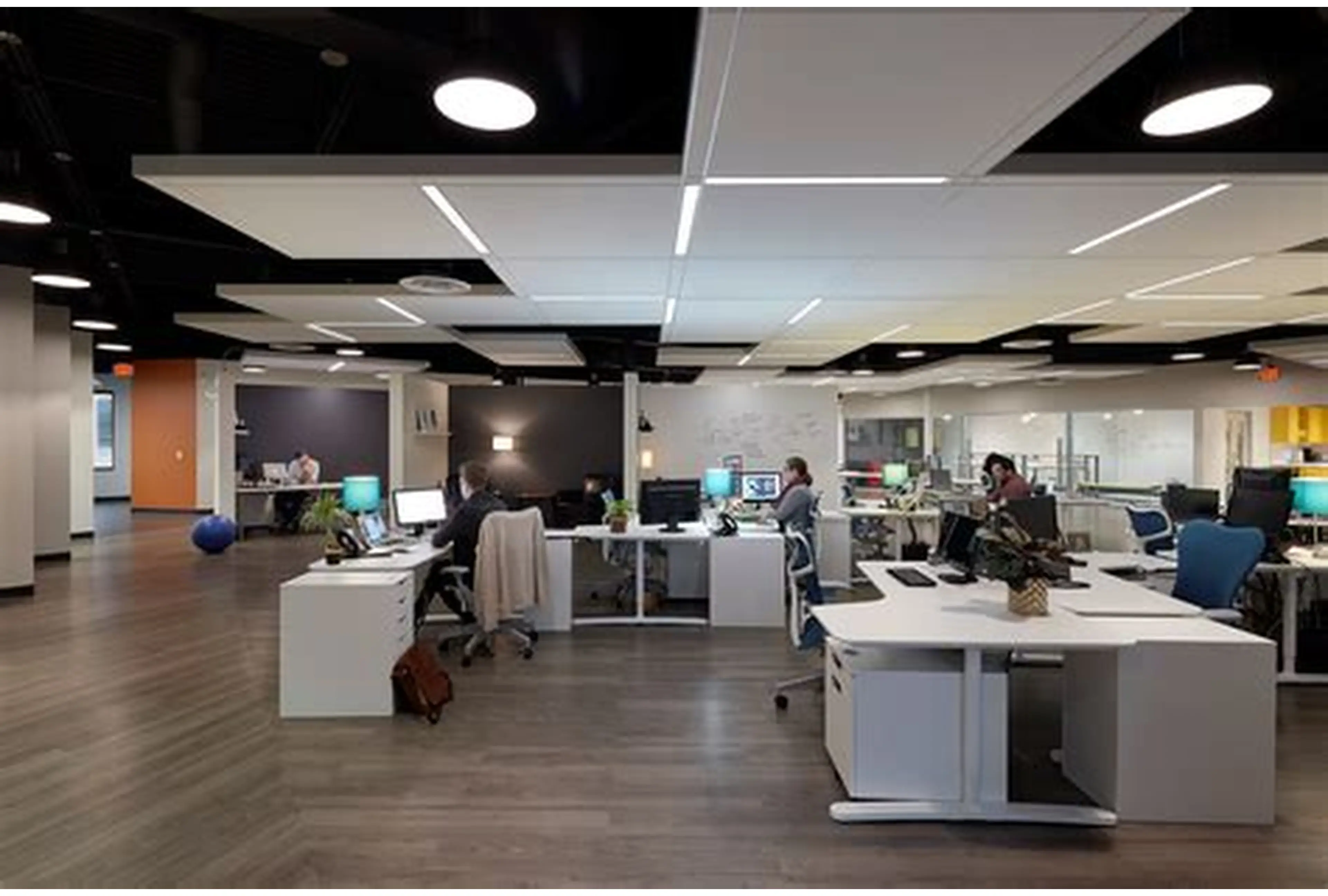
There was a week—just one, though it felt longer—when the office hummed with activity.
Calendars were full. Conversations overlapped. Notifications arrived faster than they could be processed. If you measured effort, it was abundant.
If you measured output, it was… unclear.
Projects advanced, but slowly. Decisions stalled in meetings that seemed productive while they were happening and strangely inconclusive afterward. Tasks multiplied, but completion didn’t keep pace.
It wasn’t dysfunction. It was something more subtle.
The system was active. It just wasn’t effective.
That distinction sits at the center of productivity: activity is visible. Effectiveness is not.
Improving office productivity requires understanding the gap between the two—and then closing it, deliberately.
Productivity Is a Structural Outcome
There’s a tendency to approach productivity as a behavioral issue.
Encourage focus. Increase accountability. Motivate the team.
These interventions have value. But they often miss the underlying cause.
Productivity is not primarily driven by effort. It is shaped by structure:
- How work is defined
- How information flows
- How time is allocated
- How decisions are made
When these are aligned, productivity rises naturally. When they are not, even high effort produces limited results.
Clarity: The Starting Point That’s Often Skipped
Define What Actually Needs to Be Done
Productivity falters when work is vaguely defined.
“Move this forward.”
“Make progress on that.”
These instructions sound reasonable. They are not actionable.
Effective environments translate work into clarity:
- Specific tasks
- Defined outcomes
- Clear ownership
Without this, effort disperses.
Align Priorities Relentlessly
Not everything can be urgent.
When priorities compete:
- Attention fragments
- Work slows
- Decisions are delayed
Productive offices establish:
- What matters most
- What can wait
- What should not be done at all
This is less about adding structure and more about removing ambiguity.
Time: The Resource Most Often Mismanaged
Protect Focus as a System, Not an Intention
Focus is frequently treated as an individual responsibility.
But the environment determines whether focus is possible.
Interruptions—meetings, messages, unscheduled requests—erode concentration.
Productive systems:
- Group meetings into defined blocks
- Limit unnecessary interruptions
- Preserve uninterrupted work periods
Time, when fragmented, loses its value.
Meetings: Necessary, but Expensive
Meetings consume time collectively.
A one-hour meeting with five people is not one hour—it is five.
Improving productivity requires examining:
- Whether meetings are necessary
- Whether the right people are attending
- Whether outcomes are defined
Without this, meetings become placeholders for decisions that never quite happen.
Communication: Precision Over Volume
Reduce Noise to Increase Signal
Communication tools make interaction easy.
Too easy.
Constant messaging:
- Interrupts workflow
- Creates cognitive overload
- Dilutes important information
Productive environments:
- Define communication channels clearly
- Use asynchronous communication where possible
- Reserve real-time discussion for necessary moments
Less communication, when precise, produces better results.
Document Decisions
Conversations are transient. Decisions should not be.
Failing to document:
- Creates repeated discussions
- Leads to misalignment
- Slows execution
Recording decisions:
- Clarifies direction
- Reduces redundancy
- Increases accountability
Systems: The Invisible Drivers
Simplify Workflows
Complex processes:
- Increase time per task
- Introduce errors
- Reduce consistency
Productivity improves when workflows are:
- Streamlined
- Logical
- Easy to follow
This often involves removing steps, not adding them.
Use Tools Intentionally
Software such as:
- Asana
- Slack
- Microsoft Excel
can enhance productivity—but only when aligned with workflow.
Misaligned tools:
- Create duplication
- Increase complexity
- Require additional maintenance
The goal is not more tools. It is better alignment.
A Lesson Learned: Productivity Is Often Misdiagnosed
There was a period when I believed a team’s declining productivity was due to lack of focus.
The response was predictable:
- More frequent check-ins
- Increased oversight
- Additional reporting
The result was equally predictable:
- More activity
- Less progress
The issue wasn’t effort. It was structure.
Workflows had become unclear. Priorities shifted without communication. Tasks were assigned without defined outcomes.
Once those were corrected, productivity improved—not through pressure, but through clarity.
That experience changed how I approach the problem.
When output declines, the cause is rarely a lack of effort. It is usually a misalignment in how work is organized.
Delegation: The Multiplier of Output
Assign Outcomes, Not Instructions
Delegation often fails because it is too prescriptive.
Telling someone exactly how to complete a task:
- Limits initiative
- Slows execution
- Creates dependency
Effective delegation:
- Defines the outcome
- Establishes constraints
- Allows autonomy in execution
This increases both speed and ownership.
Follow Up With Structure
Delegation without follow-up leads to uncertainty.
But follow-up should be:
- Scheduled
- Focused on progress
- Oriented toward outcomes
This maintains accountability without unnecessary oversight.
Environment: The Silent Influence
Reduce Friction Everywhere
Small inefficiencies accumulate:
- Searching for information
- Navigating unclear systems
- Repeating avoidable tasks
Each instance minor. Together, significant.
Productivity improves when friction is reduced:
- Centralized information
- Clear processes
- Accessible tools
Maintain Stability Where Possible
Frequent changes—new processes, shifting priorities—create instability.
This leads to:
- Confusion
- Reduced confidence
- Slower execution
While adaptation is necessary, constant change is counterproductive.
A Comparative Breakdown: Low vs. High Productivity Environments
| Factor | Low Productivity Environment | High Productivity Environment | Impact on Work |
|---|---|---|---|
| Task Clarity | Vague, loosely defined | Specific, outcome-oriented | Faster execution |
| Prioritization | Competing, unclear | Clearly ranked | Focused effort |
| Communication | Frequent, unfocused | Structured, purposeful | Reduced noise |
| Workflows | Complex, inconsistent | Streamlined, standardized | Fewer delays |
| Tool Usage | Fragmented, redundant | Aligned with processes | Efficient operations |
| Time Management | Fragmented schedules | Protected focus periods | Sustained productivity |
The difference is not effort. It is alignment.
Measurement: Knowing What to Track
Avoid Activity-Based Metrics
Tracking:
- Hours worked
- Tasks completed
provides data, but not insight.
More meaningful indicators:
- Quality of output
- Timeliness relative to expectations
- Ability to complete work independently
These reflect effectiveness, not just activity.
Use Data to Adjust, Not Just Observe
Metrics should inform decisions:
- Adjust workloads
- Refine processes
- Reallocate resources
Without action, measurement becomes passive.
The Subtle Skill: Restraint
One of the least discussed aspects of improving productivity is knowing when not to act.
Not every issue requires intervention.
Not every delay requires escalation.
Not every process needs optimization.
Restraint allows:
- Systems to stabilize
- Teams to adapt
- Patterns to emerge
Intervening too quickly can disrupt more than it resolves.
Culture: The Layer That Sustains Productivity
Consistency Builds Trust
Productivity depends on predictability:
- Clear expectations
- Fair treatment
- Reliable processes
Without consistency, even well-designed systems lose effectiveness.
Reinforce Productive Behavior
What gets acknowledged gets repeated.
Recognizing:
- Efficient problem-solving
- Clear communication
- Proactive work
reinforces the behaviors that drive productivity.
A Final Reflection: Productivity Is What Remains
There is a natural inclination to improve productivity by adding:
- More tools
- More processes
- More oversight
But the most effective improvements often come from removal:
- Eliminating unnecessary steps
- Reducing redundant communication
- Clarifying expectations
What remains is not less work—but clearer work.
Which leads to a question worth asking:
If your office feels busy but not productive, is it because people need to do more—or because the system is making effective work unnecessarily difficult?
The answer is rarely found in effort.
It is found in structure.
- Arts
- Business
- Computers
- Juegos
- Health
- Home
- Kids and Teens
- Money
- News
- Personal Development
- Recreation
- Regional
- Reference
- Science
- Shopping
- Society
- Sports
- Бизнес
- Деньги
- Дом
- Досуг
- Здоровье
- Игры
- Искусство
- Источники информации
- Компьютеры
- Личное развитие
- Наука
- Новости и СМИ
- Общество
- Покупки
- Спорт
- Страны и регионы
- World

 English
 Russian
 French
 Portuguese
 Deutsch
 Turkish
 Dutch
Dutch
 Italiano
 Arabic
 Romaian
 Portuguese (Brazil)
 Greek
Greek