
How to Reduce Paper Usage?
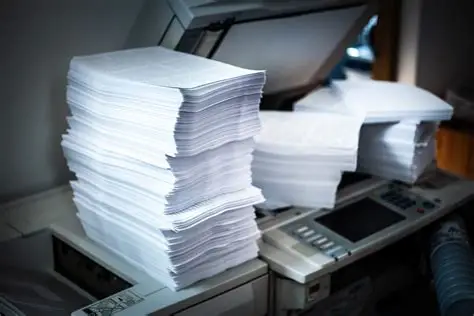
The printer wouldn’t stop humming.
Page after page slid into the output tray while nobody stood nearby to claim them. A forgotten presentation deck. Two duplicate invoices. Somebody’s meeting agenda abandoned halfway through printing because they realized the conference had moved to Zoom instead.
By noon, the recycling bin overflowed with documents nobody had actually needed.
That image stayed with me because it captured something strangely common in modern workplaces: people rarely print intentionally anymore. They print reflexively.
Not because paper is essential. Because habits are.
For decades, offices treated paper consumption as operational background noise. Necessary. Unavoidable. Barely worth questioning. Then costs rose, storage space tightened, hybrid work scattered employees across multiple locations, and suddenly organizations began noticing how much money quietly disappeared into paper, toner, filing systems, shredding services, and physical storage infrastructure.
The numbers were never small.
They were simply invisible.
Reducing paper usage sounds straightforward until you try doing it seriously. That’s when you discover paper isn’t just a material. It’s emotional infrastructure. People print because paper feels safer, easier to review, harder to lose, more official, more trustworthy.
Sometimes they’re right.
Which means successful paper reduction requires more than forcing digital tools into every workflow. It requires understanding why employees cling to paper in the first place.
That distinction changes everything.
Most Offices Don’t Actually Need Less Paper
They need fewer unnecessary prints.
There’s a difference.
Some physical documents still make perfect sense:
- Legal contracts
- Compliance records
- Annotated design drafts
- Long-form proofreading
- Emergency backup materials
The problem isn’t strategic printing.
The problem is frictionless overprinting.
Employees print emails they never reread. Meeting notes they could access digitally. Reports nobody requested physically. Drafts destined for trash bins within hours.
One operations manager told me her office reduced paper consumption nearly 40% simply by analyzing printer logs and discovering employees routinely printed duplicate versions of the same documents “just in case.”
That phrase appears constantly around paper usage.
“Just in case.”
Three words responsible for astonishing amounts of waste.
Why People Still Print Things They Don’t Need
This part matters more than technology vendors usually admit.
Paper survives because it solves psychological problems digital systems sometimes fail to address.
Printed documents feel:
- Permanent
- Easier to annotate
- Less mentally fragmented
- Safer during presentations
- Simpler to review collaboratively
I learned this personally while editing long-form content years ago. I tried moving entirely digital because it seemed more efficient. Instead, I missed obvious structural problems repeatedly until I printed drafts physically again.
Something about paper slowed my thinking productively.
That experience changed how I approach paper reduction entirely.
The goal is not eliminating every printed page.
It’s identifying where paper genuinely improves workflow versus where it survives through inertia.
The Hidden Costs of Excessive Paper Usage
Paper expenses stretch far beyond reams and printer ink.
Most businesses underestimate the full operational burden dramatically.
Here’s where the costs accumulate:
| Cost Area | Operational Impact | Financial Consequence |
|---|---|---|
| Printer Maintenance | Frequent repairs and downtime | Increased service expenses |
| Toner & Ink | High recurring costs | Budget inflation |
| Physical Storage | Filing cabinets and archive rooms | Reduced usable workspace |
| Employee Time | Searching and organizing documents | Productivity loss |
| Waste Disposal | Shredding and recycling services | Ongoing operational costs |
| Duplicate Printing | Unnecessary paper consumption | Supply waste |
| Security Risks | Misplaced printed documents | Compliance vulnerabilities |
Paper-based systems often appear inexpensive because the expenses scatter across departments invisibly.
One invoice for toner here.
A filing cabinet purchase there.
Storage fees somewhere else entirely.
Fragmentation hides inefficiency beautifully.
Default Printer Settings Quietly Shape Behavior
This sounds almost absurdly minor until you test it.
Most employees never change printer settings manually.
Which means default configurations influence paper consumption constantly.
Simple adjustments create measurable reductions:
- Double-sided printing by default
- Black-and-white printing for nonessential documents
- Reduced margins
- Draft-quality printing for internal materials
One company reduced monthly paper usage significantly without changing employee behavior at all. They simply changed default printer settings across the organization.
That’s the fascinating thing about operational systems:
small environmental changes often outperform motivational campaigns.
Humans usually follow the path requiring the least resistance.
Stop Printing for Meetings Nobody Remembers
Meetings generate astonishing amounts of paper waste.
Agendas.
Presentation decks.
Reference documents.
Handouts nobody reads after leaving the room.
Most of it exists briefly before becoming trash.
A better approach:
- Share documents digitally beforehand
- Use collaborative screens during presentations
- Print only materials requiring annotation
- Encourage note-taking through shared platforms
I once attended a strategy meeting where organizers proudly distributed beautifully printed 40-page presentation booklets.
Nobody opened them.
Every participant followed the presentation on laptops instead while the printed packets sat untouched beside coffee cups like decorative centerpieces.
The waste wasn’t malicious.
It was habitual.
Digital Signatures Eliminated More Paper Than Most Companies Realize
Contracts alone once generated mountains of paper:
- Printing
- Signing
- Scanning
- Filing
- Mailing
- Archiving
Now many organizations complete entire approval chains digitally within minutes.
The efficiency gain isn’t merely environmental.
It’s operational.
Digital workflows reduce:
- Administrative delays
- Filing errors
- Storage needs
- Version confusion
- Document retrieval time
But companies often fail to extend that mindset beyond legal documentation.
Paper reduction works best when organizations examine entire workflows instead of isolated tasks.
Employees Print More When Information Feels Disorganized
This surprised me when I first noticed it.
People print documents more frequently when digital systems feel chaotic.
If employees struggle to:
- Find files
- Access shared folders
- Trust version accuracy
- Navigate document systems
…they revert toward physical copies because paper feels easier to control individually.
Which means poor digital organization indirectly increases paper usage.
One company spent heavily promoting sustainability initiatives while employees continued printing excessively because their shared drive structure was practically unusable.
Folders nested inside folders inside unlabeled archives.
Finding documents digitally became harder than printing them.
The issue wasn’t employee resistance.
It was digital friction.
Hybrid Work Reduced Some Paper Usage — And Increased Other Types
Remote work eliminated certain paper-heavy workflows almost overnight:
- Printed meeting packets
- Shared office memos
- Physical scheduling boards
But hybrid environments also created new complications:
- Home-office printing
- Scattered reimbursement systems
- Untracked paper consumption
- Personal printer purchases
Paper didn’t disappear.
It decentralized.
And decentralized systems become harder to monitor operationally because visibility fractures across locations.
You can’t casually notice excessive printing habits when employees work from fifteen different zip codes.
The Supplies That Help Reduce Paper Consumption
Ironically, reducing paper usage often requires investing in different physical tools.
Notebooks may survive.
But some traditional supplies shrink dramatically when offices adopt:
- Tablets with stylus support
- Reusable whiteboards
- Shared digital displays
- Cloud storage systems
- Collaborative project management tools
The strongest offices rarely pursue total elimination.
They pursue selective replacement.
That distinction matters because absolutist approaches usually trigger employee resistance.
People cooperate more willingly with systems that preserve useful workflows while eliminating obvious waste.
Why “Paperless” Initiatives Often Fail
Because many organizations approach them performatively instead of operationally.
Leadership announces ambitious reduction goals.
Employees receive generic sustainability emails.
Nothing about actual workflows changes.
Then managers wonder why printing habits remain identical six months later.
Behavior shifts when systems shift.
Not when posters appear near printers.
I once worked with a company that reduced paper usage dramatically through one surprisingly effective policy:
employees needed to walk slightly farther to reach centralized printers.
That tiny inconvenience reduced impulse printing almost immediately.
Again:
friction shapes behavior.
Not inspirational messaging.
A Lesson I Learned From a Marked-Up Draft
Years ago, I insisted on editing everything digitally because it seemed cleaner and more efficient. Then an editor returned a heavily annotated printed manuscript covered in handwritten notes, arrows, margin comments, and brutal observations impossible to replicate quite the same way on-screen.
The revisions were exceptional.
Sharper. More intuitive. More human somehow.
That experience forced me to rethink simplistic assumptions about paper usage. Eliminating paper entirely wasn’t necessarily smarter. It was sometimes just ideologically cleaner.
Now I approach reduction differently.
Print intentionally.
Not automatically.
That nuance matters enormously.
Practical Ways to Reduce Paper Usage Immediately
If an office wants measurable improvement quickly, start operationally instead of symbolically.
1. Audit Printer Usage
Most organizations have no idea:
- Who prints most frequently
- Which departments consume most paper
- Which documents generate waste
Data changes conversations fast.
2. Centralize Printing Areas
Personal desktop printers encourage unconscious overprinting.
Shared printers increase awareness naturally.
3. Improve Digital Organization
Employees print less when digital systems feel reliable.
4. Change Default Printer Settings
Double-sided printing alone creates immediate reductions.
5. Eliminate Automatic Handouts
Print only when physical review genuinely improves outcomes.
6. Digitize Archival Systems
Storage costs decline dramatically when paper archives shrink.
7. Normalize Digital Collaboration
Shared editing platforms reduce duplicate drafts and unnecessary print cycles.
The Environmental Argument Matters — But Operational Efficiency Matters More
Many companies frame paper reduction primarily as environmental responsibility.
That’s reasonable.
But operational efficiency often motivates faster behavioral change internally.
Employees respond more consistently when organizations explain:
- Time savings
- Cost reduction
- Faster workflows
- Easier retrieval systems
- Reduced clutter
Efficiency creates practical momentum.
Sustainability becomes the secondary benefit reinforcing it.
The Real Problem Was Never Paper
Paper itself isn’t the enemy.
Mindless consumption is.
That distinction feels important because modern workplaces sometimes confuse reduction with progress automatically. But replacing useful physical workflows with frustrating digital alternatives doesn’t improve operations. It just relocates inefficiency into software.
The strongest offices understand something more balanced:
some tasks benefit from physical interaction.
Others absolutely do not.
Reducing paper usage successfully means recognizing the difference honestly instead of chasing performative minimalism.
The humming printer wasn’t really the issue.
The issue was the stack of pages nobody needed in the first place.
- Arts
- Business
- Computers
- Games
- Health
- Home
- Kids and Teens
- Money
- News
- Personal Development
- Recreation
- Regional
- Reference
- Science
- Shopping
- Society
- Sports
- Бизнес
- Деньги
- Дом
- Досуг
- Здоровье
- Игры
- Искусство
- Источники информации
- Компьютеры
- Личное развитие
- Наука
- Новости и СМИ
- Общество
- Покупки
- Спорт
- Страны и регионы
- World

 Russian
 French
 Spanish
 Portuguese
 Deutsch
 Turkish
 Dutch
Dutch
 Italiano
 Arabic
 Romaian
 Portuguese (Brazil)
 Greek
Greek