
What Is a Business Model?
There is a peculiar moment that happens in nearly every startup meeting. Someone walks to the whiteboard, writes revenue in large letters, circles it twice, and then proceeds to confuse the entire room.
Revenue is not the business model.
Neither is the product.
Nor the slogan, the logo, the viral social clip, or the founder’s caffeine-powered optimism.
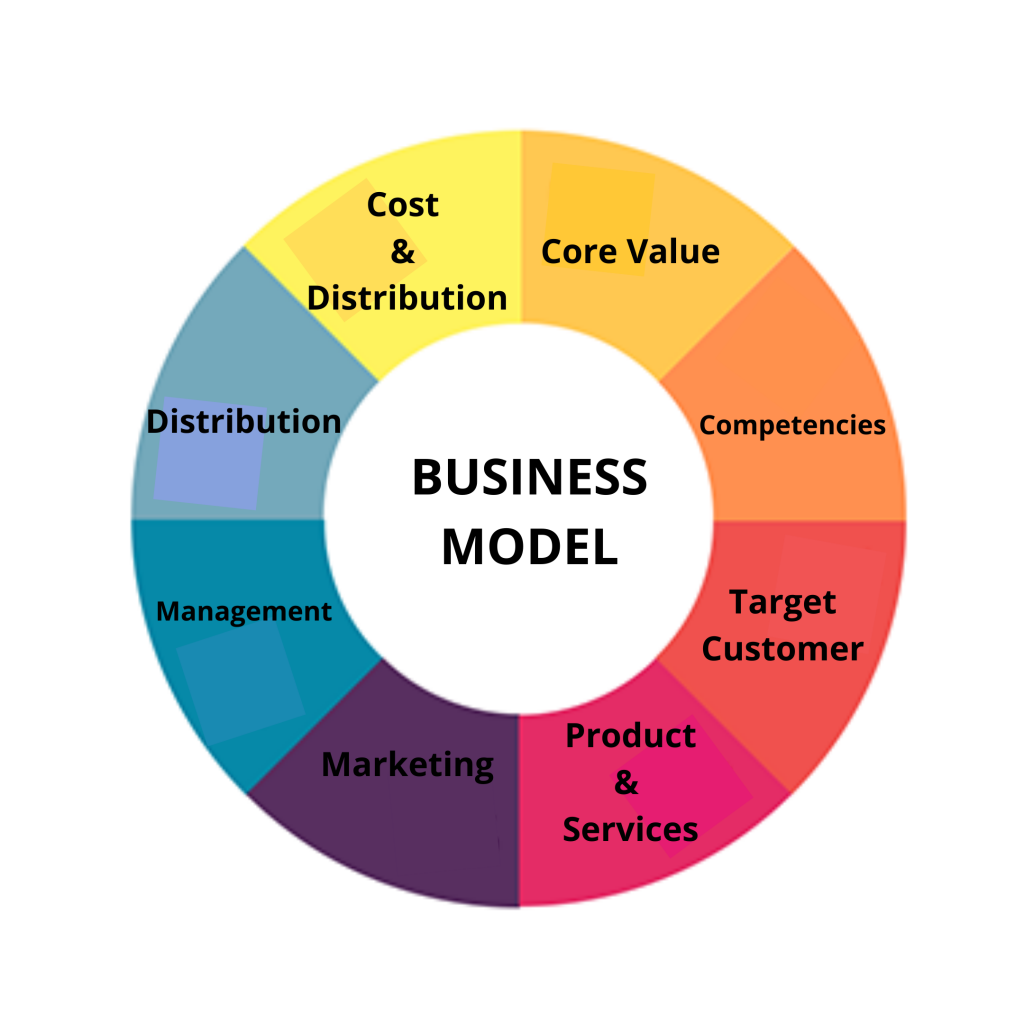
A business model is the architecture underneath the noise. It is the hidden mechanism that explains why a company exists, how it creates value, who pays for that value, and why the economics can survive contact with reality.
That sounds clinical. It isn’t.
A business model is closer to choreography than accounting. Every movement affects another. Price changes distribution. Distribution alters customer behavior. Customer behavior shifts operational cost. Operational cost changes margins. Margins determine whether the company can breathe long enough to matter.
The businesses that endure understand this instinctively. The ones that disappear usually mistake activity for structure.
I learned this the expensive way.
Years ago, I sat across from the founder of a specialty retail company whose products were exceptional—beautifully manufactured, intelligently branded, impossible to ignore. Sales surged during the first six months. Investors celebrated. Journalists praised the “vision.”
Then freight costs doubled.
One supplier failed.
Customer acquisition expenses climbed quietly in the background like rising groundwater.
Suddenly the business was selling more than ever while losing money on every transaction.
The founder stared at the spreadsheets and said something I have never forgotten:
“We built demand before we built a model.”
That sentence should be printed above every incubator entrance in America.
The Simplest Definition of a Business Model
A business model explains how a company makes money sustainably.
Simple enough. Yet simplicity disguises complexity.
At minimum, every business model answers five questions:
1. What value is being created?
Not features. Not buzzwords. Actual value.
Does the business save time? Reduce risk? Provide status? Deliver convenience? Eliminate frustration?
People rarely buy products for the reasons founders imagine. They buy outcomes.
2. Who is the customer?
This question sounds embarrassingly obvious until companies try to answer it honestly.
A social platform may claim users are the customer when advertisers actually finance the operation. A healthcare company may market toward patients while insurers control profitability. A software company may target employees even though procurement departments make purchasing decisions.
Confusing the user with the payer is a classic strategic error.
3. How is value delivered?
Physical stores? Subscription apps? Licensing agreements? Franchise networks? Direct-to-consumer shipping? Partnerships?
Distribution is not logistics alone. Distribution shapes perception.
A luxury watch sold in discount warehouses stops feeling luxurious rather quickly.
4. How does the company earn revenue?
One-time purchases. Recurring subscriptions. Advertising. Usage fees. Transaction commissions. Freemium upgrades.
The revenue mechanism matters because it dictates incentives.
When companies earn money from advertising, attention becomes currency. When they rely on subscriptions, retention matters more than spectacle.
Business models quietly influence behavior from the inside out.
5. What costs make the system work?
This is where fantasy usually collides with arithmetic.
A company may generate impressive sales and still collapse if acquisition costs, manufacturing expenses, labor requirements, or infrastructure obligations overwhelm margins.
Growth without structural efficiency can become an elegantly designed catastrophe.
Why Business Models Matter More Than Products
The marketplace is crowded with excellent products attached to weak business models.
That imbalance surprises people.
Consumers assume superior products win. Markets are less sentimental.
History offers countless examples:
- Technically brilliant newspapers undermined by collapsing advertising structures.
- Streaming platforms with millions of viewers but unstable economics.
- Restaurants adored by critics yet unable to survive rent increases.
- Software startups acquiring users rapidly while burning cash at impossible rates.
Meanwhile, mediocre products with disciplined models often thrive.
That feels unfair until you realize businesses are not judged by admiration alone. They are judged by durability.
A strong business model absorbs shocks.
It can survive supplier disruptions, changing consumer behavior, inflationary pressure, platform dependency, or competitive imitation. A weak one fractures under pressure because the underlying mechanics were never stable to begin with.
The Core Types of Business Models
Not every business reinvents the wheel. Most operate within recognizable structures that have evolved over decades.
Here is where things become useful.
Subscription Model
Customers pay recurring fees for ongoing access.
Examples include streaming services, SaaS platforms, fitness memberships, and digital publications.
Why it works:
- Predictable recurring revenue
- Stronger customer lifetime value
- Easier forecasting
Risks:
- Subscription fatigue
- High retention pressure
- Constant need to justify recurring payment
The subscription model transformed corporate planning because recurring income reduces uncertainty. Investors adore predictability almost as much as executives do.
Still, subscriptions fail when companies confuse convenience with captivity. Consumers cancel ruthlessly once value becomes vague.
Transaction-Based Model
The company earns money from individual sales.
Retailers, restaurants, airlines, and manufacturers commonly operate this way.
Advantages:
- Immediate revenue realization
- Straightforward customer relationship
- Easier pricing transparency
Weaknesses:
- Revenue volatility
- Seasonal fluctuations
- Constant sales pressure
This model demands operational discipline because every transaction must remain profitable on its own.
Freemium Model
Basic services are free while premium features require payment.
Common among apps, software platforms, and gaming companies.
Benefits:
- Rapid user growth
- Lower adoption friction
- Viral scalability potential
Problems:
- Expensive infrastructure costs
- Low conversion rates
- Difficulty balancing free versus paid value
Freemium models often look impressive externally while hiding economic instability internally.
User growth is intoxicating. Profitability is less forgiving.
Marketplace Model
The company connects buyers and sellers while taking a percentage of transactions.
Think ride-sharing platforms, resale marketplaces, or booking services.
Strengths:
- Network effects
- Scalable expansion
- Lower inventory requirements
Challenges:
- Chicken-and-egg growth problem
- Platform trust concerns
- Competitive commoditization
Marketplaces become powerful when liquidity develops. Until then, they resemble awkward parties where nobody arrives simultaneously.
Franchise Model
Independent operators pay to replicate an established brand system.
Fast-food chains perfected this structure.
Advantages:
- Rapid geographic expansion
- Lower corporate operating costs
- Shared risk distribution
Drawbacks:
- Quality control complexity
- Reputation vulnerability
- Operational inconsistency
Franchising is ultimately a model of replication discipline. Systems matter more than inspiration.
Comparison Table: Major Business Models
| Business Model | Revenue Source | Key Advantage | Primary Risk | Example Industries |
|---|---|---|---|---|
| Subscription | Recurring payments | Predictable income | Customer churn | Streaming, SaaS |
| Transaction-Based | Individual sales | Simplicity | Revenue volatility | Retail, hospitality |
| Freemium | Premium upgrades | Fast user growth | Weak monetization | Apps, gaming |
| Marketplace | Transaction commissions | Network effects | Trust and liquidity issues | E-commerce platforms |
| Franchise | Licensing and fees | Scalable expansion | Brand inconsistency | Fast food, fitness |
| Advertising | Ad placements | Free consumer access | Attention dependency | Media, social platforms |
| Licensing | Intellectual property fees | Low operational burden | Dependency on brand value | Entertainment, technology |
The Hidden Ingredient: Incentive Alignment
This is the part executives discuss quietly after presentations end.
Every business model creates behavioral incentives.
Sometimes those incentives become dangerous.
If social platforms monetize attention, outrage may outperform accuracy. If media companies rely heavily on clicks, sensationalism can overpower nuance. If delivery apps prioritize speed aggressively, labor strain increases downstream.
Business models are moral structures as much as financial ones.
That observation makes some leaders uncomfortable because it shifts responsibility away from abstract “market forces” and back toward deliberate design choices.
Yet incentive architecture explains corporate behavior better than mission statements ever will.
What Makes a Business Model Sustainable?
Not growth alone.
Not popularity.
Not even profitability in isolation.
Sustainability emerges when several forces reinforce one another simultaneously:
Strong Margins
Healthy margins create resilience during downturns.
Thin-margin businesses can survive during stability but become fragile under stress.
Customer Retention
Acquiring customers is expensive. Retaining them is strategic oxygen.
Companies obsessed exclusively with acquisition often behave like landlords constantly rebuilding houses instead of maintaining neighborhoods.
Scalable Operations
Can the business grow without costs increasing proportionally?
This distinction separates scalable companies from operational treadmills.
Defensible Positioning
Can competitors easily replicate the model?
If imitation requires little effort, margins deteriorate quickly.
Adaptability
Markets evolve. Consumer behavior changes. Technology shifts expectations.
Rigid business models eventually become historical artifacts.
The Dangerous Seduction of “Disruption”
Corporate language frequently romanticizes disruption while ignoring survivability.
That imbalance produces strange outcomes.
Founders sometimes pursue growth models that depend indefinitely on investor funding while postponing profitability into some abstract future quarter nobody can quite identify.
For a while, this strategy can appear dazzling.
Media coverage expands.
Valuations climb.
Conference invitations multiply.
Then financial conditions tighten.
Suddenly investors begin asking impolite questions involving cash flow.
A business model should not require permanent optimism to remain functional.
That distinction matters enormously.
Business Models Are Stories Backed by Math
This may be the clearest way to understand the concept.
A business model is partly narrative and partly arithmetic.
The narrative explains why customers care.
The arithmetic determines whether the company survives.
One without the other creates imbalance.
Compelling storytelling without financial structure becomes performance art. Strong economics without customer resonance produces sterile irrelevance.
The strongest companies integrate both seamlessly.
Consumers feel the narrative.
Investors trust the mathematics.
Employees understand the mission.
Operations support the promise.
When alignment happens, momentum becomes extraordinarily difficult for competitors to interrupt.
The Lesson Most Entrepreneurs Learn Too Late
Products attract attention.
Business models determine endurance.
I have watched founders spend years refining packaging, obsessing over visual identity, rewriting taglines, redesigning websites, and chasing publicity while barely understanding unit economics.
The market eventually punishes that imbalance.
Quietly at first.
Then all at once.
A business model is not a paragraph buried in a pitch deck. It is the structural logic of the enterprise itself. It decides whether growth creates strength or simply accelerates instability.
That is why sophisticated investors often ask operational questions long before they discuss branding.
They are searching for structural coherence.
Because once the excitement fades—and it always fades—the model remains.
And the model tells the truth.
Conclusion: The Companies That Last Understand One Thing
Businesses fail for thousands of reasons, but many collapse from the same underlying mistake: they confuse momentum with sustainability.
A viral product launch is not a business model.
Massive traffic is not a business model.
Investor enthusiasm is not a business model.
A business model is the disciplined answer to a harder question:
Why should this company continue to exist economically five years from now?
That question sounds severe because it is.
Yet it is also clarifying.
The companies that survive recessions, technological shifts, supply chain disruptions, changing consumer habits, and aggressive competitors usually possess one shared characteristic: their underlying model was designed intentionally rather than accidentally.
And intentional structures tend to outlast fashionable ideas.
- Arts
- Business
- Computers
- Games
- Health
- Home
- Kids and Teens
- Money
- News
- Personal Development
- Recreation
- Regional
- Reference
- Science
- Shopping
- Society
- Sports
- Бизнес
- Деньги
- Дом
- Досуг
- Здоровье
- Игры
- Искусство
- Источники информации
- Компьютеры
- Личное развитие
- Наука
- Новости и СМИ
- Общество
- Покупки
- Спорт
- Страны и регионы
- World

 Russian
 French
 Spanish
 Portuguese
 Deutsch
 Turkish
 Dutch
Dutch
 Italiano
 Arabic
 Romaian
 Portuguese (Brazil)
 Greek
Greek
