
What Is a Subscription Business Model?
A notification appears quietly on a phone screen. Twelve dollars for music streaming. Twenty-two for cloud storage. Fifteen for television access. Nine for meditation apps. Thirty for meal kits. Another monthly software charge buried somewhere beneath the others like loose change trapped inside couch cushions.
The amounts seem harmless individually.
Collectively, they form one of the most powerful business transformations of the past two decades.
The subscription business model did not simply change how companies earn revenue. It changed how consumers relate to ownership itself.
People once bought products outright. Now they rent access continuously.
Music became access.
Movies became access.
Software became access.
Even transportation, education, groceries, fitness, and personal grooming increasingly operate through recurring payments rather than isolated transactions.
This shift did not happen accidentally. It emerged because subscriptions solve one of the oldest anxieties in business:
Uncertainty.
I remember speaking with the founder of a software company years ago during a particularly stressful quarter. Revenue fluctuated wildly month to month because the company depended entirely on one-time purchases.
Some months looked extraordinary.
Others looked catastrophic.
The founder eventually converted the business into a recurring subscription structure. Six months later he told me something revealing:
“For the first time, I can predict whether we’ll survive next quarter.”
That sentence explains the appeal of subscription models more honestly than most investor presentations ever do.
Predictability creates stability.
And stability is intoxicating to businesses.
What Is a Subscription Business Model?
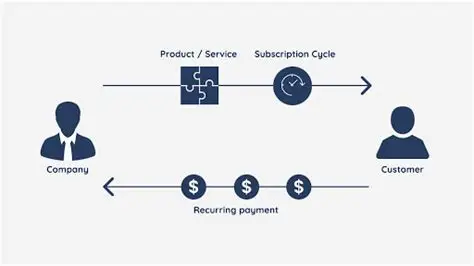
A subscription business model charges customers recurring payments at regular intervals—monthly, quarterly, or annually—in exchange for ongoing access to products or services.
Instead of relying on one-time transactions, the company generates continuous revenue from retained customers.
Examples include:
- Streaming platforms
- Software-as-a-service (SaaS)
- Membership programs
- Subscription boxes
- Fitness apps
- Digital publications
- Cloud storage services
The defining characteristic is continuity.
The customer relationship does not end after purchase. Ideally, it deepens.
That changes the economics of the business profoundly.
Why Companies Love Subscription Models
The answer begins with revenue predictability.
Traditional transaction-based businesses constantly restart the sales process. Every month begins with uncertainty. Companies must repeatedly convince customers to purchase again.
Subscription businesses operate differently.
Once customers subscribe, future revenue becomes partially visible in advance.
This transforms planning.
Companies can forecast:
- Hiring needs
- Operational budgets
- Expansion timelines
- Product development investments
- Investor expectations
Predictable cash flow reduces organizational anxiety significantly.
Investors adore this.
Executives do too.
Recurring Revenue Changes Corporate Behavior
Subscription models influence how companies think internally.
Businesses dependent on one-time sales often prioritize aggressive acquisition. Immediate transactions become the obsession.
Subscription businesses, by contrast, become intensely focused on retention.
That distinction matters.
Because retaining a customer is usually cheaper than acquiring a new one.
This shifts priorities toward:
- Customer experience
- Long-term satisfaction
- Product reliability
- Ongoing engagement
- Continuous improvement
At least theoretically.
In practice, some companies become so obsessed with retention metrics that they accidentally create manipulative ecosystems designed to make cancellation psychologically exhausting.
Consumers have noticed.
Subscription fatigue is now a genuine cultural phenomenon.
The Psychology Behind Subscription Models
Subscriptions succeed because they reduce friction.
A customer subscribes once.
After that, the payment process becomes nearly invisible.
No repeated decision-making.
No checkout interruptions.
No emotional pause before every transaction.
Behavioral economists understand this deeply. Humans prefer convenience over repeated evaluation, even when repeated evaluation might save money.
This is why consumers frequently underestimate how much they spend on subscriptions collectively.
The payments become ambient.
Quiet.
Background noise.
Until the credit card statement arrives with the emotional subtlety of an ambulance siren.
Types of Subscription Business Models
Access Subscriptions
Customers pay for ongoing access to content, software, or services.
Examples:
- Streaming platforms
- SaaS tools
- Online learning platforms
The value comes from continuous utility.
Strength
High scalability.
Risk
Retention collapses quickly if users stop engaging consistently.
Subscription Boxes
Physical products are delivered regularly according to a schedule.
Examples:
- Meal kits
- Beauty products
- Snack boxes
- Book clubs
This model combines recurring revenue with anticipation psychology.
Strength
Strong customer habit formation.
Risk
Operational complexity and shipping costs can damage margins.
Membership Models
Customers pay recurring fees for exclusive access, discounts, or privileges.
Examples:
- Wholesale clubs
- Premium loyalty programs
- Professional organizations
Strength
High customer loyalty potential.
Risk
Members eventually question whether benefits justify continued payment.
Usage-Based Subscriptions
Customers pay according to consumption levels.
Examples:
- Cloud computing
- Telecommunications
- Utility services
Strength
Revenue scales with customer growth.
Risk
Revenue forecasting becomes less predictable.
Comparison Table: Subscription vs. Traditional Transaction Models
| Factor | Subscription Model | Transaction Model |
|---|---|---|
| Revenue Structure | Recurring payments | One-time purchases |
| Customer Relationship | Ongoing | Episodic |
| Revenue Predictability | High | Variable |
| Customer Focus | Retention | Acquisition |
| Cash Flow Stability | More stable | More volatile |
| Scalability | Often highly scalable | Depends on volume |
| Consumer Commitment | Continuous | Temporary |
| Operational Pressure | Churn management | Constant sales pressure |
| Profitability Timeline | Slower initially | Faster immediate returns |
The Most Important Metric: Churn
Every subscription business eventually becomes obsessed with one terrifying word:
Churn.
Churn measures how many customers cancel over time.
A subscription business with high acquisition but weak retention resembles a bucket leaking water continuously. Growth becomes expensive and unstable because new customers merely replace departing ones.
Healthy subscription businesses monitor:
- Monthly churn
- Annual retention
- Customer lifetime value
- Engagement frequency
- Upgrade behavior
I once consulted for a digital publication celebrating rapid subscriber growth publicly while privately losing nearly 40% of new subscribers within three months.
The business was scaling visibility faster than loyalty.
That imbalance eventually became impossible to sustain economically.
Why Subscription Models Became So Dominant
Several forces accelerated adoption simultaneously.
Consumer Convenience
Subscriptions remove repeated purchasing friction.
Consumers appreciate automation—until automation begins feeling excessive.
Predictable Revenue for Businesses
Stable recurring revenue improves financial forecasting dramatically.
This creates operational confidence investors reward aggressively.
Technological Infrastructure
Automatic billing systems made recurring payment structures remarkably efficient.
Managing millions of subscriptions manually would have been operationally absurd decades ago.
Customer Data Advantages
Subscription businesses gather continuous behavioral data:
- Usage patterns
- Retention triggers
- Engagement frequency
- Cancellation behavior
This allows companies to optimize products continuously.
Sometimes helpfully.
Sometimes invasively.
The Dark Side of Subscription Models
Not every subscription business deserves admiration.
Some companies exploit consumer inertia aggressively.
Complicated cancellation systems.
Hidden renewal terms.
Confusing pricing tiers.
Automatic upgrades.
These tactics may temporarily increase revenue while quietly destroying trust.
Consumers increasingly resent subscriptions perceived as manipulative rather than valuable.
That resentment matters because subscription relationships depend heavily on psychological goodwill.
A customer forced to remain is not truly loyal.
Merely trapped.
And trapped customers eventually leave loudly.
Why Some Subscription Businesses Fail
The assumption that subscriptions guarantee success is dangerously naïve.
Many businesses force subscription structures onto products poorly suited for recurring engagement.
This creates value inconsistency.
For example:
- Customers may not need the service monthly
- Product usage may feel episodic
- Ongoing payments may exceed perceived utility
I once watched a consulting company attempt to transition every client into recurring subscriptions regardless of project frequency.
Clients resisted almost immediately.
Why?
Because the relationship naturally functioned around specific engagements rather than continuous access.
The subscription model conflicted with customer psychology.
That mismatch became destructive.
Successful Subscription Models Create Habitual Value
The strongest subscription businesses integrate naturally into customer routines.
People continue paying because:
- The service feels essential
- Convenience outweighs cancellation motivation
- Value remains consistently visible
- Switching feels disruptive
Notice something important here:
The best subscription businesses do not rely solely on forgetting.
They rely on usefulness.
That distinction separates sustainable models from exploitative ones.
The Emotional Economics of Subscriptions
Subscription businesses operate partly on trust.
Customers grant companies permission to withdraw money continuously with relatively little friction. That arrangement carries psychological weight.
If customers feel respected, the relationship deepens.
If customers feel manipulated, resentment compounds quietly.
This emotional layer is frequently underestimated by executives obsessed with retention dashboards and recurring revenue charts.
People are not merely recurring payment sources.
They are recurring trust decisions.
The companies that understand this tend to retain customers longer.
The Future of Subscription Models May Be Simpler, Not Larger
Consumers are becoming more selective.
The early excitement surrounding subscriptions produced excess:
- Too many memberships
- Too many overlapping services
- Too many recurring charges competing for attention
Now consolidation is happening psychologically.
Consumers increasingly ask:
- Do I actually use this?
- Does this provide meaningful value?
- Is this convenience or clutter?
Subscription businesses that survive long term will likely be the ones delivering unmistakable utility rather than relying on passive consumer neglect.
That shift is healthy.
It forces businesses to earn continuity continuously.
Conclusion: Subscription Models Sell Stability as Much as Products
At first glance, subscription businesses appear to sell access.
Music access.
Software access.
Content access.
But structurally, they are selling something larger:
Predictability.
Predictable revenue for companies.
Predictable experiences for consumers.
Predictable engagement patterns for investors.
That stability reshapes entire organizations.
Yet the subscription model succeeds only when value remains visible enough to justify continuity. The moment recurring payments feel disconnected from meaningful utility, customer trust begins eroding quietly beneath the surface.
And once trust deteriorates, churn follows.
The strongest subscription businesses understand this instinctively. They focus less on trapping customers and more on becoming difficult to live without.
Because recurring revenue is not the real achievement.
Recurring relevance is.
- Arts
- Business
- Computers
- Giochi
- Health
- Home
- Kids and Teens
- Money
- News
- Personal Development
- Recreation
- Regional
- Reference
- Science
- Shopping
- Society
- Sports
- Бизнес
- Деньги
- Дом
- Досуг
- Здоровье
- Игры
- Искусство
- Источники информации
- Компьютеры
- Личное развитие
- Наука
- Новости и СМИ
- Общество
- Покупки
- Спорт
- Страны и регионы
- World

 English
 Russian
 French
 Spanish
 Portuguese
 Deutsch
 Turkish
 Dutch
Dutch
 Arabic
 Romaian
 Portuguese (Brazil)
 Greek
Greek