
What Is a Freemium Model?
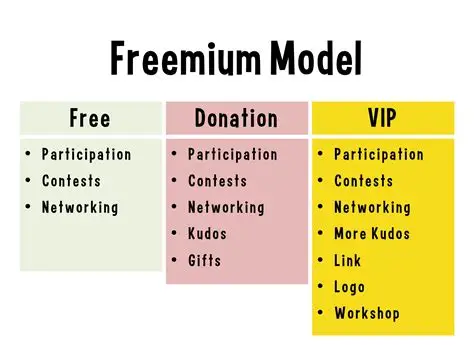
There is a peculiar moment that happens inside almost every successful freemium business.
A user signs up casually.
No credit card. No commitment. No meaningful hesitation.
The product feels generous at first—almost suspiciously generous. Features work. The interface is polished. The experience appears complete enough that the user wonders privately how the company survives financially at all.
Then, eventually, friction appears.
Storage limits.
Advanced analytics locked behind a paywall.
Collaboration restrictions.
Customization barriers.
The free experience remains functional, but now the user has crossed an invisible psychological threshold:
Leaving feels more inconvenient than paying.
That moment is the real engine behind the freemium model.
Not the free product itself.
Not the branding.
Not the onboarding sequence executives obsess over in quarterly meetings.
The true mechanism is conversion psychology carefully engineered around habit, utility, and behavioral momentum.
I learned this years ago while consulting for a software startup convinced its explosive user growth guaranteed eventual dominance. Investors praised the numbers enthusiastically. Press coverage celebrated the company as “the future of workplace productivity.”
There was just one uncomfortable problem.
Almost nobody was paying.
The platform had accumulated millions of users while generating surprisingly fragile revenue. Leadership had built acquisition velocity without a sufficiently persuasive conversion structure.
At one point, the founder looked at me across a conference table and asked:
“How can we be this popular and still this financially anxious?”
Because popularity and monetization are not the same thing.
The freemium model exposes that distinction with unusual brutality.
What Is a Freemium Model?
A freemium model offers users a basic version of a product or service at no cost while charging for premium features, advanced functionality, or expanded access.
The word itself combines:
- Free
- Premium
The structure is simple conceptually:
- Free users enter the ecosystem easily
- Some percentage eventually upgrade to paid plans
Freemium businesses commonly appear in:
- Software platforms
- Mobile apps
- Streaming services
- Productivity tools
- Gaming ecosystems
- Cloud storage providers
The free tier functions as both marketing and onboarding simultaneously.
Instead of convincing users through advertising alone, the product demonstrates value directly.
That sounds efficient.
Sometimes it is.
Sometimes it becomes financially catastrophic.
Why Companies Use Freemium Models
The answer begins with friction reduction.
Most customers hesitate before purchasing unfamiliar products. Freemium removes that hesitation almost entirely.
No upfront payment.
No financial risk.
No commitment pressure.
Users explore freely.
This dramatically accelerates adoption because curiosity becomes easier than resistance.
For companies, this creates:
- Rapid audience growth
- Lower acquisition friction
- Wider market penetration
- Behavioral user data
- Viral sharing opportunities
The free product essentially becomes the sales funnel.
This is why freemium models became particularly attractive for software businesses. Once infrastructure exists, distributing additional digital access costs relatively little compared to physical product manufacturing.
At scale, even small conversion percentages can generate enormous revenue.
At least theoretically.
The Real Goal Is Not Free Users
This point confuses many founders.
Free users are not the objective.
Profitable conversion is.
A freemium business succeeds only when enough users eventually transition into paying customers to sustain the economics of the platform.
That balance is delicate.
Too few free features and users abandon the platform quickly.
Too many free features and users never feel compelled to upgrade.
This tension defines the entire model.
I once worked with a startup whose free product tier was so generous that paid subscriptions felt almost unnecessary. Internally, leadership celebrated user satisfaction metrics while revenue remained dangerously weak.
Customers loved the platform.
They simply had little reason to pay for it.
The company had optimized delight while weakening monetization pressure.
That imbalance nearly destroyed the business.
The Psychology Behind Freemium Models
Freemium businesses operate heavily on behavioral momentum.
Once users invest:
- Time
- Data
- Workflow integration
- Social connections
- Familiarity
The product becomes psychologically embedded.
At that point, upgrading feels less like spending money and more like preserving continuity.
This is why many freemium platforms focus obsessively on:
- Onboarding simplicity
- Habit formation
- User engagement frequency
- Collaboration features
- Ecosystem dependency
The goal is not merely usage.
It is attachment.
Because attached users convert more predictably than casual visitors.
Types of Freemium Models
Feature-Limited Freemium
Basic functionality remains free while advanced features require payment.
Examples include:
- Analytics tools
- Design software
- Productivity apps
Strength
Clear upgrade incentives.
Risk
Users may feel artificially restricted if limitations appear manipulative.
Usage-Limited Freemium
Users receive access within defined limits:
- Storage caps
- Usage quotas
- Time restrictions
Beyond those limits, payment becomes necessary.
Strength
Natural scaling with customer growth.
Risk
Heavy users may seek alternatives instead of upgrading.
Ad-Supported Freemium
Users access the platform for free while advertisements generate revenue. Paid plans remove ads or unlock additional features.
Strength
Broader audience accessibility.
Risk
Advertising can damage user experience significantly.
Network-Based Freemium
The platform becomes more valuable as more users participate. Premium upgrades enhance collaboration or advanced functionality.
Examples include communication platforms and team software.
Strength
Strong viral growth potential.
Risk
Low conversion rates if free collaboration remains sufficient indefinitely.
Comparison Table: Freemium vs. Subscription Models
| Factor | Freemium Model | Subscription Model |
|---|---|---|
| Entry Barrier | Extremely low | Moderate |
| Initial Revenue | Limited | Immediate |
| User Acquisition | Rapid | Slower |
| Monetization Strategy | Partial user conversion | Universal payment |
| Customer Psychology | Try first, pay later | Commit before use |
| Growth Focus | Audience expansion | Revenue predictability |
| Operational Risk | Weak conversion rates | Churn management |
| Scalability | High for digital products | High with retention |
| Revenue Stability | Variable | More predictable |
Why Freemium Models Can Scale Rapidly
Freemium products spread efficiently because users become distribution channels themselves.
People recommend free products more casually than paid ones.
Teams invite colleagues.
Students share tools.
Communities adopt platforms collectively.
This organic growth can become remarkably powerful.
Some freemium businesses acquire millions of users before investing heavily in traditional advertising.
That efficiency attracts investors aggressively because customer acquisition costs may decline substantially through virality and network effects.
But rapid user growth creates dangerous illusions.
Growth metrics can appear spectacular while profitability remains fragile underneath.
The Hidden Cost of Free Users
Free users are not actually free.
They consume:
- Server infrastructure
- Customer support
- Product maintenance
- Engineering resources
- Security protection
This creates operational pressure quickly.
A platform with millions of free users but weak monetization can become financially unstable despite public excitement surrounding growth.
I once advised a startup celebrating user expansion while quietly struggling to pay cloud infrastructure costs generated primarily by non-paying accounts.
The company had achieved visibility faster than sustainability.
That pattern is common in freemium businesses.
Conversion Is Everything
The most important metric inside freemium businesses is conversion rate.
How many users eventually become paying customers?
Even slight conversion improvements dramatically affect profitability at scale.
Successful freemium companies understand exactly:
- Which features drive upgrades
- When users become ready to pay
- What usage patterns predict conversion
- Which customer segments monetize best
This requires extensive behavioral analysis.
The strongest companies refine conversion pathways relentlessly.
Not aggressively.
Relentlessly.
There is a difference.
The Ethical Problem With Some Freemium Models
Not all freemium strategies are admirable.
Some businesses intentionally create frustration to pressure upgrades:
- Artificial limitations
- Excessive notifications
- Deliberate inconvenience
- Psychological manipulation
- Feature fragmentation
Users recognize these tactics increasingly quickly.
When free tiers feel deceptive rather than genuinely useful, trust deteriorates.
And trust matters enormously in freemium ecosystems because the relationship begins before payment occurs.
A customer who feels manipulated rarely becomes loyal long term.
Merely temporarily compliant.
Why Freemium Works Best for Certain Businesses
Freemium models thrive primarily when:
- Distribution costs are low
- Marginal user costs remain manageable
- Network effects exist
- Habit formation matters
- Product utility improves over time
Digital businesses often fit these conditions naturally.
Physical-product companies generally struggle with freemium structures because manufacturing and shipping costs make “free” economically difficult to sustain.
The model must align with operational reality.
Otherwise free access becomes financially destructive rather than strategically useful.
The Emotional Dynamics of Freemium Businesses
Freemium businesses operate partly on optimism.
Users begin with curiosity.
Companies hope curiosity becomes dependency.
Dependency becomes payment.
Payment becomes retention.
That progression feels elegant when functioning properly.
But emotionally, freemium businesses often create internal tension inside organizations.
Product teams want users delighted.
Finance teams want stronger conversion pressure.
Marketing teams want explosive growth.
Leadership wants profitability.
These priorities do not always align naturally.
The strongest freemium businesses balance generosity with monetization discipline remarkably carefully.
That balance is harder than most outsiders realize.
The Most Important Lesson About Freemium Models
Free access alone is not a strategy.
It is an invitation.
The real business depends on what happens afterward.
Does the product become useful enough, integrated enough, trusted enough, or habitual enough that paying feels reasonable rather than coercive?
That is the real test.
Because users are willing to experiment freely with almost anything.
Convincing them to remain financially committed is far more difficult.
Conclusion: Freemium Businesses Sell Trust Before They Sell Products
At first glance, freemium models appear to distribute free products.
Structurally, however, they distribute trust.
Trust that the platform is worth trying.
Trust that value exists beyond the paywall.
Trust that upgrading improves the experience meaningfully rather than merely removing irritation artificially imposed by the company itself.
The strongest freemium businesses understand this instinctively.
They use free access not as bait, but as proof.
Proof that the product deserves deeper commitment.
Because eventually every freemium business confronts the same unforgiving question:
Did the free experience create genuine value—or merely temporary curiosity?
The answer determines whether users become loyal customers or just another impressive statistic in a growth presentation masking fragile economics underneath.
- Arts
- Business
- Computers
- Игры
- Health
- Главная
- Kids and Teens
- Деньги
- News
- Personal Development
- Recreation
- Regional
- Reference
- Science
- Shopping
- Society
- Sports
- Бизнес
- Деньги
- Дом
- Досуг
- Здоровье
- Игры
- Искусство
- Источники информации
- Компьютеры
- Личное развитие
- Наука
- Новости и СМИ
- Общество
- Покупки
- Спорт
- Страны и регионы
- World

 English
 French
 Spanish
 Portuguese
 Deutsch
 Turkish
 Dutch
Dutch
 Italiano
 Arabic
 Romaian
 Portuguese (Brazil)
 Greek
Greek