
What Is a Disruptive Business Model?
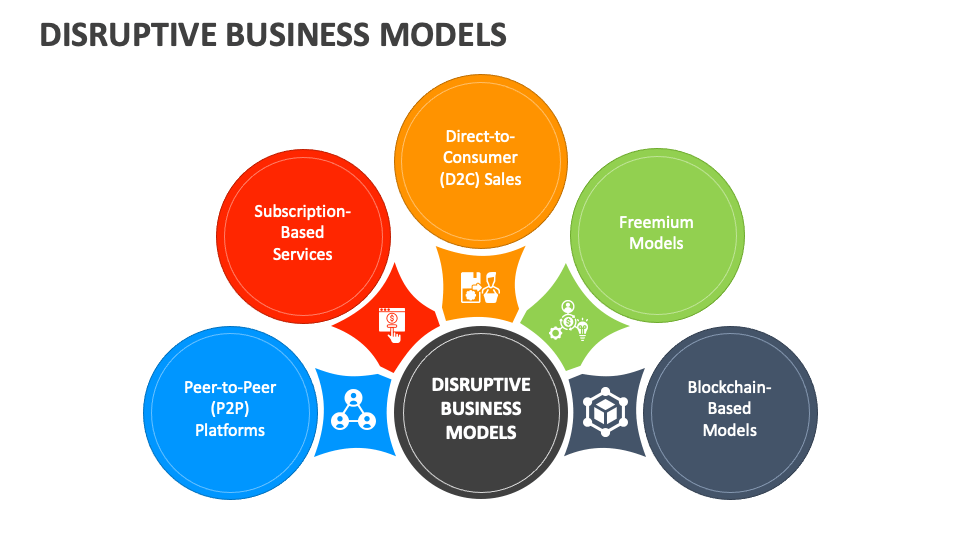
Most industries do not collapse dramatically.
They erode.
Quietly at first. Almost politely.
Then one morning executives wake up to discover the assumptions supporting their entire market have become historical artifacts. Customers behave differently. Pricing logic weakens. Distribution channels fracture. Loyalty evaporates with astonishing speed. The companies once considered immovable begin issuing strangely defensive press releases about “strategic transformation.”
That is usually how disruption looks in real life.
Not cinematic destruction. Gradual irrelevance followed by sudden panic.
The phrase “disruptive business model” gets thrown around with reckless enthusiasm now. Every startup pitch deck claims disruption. Every new app promises reinvention. Most of it is branding theater.
True disruption is rarer — and far more destabilizing.
A disruptive business model changes how value is created, delivered, priced, or consumed within an industry. More importantly, it alters customer expectations so permanently that incumbents struggle to recover without dismantling parts of themselves.
That last part matters.
Disruption does not merely introduce competition. It changes the rules competitors were optimized to win under.
I saw this firsthand years ago while consulting for a regional media company that had dominated local advertising for decades. Executives initially dismissed smaller digital competitors because online ad rates looked insignificant compared to traditional print revenue. The newcomers appeared unserious.
Within five years, those “unserious” platforms had rewired customer behavior entirely.
Advertisers no longer cared about prestige placements beside Sunday editorials. They wanted targeting precision, real-time analytics, measurable conversion data, and flexible spending. The old model still generated revenue, but its structural advantage had disappeared.
The company did not fail because it lacked intelligence.
It failed because it mistook market leadership for market permanence.
That confusion destroys incumbents with startling regularity.
Disruption Is Not Innovation
This distinction gets blurred constantly.
Innovation improves existing systems. Disruption reconfigures them.
A luxury automaker adding better touchscreen controls is innovation. A transportation platform redefining car ownership itself is disruption.
The difference lies in structural impact.
Disruptive business models frequently begin by serving overlooked customers, ignored demographics, or lower-margin segments established firms consider unattractive. Over time, the disruptor improves quality while maintaining structural advantages in cost, convenience, speed, or accessibility.
Then the center of the market shifts beneath everyone’s feet.
Clayton Christensen and the Theory Behind Disruption
The modern framework for disruptive innovation emerged largely from the work of Harvard professor Clayton Christensen. His theory explained why dominant companies often lose to smaller entrants despite possessing greater resources, stronger brands, and experienced leadership.
Because incumbents optimize for current profitability.
Disruptors optimize for emerging behavior.
That difference sounds subtle until billions of dollars evaporate.
Established firms frequently ignore early-stage disruptors because the initial market appears too small, too cheap, or too low-status to threaten core revenue streams. By the time incumbents recognize the shift, customer habits have already changed.
And customer habits harden faster than corporations adapt.
The Core Characteristics of a Disruptive Business Model
Not every successful company qualifies as disruptive. Some simply execute existing models more efficiently.
True disruption tends to involve several defining traits.
Accessibility
Disruptive businesses often democratize products or services previously considered expensive, exclusive, or inconvenient.
Netflix reduced dependence on physical video rentals. Airbnb expanded lodging access without building hotels. Spotify altered music consumption by prioritizing streaming access over ownership.
The pattern repeats constantly: lower friction, broader reach.
Simplicity
Consumers routinely tolerate inefficiency until a simpler alternative appears.
Then patience collapses.
Disruptive companies reduce complexity in ways incumbents often overlook because existing systems have become normalized internally. Customers, however, experience those inefficiencies directly.
Convenience can destabilize entire industries.
Alternative Revenue Structures
Many disruptive companies rethink pricing itself.
Subscription models replaced one-time ownership in software and entertainment. Freemium structures lowered adoption barriers. Platform commissions displaced traditional retail markups.
Pricing architecture is frequently where disruption becomes economically dangerous for incumbents.
Technology-Enabled Scalability
Technology is not always the disruption itself. Often it is the infrastructure enabling a radically different business model.
Amazon’s disruption was never merely “selling books online.” It was building a logistics and data ecosystem capable of reshaping retail expectations permanently.
The distinction matters because surface-level imitation rarely reproduces structural advantages.
A Comparison of Traditional vs. Disruptive Business Models
| Industry | Traditional Model | Disruptive Model | Structural Shift |
|---|---|---|---|
| Transportation | Taxi ownership and dispatch | Ride-sharing platforms | Asset-light mobility networks |
| Entertainment | Physical rentals and cable bundles | Streaming subscriptions | On-demand access |
| Hospitality | Hotel ownership | Peer-to-peer lodging platforms | Decentralized inventory |
| Retail | Brick-and-mortar distribution | E-commerce ecosystems | Direct digital purchasing |
| Software | One-time software licenses | SaaS subscriptions | Continuous recurring revenue |
| Education | Campus-based instruction | Online learning platforms | Remote scalable access |
| Banking | Branch-centered banking | Mobile-first fintech | Frictionless digital finance |
| Publishing | Print advertising dependence | Algorithm-driven media platforms | Data-targeted monetization |
Notice something unsettling here.
Disruption often removes ownership burdens from the disruptor itself.
Uber does not own most vehicles. Airbnb does not own most properties. Netflix abandoned physical inventory constraints. Platform-based disruption frequently depends on orchestrating systems rather than controlling traditional assets.
That changes cost structures dramatically.
Why Incumbents Struggle to Respond
People assume large corporations fail to adapt because executives are shortsighted.
The reality is more uncomfortable.
Often, incumbents behave rationally according to the incentives surrounding them.
A profitable company protecting high-margin revenue streams may resist lower-margin innovations because shareholders expect near-term financial performance. Internal teams become optimized around existing operations. Entire compensation structures reinforce the status quo.
Disruption threatens not merely products, but organizational identity.
The Innovator’s Dilemma
This tension became famously known as “The Innovator’s Dilemma.”
Companies hesitate to cannibalize their own profitable systems. Yet refusing to evolve creates vulnerability to external disruption.
Kodak understood digital photography earlier than most people realize. The company even developed early digital camera technology internally. But leadership feared undermining its enormously profitable film business.
The market eventually made the decision for them.
This pattern repeats endlessly because corporations are rarely designed for self-destruction, even when reinvention requires it.
Disruptive Models Often Begin Looking Inferior
This is one of the most misunderstood aspects of disruption.
Early disruptive products frequently appear weaker than incumbent alternatives.
They may have lower quality. Fewer features. Smaller audiences. Reduced profitability.
Which is precisely why incumbents underestimate them.
I remember interviewing an executive from a traditional retail chain who dismissed early e-commerce competitors as “catalog businesses with websites.” At the time, online shopping genuinely felt clunky compared to polished in-store experiences.
But convenience compounds.
Consumers tolerate early imperfections if the broader behavioral shift offers enough value. Over time, the disruptor improves while incumbents remain anchored to legacy infrastructure.
Then the gap closes abruptly.
The Role of Consumer Psychology
Disruption is not solely economic. It is behavioral.
The strongest disruptive models alter what customers consider normal.
Once consumers became accustomed to instant streaming, waiting for scheduled television programming felt archaic. Once mobile banking normalized real-time transactions, physical branch visits began feeling unnecessary for routine services.
Behavioral rewiring creates durable competitive advantages because habits are difficult to reverse.
This is why some incumbents survive disruption technologically but still lose culturally.
They replicate features without reshaping perception.
Can Disruption Be Manufactured?
Not reliably.
Many founders attempt performative disruption by attacking industries theatrically without solving meaningful customer problems. Investors occasionally reward the spectacle temporarily, but markets eventually expose superficiality.
True disruption usually emerges from obsessive attention to structural inefficiencies.
The founders behind disruptive businesses often spend years immersed in industry pain points before building alternatives. They understand where friction lives because they have experienced it personally or studied it relentlessly.
Disruption requires precision.
Not noise.
The Human Cost of Disruption
This conversation becomes strangely sanitized in startup culture.
Disruption sounds exciting until jobs disappear.
Taxi medallion systems collapsed under ride-sharing expansion. Retail bankruptcies accelerated under e-commerce pressure. Local newspapers weakened as advertising migrated to digital platforms. Automation continues reshaping manufacturing and administrative work.
Disruption creates winners and casualties simultaneously.
That duality deserves more honesty than business media typically provides.
I once spoke with a bookstore owner who survived the rise of online retail by transforming his shop into a community-centered literary space rather than competing purely on inventory pricing. He said something revealing:
“You can’t beat disruption by pretending it isn’t happening. You survive by becoming valuable differently.”
That sentence captures the adaptive intelligence many organizations lack.
Modern Industries Most Vulnerable to Disruption
Several sectors currently exhibit conditions ripe for disruptive transformation.
Healthcare
Consumers increasingly demand transparent pricing, digital access, telemedicine, and personalized treatment pathways. Traditional healthcare infrastructure remains burdened by administrative complexity and fragmented systems.
Higher Education
Rising tuition costs, changing workforce expectations, and remote learning technologies continue pressuring traditional university models.
Financial Services
Fintech platforms have exposed how much friction consumers tolerated for decades within banking systems.
Legal Services
AI-assisted research, contract automation, and alternative legal platforms may reshape portions of the legal industry far faster than many firms expect.
The warning signs usually appear long before disruption becomes undeniable.
Most incumbents simply rationalize them away.
Conclusion: Disruption Is a Shift in Power
People talk about disruptive business models as though disruption itself is inherently virtuous.
It is not.
Disruption is simply power redistribution.
It transfers influence from organizations optimized for old conditions toward those aligned with emerging behavior. Sometimes the result improves accessibility and efficiency. Sometimes it creates new monopolies wrapped in modern branding.
The rhetoric surrounding disruption often celebrates destruction while ignoring consolidation.
Yet beneath all the hype, one truth remains remarkably consistent:
Disruptive businesses succeed because they recognize changes in consumer behavior before established companies fully respect them.
That recognition creates asymmetry.
The incumbent sees stability. The disruptor sees stagnation.
The incumbent protects systems that once worked brilliantly. The disruptor builds systems for how people are beginning to live, buy, communicate, travel, learn, and consume.
And once customer expectations change at scale, industries rarely return to their previous form.
That is what makes disruption so unsettling.
Not the arrival of something new.
The quiet realization that the old world no longer holds authority over the market it once defined.
- Arts
- Business
- Computers
- Jogos
- Health
- Início
- Kids and Teens
- Money
- News
- Personal Development
- Recreation
- Regional
- Reference
- Science
- Shopping
- Society
- Sports
- Бизнес
- Деньги
- Дом
- Досуг
- Здоровье
- Игры
- Искусство
- Источники информации
- Компьютеры
- Личное развитие
- Наука
- Новости и СМИ
- Общество
- Покупки
- Спорт
- Страны и регионы
- World

 English
 Russian
 French
 Spanish
 Portuguese
 Deutsch
 Turkish
 Dutch
Dutch
 Italiano
 Arabic
 Romaian
 Greek
Greek
