
What Is Dropshipping?
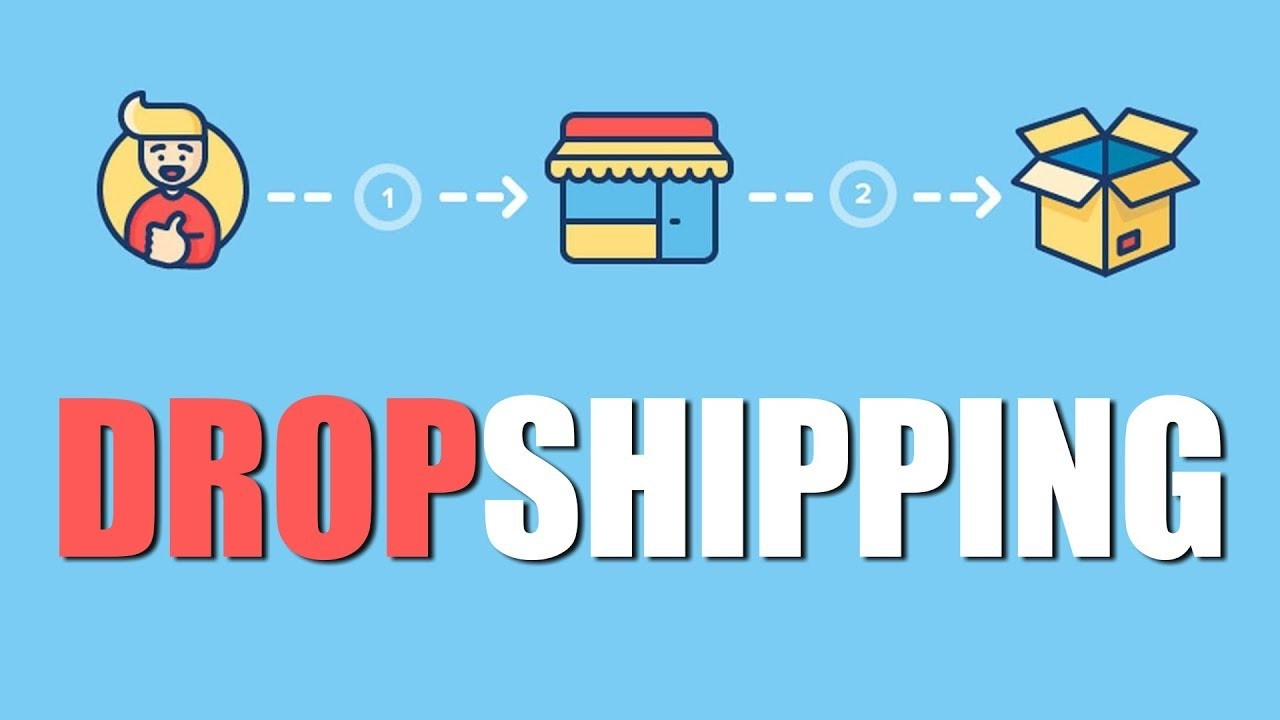
Dropshipping is one of the most misunderstood business models on the internet.
Partly because it has been marketed as liberation.
No warehouse. No inventory. No employees packing boxes at midnight. Just a laptop, a storefront, a supplier somewhere overseas, and the seductive promise that money can flow through systems you barely touch physically.
That promise attracts millions of aspiring entrepreneurs every year.
Most of them misunderstand what business they are actually entering.
They think they are selling products.
In reality, they are competing in logistics, customer psychology, advertising economics, and operational trust management — often simultaneously, usually without realizing it.
I learned this firsthand after advising a young founder who had become briefly obsessed with the mythology surrounding dropshipping. Social media convinced him the model represented near-frictionless entrepreneurship. He launched an online store selling minimalist desk accessories sourced through overseas suppliers. The early signs looked encouraging. Orders appeared quickly after several aggressive ad campaigns.
Then the emails started.
Delayed shipments. Damaged packaging. Incorrect tracking numbers. Customers demanding refunds before products even reached customs. The founder spent more time apologizing than scaling. Eventually, he admitted something revealing during a late-night call:
“I don’t own the inventory, but I somehow inherited all the problems.”
Exactly.
That sentence captures the hidden reality of dropshipping better than most glossy tutorials ever could.
Because dropshipping is not passive retail. It is outsourced fulfillment layered beneath aggressive digital marketing.
And whether the model succeeds depends less on product selection than operational execution.
What Is Dropshipping, Really?
Dropshipping is an e-commerce business model where the seller does not keep products physically in stock.
Instead, when a customer places an order, the seller forwards that order to a third-party supplier — usually a wholesaler, manufacturer, or fulfillment company — which ships the product directly to the customer.
The retailer acts primarily as:
- The storefront operator
- Brand manager
- Marketing engine
- Customer acquisition system
- Customer service layer
The supplier handles inventory storage and shipping logistics.
At least in theory.
That distinction matters because many people assume dropshipping eliminates operational responsibility. It eliminates inventory ownership, not accountability. Customers still associate the experience entirely with the seller.
If shipping fails, the brand absorbs the damage.
Not the supplier.
Why Dropshipping Became So Popular
The rise of dropshipping was fueled by several overlapping conditions:
- Low startup costs
- E-commerce platform accessibility
- Global supplier marketplaces
- Social media advertising
- Influencer entrepreneurship culture
- Simplified website builders
For the first time, almost anyone could launch an online storefront without investing heavily in inventory upfront.
That dramatically lowered entry barriers.
The Illusion of Simplicity
This accessibility created a dangerous misconception: that dropshipping itself is easy.
Launching a store is easy.
Building a profitable, sustainable, trusted retail operation is not.
The distinction separates temporary hobby sellers from legitimate operators.
How Dropshipping Actually Works
The mechanics are relatively straightforward.
Step 1: A Seller Creates an Online Store
The retailer builds a storefront through platforms like Shopify, WooCommerce, or marketplace ecosystems.
Products are listed with descriptions, images, and pricing markup.
The seller typically never touches the actual product physically.
Step 2: Customers Place Orders
A customer purchases through the online store exactly as they would with traditional e-commerce.
Payment flows to the retailer first.
Step 3: The Order Is Sent to the Supplier
The retailer forwards order details to the supplier or uses automated integrations connecting the store directly to fulfillment systems.
The supplier then prepares shipment.
Step 4: The Supplier Ships Directly to the Customer
The product travels from supplier to customer without passing through the retailer’s possession.
The seller profits from the difference between wholesale cost and retail price.
Simple structurally.
Complicated operationally.
A Comparison of Dropshipping vs. Traditional E-Commerce
| Factor | Dropshipping | Traditional E-Commerce |
|---|---|---|
| Inventory Ownership | Supplier-owned | Seller-owned |
| Startup Costs | Low | Higher |
| Shipping Control | Limited | High |
| Profit Margins | Lower | Higher |
| Operational Complexity | Moderate | High |
| Branding Flexibility | Moderate | High |
| Fulfillment Speed | Often slower | Faster |
| Risk Exposure | Lower inventory risk | Higher inventory risk |
| Customer Experience Control | Limited | Strong |
| Scalability Potential | Moderate-High | High |
The table reveals something important.
Dropshipping reduces certain risks while introducing entirely different vulnerabilities.
Entrepreneurs often focus on what the model removes — warehousing, inventory investment, bulk purchasing — while underestimating what it sacrifices in return: operational control.
The Real Economics of Dropshipping
This is where many newcomers become disillusioned.
Margins in dropshipping are often thinner than social media narratives suggest.
Why Margins Get Compressed
Several forces reduce profitability:
- Intense competition
- Rising digital advertising costs
- Supplier markups
- Refund rates
- Payment processing fees
- Shipping delays
- Platform commissions
Popular products become saturated quickly because entry barriers remain low. Once dozens or hundreds of stores sell identical products, price competition intensifies aggressively.
The result is often a race toward diminishing profitability.
Customer Acquisition Becomes the Real Business
Most successful dropshipping operations are not fundamentally product businesses.
They are advertising businesses.
The core challenge becomes acquiring customers profitably before competitors saturate the market. This is why media buying skills, content creation, and branding often matter more than product sourcing itself.
The storefront is only one piece of the machine.
The Supplier Problem
Suppliers determine enormous portions of the customer experience despite remaining invisible to customers.
That creates operational tension.
Common Supplier Risks
- Inconsistent product quality
- Shipping delays
- Inventory inaccuracies
- Weak packaging standards
- Communication failures
- Customs complications
- Tracking issues
A retailer may run exceptional marketing campaigns while still losing customers because supplier performance deteriorates trust afterward.
I once reviewed customer support logs for a struggling dropshipping company where nearly 60% of complaints involved fulfillment problems entirely outside the founder’s direct control. Yet customers blamed the brand itself.
Of course they did.
Customers do not care how your supply chain is structured. They care whether expectations were met.
Why Branding Matters More Than Ever
Early dropshipping culture revolved heavily around generic stores selling trending products rapidly before market saturation occurred.
That strategy became increasingly unstable.
Today, stronger dropshipping businesses behave more like legitimate brands:
- Curated product selections
- Distinct visual identity
- Better customer communication
- Stronger content ecosystems
- Community-building efforts
- Improved packaging experiences
- Clear positioning
Branding creates insulation against pure price competition.
Without differentiation, dropshipping stores become interchangeable.
And interchangeable businesses rarely survive long-term.
The Role of Social Media in Dropshipping
Social platforms transformed dropshipping economics dramatically.
TikTok, Instagram, Facebook, and YouTube now function as discovery engines capable of generating massive traffic spikes almost instantly. Viral product demonstrations can trigger explosive order volume within hours.
That visibility accelerated both opportunity and instability.
Virality Creates Operational Pressure
Many inexperienced sellers celebrate viral growth before realizing fulfillment systems cannot absorb sudden demand surges.
Inventory disappears. Shipping slows. Customer complaints multiply publicly.
Rapid visibility without operational preparation creates reputational damage surprisingly fast.
I have watched stores generate six-figure sales months while simultaneously destroying long-term customer trust underneath.
Revenue and stability are not synonymous.
Is Dropshipping Still Profitable?
Yes.
But not in the simplistic way many tutorials imply.
The easy arbitrage phase largely faded once competition intensified globally. Today, profitable dropshipping usually requires:
- Sophisticated branding
- Strong customer acquisition systems
- Reliable suppliers
- Retention strategies
- Effective content marketing
- Data-driven optimization
- Operational discipline
The model still works.
The mythology surrounding effortless success does not.
The Psychological Appeal of Dropshipping
Part of dropshipping’s endurance comes from emotional symbolism.
It represents accessibility.
People are drawn to the idea that entrepreneurship no longer requires massive capital reserves, physical storefronts, or traditional gatekeepers. Dropshipping feels democratic because the infrastructure appears open to anyone willing to try.
That emotional appeal matters.
But accessibility also creates overcrowding.
And overcrowding intensifies the importance of operational competence.
The Future of Dropshipping
Several trends are reshaping the model already.
Faster Fulfillment Expectations
Consumers increasingly expect domestic shipping speeds even when products originate internationally. This pressures suppliers and retailers to improve logistics infrastructure dramatically.
AI-Driven Product Research
Artificial intelligence is changing how sellers identify trends, optimize advertising, and personalize customer experiences.
Brand Consolidation
The market is gradually favoring stronger branded stores over disposable trend-driven operations.
Regulatory Pressure
Consumer protection standards, advertising transparency, and platform accountability may tighten further as e-commerce ecosystems mature.
The industry is becoming less chaotic and more professionalized.
Which is probably healthy.
Conclusion: Dropshipping Is Really About Trust Transfer
People often describe dropshipping as a retail shortcut.
More accurately, it is a trust-transfer system.
Customers trust a retailer that does not directly manufacture, warehouse, or often even physically inspect the products being sold. That trust depends entirely on communication, branding, reliability, and expectation management.
The seller sits between consumer expectations and supplier execution.
That position can be highly profitable.
It can also become operationally brutal.
Because dropshipping removes certain traditional retail burdens while magnifying others — especially customer acquisition pressure and reputational vulnerability. The businesses that endure usually stop treating dropshipping like a loophole and start treating it like what it actually is:
A real retail business with outsourced logistics.
And once founders understand that distinction, their decisions become very different. They focus less on chasing viral products and more on building systems customers actually trust.
Which, ironically, brings the entire conversation back to the oldest principle in commerce:
People buy more confidently when they believe someone will still care after the payment clears.
- Arts
- Business
- Computers
- Juegos
- Health
- Home
- Kids and Teens
- Money
- News
- Personal Development
- Recreation
- Regional
- Reference
- Science
- Shopping
- Society
- Sports
- Бизнес
- Деньги
- Дом
- Досуг
- Здоровье
- Игры
- Искусство
- Источники информации
- Компьютеры
- Личное развитие
- Наука
- Новости и СМИ
- Общество
- Покупки
- Спорт
- Страны и регионы
- World

 English
 Russian
 French
 Portuguese
 Deutsch
 Turkish
 Dutch
Dutch
 Italiano
 Arabic
 Romaian
 Portuguese (Brazil)
 Greek
Greek
