
How to take notes while speed reading?
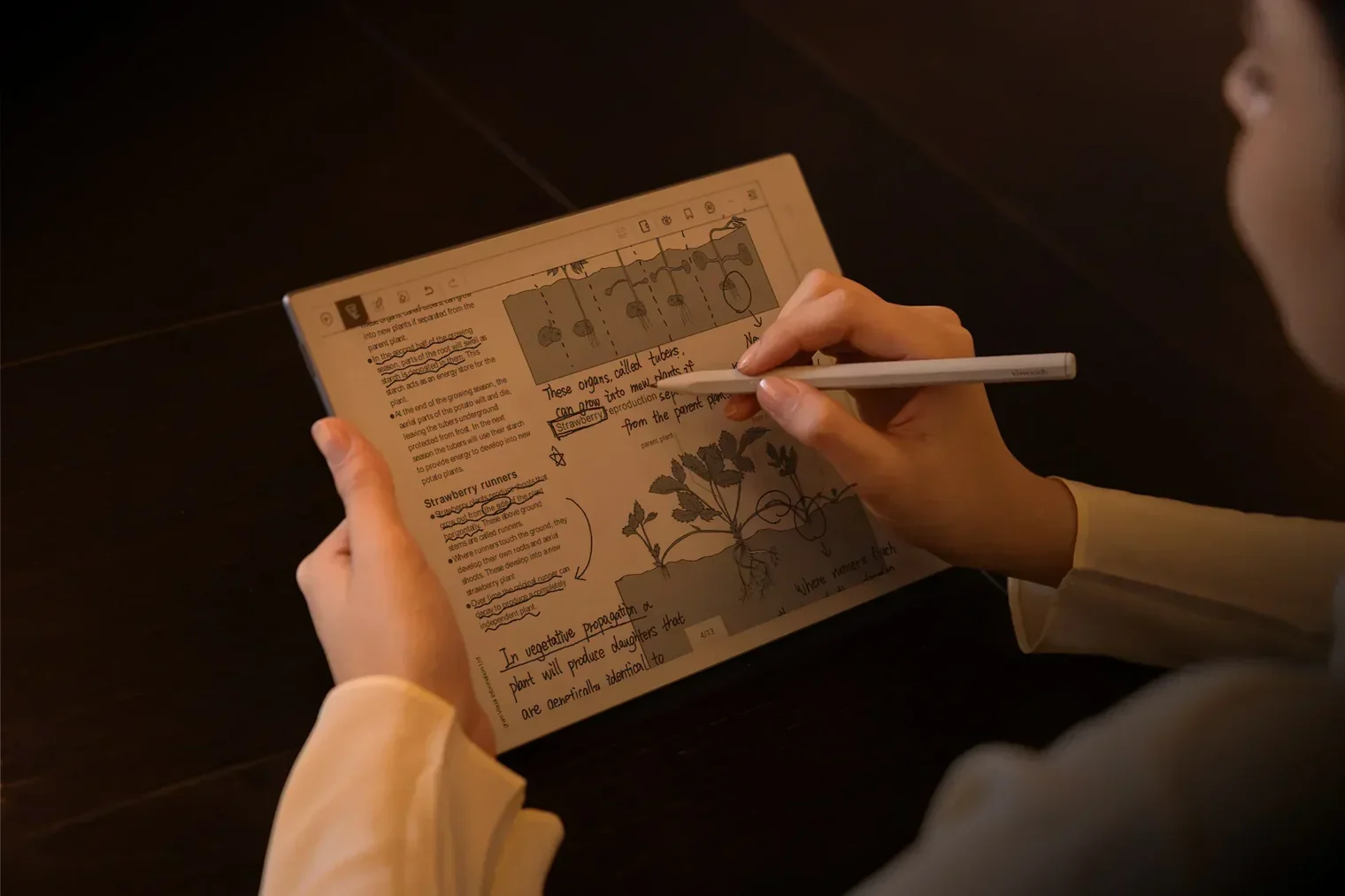
How to Take Notes While Speed Reading Without Destroying Your Momentum
Most people discover a brutal contradiction almost immediately after learning speed reading:
The faster you read, the harder it becomes to take useful notes.
You either:
-
slow down constantly to capture details
-
or maintain speed and remember almost nothing afterward
That tension frustrates nearly everyone at first.
Because traditional note-taking and speed reading were designed around opposite assumptions.
Traditional note-taking assumes:
slow, careful, linear processing
Speed reading assumes:
selective, high-efficiency information extraction
Trying to combine both without changing your method creates cognitive traffic jams.
You pause too often.
You over-highlight.
You copy sentences mechanically.
Your reading rhythm collapses.
And eventually the entire process becomes slower than ordinary reading.
Which raises the real question:
How do you take notes without sabotaging reading flow?
The answer is surprisingly counterintuitive.
You stop trying to capture everything.
Most People Take Notes Defensively
Watch students or professionals reading dense material and you’ll notice something interesting.
Their notes often function less like learning tools and more like anxiety management.
They record information because they are afraid of forgetting it.
That fear produces terrible notes:
-
massive highlighting
-
copied paragraphs
-
cluttered summaries
-
disconnected facts
-
endless screenshots
The brain mistakes collection for comprehension.
But information storage is not the same thing as understanding.
In fact, excessive note-taking frequently damages comprehension because attention shifts away from meaning construction toward transcription.
You stop processing ideas.
You start preserving artifacts.
That distinction matters enormously during speed reading.
Speed Reading Changes the Role of Notes
Traditional reading often treats notes as a parallel activity happening continuously alongside the text.
Speed reading works better when notes become:
-
selective
-
structural
-
delayed
-
concept-focused
Instead of documenting every important sentence, you identify:
-
core arguments
-
recurring themes
-
conceptual frameworks
-
relationships between ideas
-
actionable insights
This dramatically reduces interruption frequency.
And interruption frequency is the hidden enemy of reading momentum.
The Biggest Mistake: Stopping Too Often
Every time you pause reading to write extensive notes, the brain pays a switching cost.
Context weakens.
Momentum disappears.
Attention resets.
Then reentry takes effort.
Most people underestimate how cognitively expensive these micro-interruptions are.
Especially during deep reading.
I learned this while reading research-heavy nonfiction years ago. Initially, I tried taking meticulous notes sentence by sentence because I believed “thoroughness” meant capturing maximum detail.
The result was absurd.
A single chapter consumed hours. My notebook expanded rapidly. Yet days later, my actual conceptual recall remained surprisingly weak.
Eventually I changed approaches completely.
Instead of interrupting constantly, I began reading larger sections uninterrupted and writing short synthesis notes afterward.
Retention improved immediately.
Because I was finally processing ideas as systems rather than isolated fragments.
The Brain Remembers Structure Better Than Volume
This is one of the most important principles in efficient note-taking.
The brain handles organized meaning better than scattered information accumulation.
Which means your notes should prioritize:
-
hierarchy
-
relationships
-
causality
-
frameworks
-
patterns
over raw quantity.
For example, this is weak note-taking:
“The author says attention span decreases with digital overstimulation.”
This is stronger:
Digital overstimulation → fragmented attention → weaker comprehension → slower deep reading.
The second note preserves structure rather than wording.
And structural notes compress information much more efficiently during speed reading.
Use Layered Reading Instead of Continuous Annotation
One of the most effective systems for balancing speed and note-taking is layered reading.
Layer 1: Fast Overview
Read quickly for:
-
structure
-
main arguments
-
chapter flow
-
informational hierarchy
Minimal notes.
Layer 2: Targeted Deep Reading
Return selectively to:
-
difficult concepts
-
key arguments
-
valuable passages
-
high-priority sections
Now take more detailed notes.
Layer 3: Synthesis
Summarize ideas in your own words.
This approach prevents constant interruption while preserving comprehension quality.
And importantly, it aligns with how memory actually works.
The brain encodes frameworks before details.
Highlighting Is Mostly Overused
People highlight excessively because highlighting feels productive.
It is fast.
Visually satisfying.
Emotionally reassuring.
But most highlighting is cognitively shallow.
Research repeatedly suggests active engagement methods outperform passive marking for long-term retention.
The problem intensifies during speed reading because highlighting becomes reflexive:
-
too many passages marked
-
no prioritization
-
no synthesis
-
no conceptual filtering
Eventually entire pages glow yellow while actual understanding remains vague.
A better rule:
Highlight only information that changes your understanding of the subject materially.
That immediately forces selectivity.
Speed Reading Requires “Compression Notes”
Traditional notes often become miniature copies of the source material.
Compression notes do the opposite.
They aggressively reduce information into:
-
keywords
-
frameworks
-
symbols
-
shorthand
-
conceptual triggers
For example:
Instead of:
“The author argues that working memory becomes overloaded when too many cognitive tasks compete simultaneously.”
Write:
WM overload = multitask competition → weaker processing
Faster.
Cleaner.
More memorable.
Compression preserves momentum.
Don’t Take Notes During Easy Sections
This sounds obvious until you realize most people still do it constantly.
If material is:
-
repetitive
-
intuitive
-
familiar
-
low-value
-
overly explanatory
keep moving.
Many books contain large amounts of conceptual redundancy.
Experienced readers recognize this quickly and avoid documenting repeated ideas excessively.
Beginners often treat every paragraph as equally important.
That destroys reading efficiency.
Questions Make Better Notes Than Summaries
One of the most powerful note-taking shifts is converting information into questions.
Instead of:
“Dopamine influences reward anticipation.”
Write:
How does dopamine affect anticipation behavior?
Why does this work so well?
Because questions activate retrieval pathways.
The brain remembers unresolved prompts more effectively than passive statements.
This method becomes especially valuable for:
-
exam preparation
-
technical subjects
-
conceptual learning
-
long-term retention
It also keeps notes concise during fast reading sessions.
Digital Notes vs Handwritten Notes
This debate never fully disappears because both methods offer different cognitive advantages.
Handwritten Notes
Better for:
-
memory encoding
-
conceptual synthesis
-
slower deep thinking
-
diagramming relationships
Digital Notes
Better for:
-
speed
-
searchability
-
organization
-
large information systems
-
linking ideas across sources
For speed reading specifically, digital systems often integrate more smoothly because they reduce interruption friction.
But handwritten synthesis sessions can improve retention substantially afterward.
The strongest readers frequently combine both.
The Cornell Method Works Surprisingly Well for Speed Reading
The Cornell note-taking system adapts effectively to accelerated reading because it separates:
-
capture
-
cues
-
synthesis
Instead of writing massive summaries continuously, you organize notes into:
-
main ideas
-
prompts/questions
-
concise summaries
This structure naturally encourages selective processing.
And selective processing is the foundation of efficient speed reading.
Your Notes Should Be Harder to Write Than to Read
This principle changes everything.
Weak notes are often easy to write:
-
copied text
-
direct quotations
-
oversized summaries
Strong notes require effortful compression.
That compression forces understanding.
The more processing required during note creation, the stronger memory encoding usually becomes.
Paradoxically, shorter notes often reflect deeper comprehension.
Stop Chasing Perfect Notes
Perfectionism quietly destroys reading flow.
People pause endlessly trying to create:
-
beautiful formatting
-
complete summaries
-
flawless organization
-
exhaustive coverage
This turns reading into administrative labor.
And worse, it creates the illusion that polished notes equal mastery.
They do not.
Messy but cognitively active notes outperform aesthetically perfect passive notes almost every time.
Especially during high-volume reading.
Symbols and Shorthand Save Massive Time
Efficient readers develop compressed symbolic systems naturally.
Examples:
-
→ = causes/leads to
-
↑ = increase
-
↓ = decrease
-
vs = comparison
-
? = uncertainty
-
-
= highly important
-
-
EX = example
These reduce writing time dramatically while preserving meaning.
The faster your notation system becomes, the less momentum you lose during reading.
Read First, Capture Later
This may be the single most useful adjustment for many people.
Instead of interrupting constantly:
-
Read a section fully
-
Pause afterward
-
Summarize from memory
This forces active recall.
And active recall strengthens retention far more effectively than simultaneous transcription.
It also reveals comprehension gaps immediately.
If you cannot summarize the section without looking back, the issue is usually understanding — not note quality.
Different Material Requires Different Notes
A major mistake is using identical note systems everywhere.
For example:
| Material Type | Best Note Style |
|---|---|
| Textbooks | Structured outlines |
| Philosophy | Argument mapping |
| Business books | Actionable insights |
| Research papers | Hypothesis + evidence tracking |
| Biographies | Timeline + themes |
| Technical manuals | Process steps |
| Literature | Symbolism + interpretation |
Adaptive note-taking dramatically improves both speed and retention.
The Best Readers Often Take Fewer Notes
This surprises people.
But highly experienced readers frequently document less because they:
-
recognize patterns faster
-
filter information more aggressively
-
retain structure more effectively
-
distinguish signal from noise efficiently
Beginners often compensate for uncertainty with excessive documentation.
Over time, confidence allows greater selectivity.
The Goal Is Not Archiving — It’s Retrieval
This is the real breakthrough.
Most note-taking systems fail because they optimize for storage rather than future usability.
But knowledge matters only if it can later be:
-
recalled
-
applied
-
connected
-
explained
-
retrieved quickly
Good notes are retrieval systems.
Not information graveyards.
That distinction becomes essential during speed reading because excessive storage destroys pacing immediately.
Final Thoughts: Efficient Notes Preserve Momentum, Not Just Information
Most people think note-taking exists to prevent forgetting.
Partially true.
But effective notes do something more important:
They preserve understanding while minimizing cognitive interruption.
That balance is the entire challenge.
The best speed readers are not people who capture everything.
They are people who identify:
-
what matters
-
what connects
-
what deserves deeper processing
-
what can safely pass by quickly
And their notes reflect that selectivity.
Cleaner.
Shorter.
More structural.
More intentional.
Because ultimately, speed reading is not about moving your eyes faster across words.
It is about reducing wasted attention.
And good note-taking should support that goal — not compete with it.
- Arts
- Business
- Computers
- Spellen
- Health
- Home
- Kids and Teens
- Money
- News
- Personal Development
- Recreation
- Regional
- Reference
- Science
- Shopping
- Society
- Sports
- Бизнес
- Деньги
- Дом
- Досуг
- Здоровье
- Игры
- Искусство
- Источники информации
- Компьютеры
- Личное развитие
- Наука
- Новости и СМИ
- Общество
- Покупки
- Спорт
- Страны и регионы
- World

 English
 Russian
 French
 Spanish
 Portuguese
 Deutsch
 Turkish
 Italiano
 Arabic
 Romaian
 Portuguese (Brazil)
 Greek
Greek
