
How Do Banks Affect the Economy?
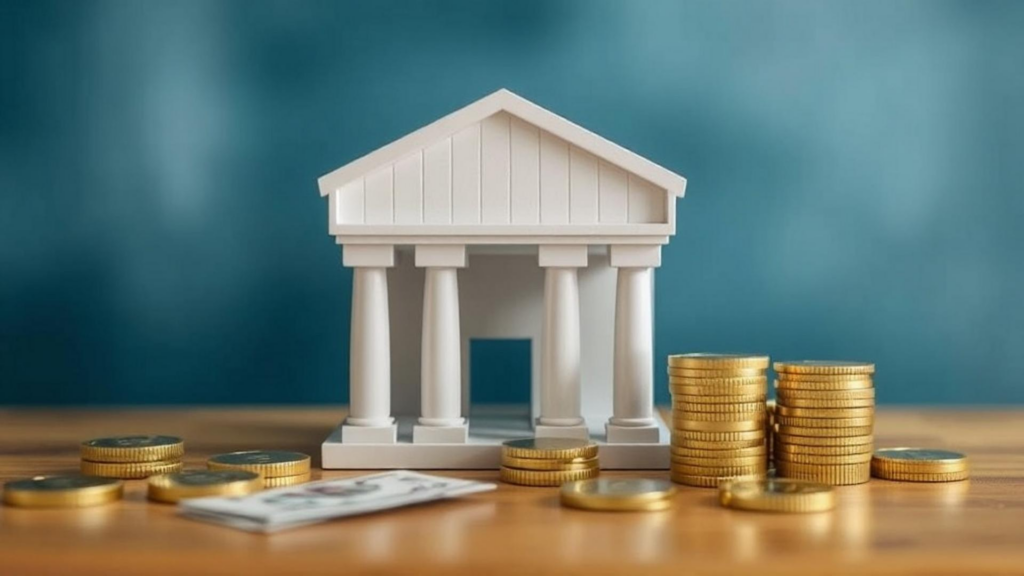
How Do Banks Affect the Economy?
The modern man believes banks store money. This is a charming fiction, repeated so often it has acquired the status of civic religion. Parents tell it to children. Economists tell it to freshmen. Politicians tell it to voters. But the balance sheet tells another story entirely.
Banks do not merely store money. They manufacture it.
That distinction changes everything.
The difference between a warehouse and a counterfeiter is not semantic. A warehouse safeguards existing property. A counterfeiter dilutes it. Modern banking, wrapped in regulatory jargon and marble architecture, performs the latter function with bureaucratic elegance.
And yet, civilization could not function without banks. Commerce requires intermediation. Savings require custodianship. Capital must move from those who have it to those who can employ it productively. Banking emerged because human beings discovered that idle capital is a wasted opportunity.
The tragedy is not that banks exist.
The tragedy is that most people do not understand what banks actually do to the economy.
The Original Purpose of Banking
Before central banks, before deposit insurance, before monetary committees convened in expensive hotels to manipulate interest rates with the confidence of medieval astrologers reading chicken entrails, banking was comparatively simple.
A banker accepted deposits from savers and lent a portion of them to borrowers. Profit came from the spread between deposit rates and lending rates. Risk discipline was brutally direct: reckless banks failed.
Under a hard money standard, particularly gold, banks faced constraints imposed not by regulators but by reality itself. If too many depositors demanded redemption simultaneously, insolvency became visible immediately. Gold has no patience for academic theories.
This mattered enormously.
A bank operating under hard money could not expand credit indefinitely. Its liabilities had to correspond, at least approximately, to redeemable reserves. Credit expansion therefore reflected genuine savings accumulated through deferred consumption.
That mechanism coordinated economic activity naturally.
If society saved more, interest rates fell. More long-term projects became viable. Entrepreneurs expanded production. Growth emerged organically from sacrifice and accumulated capital.
The crucial point is often ignored: real prosperity requires real savings.
Printing money does not create tractors. It does not create semiconductors. It does not create steel mills. It merely reallocates purchasing power.
When Banks Became Monetary Factories
The transformation of banking accelerated once governments realized banks could finance state spending more efficiently than direct taxation.
Taxation provokes resistance. Inflation disguises confiscation.
A government allied with a central bank acquires extraordinary power: it can create purchasing power ex nihilo while diffusing the costs invisibly across society through currency debasement.
Commercial banks became the transmission mechanism for this process.
Under fractional reserve banking, banks issue loans far exceeding their actual reserves. A mortgage is not funded because another customer saved an equivalent amount. Rather, the act of lending itself creates new deposit balances.
This is not conspiracy theory. It is accounting.
A bank extends a $500,000 mortgage. Simultaneously, a matching deposit appears in the borrower’s account. New money enters circulation instantly. The banking system expands the money supply through debt creation.
Most people encounter money as debt long before they encounter it as savings.
This inversion fundamentally reshapes the economy.
The Economic Effects of Bank Credit Expansion
1. Asset Inflation
Newly created money does not distribute itself evenly.
This is among the most misunderstood realities in economics.
When banks expand credit, the first recipients of new money gain purchasing power before prices adjust. By the time the money filters through the broader economy, prices have already risen.
Economists politely call this the “Cantillon Effect.” Ordinary people experience it as unaffordable housing.
Consider housing markets across the Western world. Home prices did not merely rise because populations increased or because lumber became scarce. Prices exploded because banks continuously expanded mortgage credit while central banks suppressed interest rates.
Cheap credit transforms houses from places to live into financial instruments.
A young engineer saving diligently from salary income cannot compete against artificially expanded credit creation. The result is predictable: wages stagnate relative to asset prices.
People work harder merely to remain stationary.
2. Malinvestment
Artificially low interest rates distort entrepreneurial calculation.
Interest rates are prices. Specifically, they are the price of time.
When central banks suppress rates below market levels, they send false signals to businesses. Projects that appear profitable under cheap credit conditions may prove catastrophic once financing costs normalize.
This produces malinvestment.
One need only observe entire city skylines filled with half-empty luxury apartments, or venture capital firms funding companies that lose money delivering sandwiches at subsidized prices, to see the mechanism in action.
The economy begins to reward proximity to credit rather than productive competence.
A society drifting toward financialization gradually mistakes leverage for wealth creation.
They are not the same thing.
A Lesson I Learned Watching a Small Business Collapse
Years ago, I spoke with the owner of a manufacturing business who had survived three decades of brutal competition. He understood machinery, labor costs, supplier relationships, and customer demand with the precision of a battlefield commander. His margins were thin, but real.
Then interest rates collapsed after another round of monetary intervention.
Suddenly, competitors with almost no operational discipline received enormous lines of cheap credit. They expanded recklessly, underpriced contracts, leased equipment they could not truly afford, and distorted the entire market.
For several years, it looked as though the prudent operator was losing.
Then financing tightened.
Within eighteen months, most of the leveraged competitors disappeared.
The lesson stayed with me because it revealed something economists often sanitize with abstractions: easy money rewards illusion temporarily, but reality eventually reasserts itself with savage indifference.
Banks, through credit expansion, can suspend economic gravity for a while. They cannot abolish it.
The Banking System and Boom-Bust Cycles
Modern recessions are not mysterious weather events. They are frequently the consequence of prior monetary distortions.
The cycle generally unfolds with remarkable consistency:
| Phase | Banking Activity | Economic Illusion | Eventual Outcome |
|---|---|---|---|
| Credit Expansion | Banks increase lending aggressively | Rising asset prices create optimism | Debt accumulation accelerates |
| Artificial Boom | Low rates encourage speculation | Consumption appears prosperous | Capital allocation deteriorates |
| Inflation Emerges | Excess money raises prices | Policymakers deny monetary causes | Real wages weaken |
| Tightening Phase | Lending slows and rates rise | Weak businesses lose financing | Defaults increase |
| Recession | Credit contracts sharply | Asset bubbles burst | Malinvestment liquidates |
The public usually mistakes the boom for prosperity and the bust for failure.
In reality, the boom itself often contains the seeds of collapse.
A society cannot borrow itself into sustainable wealth any more than an alcoholic can hydrate himself with whiskey.
Why Governments Protect Banks
Observe political behavior during financial crises.
Small businesses fail every day without emergency parliamentary sessions. Restaurants close. Manufacturers disappear. Workers lose livelihoods quietly. But when large banks fail, governments mobilize with astonishing urgency.
Why?
Because modern states depend on banks structurally.
Banks purchase government debt. Governments guarantee banking systems. Central banks backstop liquidity. The relationship is symbiotic.
A banking collapse threatens sovereign financing itself.
This is why losses become socialized while gains remain private.
The doctrine is never stated openly, of course. Instead, the public hears euphemisms like “systemic stabilization” or “emergency liquidity support.” Language becomes anesthetic.
But the underlying reality is straightforward: politically connected banking systems operate under asymmetric incentives. Profits accrue privately during expansions; losses disperse publicly during contractions.
No civilization escapes consequences from such incentives indefinitely.
Banking and the Destruction of Savings
Inflation punishes savers subtly.
That subtlety is precisely why it persists politically.
If governments confiscated 8% of household savings annually through direct taxation, public outrage would erupt instantly. But if currency purchasing power declines gradually while nominal account balances remain unchanged, many fail to notice the theft occurring in slow motion.
Banks contribute to this process through monetary expansion.
A savings account yielding 2% during periods of 7% monetary inflation is not generating wealth. It is preserving the illusion of wealth while real purchasing power erodes steadily.
This dynamic forces individuals into increasingly speculative behavior merely to preserve economic standing.
Retirement funds migrate toward riskier assets. Households become dependent on perpetual asset appreciation. Entire generations lose the ability to distinguish investment from speculation.
The economy becomes fragile because its foundation rests increasingly on leverage rather than production.
The Moral Dimension Few Economists Discuss
Banking is not merely technical infrastructure. It shapes moral behavior.
Hard money environments reward patience, thrift, long-term thinking, and capital accumulation. Inflationary environments reward debtors, speculators, and short-term leverage.
Monetary systems influence civilization psychologically.
When money reliably stores value, individuals defer gratification confidently. They save for decades. They think intergenerationally. Capital formation strengthens social stability.
When money depreciates persistently, time horizons contract.
Consumption accelerates. Debt expands. Speculation dominates discourse. Society becomes financially anxious because the future itself grows economically uncertain.
One can observe this everywhere now. Financial markets occupy cultural attention once reserved for religion, philosophy, or craftsmanship. Ordinary people monitor asset prices compulsively because remaining outside speculative systems feels increasingly dangerous.
That is not accidental.
It is the rational adaptation of populations living under structurally inflationary monetary systems.
Are Banks Necessary?
Absolutely.
An economy without financial intermediation would be primitive and inefficient. Productive banking channels savings into enterprise, facilitates payments, and enables complex trade across vast geographic distances.
The issue is not banking itself.
The issue is whether banks operate under monetary constraints rooted in reality or under political systems capable of unlimited credit expansion.
A restrained banking system allocates capital.
An unconstrained banking system manufactures distortions.
That distinction determines whether finance serves production or consumes it.
Conclusion: The Economy Reflects the Money Beneath It
Every civilization eventually reveals the quality of its money.
Weak money produces distorted incentives, rising debt dependence, political opportunism, and financial fragility masquerading as prosperity. Strong money imposes discipline—not because politicians desire restraint, but because reality does.
Banks stand at the center of this process.
They influence who receives capital, how assets are priced, which industries survive, and how ordinary people experience time, savings, and risk. Their actions shape not merely GDP figures but the psychological architecture of society itself.
Most people believe the economy is driven by innovation, productivity, or politics alone.
Those matter.
But beneath all of them sits the banking system, quietly determining the cost of capital and the integrity of money. It is the hidden operating system beneath modern economic life.
And like all operating systems, most people notice it only when it crashes.
- Arts
- Business
- Computers
- Игры
- Health
- Главная
- Kids and Teens
- Деньги
- News
- Personal Development
- Recreation
- Regional
- Reference
- Science
- Shopping
- Society
- Sports
- Бизнес
- Деньги
- Дом
- Досуг
- Здоровье
- Игры
- Искусство
- Источники информации
- Компьютеры
- Личное развитие
- Наука
- Новости и СМИ
- Общество
- Покупки
- Спорт
- Страны и регионы
- World

 English
 French
 Spanish
 Portuguese
 Deutsch
 Turkish
 Dutch
Dutch
 Italiano
 Arabic
 Romaian
 Portuguese (Brazil)
 Greek
Greek