
What Is GDP?
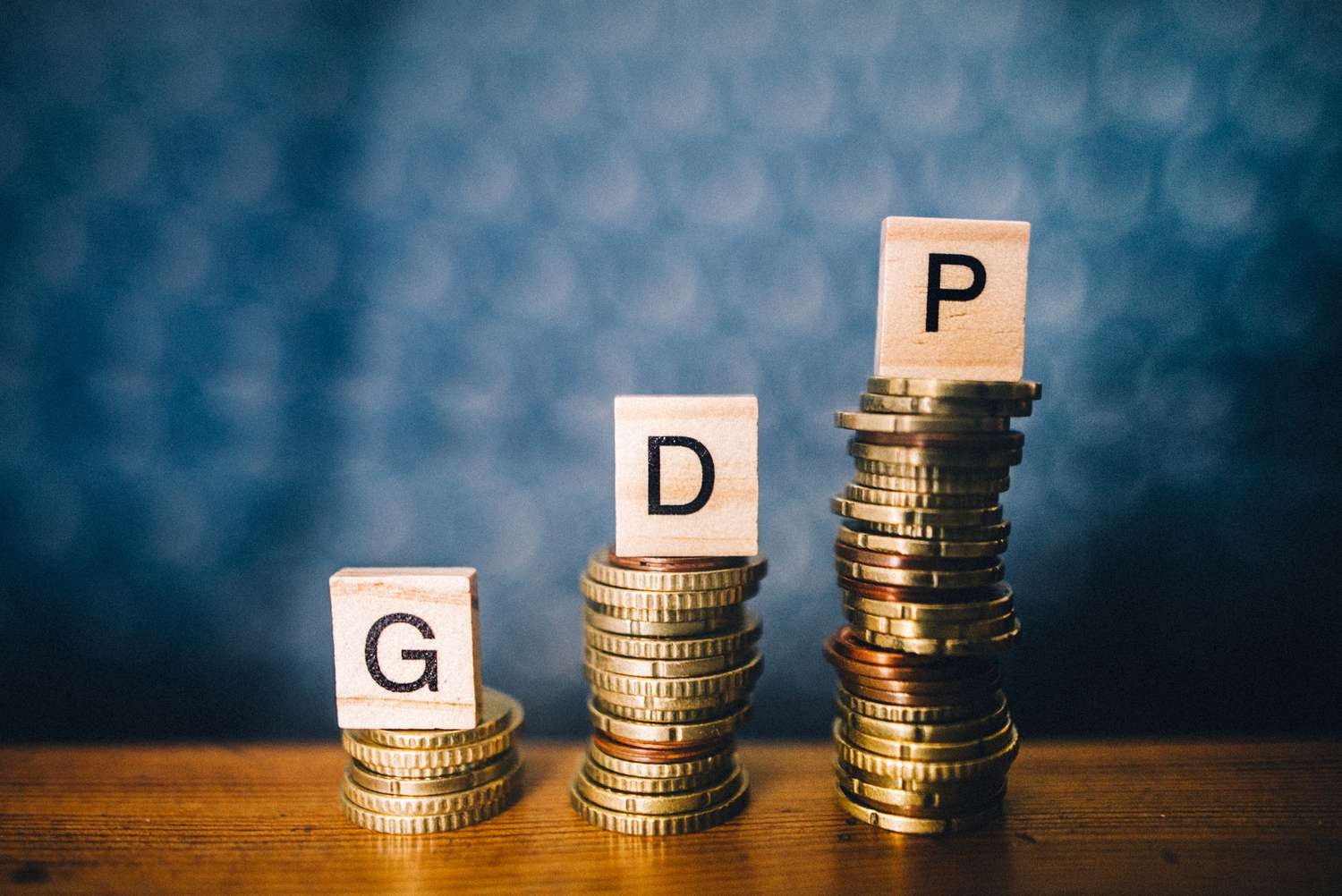
What Is GDP?
A civilization can build cathedrals, split the atom, compose fugues, and map the human genome, yet modern economists will often reduce its success to a quarterly percentage point.
That number is GDP.
Three letters. Gross Domestic Product. The sacred statistic of contemporary statesmanship. Presidents celebrate it. Central bankers manipulate economies in pursuit of it. Television anchors announce it with the breathless urgency once reserved for military victories.
And yet most people have no idea what it actually measures.
Worse still, many assume it measures prosperity.
It does not.
GDP measures production. That distinction matters more than most economists are willing to admit.
The confusion is not accidental. Modern political systems require a metric large enough to justify intervention and vague enough to conceal the damage intervention often causes. GDP serves this purpose magnificently. It transforms the immeasurable complexity of human cooperation into a single figure, allowing governments to claim authorship over growth they scarcely understand.
Still, dismissing GDP entirely would be foolish. It remains useful, much as a ship’s compass remains useful even though it cannot explain the ocean.
To understand GDP properly is to understand both the brilliance and the absurdity of modern economic accounting.
The Birth of GDP: A Wartime Tool That Became a Religion
GDP did not emerge from philosophers debating prosperity beneath marble columns. It emerged from bureaucrats preparing for war.
In the 1930s, during the depths of the Great Depression, governments needed a systematic way to estimate national production. Policymakers wanted to know how much industrial capacity existed, how much could be taxed, and how much could be redirected toward military expansion.
The economist most associated with its creation, Simon Kuznets, understood immediately that the statistic could be abused. He explicitly warned against treating national income as a measure of welfare.
Few warnings in economics have aged more tragically.
By the end of the Second World War, GDP had become institutional doctrine. Nations began organizing policy around maximizing it. Universities trained economists to defend it. International organizations ranked countries by it.
The metric ceased being descriptive and became aspirational.
That transformation changed politics permanently.
What GDP Actually Measures
At its core, GDP measures the total market value of all final goods and services produced within a country during a specific period.
The formula is deceptively simple:
genui{"math_block_widget_always_prefetch_v2":{"content":"GDP = C + I + G + (X - M)"}}
Where:
-
C = Consumer spending
-
I = Investment
-
G = Government spending
-
X = Exports
-
M = Imports
Every modern economy is compressed into this equation.
A teenager buying coffee. A factory constructing machinery. A government paving roads. A multinational exporting semiconductors. All become entries in the same ledger.
But the simplicity hides a profound philosophical assumption: that spending equals value creation.
Sometimes it does.
Sometimes it emphatically does not.
If a businessman builds a factory that produces efficient engines for thirty years, GDP rises.
If a hurricane destroys the factory and reconstruction begins, GDP also rises.
The statistic does not distinguish between creation and repair. Between wealth generation and wealth replacement. Between productive enterprise and bureaucratic expenditure.
It merely counts transactions.
That is its strength.
And its fatal weakness.
Why Governments Worship GDP
GDP offers politicians something irresistible: quantifiable legitimacy.
If GDP grows by 4%, leaders congratulate themselves. If it contracts, they demand emergency powers. Entire election cycles revolve around decimal points.
This creates a perverse incentive structure.
Governments increasingly prioritize activities that inflate measured output even when those activities erode long-term prosperity.
Consider debt-financed spending.
A government can borrow billions, distribute subsidies, fund unnecessary infrastructure, or expand administrative payrolls. GDP increases immediately because government expenditure is included directly in the formula.
Whether the spending creates durable value is another question entirely.
An entrepreneur risking personal capital must satisfy customers voluntarily. A state bureaucracy satisfies statistical accounting.
These are not the same thing.
I learned this lesson years ago while visiting a rapidly developing country whose GDP growth was celebrated endlessly in financial media. Tower cranes filled the skyline. Concrete poured day and night. Officials boasted of double-digit expansion.
Yet entire apartment blocks sat empty.
Roads led nowhere. Airports handled almost no traffic. Shopping malls contained more employees than customers.
The GDP figures were technically accurate. Production had occurred. Money had changed hands.
But wealth had not meaningfully increased.
What I witnessed was not prosperity. It was accounting theater.
GDP Versus Actual Prosperity
The central flaw in GDP is not that it measures nothing.
It measures something very specific.
The problem is that economists and politicians routinely pretend it measures everything.
Prosperity includes factors GDP cannot adequately capture:
-
Social trust
-
Family stability
-
Property rights
-
Sound money
-
Cultural cohesion
-
Leisure time
-
Technological durability
-
Environmental quality
-
Personal freedom
A country can have soaring GDP while suffering institutional decay.
Likewise, a society with moderate GDP may possess extraordinary long-term resilience.
The distinction becomes clearer when comparing nations.
GDP Comparison Table: Output Versus Reality
| Country | Approximate GDP Size | GDP Per Capita | Structural Strength | Hidden Fragilities |
|---|---|---|---|---|
| United States | Extremely High | High | Innovation, capital markets, energy production | Massive debt dependence |
| China | Extremely High | Moderate | Manufacturing scale, infrastructure | Real estate distortions, demographic decline |
| Switzerland | Smaller Overall | Very High | Stable currency, strong institutions | Export dependence |
| Japan | High | High | Industrial sophistication | Aging population, stagnation |
| Argentina | Moderate | Moderate | Agricultural wealth | Chronic monetary instability |
Notice something important.
GDP size alone reveals remarkably little about institutional quality or future sustainability.
A nation with sound money and stable property rights often produces lower headline growth than a nation inflating itself through credit expansion. Yet over decades, the former frequently preserves wealth more effectively.
Modern macroeconomics, obsessed with short-term GDP acceleration, systematically underestimates this truth.
The Dangerous Illusion of Consumption
One of the strangest habits of contemporary economics is treating consumption as the engine of prosperity.
Politicians constantly insist consumers must spend more to “drive growth.”
This is backwards.
Production precedes consumption.
Civilization advances because humans save, invest, and defer gratification long enough to accumulate capital. Consumption is the reward for production, not its substitute.
Imagine two islands.
On the first island, inhabitants fish with bare hands and consume everything immediately.
On the second island, inhabitants save resources long enough to build nets, boats, and refrigeration systems.
Initially, the first island may exhibit higher consumption. But the second island accumulates productive capacity.
Over time, it becomes vastly wealthier.
GDP accounting often obscures this distinction because both immediate consumption and productive investment can temporarily increase output figures. Yet one strengthens future production while the other merely exhausts present resources.
The obsession with stimulating demand through debt and monetary expansion reflects a civilization increasingly hostile to delayed gratification.
That hostility has consequences.
Why GDP Ignores What Matters Most
Some of the most valuable human activities never appear in GDP calculations.
A mother raising children at home contributes enormously to civilization. GDP records nothing.
Neighbors helping one another repair homes after a storm create real wealth. GDP barely notices.
A man spending years mastering a craft before opening a business strengthens the productive fabric of society long before revenue appears in national statistics.
GDP remains silent.
Yet if the same family hires expensive childcare, if consultants produce redundant reports, or if regulators multiply compliance procedures, GDP increases immediately.
The metric rewards monetization, not meaning.
This matters because societies gradually optimize around the metrics they celebrate.
When GDP becomes the supreme measure of success, nations drift toward financialization, bureaucracy, and artificial consumption. Activities that generate measurable transactions receive priority over those that generate durable human flourishing.
The result is an economy increasingly large on paper and increasingly hollow underneath.
GDP Growth and Inflation: The Statistical Mirage
Another complication rarely explained clearly is the difference between nominal GDP and real GDP.
Nominal GDP measures output using current prices.
Real GDP attempts to adjust for inflation.
That distinction sounds straightforward until one confronts a difficult question: how accurately can inflation itself be measured?
Governments possess strong incentives to understate inflation. Lower reported inflation makes economic growth appear stronger in real terms. It also reduces political pressure from rising living costs.
Suppose an economy reports 5% nominal GDP growth while inflation runs at 4%.
Real growth becomes approximately 1%.
But if inflation is actually 7%, the economy may be shrinking in real purchasing power even while official statistics suggest expansion.
This is why many citizens feel poorer during periods economists describe as prosperous.
They are not irrational.
They are responding to reality rather than statistical abstraction.
The Seduction of Aggregate Thinking
GDP encourages people to think nationally rather than individually.
This subtle shift has enormous political consequences.
When citizens hear “the economy grew,” they instinctively assume collective improvement. Yet aggregate production can rise while living standards stagnate for large segments of the population.
Financial asset inflation provides a clear example.
Central bank policies may elevate stock prices and corporate valuations, boosting GDP through increased spending and investment activity. Meanwhile housing becomes unaffordable, wages stagnate, and younger generations lose purchasing power.
The aggregate number rises.
Social stability deteriorates.
GDP conceals distributional complexity behind arithmetic simplicity.
Politicians adore this feature.
What GDP Is Still Useful For
Despite all these criticisms, abandoning GDP entirely would be foolish.
GDP remains useful for measuring economic scale and productive activity across time. It provides a rough indication of industrial capacity, commercial dynamism, and tax potential.
A country with a GDP of $25 trillion undeniably possesses greater economic firepower than one with a GDP of $200 billion.
The problem arises when GDP becomes confused with civilization itself.
It is one metric among many. A tool, not a theology.
Used carefully, GDP can illuminate.
Used dogmatically, it blinds.
The Real Lesson Hidden Beneath GDP
The deeper lesson of GDP is not economic but philosophical.
Modern societies increasingly confuse measurable activity with genuine progress.
We assume that if output rises, civilization advances automatically. Yet history offers little support for this belief.
The late Roman Empire had immense economic activity. So did countless declining empires before it. Complexity and expenditure are not synonymous with vitality.
What sustains civilizations over long periods is harder to quantify:
-
Trustworthy institutions
-
Stable money
-
Productive capital accumulation
-
Cultural continuity
-
Respect for property
-
Low time preference
These forces rarely fit neatly inside quarterly reports.
And yet they determine whether prosperity endures or evaporates.
GDP can count transactions.
It cannot measure wisdom.
That limitation is not merely technical. It is civilizational.
A society obsessed with maximizing GDP may eventually discover that it has optimized for motion instead of direction.
- Arts
- Business
- Computers
- Jocuri
- Health
- Home
- Kids and Teens
- Money
- News
- Personal Development
- Recreation
- Regional
- Reference
- Science
- Shopping
- Society
- Sports
- Бизнес
- Деньги
- Дом
- Досуг
- Здоровье
- Игры
- Искусство
- Источники информации
- Компьютеры
- Личное развитие
- Наука
- Новости и СМИ
- Общество
- Покупки
- Спорт
- Страны и регионы
- World

 English
 Russian
 French
 Spanish
 Portuguese
 Deutsch
 Turkish
 Dutch
Dutch
 Italiano
 Arabic
 Portuguese (Brazil)
 Greek
Greek