
How to Build an Audience
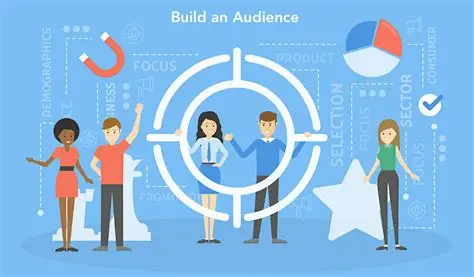
Most people do not have an audience problem.
They have a relevance problem disguised as an audience problem.
That distinction matters because it changes where the failure actually lives.
Not in the algorithm.
Not in the platform.
Not even in consistency, despite how aggressively the internet worships that word.
The real issue is simpler and far less comfortable: most content gives strangers no compelling reason to remember the person creating it.
Memory is the first conversion.
Before loyalty. Before community. Before monetization. Before influence.
Memory.
And yet the average creator approaches audience-building like a volume contest. More posts. More platforms. More visibility. They scatter content across timelines with the desperation of someone throwing flyers into traffic and hoping one lands somewhere useful.
Then they wonder why growth stalls.
I learned this slowly.
Years ago, I believed audience growth was primarily mathematical. Publish enough material and momentum would eventually arrive through sheer persistence. So I posted constantly. Threads. Articles. Commentary. Short-form videos. Daily uploads that looked productive from the outside and hollow from the inside.
The numbers moved.
Barely.
Then one essay changed everything.
Not because it went viral in the dramatic, cinematic way people fantasize about online. It didn’t generate celebrity-level reach. There were no overnight sponsorships waiting in my inbox.
But readers started quoting lines back to me.
That’s when I realized audience-building is less about attracting attention and more about creating recognition.
Recognition scales differently.
Audiences Are Built Through Identity, Not Information
Information is abundant. Identity is scarce.
This is why thousands of creators can discuss the exact same topic while only a handful develop magnetic audiences.
People do not follow creators merely because they teach something useful. They follow creators whose worldview helps articulate something they already feel but haven’t fully expressed.
That’s a completely different psychological relationship.
A productivity expert might explain time management.
A trusted voice explains why modern work feels emotionally exhausting in the first place.
One delivers tactics.
The other delivers interpretation.
Interpretation creates loyalty.
Because audiences aren’t searching only for answers. They’re searching for alignment.
The Dangerous Myth of “Posting Every Day”
Consistency matters. Mechanical consistency does not.
There’s a difference.
The internet frequently rewards visibility in the short term, but audience trust compounds through depth, not frequency alone. A creator publishing forgettable content seven times a week can still remain invisible emotionally.
Meanwhile, a single sharp insight can circulate for months.
People remember emotional precision.
I once spent three weeks writing a long-form article that performed modestly in terms of traffic. By conventional standards, it looked inefficient. But six months later, that same article continued generating inquiries, partnerships, and newsletter subscribers because readers kept sharing it privately.
That’s the metric nobody talks about enough: private sharing.
Public engagement is often performative. Private sharing is intentional.
An audience begins forming the moment people associate your work with intellectual or emotional utility.
Attention Is Cheap. Return Attention Is Rare.
Virality can create exposure. It cannot guarantee attachment.
This is where creators miscalculate.
A massive spike in traffic often feels meaningful because numbers create emotional theater. But attention without retention behaves like a leaking bucket. Impressive for screenshots. Financially and strategically fragile.
Audience-building depends on return behavior.
Do people come back?
Do they remember your voice?
Can they recognize your work without seeing your name attached to it?
That last question matters enormously.
The strongest creators develop identifiable rhythm. Not branding in the superficial sense—logos, fonts, color palettes—but cognitive fingerprints.
You should sound like yourself even stripped of formatting.
The Architecture of Audience Trust
Trust online is rarely established through authority alone.
It’s built through accumulated proof of perception.
Readers trust creators who consistently:
- articulate nuanced problems clearly,
- avoid inflated certainty,
- demonstrate lived experience,
- and communicate with emotional accuracy.
Notice what’s absent from that list: perfection.
Audiences do not require flawless expertise. They require believable expertise.
That’s why overly polished content can sometimes weaken connection. It feels sterilized. Processed. Detached from real observation.
Human beings trust texture.
What Actually Creates Audience Growth
The mechanics are less mysterious than people pretend.
Here’s what consistently separates growing creators from stagnant ones:
| Weak Audience Strategy | Effective Audience Strategy | Long-Term Effect |
|---|---|---|
| Chasing trends | Building perspective | Recognizable identity |
| Posting constantly | Publishing intentionally | Higher trust |
| Broad messaging | Specific observations | Stronger resonance |
| Copying popular voices | Developing verbal distinction | Memorability |
| Obsessing over followers | Obsessing over retention | Durable growth |
| Performing expertise | Demonstrating understanding | Credibility |
| Talking at audiences | Reflecting audience psychology | Emotional connection |
| Prioritizing reach | Prioritizing relevance | Sustainable loyalty |
Most creators spend too much time asking:
“How do I get discovered?”
The better question is:
“Why would someone stay?”
Your Audience Wants Emotional Compression
People are overwhelmed, but not necessarily by quantity.
They’re overwhelmed by cognitive friction.
The creators who grow fastest often possess a rare skill: they compress complicated emotions into language that feels immediately recognizable.
For example:
“Most people aren’t burned out from work itself. They’re burned out from context switching between ten unfinished identities.”
That line spreads because it condenses a diffuse feeling into a coherent observation.
Audiences remember articulation.
This is why strong writing consistently outperforms generic motivational content over time. Precision creates emotional velocity.
Stop Trying to Sound Universally Likable
The instinct to sound broadly agreeable destroys audience differentiation.
Safe content rarely creates loyal communities because loyalty requires emotional polarity. Not hostility. Distinction.
If every sentence sounds optimized to avoid disagreement, readers forget it almost immediately.
Some of the most successful audience-builders online share one characteristic: they make specific people feel intensely understood rather than trying to appeal to everyone equally.
That’s strategically uncomfortable for many creators because specificity risks exclusion.
But exclusion sharpens identity.
And identity attracts communities.
The Platforms Are Not the Audience
This confusion causes enormous strategic mistakes.
Social platforms are distribution environments. The audience relationship itself exists independently of the platform.
Creators who rely entirely on algorithmic visibility often build fragile ecosystems because borrowed attention can disappear without warning.
I learned this after a dramatic engagement drop years ago. Same writing quality. Same posting frequency. Different algorithmic conditions.
For about two weeks, I panicked.
Then I noticed something revealing: email subscribers continued responding. Long-form readers continued returning. Direct messages continued arriving.
The platform had shifted. The relationship had not.
That changed how I approached audience-building permanently.
You do not own visibility.
You earn affinity.
Those are not interchangeable assets.
Audience-Building Requires Repetition Without Sameness
This is where many smart creators accidentally sabotage themselves.
They fear repeating core ideas because repetition feels intellectually redundant.
But audiences need thematic consistency before they recognize expertise.
Strong creators revisit the same foundational tensions repeatedly:
- ambition versus exhaustion,
- creativity versus distraction,
- visibility versus authenticity,
- growth versus sustainability.
The topic remains familiar. The framing evolves.
Think about musicians. Nobody complains when an artist revisits emotional themes across albums. Audiences expect continuity.
Content works similarly.
You are not building an archive of disconnected thoughts. You are building recognizable philosophical terrain.
Metrics Can Quietly Corrupt Your Voice
Analytics are useful until they become ideological.
One viral post can distort creative judgment for months if you’re not careful. Suddenly every idea gets filtered through predicted performance instead of intellectual honesty.
That’s dangerous.
Because audiences eventually sense optimization fatigue.
Content begins sounding engineered instead of observed.
The strongest creators protect part of their process from metrics entirely. They leave room for intuition. Curiosity. Experimentation that may not maximize immediate reach but deepens long-term distinction.
Not every valuable piece of content performs instantly.
Some ideas compound slowly because they require reflection instead of reaction.
Community Is Built Through Shared Language
This is one of the most overlooked audience dynamics online.
Communities form when audiences begin adopting shared terminology, references, frameworks, or recurring emotional themes from a creator’s work.
Language creates belonging.
You can see this everywhere:
- creators with signature phrases,
- newsletters with recurring conceptual models,
- podcasts with internal audience references,
- brands whose audiences quote specific ideas repeatedly.
Shared language transforms passive readers into participating communities.
And communities scale differently than audiences because they self-reinforce.
The Fastest Growth Often Comes After Strategic Patience
This frustrates people because it lacks cinematic appeal.
Most meaningful audience-building looks invisible at first.
Months of low engagement.
Slow accumulation.
Minimal external validation.
Then suddenly momentum appears to arrive “overnight.”
Except it wasn’t overnight.
It was delayed recognition catching up to sustained clarity.
The internet compresses visible outcomes while hiding developmental timelines. That distortion causes creators to abandon strategies prematurely.
Audiences rarely emerge instantly unless novelty is carrying the growth. Durable audiences typically emerge through accumulated familiarity.
Trust compounds quietly before it compounds publicly.
The Most Valuable Audience Trait Is Not Size
It’s conviction.
A small audience with high trust routinely outperforms a massive audience with weak attachment.
Ten thousand deeply invested readers can build extraordinary businesses, communities, and opportunities. Meanwhile, creators with millions of passive viewers often struggle to convert attention into meaningful sustainability.
This is because passive attention behaves differently from active trust.
Trust purchases.
Trust shares privately.
Trust returns voluntarily.
Trust forgives mistakes.
Attention merely scrolls.
The distinction becomes brutally obvious over time.
Conclusion: Build Something People Can Recognize Themselves Inside
Most audience advice focuses on tactics because tactics are easy to package.
Post at this time.
Use this hook formula.
Follow this content structure.
Some of that matters.
Very little of it explains why certain creators become emotionally unforgettable while others remain temporarily visible.
Real audience-building happens when people consistently encounter themselves inside your work.
Their frustrations.
Their ambitions.
Their contradictions.
Their unspoken observations.
That recognition creates gravity.
And gravity is ultimately what audiences are: repeated emotional return.
Not because the creator mastered algorithms.
Not because the branding looked expensive.
Not because the content volume became overwhelming.
But because the work developed a distinct emotional signature difficult to replace.
That is the real threshold.
The moment your audience stops consuming your content casually and starts using it to better understand their own lives.
- Arts
- Business
- Computers
- Jeux
- Health
- Domicile
- Kids and Teens
- Argent
- News
- Personal Development
- Recreation
- Regional
- Reference
- Science
- Shopping
- Society
- Sports
- Бизнес
- Деньги
- Дом
- Досуг
- Здоровье
- Игры
- Искусство
- Источники информации
- Компьютеры
- Личное развитие
- Наука
- Новости и СМИ
- Общество
- Покупки
- Спорт
- Страны и регионы
- World

 English
 Russian
 Spanish
 Portuguese
 Deutsch
 Turkish
 Dutch
Dutch
 Italiano
 Arabic
 Romaian
 Portuguese (Brazil)
 Greek
Greek
