
Why are habits important?
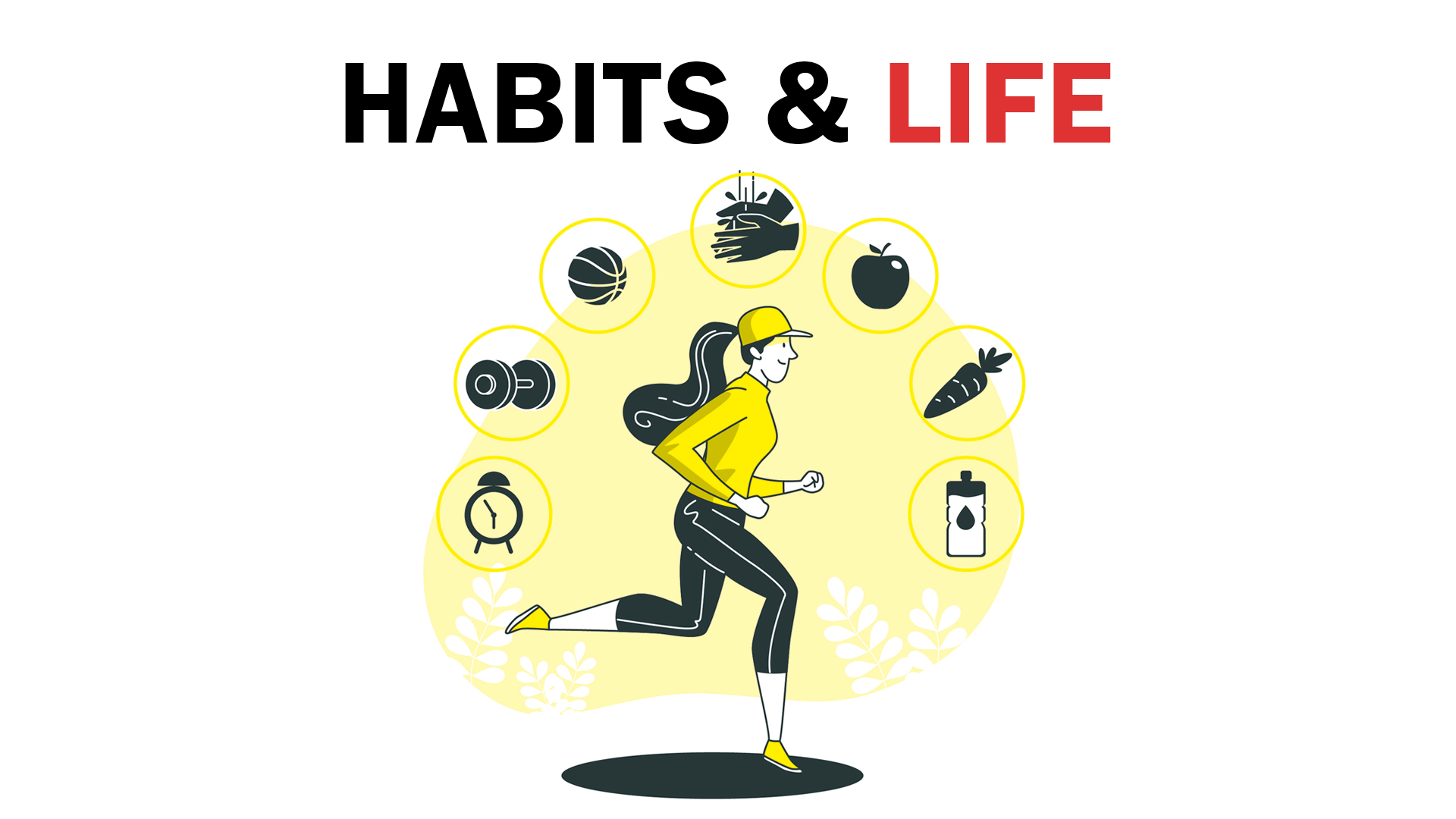
Why Are Habits Important?
Most people dramatically underestimate how much of their lives runs on automation.
Not intention. Not motivation. Not conscious decision-making.
Automation.
The overwhelming majority of daily behavior happens without deep reflection. You wake up in roughly the same way, check the same applications, follow similar movement patterns, repeat familiar emotional reactions, eat predictable foods, think recurring thoughts, and respond to stress through routines you often no longer notice.
That repetition is not accidental.
It is the architecture of habit.
And habits matter because they quietly determine outcomes long before conscious goals ever get a chance to intervene.
Habits Reduce Cognitive Load
Human attention is limited.
Every deliberate decision consumes:
-
mental energy
-
working memory
-
attention bandwidth
-
emotional regulation capacity
If every action required conscious evaluation, daily functioning would become cognitively exhausting almost immediately.
Habits solve this problem through behavioral automation.
Once the brain identifies a repeated behavior as useful—or at least predictable—it gradually shifts execution away from active deliberation.
This creates efficiency.
You no longer need to negotiate every action from scratch.
That matters because cognitive resources are finite. Habits preserve those resources for tasks requiring deeper analysis or creativity.
Habits Shape Behavior More Reliably Than Motivation
Motivation is unstable.
It fluctuates based on:
-
sleep quality
-
stress
-
emotion
-
environment
-
uncertainty
-
energy levels
Habits operate differently.
Once a behavior becomes habitual, it depends less on emotional readiness and more on structural consistency.
This is why habits are powerful:
they continue functioning even when motivation collapses.
A person who relies entirely on motivation must repeatedly convince themselves to act.
A person with stable habits often bypasses that negotiation entirely.
That difference compounds over time.
Small Repeated Behaviors Create Large Long-Term Outcomes
The importance of habits is rarely visible in single moments.
Their power emerges through accumulation.
A single workout changes little.
A year of consistent training changes physiology.
One skipped study session barely matters.
Repeated avoidance reshapes competence entirely.
Habits influence trajectories rather than isolated events.
This makes them deceptively easy to underestimate because humans naturally focus on immediate outcomes rather than cumulative probabilities.
But life is heavily shaped by repeated patterns:
-
financial habits
-
communication habits
-
attention habits
-
eating habits
-
sleep habits
-
thinking habits
The repetition matters more than the individual instance.
Habits Influence Identity
Over time, habits stop feeling like actions and start feeling like personality.
This transition is psychologically significant.
People begin forming self-concepts around repeated behavior:
-
“I’m productive.”
-
“I’m inconsistent.”
-
“I’m healthy.”
-
“I always procrastinate.”
Once habits become identity-linked, they reinforce themselves.
The brain seeks consistency between self-image and behavior. That means repeated actions eventually shape not just what you do, but what you believe you are.
This is one reason habits are difficult to change:
changing the behavior often requires destabilizing part of the identity attached to it.
Good Habits Reduce Friction
One of the hidden benefits of habits is reduced behavioral resistance.
When behaviors are unfamiliar, they require:
-
activation energy
-
decision-making
-
emotional effort
-
conscious focus
As behaviors become habitual, friction decreases.
The action starts feeling normal instead of effortful.
This is why experienced athletes, writers, musicians, or analysts often appear disciplined from the outside. In many cases, they are not exerting constant willpower. They are operating within highly automated behavioral systems.
The important distinction is this:
habits reduce the need for repeated self-control.
Habits Protect You During Low-Functioning Periods
People often imagine self-improvement as something that happens during peak motivation.
In reality, habits matter most during periods of instability.
Stress, burnout, grief, uncertainty, exhaustion—these states reduce cognitive capacity dramatically.
During those periods, behavior often defaults to whatever patterns are already automated.
That means habits function like behavioral fallback systems.
Strong habits can preserve:
-
basic health
-
productivity
-
emotional regulation
-
financial stability
-
relationship maintenance
when conscious discipline becomes unreliable.
Without habits, difficult periods often produce behavioral collapse because every action requires fresh effort.
Negative Habits Matter Just as Much
People sometimes discuss habits only in positive terms, but destructive habits are equally important because they shape outcomes silently.
Examples:
-
chronic avoidance
-
impulsive spending
-
doomscrolling
-
emotional eating
-
self-interrupting focus cycles
-
reactive communication patterns
Negative habits often survive because they provide immediate rewards:
-
distraction
-
relief
-
stimulation
-
predictability
-
emotional escape
The brain prioritizes short-term regulation very aggressively.
That means bad habits are not usually irrational. They are often efficient responses to discomfort with long-term costs hidden downstream.
Understanding this is important because it reframes habits from moral failures into adaptive systems—sometimes maladaptive, but still systematic.
Habits Create Predictability in Unpredictable Environments
Human beings function better with structure than they often realize.
Habits create rhythm.
That rhythm:
-
reduces uncertainty
-
stabilizes attention
-
lowers decision fatigue
-
creates psychological continuity
In chaotic environments, habits can provide a form of behavioral anchoring.
Simple routines—sleep schedules, exercise patterns, reading habits, focused work blocks—often create disproportionate emotional stability because they introduce predictability into otherwise unstable systems.
The nervous system values predictability more than most people consciously recognize.
The Relationship Between Habits and Success
Success is frequently romanticized as a product of rare moments:
-
inspiration
-
genius
-
ambition
-
breakthrough effort
But sustained outcomes usually emerge from repeated ordinary behavior.
Habits determine:
-
how often you practice
-
how consistently you focus
-
how reliably you recover
-
how effectively you manage attention
-
how frequently you compound small gains
In many domains, outcomes are less about dramatic action and more about behavioral consistency maintained over long periods.
This is not glamorous, which is partly why it is often ignored.
But repetition shapes performance more reliably than intensity spikes.
A Personal Lesson About Why Habits Matter
For years, I underestimated habits because I associated progress with effort.
If something felt difficult, I assumed it was meaningful. If it became automatic, I stopped valuing it psychologically.
That mindset created a strange cycle:
-
bursts of motivation
-
aggressive overcommitment
-
exhaustion
-
inconsistency
The turning point came when I realized that the most important behaviors in my life were not the dramatic ones.
They were the invisible ones.
The small repeated actions I barely noticed:
-
when I started working
-
how I handled distraction
-
whether I reviewed notes consistently
-
how often I interrupted my own focus
-
what I defaulted to during stress
Those patterns mattered more than occasional intense effort ever did.
That realization changed how I viewed habits entirely. They were not secondary to success. They were the infrastructure underneath it.
Habits Influence Attention and Thought Patterns
Habits are not limited to physical behaviors.
Thinking itself becomes habitual.
People develop recurring mental patterns:
-
catastrophizing
-
self-criticism
-
overanalysis
-
optimism
-
comparison
-
avoidance thinking
Repeated thought pathways strengthen over time just like repeated behaviors.
This means habits shape not only actions, but perception itself.
The way someone interprets setbacks, uncertainty, or discomfort can become automated through repetition.
That is a powerful idea because it means habits influence emotional reality, not just external behavior.
Why Habits Compound Quietly
The most dangerous thing about habits is how subtle they feel in the short term.
Single instances rarely appear significant.
But habits compound.
\text{Small Repeated Actions} \times \text{Time} = \text{Compounded Outcomes}
Tiny repeated behaviors gradually reshape:
-
health
-
skill
-
finances
-
relationships
-
attention span
-
emotional resilience
People often look for dramatic turning points in life while ignoring the repeated systems quietly shaping probability every day.
Habits operate below the threshold of immediate visibility.
That is exactly why they become so influential.
The Difference Between Goals and Habits
Goals define desired outcomes.
Habits determine recurring behavior.
This distinction matters because goals are episodic. Habits are continuous.
A goal might be:
-
write a book
-
get healthier
-
learn programming
-
improve focus
But the outcome depends almost entirely on habitual systems:
-
daily writing
-
consistent sleep
-
regular practice
-
distraction management
Goals provide direction.
Habits provide execution.
Without habits, goals remain conceptual intentions competing against inconsistent motivation.
Conclusion: Habits Quietly Shape Entire Lives
Habits are important because they convert repeated behavior into automatic structure.
They reduce cognitive load, stabilize action, shape identity, preserve consistency during difficult periods, and compound outcomes over time.
Most importantly, they influence life indirectly.
Rarely through dramatic moments.
Usually through accumulated repetition.
People often assume their lives are primarily shaped by major decisions.
In reality, daily defaults often matter more.
Because what you repeat eventually stops feeling like a choice.
And once behavior becomes automatic, it begins shaping outcomes quietly, continuously, and with far more influence than most people realize.
- Arts
- Business
- Computers
- Games
- Health
- Home
- Kids and Teens
- Money
- News
- Personal Development
- Recreation
- Regional
- Reference
- Science
- Shopping
- Society
- Sports
- Бизнес
- Деньги
- Дом
- Досуг
- Здоровье
- Игры
- Искусство
- Источники информации
- Компьютеры
- Личное развитие
- Наука
- Новости и СМИ
- Общество
- Покупки
- Спорт
- Страны и регионы
- World

 Russian
 French
 Spanish
 Portuguese
 Deutsch
 Turkish
 Dutch
Dutch
 Italiano
 Arabic
 Romaian
 Portuguese (Brazil)
 Greek
Greek