
How Does Email Marketing Work for B2B?
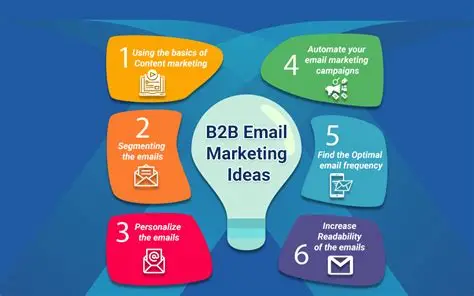
Most B2B companies treat email marketing like a distribution tool.
Send newsletter.
Promote webinar.
Push case study.
Track open rates.
Repeat mechanically.
Then they wonder why their emails disappear into inbox purgatory beside:
- unread SaaS promotions,
- automated follow-ups,
- and emotionally lifeless “checking in” messages.
The problem is not email itself.
The problem is that most B2B email marketing feels transactional before trust exists.
That distinction matters enormously.
Because email remains one of the few marketing channels where businesses still allow direct, repeated access to attention voluntarily.
No algorithm standing between you and the audience.
No platform volatility controlling visibility.
No rented reach disappearing overnight.
Just trust.
Or the absence of it.
I learned this after helping restructure the email strategy for a consulting company whose newsletter looked healthy numerically:
- decent open rates,
- stable subscriber growth,
- respectable click-through metrics.
Revenue impact remained weak.
Eventually we discovered something uncomfortable:
the emails were informative but emotionally forgettable.
They delivered content without perspective.
Once the newsletter shifted from “content distribution” into operational interpretation, responses changed immediately. Prospects replied directly. Sales conversations increased. Referral activity improved.
Not because the emails became louder.
Because they became more useful psychologically.
B2B Email Marketing Is Really About Familiarity
Most business purchases do not happen instantly.
Especially in B2B environments.
Buyers often spend weeks—or months—evaluating:
- providers,
- implementation risks,
- internal alignment,
- and organizational consequences.
Email helps shorten emotional distance gradually.
That’s its real function.
Repeated exposure creates:
- recognition,
- familiarity,
- and perceived credibility.
And familiarity lowers skepticism.
This is why newsletters consistently outperform random cold visibility over time:
subscribers invite ongoing attention voluntarily.
That changes the relationship fundamentally.
Why Email Still Works So Well in B2B
People love predicting the death of email every few years.
Meanwhile executives continue checking their inboxes obsessively.
Because email fits how businesses already operate:
- decision-making,
- approvals,
- coordination,
- relationship management.
Unlike social feeds, email creates a more intentional environment.
Subscribers are not merely scrolling passively.
They are choosing whether your communication deserves attention repeatedly.
That makes email psychologically intimate compared to most marketing channels.
Especially in B2B.
Most B2B Emails Sound Emotionally Artificial
This is where many companies fail immediately.
Open a random B2B newsletter and you’ll likely encounter:
- generic growth advice,
- shallow trend commentary,
- bloated introductions,
- promotional urgency disguised as education.
Everything begins sounding interchangeable.
The strongest B2B emails sound observational instead of performative.
They:
- identify patterns,
- explain operational consequences,
- clarify confusing situations,
- or challenge weak assumptions thoughtfully.
One of the highest-performing B2B newsletters I helped create contained almost no promotional language at all.
Instead, it analyzed:
- onboarding failures,
- communication bottlenecks,
- and buyer hesitation patterns inside enterprise sales cycles.
Readers forwarded those emails internally.
That behavior matters more than vanity metrics.
Email Marketing Builds Trust Gradually
This is one of the biggest misunderstandings in B2B marketing.
Businesses often expect immediate conversions from email campaigns.
Realistically, strong email marketing compounds slowly:
- one useful insight,
- one thoughtful observation,
- one memorable analysis at a time.
A subscriber may:
- read silently for months,
- never reply,
- never click aggressively,
- appear inactive analytically
and still become a high-value client eventually.
I once received a consulting inquiry from someone who had quietly read a newsletter for nearly a year without engaging visibly once.
Their message included:
“I already trust how you think.”
That sentence explained the entire function of B2B email marketing better than most analytics dashboards ever could.
The Best B2B Emails Feel Specific
Generic emails disappear mentally almost instantly.
Specific emails create recognition.
Compare:
“Here are five productivity tips for scaling teams.”
versus:
“Why enterprise onboarding collapses after handoff between sales and operations.”
The second headline signals:
- operational understanding,
- contextual relevance,
- and strategic depth.
Specificity creates authority because it reflects real-world observation.
Businesses trust specificity.
Here’s What Effective B2B Email Marketing Actually Does
| Email Strategy | Strategic Purpose | Common Mistake |
|---|---|---|
| Educational newsletters | Build long-term trust | Publishing generic advice |
| Case study emails | Reduce buyer uncertainty | Over-polishing outcomes |
| Lead nurturing sequences | Maintain familiarity | Excessive automation tone |
| Insight-driven commentary | Demonstrate expertise | Repeating industry clichés |
| Webinar follow-ups | Extend authority | Aggressive selling |
| Segmented campaigns | Increase relevance | Sending identical messaging |
| Founder-led emails | Humanize the brand | Sounding performative |
Notice the pattern:
strong email marketing reduces skepticism gradually.
Segmentation Matters More Than Frequency
Many businesses obsess over sending volume:
- more campaigns,
- more follow-ups,
- more automation.
But relevance matters more than frequency in B2B environments.
Different audiences experience different problems:
- executives,
- operations leaders,
- marketers,
- procurement teams,
- technical stakeholders.
Sending identical messaging to everyone weakens trust because it signals shallow understanding.
One email segmentation adjustment improved engagement dramatically for a B2B software company:
instead of broad newsletters, they created operationally specific content streams for different stakeholder groups.
Engagement quality improved immediately.
Not because the emails became more persuasive.
Because they became more contextually intelligent.
Automation Helps—Until It Starts Sounding Robotic
Automation is useful operationally.
But emotionally dead automation destroys trust quickly.
Most people can detect templated sequences instantly:
- fake personalization,
- artificial urgency,
- manipulative follow-up structures.
The strongest automated emails still feel:
- conversational,
- thoughtful,
- and contextually aware.
One rule permanently improved email performance for a consulting client:
remove unnecessary enthusiasm.
No:
- “Hope you’re crushing it!”
- “Just bumping this to the top of your inbox!”
- “Quick reminder!”
Instead:
clear communication with actual relevance.
Professional calmness stands out now because inboxes are flooded with synthetic energy.
B2B Buyers Read Emails Differently
Consumer email marketing often prioritizes:
- emotional excitement,
- urgency,
- promotions,
- impulse behavior.
B2B readers evaluate emails strategically:
- Is this useful?
- Does this person understand operational reality?
- Is this worth forwarding internally?
- Does this reduce uncertainty?
That changes content structure significantly.
The strongest B2B emails prioritize:
- clarity,
- insight,
- brevity,
- and strategic usefulness.
Not entertainment.
Founder-Led Emails Often Perform Better
This surprises larger organizations sometimes.
But people trust people more than institutional branding language.
Founder-led or operator-led emails often feel:
- more human,
- more nuanced,
- and more observational.
Especially when they include:
- lessons learned,
- implementation mistakes,
- strategic realizations,
- or operational reflections.
One founder newsletter I helped refine generated substantial partnership interest simply because it documented:
- difficult client situations,
- internal process lessons,
- and realistic business observations honestly.
Transparency created credibility.
Metrics Matter Less Than Most Marketers Think
Open rates matter somewhat.
Click rates matter somewhat.
But B2B email marketing success often appears indirectly:
- inbound replies,
- referrals,
- sales conversations,
- partnership interest,
- executive recognition.
Many high-value readers consume newsletters quietly.
Which means shallow metric obsession can distort strategy badly.
One email sequence with moderate engagement metrics generated multiple enterprise conversations because the content reached the right buyers psychologically.
Quality of attention matters more than scale constantly in B2B.
Why Most B2B Newsletters Fail
Not because email stopped working.
Because the content lacks:
- perspective,
- specificity,
- operational realism,
- or strategic usefulness.
Most newsletters merely summarize information already available everywhere else.
Strong newsletters interpret reality instead.
That difference creates authority.
Conclusion: B2B Email Marketing Is Trust Delivered Repeatedly
Most businesses think email marketing is about communication frequency.
It’s really about relationship continuity.
Done poorly, email becomes:
- noise,
- interruption,
- or promotional clutter.
Done well, it becomes:
- familiarity,
- intellectual trust,
- and strategic reassurance.
That’s why email remains one of the most powerful B2B marketing channels available despite endless predictions about its decline.
Because businesses still buy from organizations they:
- recognize,
- understand,
- and trust operationally.
And trust rarely forms from one interaction alone.
It compounds through repeated useful exposure:
- one insightful email,
- one thoughtful observation,
- one strategically valuable perspective at a time.
The strongest B2B email marketers are not necessarily the most aggressive sellers.
Usually they are the clearest thinkers.
The people capable of communicating with enough:
- specificity,
- calmness,
- and operational understanding
that buyers gradually begin associating their inbox presence with credibility rather than interruption.
That’s what effective B2B email marketing really is.
Not automated persuasion sequences.
Trust built carefully through consistency, usefulness, and believable expertise.
- Arts
- Business
- Computers
- Παιχνίδια
- Health
- Κεντρική Σελίδα
- Kids and Teens
- Money
- News
- Personal Development
- Recreation
- Regional
- Reference
- Science
- Shopping
- Society
- Sports
- Бизнес
- Деньги
- Дом
- Досуг
- Здоровье
- Игры
- Искусство
- Источники информации
- Компьютеры
- Личное развитие
- Наука
- Новости и СМИ
- Общество
- Покупки
- Спорт
- Страны и регионы
- World

 English
 Russian
 French
 Spanish
 Portuguese
 Deutsch
 Turkish
 Dutch
Dutch
 Italiano
 Arabic
 Romaian
 Portuguese (Brazil)
