
What Is CRM Software? Most Companies Think It’s About Customers. It’s Actually About Memory.
The first time I watched a company outgrow spreadsheets, the collapse happened quietly.
No dramatic system failure. No cinematic panic inside a conference room.
Just small operational fractures accumulating until everyone became exhausted.
Sales reps duplicated outreach without realizing it. Customer support lost context between conversations. Marketing celebrated leads sales considered useless. Important client notes disappeared into Slack threads nobody could find later. One executive described the company’s internal communication as “archaeology with deadlines.”
Then someone finally said the phrase every growing business eventually reaches:
“We need a CRM.”
What fascinated me wasn’t the decision itself.
It was how differently people interpreted what a CRM actually was.
Sales thought it meant pipeline tracking.
Marketing thought it meant campaign attribution.
Leadership thought it meant forecasting visibility.
Customer success wanted centralized client history.
Operations wanted organizational sanity.
All technically correct.
And yet none of those explanations fully captured why CRM software became foundational to modern business infrastructure.
Because beneath the dashboards, automations, and contact records, CRM software serves a simpler purpose:
it prevents companies from forgetting important relationships at scale.
That sounds almost embarrassingly obvious until you realize how many businesses fail precisely because institutional memory breaks down as growth accelerates.
What Is CRM Software?
CRM stands for Customer Relationship Management.
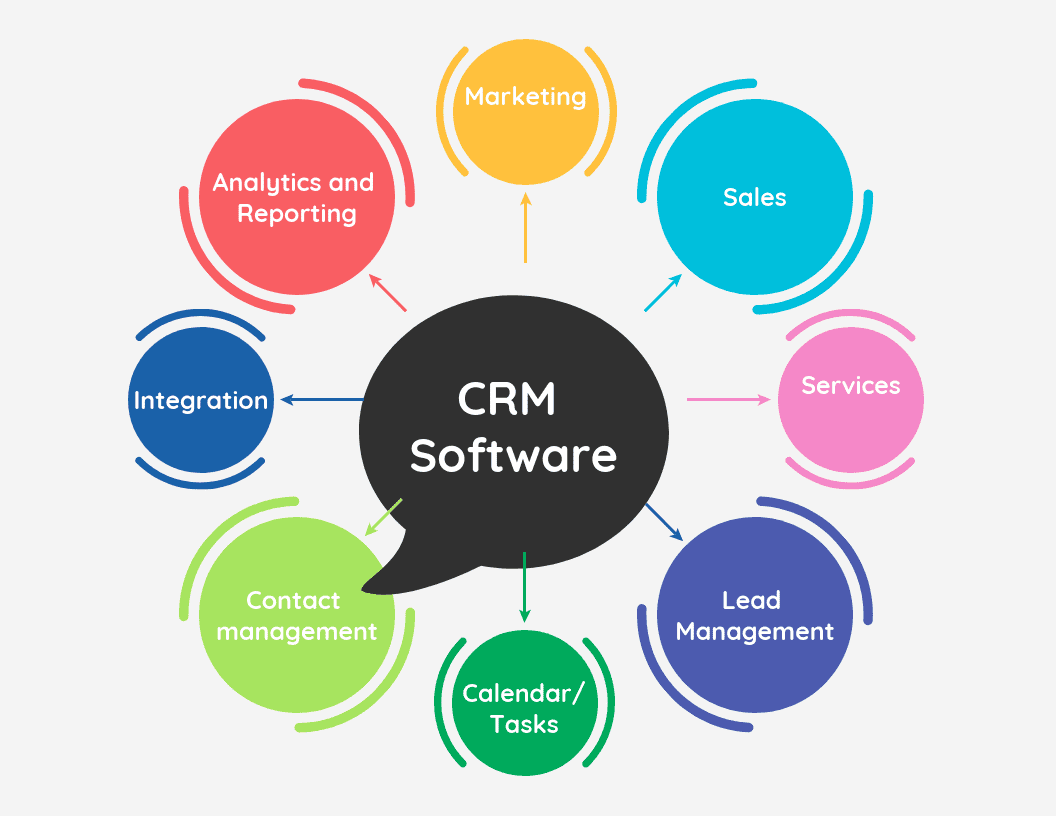
CRM software helps businesses organize, track, and manage interactions with customers, prospects, leads, and clients across sales, marketing, and support functions.
At a functional level, CRM platforms typically store:
- Contact information
- Sales activity
- Communication history
- Purchase behavior
- Customer support interactions
- Pipeline stages
- Task reminders
- Reporting data
But describing CRM software purely through features misses the deeper operational role it plays.
A CRM is not merely a database.
It is a coordination system for human relationships inside organizations that have become too large to rely on memory alone.
And once companies cross a certain complexity threshold, that coordination becomes existential.
Why Businesses Needed CRM Software in the First Place
Before CRM platforms became widespread, many companies operated through fragmented information systems.
Sales kept notes locally.
Marketing tracked campaigns separately.
Support teams maintained isolated ticket histories.
Executives relied on disconnected reporting.
The result was organizational amnesia.
Customers repeated information constantly because departments rarely shared context effectively.
This created operational friction everywhere:
- Lost leads
- Missed follow-ups
- Inconsistent communication
- Weak forecasting
- Duplicate outreach
- Customer frustration
CRM systems emerged because scaling businesses eventually discovered something uncomfortable:
human memory does not scale operationally.
Especially across departments.
Especially under pressure.
Especially when employee turnover enters the equation.
CRM Software Is Really About Visibility
Most CRM vendors market productivity.
Useful framing.
Incomplete framing.
The true value of CRM software is visibility.
Visibility into:
- Customer behavior
- Sales pipeline movement
- Revenue forecasting
- Team activity
- Communication history
- Retention risks
- Opportunity timing
Without centralized visibility, businesses operate reactively.
With visibility, companies can identify:
- Which deals are stalling
- Which customers require support
- Which campaigns influence revenue
- Which accounts are expanding
- Which sales reps need coaching
Visibility reduces operational guesswork.
And reducing guesswork tends to improve revenue quality surprisingly quickly.
The Evolution of CRM: From Rolodex Replacement to Revenue Infrastructure
Early CRM systems behaved mostly like digital contact management tools.
Useful, certainly.
Limited, too.
Modern CRM platforms evolved into operational ecosystems connecting:
- Sales
- Marketing
- Customer service
- Finance
- Analytics
- Automation
- Reporting
- AI-driven forecasting
Today’s CRM systems often sit at the center of company operations.
That evolution happened because customer relationships themselves became more complicated.
A single B2B customer interaction now might involve:
- Paid advertising
- Website visits
- Email sequences
- Demo calls
- Support conversations
- Product onboarding
- Renewal discussions
Without centralized systems, that customer journey fragments quickly.
CRM software attempts to unify the narrative.
A Comparison: Businesses Without CRM vs. Businesses Using CRM Software Effectively
| Factor | Without CRM Software | With CRM Software |
|---|---|---|
| Customer data | Scattered across tools | Centralized visibility |
| Sales follow-up | Inconsistent | Structured workflows |
| Revenue forecasting | Unreliable | Data-informed projections |
| Team communication | Fragmented | Shared customer context |
| Lead management | Manual tracking | Automated pipeline movement |
| Customer experience | Repetitive and inconsistent | Personalized interactions |
| Reporting accuracy | Limited visibility | Real-time analytics |
| Operational efficiency | Reactive | Process-driven |
| Customer retention | Higher friction | Stronger continuity |
| Scalability | Difficult to sustain | Easier coordination at scale |
That final row matters enormously.
CRM software becomes more valuable as organizational complexity increases.
Small teams can survive temporarily through memory and improvisation.
Scaling companies cannot.
Why Sales Teams Became Dependent on CRM Systems
Sales environments generate enormous informational chaos.
Calls.
Emails.
Meetings.
Follow-ups.
Pipeline updates.
Contract negotiations.
Without centralized systems, opportunities disappear surprisingly easily.
CRM software helps sales teams:
- Track deal progression
- Schedule follow-ups
- Prioritize leads
- Forecast revenue
- Monitor conversion behavior
- Coordinate account ownership
But there’s another reason CRM adoption spread aggressively in sales organizations:
accountability.
CRM systems create visibility into rep activity and pipeline movement. Leadership gains measurable insight into:
- Deal velocity
- Win rates
- Sales performance
- Forecast reliability
This transparency improved operational control while simultaneously making many salespeople deeply suspicious of CRM systems initially.
Not entirely unfairly.
Poorly implemented CRMs can feel less like productivity tools and more like administrative surveillance software.
Which leads directly to one of the industry’s biggest problems.
Most CRM Failures Are Not Technical Failures
They are behavioral failures.
Companies purchase expensive CRM platforms expecting immediate operational transformation.
Then adoption weakens.
Data quality deteriorates.
Teams stop updating records consistently.
Reporting becomes unreliable.
Executives lose trust in the system itself.
I watched this happen inside a mid-sized SaaS company years ago.
Leadership spent heavily on CRM implementation while neglecting one critical issue:
nobody internally agreed on workflow standards.
Sales reps interpreted pipeline stages differently. Customer success teams tracked information inconsistently. Marketing imported incomplete lead data.
The CRM became structurally confusing almost immediately.
The lesson was brutal but useful:
CRM software cannot fix organizational misalignment by itself.
It amplifies whatever operational discipline already exists.
Healthy processes scale better through CRM systems.
Chaotic processes become digitally chaotic.
Why CRM Data Quality Matters More Than Features
Modern CRM platforms compete aggressively on:
- Automation
- AI functionality
- Integrations
- Reporting dashboards
- Workflow customization
Important capabilities, certainly.
But none matter if the underlying data becomes unreliable.
Bad CRM data creates:
- Broken forecasting
- Poor lead prioritization
- Misleading analytics
- Customer frustration
- Revenue confusion
And once teams stop trusting CRM accuracy, adoption collapses quickly.
Strong CRM cultures emphasize:
- Consistent data entry
- Clear ownership
- Defined workflows
- Ongoing maintenance
- Operational accountability
Because CRM software is only as useful as the behavioral discipline surrounding it.
That reality is less exciting than AI-powered automation demos.
It is also considerably more important.
CRM Software Changed Customer Expectations Too
Customers now expect continuity.
They assume businesses remember:
- Previous conversations
- Purchase history
- Support issues
- Preferences
- Account details
When organizations fail to retain context, frustration rises immediately.
Nothing damages trust faster than forcing customers to repeat information repeatedly across departments.
CRM systems reduce that friction by preserving institutional memory.
A support representative can review:
- Prior tickets
- Sales conversations
- Product usage
- Renewal history
Before interacting with the customer.
That continuity feels competent.
Competence builds trust surprisingly efficiently.
The Rise of AI Inside CRM Platforms
Artificial intelligence is reshaping CRM software aggressively.
Modern systems increasingly offer:
- Predictive forecasting
- Automated lead scoring
- Suggested follow-ups
- Conversation summaries
- Churn prediction
- Pipeline risk alerts
Some implementations genuinely improve operational efficiency.
Others resemble automation wrapped in expensive branding language.
Still, AI changes CRM functionality fundamentally because systems are evolving from passive storage tools into active decision-support platforms.
The CRM no longer merely records behavior.
It increasingly interprets behavior.
That transition introduces enormous opportunities alongside legitimate concerns about:
- Data privacy
- Over-automation
- Decision accuracy
- Human oversight
Especially in relationship-driven industries where nuance matters heavily.
Why CRM Software Often Reveals Cultural Problems
This is rarely discussed openly.
CRM implementation projects frequently expose deeper organizational dysfunction.
Suddenly leadership sees:
- Poor follow-up habits
- Inconsistent sales processes
- Weak customer communication
- Misaligned incentives
- Departmental fragmentation
The software did not create these problems.
It revealed them.
Which explains why CRM rollouts sometimes generate internal resistance beyond ordinary software adoption discomfort.
Visibility can feel threatening.
Particularly inside organizations operating through improvisation rather than structured accountability.
Small Businesses Need CRM Software Earlier Than They Think
Many smaller companies delay CRM adoption because spreadsheets appear sufficient initially.
That works temporarily.
Then complexity arrives:
- More customers
- More employees
- More sales activity
- More communication channels
Operational memory starts breaking.
By the time businesses recognize the problem fully, migration becomes considerably harder because customer data already lives across disconnected systems.
Ironically, smaller businesses often benefit disproportionately from CRM structure because they lack the operational redundancy larger enterprises possess.
A missed follow-up matters more when revenue concentration remains high.
CRM Software Is Not Really About Technology
This is the part many companies misunderstand completely.
CRM platforms are not fundamentally software purchases.
They are operational philosophy decisions.
A company implementing CRM software is implicitly deciding:
- Customer information should remain centralized
- Relationships should survive employee turnover
- Revenue forecasting should become measurable
- Communication should become trackable
- Processes should become repeatable
Those are management choices disguised as technology decisions.
Which explains why successful CRM implementation requires cultural alignment as much as technical setup.
Conclusion: CRM Software Exists Because Relationships Become Difficult to Manage at Scale
People often describe CRM systems through features:
dashboards, pipelines, automations, analytics.
Reasonable descriptions.
But underneath all the software terminology sits something more human.
Memory.
Businesses grow.
Teams expand.
Conversations multiply.
Complexity accelerates.
Without centralized systems, organizations begin forgetting customers in fragmented ways:
- Forgotten follow-ups
- Lost context
- Inconsistent messaging
- Broken continuity
CRM software exists because scaling relationships manually eventually becomes impossible.
And modern business depends increasingly on relationship continuity.
Not just acquiring customers.
Remembering them properly afterward.
That distinction separates transactional organizations from durable ones.
Because customers rarely judge companies solely on product quality anymore.
They judge:
- Responsiveness
- Consistency
- Context awareness
- Communication continuity
In other words:
they judge whether the business behaves like it remembers them.
CRM software helps companies operationalize remembrance.
Not perfectly.
Not automatically.
Certainly not without discipline.
But effectively enough that modern organizations now struggle to function competitively without it.
Which may be the clearest definition of CRM software after all:
a system designed to help businesses maintain coherent relationships long after complexity would otherwise make coherence impossible.
- Arts
- Business
- Computers
- Games
- Health
- Home
- Kids and Teens
- Money
- News
- Personal Development
- Recreation
- Regional
- Reference
- Science
- Shopping
- Society
- Sports
- Бизнес
- Деньги
- Дом
- Досуг
- Здоровье
- Игры
- Искусство
- Источники информации
- Компьютеры
- Личное развитие
- Наука
- Новости и СМИ
- Общество
- Покупки
- Спорт
- Страны и регионы
- World

 Russian
 French
 Spanish
 Portuguese
 Deutsch
 Turkish
 Dutch
Dutch
 Italiano
 Arabic
 Romaian
 Portuguese (Brazil)
 Greek
Greek