
How does carbon pricing work?
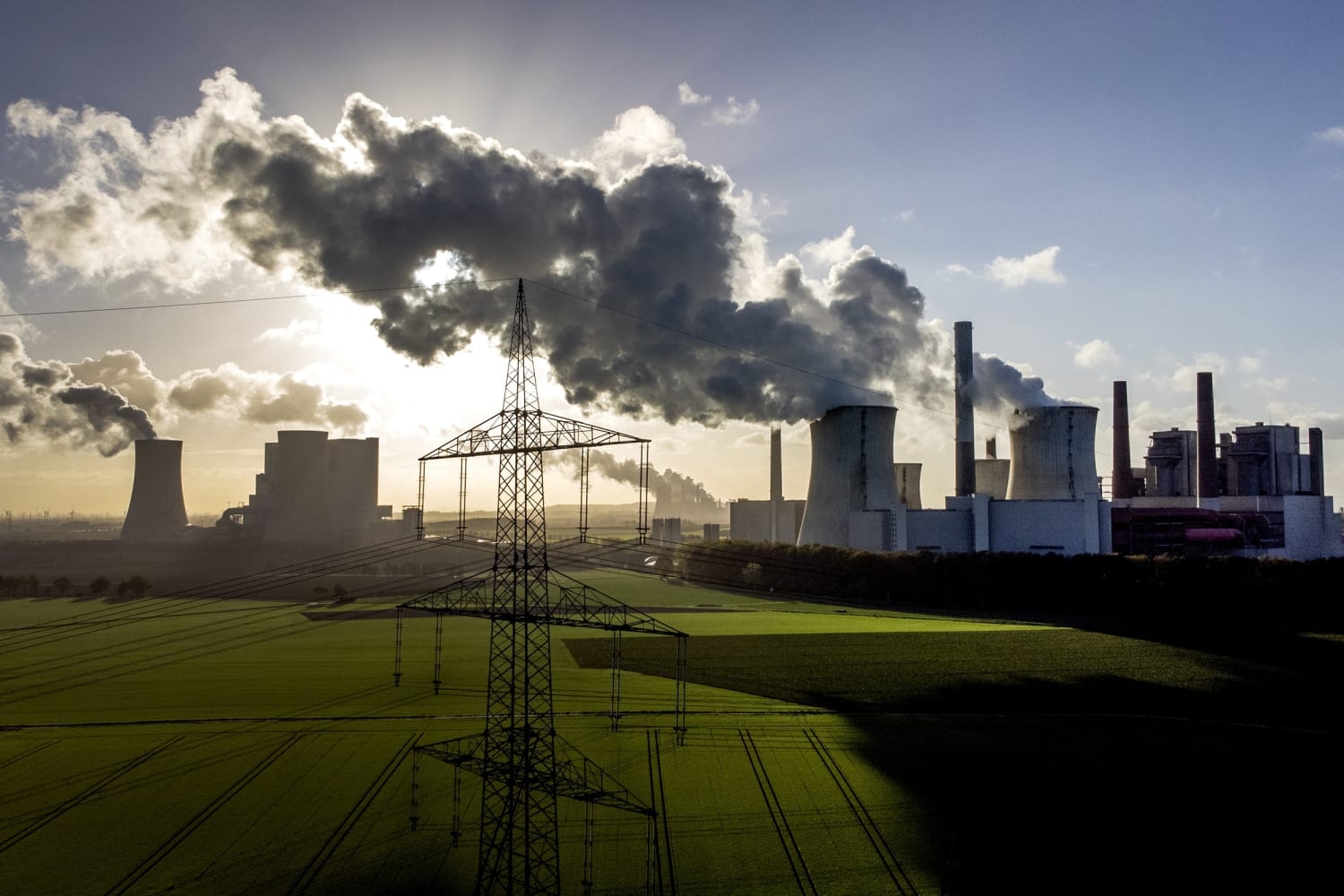
How Does Carbon Pricing Work?
There is a habit in economics, especially in rooms with polished tables and filtered air, to speak about carbon as though it were an abstraction. A metric. A unit. A derivative of energy consumption. Yet carbon dioxide is physical. It leaves a tailpipe warm. It rises from a smokestack with the invisible confidence of empire. It lingers in oceans that absorb heat like bruises.
Carbon pricing begins with a simple, destabilizing proposition: if pollution carries a cost for society, why is it free for the polluter?
That question rearranges entire industries.
Not overnight. Not cleanly. Markets resist moral vocabulary. Oil companies do not wake up one morning transformed into monastic orders devoted to atmospheric chemistry. Utilities continue generating electricity. Airlines continue lifting aluminum cylinders into the sky. But the arithmetic changes. And when arithmetic changes, civilization follows.
The atmosphere, after all, has never issued an invoice. Carbon pricing attempts to write one.
The Hidden Subsidy Beneath Modern Life
For more than a century, industrial economies have operated on a peculiar accounting trick. The profits from fossil fuels are private; the damages are public.
A coal plant can generate electricity cheaply because the respiratory illness downstream does not appear on the utility’s balance sheet. A shipping company can bunker heavy fuel oil because melting glaciers belong to no corporation. Climate change, in this sense, is not merely an environmental failure. It is an accounting failure vast enough to alter weather patterns.
Economists call these damages “externalities,” a sterile word for flooded neighborhoods and collapsing coral reefs.
Carbon pricing internalizes those costs. It places a monetary value on greenhouse gas emissions so that the price of goods and services begins to reflect their ecological consequences.
The mechanism sounds technical. The implications are philosophical.
Suddenly, the atmosphere is no longer an open sewer.
Two Dominant Models: Carbon Tax vs. Cap-and-Trade
Most carbon pricing systems fall into two categories:
-
Carbon taxes
-
Cap-and-trade systems
They share the same destination — reducing emissions — but travel different roads.
Carbon Taxes: Predictable Pain
A carbon tax imposes a direct fee on emissions, usually measured per metric ton of carbon dioxide emitted.
If a government sets the tax at $50 per ton, then a company emitting one million tons of CO₂ owes $50 million. The cost migrates through supply chains. Coal becomes more expensive. Renewable energy becomes comparatively cheaper. Efficiency suddenly acquires glamour.
The elegance of a carbon tax lies in its simplicity.
Burn more carbon, pay more money.
Consumers feel it too. Gasoline prices rise modestly. Electricity from fossil fuels inches upward. Companies redesign logistics networks because wasted fuel now resembles wasted capital.
And here something subtle occurs: innovation accelerates not because executives become environmentalists, but because markets become directional. Capital, like water, follows gradients.
Cap-and-Trade: Scarcity as Policy
Cap-and-trade systems operate differently. Instead of setting a price on carbon directly, governments establish a limit — a cap — on total emissions.
Companies receive or purchase permits allowing them to emit a certain quantity of greenhouse gases. Firms that reduce emissions efficiently can sell unused permits. Firms that pollute heavily must buy additional allowances.
Pollution becomes a tradable commodity.
To critics, this sounds vaguely surreal. To markets, it feels familiar. Scarcity drives value.
The cap tightens gradually over time. Permits become harder to obtain. Emissions decline because the economic ecosystem reorganizes itself around the shrinking availability of atmospheric space.
The architecture resembles fisheries management more than taxation. There is only so much catch allowed. Exceed it, and the system destabilizes.
A Comparison of Major Carbon Pricing Models
| Feature | Carbon Tax | Cap-and-Trade |
|---|---|---|
| Primary Control | Price certainty | Emissions certainty |
| Government Sets | Cost per ton | Total emissions cap |
| Market Determines | Total emissions reduction | Carbon price |
| Administrative Complexity | Relatively simple | More complex |
| Revenue Generation | Direct tax revenue | Permit auctions/trading |
| Business Predictability | Higher | Moderate |
| Risk | Emissions may not fall enough | Permit prices may fluctuate |
| Best For | Stable planning environments | Aggressive emissions targets |
Neither system is ideologically pure. Both are compromised by politics, exemptions, lobbying, and electoral fear. Yet both have demonstrated measurable effects.
And that is the inconvenient reality often ignored in cultural shouting matches: carbon pricing works more often than it fails.
The Strange Psychology of Pricing Pollution
Several years ago, I attended a regional climate conference where utility executives discussed decarbonization with the emotional enthusiasm of men reviewing parking regulations. During a break, one executive admitted something unexpectedly candid.
“We didn’t change because of climate science,” he told me quietly beside an urn of stale coffee. “We changed because coal stopped making financial sense.”
That sentence stayed with me.
Public discourse tends to assume transformation emerges from moral awakening. Occasionally it does. More often, systems shift because incentives shift.
Carbon pricing changes incentives.
A manufacturer deciding whether to upgrade industrial boilers suddenly calculates future carbon liabilities. An investor evaluating power infrastructure begins discounting fossil-heavy assets. Pension funds notice long-term exposure. Insurance firms notice wildfire claims. Freight companies notice diesel volatility.
The economy starts behaving like an ecosystem responding to pressure gradients.
Not perfectly. Not universally. But perceptibly.
Where Carbon Pricing Already Exists
Carbon pricing is no longer theoretical policy architecture debated exclusively in academic journals.
More than 70 carbon pricing initiatives now operate globally across national and regional jurisdictions. These systems cover nearly a quarter of worldwide greenhouse gas emissions.
Notable examples include:
-
The European Union Emissions Trading System
-
Canada’s federal carbon pricing framework
-
California’s cap-and-trade program
-
China’s national emissions trading market
-
Sweden’s carbon tax, among the highest in the world
The results vary, but patterns emerge.
Sweden, which introduced a carbon tax in 1991, reduced emissions significantly while maintaining economic growth. The European Union’s carbon market helped accelerate coal plant retirements across several member states. British Columbia’s carbon tax reduced fuel consumption while returning revenue to citizens through tax reductions.
The caricature that environmental regulation automatically destroys economies has always depended on selective memory. Industrial history suggests something else entirely: regulation often drives modernization.
Catalytic converters were once denounced as economic sabotage. So were seat belts. So was sulfur regulation.
Civilization advances through constraints.
Why Critics Resist Carbon Pricing
The objections are not trivial.
Carbon pricing can increase energy costs, especially for lower-income households already carrying disproportionate financial burdens. Rural communities dependent on driving often experience higher fuel impacts. Energy-intensive industries fear competitive disadvantages if neighboring countries lack equivalent regulations.
These concerns matter.
A poorly designed carbon pricing system can deepen inequality. France’s “Yellow Vest” protests emerged partly from fuel tax anger disconnected from broader social protections. Climate policy detached from economic justice becomes politically brittle.
Which is why many economists advocate revenue recycling.
Governments can return carbon revenues directly to citizens through dividends, tax reductions, or public investments. In some proposals, most households actually receive more money back than they pay in increased energy costs.
This transforms carbon pricing from punitive taxation into economic redistribution linked to ecological repair.
The atmosphere stabilizes. Households gain resilience. Markets receive clarity.
At least in theory.
Politics, unfortunately, rarely resembles theory.
The Fossil Fuel Industry’s Complicated Relationship With Carbon Pricing
Here the story becomes more tangled.
Some major oil companies publicly support carbon pricing. Skeptics interpret this as public relations camouflage. Sometimes it is. Yet portions of the industry genuinely prefer predictable carbon pricing over fragmented regulation.
Why?
Because markets can adapt to prices more easily than uncertainty.
If executives know carbon will cost $100 per ton in ten years, they can model investments accordingly. Regulatory ambiguity creates chaos. Investors dislike chaos almost as much as they dislike declining reserves.
Meanwhile, renewable energy developers generally benefit from carbon pricing because fossil fuels lose their artificial affordability.
The market begins reflecting thermodynamic reality instead of historical subsidy.
And this is the part rarely acknowledged openly: fossil fuels have never competed in a truly free market. Their price excludes climate damage, military protection costs, health impacts, and ecosystem destruction.
Carbon pricing does not distort markets. It corrects distortions already embedded within them.
Carbon Pricing Is Not a Climate Savior
It is tempting to search for singular solutions. Human beings enjoy technological messiahs.
But carbon pricing alone will not solve climate change.
It cannot rapidly build transmission infrastructure. It does not automatically redesign cities around public transit. It will not restore forests, reinvent agriculture, or eliminate political corruption. Some sectors — aviation, cement, steel — remain stubbornly difficult to decarbonize even under strong carbon prices.
Carbon pricing functions best as part of a larger ecological framework.
Think of it less as a silver bullet and more as a compass. It nudges economies continuously toward lower emissions. It rewards efficiency. It penalizes waste. It changes investment logic.
Over time, those nudges compound.
And compounding, not spectacle, is how civilizations transform.
The Real Question Beneath the Economics
Ultimately, carbon pricing forces societies to confront a deeper question than taxation or markets.
What is the atmosphere worth?
For centuries, industrial civilization behaved as though the sky possessed infinite absorptive capacity. We now know otherwise. Oceans warm. Jet streams destabilize. Wildfires redraw continents in smoke.
The atmosphere is finite.
Carbon pricing translates that finitude into economic language because modern systems listen to prices more attentively than they listen to science. One might wish this were not true. Yet history suggests otherwise.
I sometimes think the most revealing aspect of carbon pricing is not the mechanism itself, but the resistance to it. Entire political movements emerge to defend the right to emit greenhouse gases without paying for the damage. That resistance exposes how deeply industrial economies depend upon invisible subsidies extracted from the future.
Children inherit the invoice.
And perhaps that is the most provocative lesson carbon pricing offers: climate change is not solely an environmental crisis. It is a crisis of valuation. A civilization capable of pricing luxury watches to the cent somehow treated atmospheric stability as worthless.
Until now.
Carbon pricing works by assigning consequence where consequence was absent. Not perfectly. Not universally. But enough to alter decisions at planetary scale.
Which may be the quiet revelation underneath all of this.
The future is shaped less by grand speeches than by what societies choose to make expensive.
- Arts
- Business
- Computers
- Games
- Health
- Home
- Kids and Teens
- Money
- News
- Personal Development
- Recreation
- Regional
- Reference
- Science
- Shopping
- Society
- Sports
- Бизнес
- Деньги
- Дом
- Досуг
- Здоровье
- Игры
- Искусство
- Источники информации
- Компьютеры
- Личное развитие
- Наука
- Новости и СМИ
- Общество
- Покупки
- Спорт
- Страны и регионы
- World

 Russian
 French
 Spanish
 Portuguese
 Deutsch
 Turkish
 Dutch
Dutch
 Italiano
 Arabic
 Romaian
 Portuguese (Brazil)
 Greek
Greek