
Do carbon taxes reduce emissions?
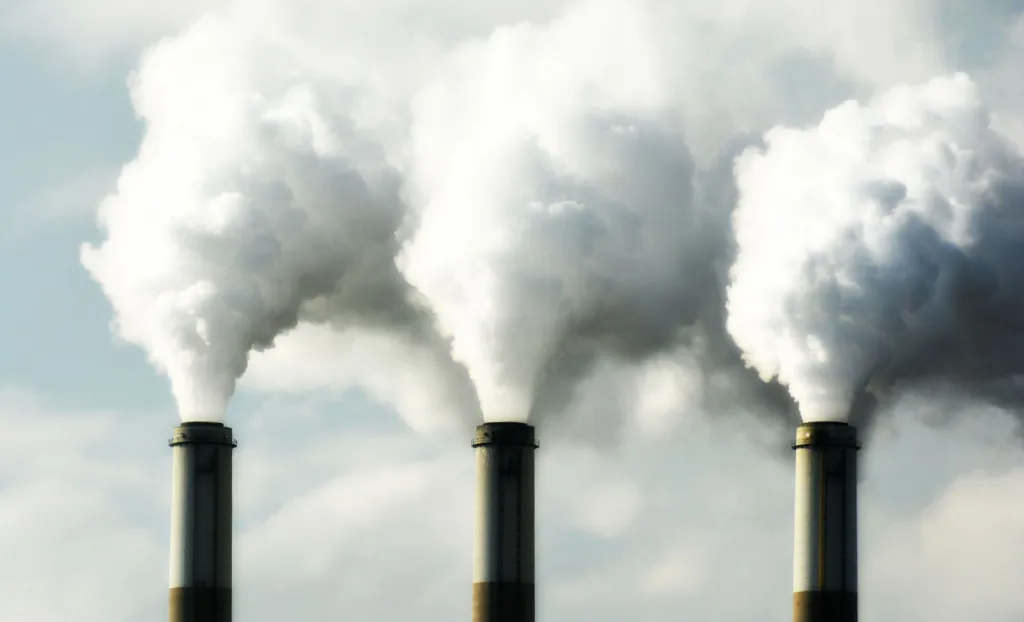
Do Carbon Taxes Reduce Emissions?
The argument usually arrives disguised as arithmetic. A legislator holds up a chart, a pundit cites a gasoline price, an economist sketches a tidy curve on television. Carbon taxes, we are told, work because people respond to prices. Raise the cost of pollution and pollution declines. Elegant. Mechanical. Almost Newtonian.
But carbon is not emitted by equations. It is emitted by furnaces in Ohio, diesel ships in the Pacific, cement kilns in India, gas flares over Texas shale fields, and apartment buildings in Montreal whose boilers wake before dawn each winter. Carbon is not an abstraction. It has a smell. Bitumen and hot iron. Jet fuel on a rainy runway. Methane leaking from a valve no one replaced because quarterly earnings mattered more than entropy.
So the real question is not whether carbon taxes function inside an economic model. The real question is stranger and more human:
Can a society place a price on damage it has spent two centuries pretending was free?
The answer, inconveniently for both ideologues and oil executives, is yes. Mostly. Unevenly. Sometimes brilliantly. Sometimes with the grace of a shopping cart pushed across gravel.
Carbon taxes do reduce emissions. The evidence now stretches across continents and decades. Yet the reduction is neither automatic nor sufficient. A carbon tax behaves less like a silver bullet and more like a tuning fork. It sends a signal through the economy. What vibrates depends on politics, infrastructure, trust, and time.
The Hidden Subsidy Beneath Modern Life
For most of industrial history, the atmosphere operated as an unpaid waste dump.
A coal plant could darken a valley’s lungs and no invoice arrived. An airline could fill the stratosphere with combustion byproducts and kerosene remained exempt from many taxes. The economic system treated ecological harm as an externality, a word so antiseptic it almost deserves prosecution.
Carbon taxes attempt to reverse that illusion.
At their core, they are brutally simple: governments charge a fee for each ton of carbon dioxide emitted. Burn fossil fuels, pay more. Emit less, pay less. The tax embeds environmental cost into market price.
Economists call this “internalizing externalities.” Farmers in drought-stricken regions might call it common sense delayed by 150 years.
The elegance of the mechanism lies in its flexibility. Unlike direct regulation, which prescribes behavior, a carbon tax lets industries improvise. One company electrifies trucks. Another redesigns manufacturing. Another invests in efficiency because waste suddenly acquires a price tag.
The atmosphere stops being free storage.
And behavior changes.
The Data No Longer Whispers
For years, opponents claimed carbon taxes were theoretical contraptions assembled by academics who had never held a wrench. That argument has aged poorly.
Consider the evidence.
| Region/Country | Carbon Pricing Start | Observed Emissions Impact | Notable Outcome |
|---|---|---|---|
| British Columbia, Canada | 2008 | Fuel consumption dropped significantly relative to rest of Canada | Economy continued growing while emissions declined |
| Sweden | 1991 | Emissions fell by roughly 27% while GDP expanded substantially | One of the world’s highest carbon taxes with durable public support |
| United Kingdom | 2013 carbon price floor | Coal power collapsed rapidly | Electricity sector decarbonized faster than expected |
| European Union ETS | 2005 | Power-sector emissions steadily declined after reforms tightened permits | Coal became less competitive |
| Switzerland | 2008 | Building emissions reduced through heating efficiency incentives | Revenue recycling improved acceptance |
The lesson emerging from these cases is not subtle: when carbon becomes expensive, cleaner alternatives move from moral aspiration to financial logic.
In Sweden, carbon taxes helped push district heating, biomass, and efficiency technologies into the mainstream. In British Columbia, fuel use declined even as the broader economy expanded. The apocalypse forecast by anti-tax campaigns never materialized.
That matters because economic fear has always been the primary political weapon against climate policy. Citizens are warned that any attempt to price carbon will extinguish prosperity like rain on a campfire.
Yet history suggests something different. Economies adapt with surprising speed when incentives shift.
Not perfectly. Not painlessly. But measurably.
Why Prices Change Behavior Faster Than Sermons
I learned something unexpected years ago while visiting a retrofit project in a working-class neighborhood outside Portland. The homes were ordinary: peeling paint, damp crawl spaces, old furnaces muttering through winter nights. Residents were not environmental activists. They were nurses, mechanics, retirees.
One homeowner told me he had ignored years of climate messaging. Then his heating bill spiked.
That was the moment he insulated the attic.
Not because a polar bear appeared in his conscience. Because economics entered his kitchen.
Environmental movements often assume information creates action. Sometimes it does. More often, information collides with habit and dies quietly there. Price signals behave differently. They penetrate routine. They alter purchasing decisions without demanding ideological conversion.
A carbon tax does not require everyone to become ecologically enlightened. It simply rearranges incentives until lower-emission behavior becomes rational.
Gasoline prices rise; consumers buy smaller vehicles. Utilities face higher fossil-fuel costs; renewables gain advantage. Manufacturers redesign supply chains because inefficiency now costs money instead of disappearing into the atmosphere unnoticed.
Critics dislike this because it feels impersonal. But systems change rarely occurs through moral awakening alone. It occurs when infrastructure, finance, and behavior align.
The Political Trap Hidden Inside Carbon Taxes
And yet.
If carbon taxes are so effective, why are they politically radioactive?
Because people do not experience them as abstract policy. They experience them at gas stations.
A carbon tax imposed carelessly can become socially corrosive. France learned this during the “Yellow Vest” protests, when fuel taxes collided with economic frustration among rural and working-class citizens. Many participants were already squeezed by stagnant wages and rising living costs. Climate policy became the visible symbol of elite indifference.
The backlash revealed something essential:
People will tolerate sacrifice when it feels shared. They revolt when sacrifice appears unequal.
This is where many technocrats fail. They assume policy design exists in a vacuum. But fairness is infrastructure too.
The most successful carbon taxes return revenue to citizens through rebates, tax cuts, or public investment. Economists call this “revenue recycling.” Citizens simply call it survival.
In Canada, rebates softened political resistance. In Switzerland, portions of revenue returned directly to households. The policy became less punitive and more reciprocal.
Without that reciprocity, carbon taxes can mutate into regressive burdens, hitting lower-income families hardest because energy costs consume a larger share of their income.
The irony is painful. A tool designed to reduce planetary harm can deepen social distrust if designed without care.
Carbon Taxes Alone Are Not Enough
Here lies another uncomfortable truth.
Even highly effective carbon taxes cannot independently deliver full decarbonization.
Markets respond to prices, yes. But markets are also creatures of infrastructure. If a city lacks public transit, higher gasoline prices punish drivers without offering alternatives. If electrical grids remain outdated, renewable adoption stalls regardless of carbon cost.
A carbon tax is a compass, not a bulldozer.
It points economies toward lower emissions. But governments still need industrial policy, grid modernization, building standards, public transit, conservation programs, and research investment. Otherwise the tax becomes a signal shouted into structural emptiness.
This distinction matters because political debates often become absurdly binary. Carbon taxes are either portrayed as miraculous or tyrannical. In reality they are tools. Powerful tools. Incomplete tools.
A hammer cannot build a cathedral by itself. Neither can a tax.
The Fossil Fuel Industry Understands the Threat Perfectly
One revealing detail often goes unnoticed: major fossil fuel companies publicly support carbon pricing more often now than they once did.
At first glance this seems encouraging. Then you examine the details.
Industries frequently support carbon taxes that are too low to meaningfully disrupt production. Symbolic pricing creates public relations cover while preserving operational continuity. A modest fee absorbed into consumer prices is far preferable to aggressive regulation, drilling restrictions, or litigation.
This does not invalidate carbon taxes. It merely reminds us that policy strength matters enormously.
A timid carbon price functions like a speed limit no one enforces.
The International Monetary Fund and numerous climate economists argue that global carbon prices remain far below levels required to meet international climate targets. Many jurisdictions still subsidize fossil fuels directly while simultaneously claiming commitment to decarbonization, a contradiction so vast it almost feels theatrical.
The atmosphere, unfortunately, does not negotiate with theater.
The Psychological Shift No One Predicted
Something subtler happens when carbon taxes persist over time.
They normalize the idea that pollution has consequences.
That cultural shift may ultimately matter as much as the emissions reductions themselves.
For decades, environmental damage occupied a strange category in public consciousness: real but economically invisible. Carbon pricing changes the narrative architecture of capitalism. It says, in effect, that ecological systems are not external to prosperity. They are prerequisites for it.
This alters investment patterns. Banks reassess risk. Entrepreneurs pursue efficiency technologies. Utilities rethink long-term infrastructure. Universities redirect research priorities.
Price becomes language.
And once economies begin speaking that language fluently, reversal becomes difficult.
The Provocative Question We Keep Avoiding
There is a peculiar asymmetry in climate politics.
When governments subsidize fossil fuels, build highways, guarantee drilling leases, or deploy military power to stabilize oil supply routes, critics rarely describe this as market interference. It is simply called economic policy.
But when governments attempt to charge polluters for atmospheric damage, outrage erupts over manipulation of the free market.
The contradiction reveals something uncomfortable: modern economies were never truly free-market systems regarding energy. They were structured ecosystems of incentives favoring combustion.
Carbon taxes do not distort markets nearly as much as centuries of fossil-fuel subsidies already have.
They merely expose the distortion.
Conclusion: The Atmosphere Keeps the Ledger
Do carbon taxes reduce emissions?
Yes. The evidence is overwhelming enough now that denial requires either ideological rigidity or selective blindness. Properly designed carbon taxes lower fuel consumption, accelerate efficiency, encourage clean energy adoption, and shift long-term investment behavior.
But the deeper lesson is not economic. It is civilizational.
Carbon taxes force societies to confront an ancient fantasy: that human prosperity can remain permanently detached from ecological consequence.
It cannot.
Every industrial system eventually receives an invoice. Drought writes one. Floods write another. Wildfires arrive carrying balance sheets in flame.
The atmosphere keeps immaculate records.
A carbon tax is imperfect, politically fragile, and insufficient on its own. Yet it represents something rare in modern governance: an attempt to align economic signals with physical reality.
And reality, unlike politics, does not negotiate.
- Arts
- Business
- Computers
- Games
- Health
- Home
- Kids and Teens
- Money
- News
- Personal Development
- Recreation
- Regional
- Reference
- Science
- Shopping
- Society
- Sports
- Бизнес
- Деньги
- Дом
- Досуг
- Здоровье
- Игры
- Искусство
- Источники информации
- Компьютеры
- Личное развитие
- Наука
- Новости и СМИ
- Общество
- Покупки
- Спорт
- Страны и регионы
- World

 Russian
 French
 Spanish
 Portuguese
 Deutsch
 Turkish
 Dutch
Dutch
 Italiano
 Arabic
 Romaian
 Portuguese (Brazil)
 Greek
Greek