
Should governments tax pollution?
Should Governments Tax Pollution?
The river looked anesthetized.
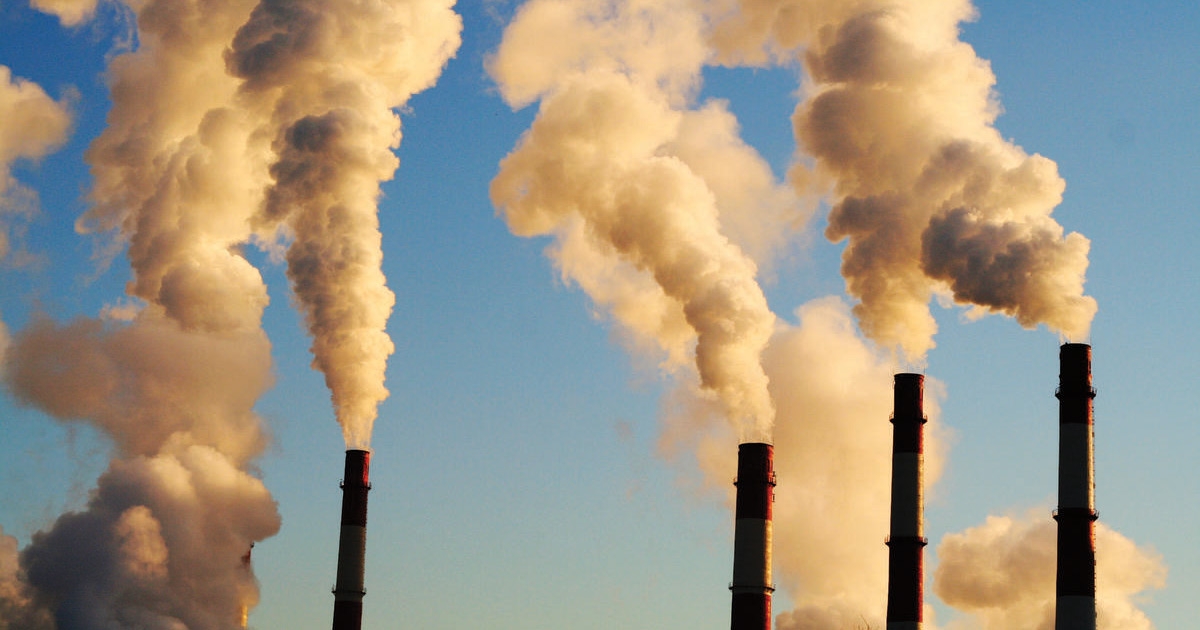
Not dead. Worse. Alive in a diminished way, as if life itself had signed a compromise agreement. I remember standing beside the Cuyahoga years after the famous fire, watching the water move under a film of industrial sheen that caught the afternoon sun like a bruise. Nearby, a father cast a fishing line with the stubborn optimism that people reserve for damaged places. Behind him, smokestacks pulsed quietly into the sky, each plume legal, permitted, measured, and utterly disconnected from the cost it imposed on lungs, rainfall, soil, and memory.
Economists call that an externality. Such a bloodless word. It suggests a bookkeeping inconvenience. Yet externalities are not abstractions. They are asthma inhalers in school backpacks. They are fisheries collapsing by increments too small to trigger headlines. They are glaciers losing weight like patients hiding an illness beneath loose clothing.
So the question arrives with more urgency than ideology: should governments tax pollution?
Yes. But not for the reasons usually offered.
The argument is not merely fiscal. Nor is it punitive. A pollution tax, properly designed, is less about punishment than about restoring language to the marketplace. Markets are extraordinary storytellers, but they suffer from selective mutism. They price lithium and wheat and freight futures with astonishing precision while remaining conspicuously silent about poisoned aquifers and destabilized climate systems. Pollution taxes force the economy to finish its sentences.
The Invisible Subsidy Nobody Discusses
Every economy subsidizes pollution.
Some do it openly through tax breaks and extraction leases. Others do it passively by allowing corporations to use the atmosphere, rivers, and oceans as free waste repositories. Either way, the effect is identical: society absorbs costs while polluters retain profits.
Imagine a trucking company that dumps barrels of waste oil into a public reservoir every night. Citizens would revolt immediately. Yet when millions of tons of carbon dioxide enter the atmosphere, dispersed molecule by dispersed molecule, the moral clarity dissolves. Diffusion creates camouflage.
That camouflage has consequences.
According to the International Monetary Fund, explicit and implicit fossil fuel subsidies amount to trillions of dollars globally each year once health and environmental damages are included. The figure sounds implausible until one considers what is omitted from fuel prices: cancer clusters near refineries, crop losses from heat waves, emergency infrastructure spending after floods, insurance volatility, species collapse.
Pollution taxes attempt to reverse this distortion. They say, quite simply: if an activity imposes measurable harm on society, that cost belongs in the transaction itself.
Not beside it. Inside it.
Why Markets Fail Without Ecological Feedback
Economists often describe pollution taxes as “pricing negative externalities.” True enough. But the deeper issue is feedback.
Nature operates through feedback loops. Forests respond to drought. Oceans respond to temperature. Human bodies respond to toxins. Industrial economies, however, became remarkably adept at suppressing ecological feedback. Smokestacks extended higher into the sky. Waste disappeared downstream. Supply chains stretched across continents, hiding extraction from consumption.
The modern economy functions with the eerie confidence of a person whose nerves no longer register pain.
A pollution tax restores sensation.
When carbon-intensive goods become more expensive, behavior changes. Investors migrate. Engineers innovate. Consumers adapt. None of this requires moral perfection. People need not become saints. Systems shift because incentives shift.
This is where critics often recoil. They hear the word “tax” and envision bureaucratic overreach, economic stagnation, or elite technocrats rearranging ordinary life from climate-controlled offices.
Some skepticism is warranted. Governments have a long history of clumsy interventions. Yet pollution itself is already an intervention — an involuntary transfer of risk from producer to public. The absence of a pollution tax is not neutrality. It is permission.
The Strange Efficiency of Waste
Waste, in ecological systems, does not exist.
A fallen cedar nourishes fungi. Bird droppings fertilize estuaries. Death recirculates into life with exquisite efficiency. Industrial civilization, by contrast, manufactures permanence. Petrochemicals that linger for centuries. Carbon concentrations unseen in human history. PFAS compounds that travel through bloodstreams with unnerving persistence.
I once toured a landfill outside Phoenix during August. Heat radiated upward in visible waves. Bulldozers crawled over mountains of discarded packaging, electronics, synthetic fabrics, and spoiled food. A supervisor pointed casually toward methane capture systems that converted decomposition gases into energy. Clever engineering, certainly. Yet I left with an unsettling realization: we have become a species that taxes labor heavily while allowing enormous categories of waste to remain economically invisible.
That imbalance matters.
In many countries, payroll taxes exceed pollution costs by orders of magnitude. We tax people for working more aggressively than we tax industries for contaminating shared resources. It is a peculiar moral hierarchy.
The Conservative Case for Pollution Taxes
Ironically, pollution taxes contain deeply conservative logic.
Rather than imposing detailed regulations on every industrial process, a tax allows flexibility. Companies can innovate however they choose. Reduce emissions, redesign products, improve efficiency, transition fuels — the pathway remains open. Government defines the cost of harm, not the engineering blueprint.
This distinction explains why economists across ideological lines have supported carbon pricing for decades. A well-designed pollution tax often proves less cumbersome than sprawling regulatory regimes.
Consider the alternatives:
| Policy Approach | Mechanism | Advantages | Weaknesses |
|---|---|---|---|
| Direct Regulation | Government mandates specific limits or technologies | Clear standards; rapid enforcement potential | Bureaucratic complexity; inflexible |
| Cap-and-Trade | Fixed emissions cap with tradable permits | Encourages efficiency; creates market incentives | Permit volatility; lobbying risks |
| Pollution Tax | Charges emitters per unit of pollution | Transparent; predictable price signal | Politically unpopular terminology |
| Voluntary Corporate Action | Self-regulated sustainability commitments | Flexible; brand-driven innovation | Weak accountability; inconsistent results |
A pollution tax is not inherently radical. Sweden implemented a carbon tax in 1991 while growing its economy substantially over subsequent decades. British Columbia introduced a revenue-neutral carbon tax that reduced fuel consumption without the economic collapse critics predicted.
The lesson is neither utopian nor catastrophic. It is practical. Economies adapt.
The Political Problem Nobody Wants to Admit
Pollution taxes fail politically for one primary reason: trust.
Citizens often assume governments will misuse the revenue. Historically, they have reasons to worry. When environmental taxes disappear into general budgets, public skepticism hardens immediately.
The design matters immensely.
If pollution tax revenues reduce payroll taxes, fund public transit, rebate households directly, or support energy transitions in vulnerable communities, acceptance rises. If revenues merely enlarge bureaucracies, backlash follows with clockwork predictability.
France learned this during the Yellow Vest protests, where fuel taxes collided with perceptions of urban elitism and economic unfairness. Environmental policy detached from social equity becomes combustible.
People tolerate sacrifice when they believe burdens are shared honestly. They resist fiercely when sacrifice appears asymmetrical.
And asymmetry defines much of modern pollution. Wealthier populations often consume the most carbon while lower-income communities absorb disproportionate environmental damage. Refineries cluster near poorer neighborhoods. Heat islands intensify in underfunded cities. Flood resilience follows property values.
A pollution tax without justice mechanisms risks becoming merely another extraction system.
Innovation Arrives Faster Than Moral Appeals
There is another uncomfortable truth worth mentioning.
Consumers rarely transform economies through virtue alone.
People say they want sustainable products, yet price and convenience routinely overpower ethical intention. Behavioral consistency is fragile. Economic signals are durable.
Pollution taxes harness this reality instead of denying it.
When coal becomes more expensive relative to renewables, utilities pivot. When disposable plastics incur meaningful costs, packaging redesign accelerates. When aviation fuel reflects environmental damage, alternative technologies attract serious investment instead of conference applause.
Innovation responds to mathematics more reliably than sentiment.
This does not diminish human idealism. It contextualizes it.
The Industrial Revolution itself emerged not because humanity suddenly became more inventive, but because energy economics changed. Coal altered the equation. Oil altered it again. Pollution taxes simply update the arithmetic to include consequences long ignored.
The Myth of Infinite Atmosphere
For most of human history, the atmosphere appeared functionally infinite. Smoke dispersed. Forests regrew. Oceans diluted contaminants beyond visible detection. Scale protected us from ourselves.
That era ended quietly.
Today humanity emits over 35 billion metric tons of carbon dioxide annually. Plastic particles circulate through Arctic ice and placental tissue alike. Nitrogen runoff creates marine dead zones visible from satellites. We have crossed from localized pollution into planetary metabolism.
Yet our accounting systems still behave as though Earth possesses infinite absorptive capacity.
This mismatch resembles a business operating from a checking account while ignoring mounting debt. For a while, activity continues normally. Then compounding arrives.
Climate instability is compounding made visible.
What I Learned Visiting an Industrial Port
Several years ago, I visited a shipping terminal on the Gulf Coast. Massive cranes lifted containers with mechanical grace while diesel engines vibrated beneath the docks. The scale impressed me at first. Global commerce rendered physical. Coffee from Colombia. Electronics from Taiwan. Grain exports moving toward Africa.
Then the wind shifted.
The smell hit abruptly — petrochemicals, exhaust, sulfur, heated metal. A nearby neighborhood sat less than a mile away. Children rode bicycles beneath transmission towers while tankers loaded refined fuel for export.
What stayed with me afterward was not outrage. It was confusion about why the surrounding damage remained economically absent from the scene itself. The port generated immense measurable value. Jobs. Trade. Revenue. Yet the respiratory burden drifting toward nearby homes occupied no line item.
An economy that counts extraction while excluding deterioration is not sophisticated. It is incomplete.
That realization changed how I think about taxation altogether. Taxes are not merely instruments for funding governments. They are signals about what societies choose to discourage, encourage, and acknowledge.
The Real Question Is Larger Than Taxation
Should governments tax pollution?
Ultimately, yes. But the deeper question is whether modern civilization can mature beyond an economic model that treats living systems as invisible infrastructure.
Pollution taxes alone will not solve ecological decline. They can be manipulated, diluted, or poorly implemented. Corporations will lobby aggressively against them. Politicians will soften them into symbolism. Consumers will complain about higher costs while continuing patterns of excess.
Still, imperfect pricing beats organized denial.
Because every society taxes what it fears.
We tax cigarettes because smoking imposes public costs. We tax alcohol because intoxication creates social burdens. We fine illegal dumping because contamination damages shared resources. Pollution differs only in scale and invisibility.
The atmosphere is not an abstract backdrop to the economy. It is the precondition for every economy that will ever exist.
For centuries we behaved as though Earth were a subsidiary of commerce. The inversion now becomes unavoidable. Commerce is a wholly owned subsidiary of Earth.
And subsidiaries do not outvote their parent company forever.
- Arts
- Business
- Computers
- Games
- Health
- Home
- Kids and Teens
- Money
- News
- Personal Development
- Recreation
- Regional
- Reference
- Science
- Shopping
- Society
- Sports
- Бизнес
- Деньги
- Дом
- Досуг
- Здоровье
- Игры
- Искусство
- Источники информации
- Компьютеры
- Личное развитие
- Наука
- Новости и СМИ
- Общество
- Покупки
- Спорт
- Страны и регионы
- World

 Russian
 French
 Spanish
 Portuguese
 Deutsch
 Turkish
 Dutch
Dutch
 Italiano
 Arabic
 Romaian
 Portuguese (Brazil)
 Greek
Greek