
What is renewable energy economics?
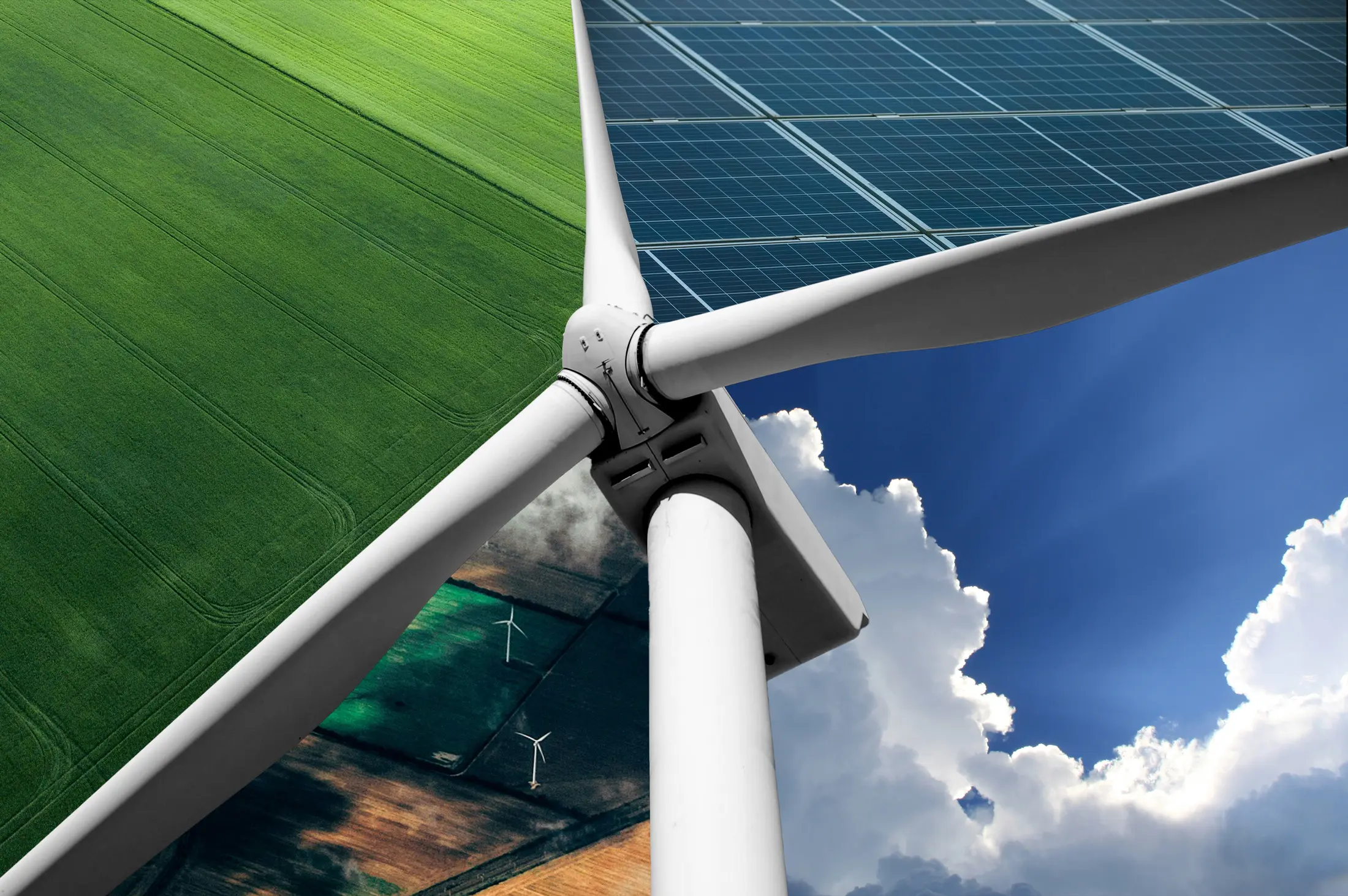
What Is Renewable Energy Economics?
There is a moment, usually just before dawn, when a wind farm becomes less an industrial artifact and more a geography. The turbines stop resembling machines. They stand like white reeds in a marine current no one can see. I remember driving through west Texas years ago, passing a cattle ranch whose owner once leased land for oil pumps and now leased it for wind towers. “The wind pays every month,” he told me, leaning against a fence silvered by dust. “The oil came like a fever.”
That sentence has stayed with me because renewable energy economics is not merely about electricity, markets, or carbon accounting. It is about duration. About whether civilization chooses systems that extract wealth by liquidation or systems that generate wealth by continuity. Economics, in its oldest sense, means management of the household. Renewable energy asks an unnerving question: What if the household is the Earth itself?
The answer rearranges everything.
The Old Arithmetic of Energy
For more than a century, industrial economies operated on a peculiar illusion. We treated fossil fuels as inexpensive because the bill arrived elsewhere — in lungs, rivers, crop losses, insurance markets, military expenditures, and atmospheric chemistry. Coal appeared cheap only because no accountant included asthma. Oil appeared efficient because sea-level rise was omitted from the balance sheet.
Traditional energy economics measured extraction costs, transportation, refining, and consumption. Yet the atmosphere was treated as an open sewer with infinite capacity. Imagine a restaurant that calculated the cost of a meal but ignored the expense of washing dishes, removing trash, or repairing the building after a fire. The books would look magnificent right before bankruptcy.
Renewable energy economics emerged partly as a correction to that distortion.
It studies how societies produce, distribute, price, and consume energy derived from replenishing sources — sunlight, wind, geothermal heat, hydropower, biomass, tidal systems. But beneath the technical definitions lies something more consequential: it examines what happens when fuel itself becomes free.
That changes the geometry of power.
A coal plant requires continuous extraction. A gas turbine depends on pipelines and volatile commodity markets. Solar panels do not negotiate with the sun over pricing. Wind turbines are indifferent to geopolitical tensions in shipping lanes. Once infrastructure is built, operational costs collapse into maintenance, storage, and grid management.
This is not a semantic difference. It is a civilizational one.
Why Renewable Energy Breaks Conventional Economics
Classical energy systems behave like ownership models. Renewable systems behave more like harvesting systems.
The distinction matters because economists spent decades analyzing scarcity while renewable energy increasingly operates through abundance. Sunlight striking Earth every hour contains more energy than humanity consumes in a year. The challenge is no longer discovering fuel reserves. It is capturing, storing, and distributing flows.
That inversion disrupts pricing models built during the fossil era.
Fossil Fuels: High Operating Costs
Coal and gas plants require perpetual fuel purchases. Their economics fluctuate with extraction difficulty, transportation bottlenecks, labor costs, and political instability.
Renewables: High Upfront Costs
Solar arrays and wind farms demand substantial initial investment, but their marginal cost of generation approaches zero afterward. Once installed, every additional kilowatt-hour becomes extraordinarily cheap.
Economists call this a capital-intensive model. But the phrase misses the emotional truth. Renewable energy systems ask societies to think like orchard growers instead of miners.
Plant first. Harvest gradually.
The Curve That Changed Everything
For years, critics dismissed renewable energy as morally attractive but financially unrealistic. That argument aged poorly.
The cost declines have been historic.
| Technology | Approximate Cost Decline Since 2010 | Primary Economic Driver |
|---|---|---|
| Solar Photovoltaics | ~85–90% | Manufacturing scale and efficiency |
| Onshore Wind | ~55–70% | Turbine size and engineering improvements |
| Lithium-Ion Batteries | ~80–90% | EV demand and supply chain maturity |
| Offshore Wind | Moderate but uneven declines | Larger installations and transmission improvements |
The speed resembles the early semiconductor industry more than traditional utilities. Solar panels obey a learning curve: every doubling of manufacturing capacity reduces costs. Factories improve. Supply chains tighten. Efficiency inches upward. Waste shrinks.
The remarkable detail is not that renewables became cheaper. It is how quickly conventional analysts underestimated the decline.
Again and again, forecasts projected modest adoption while reality accelerated past them. Energy models built around extraction economics struggled to understand technologies whose prices fell through iteration rather than depletion.
Coal gets more expensive as seams deepen.
Solar gets cheaper as knowledge accumulates.
One obeys geology. The other obeys learning.
The Invisible Subsidies
Renewable energy debates often collapse into arguments about subsidies. The conversation is usually selective.
Fossil fuels have benefited for decades from tax preferences, government-backed exploration, public land access, military protection of shipping routes, and the ability to externalize environmental damages without direct payment. The International Monetary Fund has repeatedly estimated that global fossil-fuel subsidies — explicit and implicit — amount to trillions annually when health and environmental costs are included.
Renewable subsidies, by contrast, often function as temporary accelerants for emerging industries.
There is an irony here. Economies routinely subsidize destructive behavior while scrutinizing investments intended to reduce damage. It is as if society objects to paying for fire prevention after decades of underwriting arson.
I learned this lesson firsthand during a visit to a rural cooperative in the Midwest. The town had installed community solar after repeated electricity price shocks linked to natural gas volatility. Residents initially opposed the project because it required public financing support. Three years later, many of the same skeptics defended the installation fiercely because their energy bills stabilized while neighboring towns experienced price spikes.
People rarely become passionate about ideology. They become passionate about predictability.
Renewable economics, increasingly, is the economics of stability.
The Employment Question
Energy transitions are never purely technical. They alter labor.
Oil and gas industries are concentrated, capital-heavy, and dependent on finite deposits. Renewable energy tends to distribute employment more broadly through manufacturing, installation, maintenance, grid modernization, and retrofitting.
A solar panel does not arrive with a fully formed ecosystem. Someone installs it. Someone upgrades transformers. Someone manages storage software. Someone designs financing mechanisms for households. Someone recycles materials decades later.
This distributed structure reshapes regional economies.
Yet the transition is uneven. Communities built around coal mining or drilling often experience legitimate anxiety. Economists who discuss “creative destruction” too casually usually do so from safe distances. A spreadsheet can absorb disruption more gracefully than a town can.
Renewable energy economics therefore includes transition planning — retraining workers, diversifying local economies, and designing policies that prevent sacrifice zones from merely changing names.
The moral legitimacy of clean energy depends partly on whether the transition distributes opportunity instead of concentrating hardship.
The Grid Becomes a Living System
Traditional electrical grids were designed for centralized power plants. Electricity flowed in one direction: outward.
Renewables complicate this elegantly.
Now millions of rooftops can generate power. Batteries can store surplus electricity and release it later. Smart grids can adjust dynamically. Electric vehicles become mobile storage units. Homes evolve from passive consumers into active participants.
The economics shift from linear supply chains toward networked ecosystems.
That creates friction because utilities were not built for fluidity. Regulatory systems move slowly. Infrastructure ages. Transmission lines become bottlenecks. The engineering challenge is immense.
Yet the transition carries surprising resilience benefits.
A centralized fossil-fuel grid behaves like a single giant organism vulnerable to catastrophic failure. Distributed renewable systems behave more like forests — decentralized, adaptive, redundant.
Nature rarely centralizes critical functions. Economies are beginning to relearn why.
Storage: The Missing Chapter Becoming the Main Story
Critics long argued renewable energy could never dominate because sunlight and wind are intermittent. The objection was partially correct and increasingly outdated.
Storage economics changed the equation.
Battery costs have fallen sharply, enabling utilities to smooth fluctuations, shift demand, and reduce reliance on “peaker plants” fueled by natural gas. Long-duration storage technologies — thermal systems, gravity storage, green hydrogen, compressed air — continue advancing.
The essential insight is this: renewable energy economics is no longer about generation alone. It is about orchestration.
An orchestra is not flawed because violins do not play continuously. Systems derive strength from coordination.
Energy markets are learning the same principle.
Geography Loses Some of Its Tyranny
Fossil fuels reward nations with reserves. Renewable energy distributes opportunity more widely.
Sun and wind exist in varying degrees across most regions. Countries once dependent on imported fuels can now pursue partial energy sovereignty through domestic renewable infrastructure.
This alters geopolitics.
Oil chokepoints lose some strategic leverage. Energy-importing nations gain flexibility. Decentralized systems reduce vulnerability to commodity shocks. The implications ripple through trade balances, diplomacy, defense planning, and inflation management.
Of course, new dependencies emerge — rare earth minerals, lithium supply chains, semiconductor manufacturing. No system escapes material realities. But renewable energy shifts the emphasis from perpetual fuel dependence toward infrastructure development and technological capability.
That is a profoundly different economic proposition.
The Strange Failure of GDP
There is another issue rarely discussed honestly: conventional economic metrics struggle to value prevention.
GDP rises after hurricanes because reconstruction spending increases. Medical treatment for pollution-related illness contributes to economic activity. Wildfire recovery boosts measurable transactions.
An economy can become wealthier on paper while ecosystems collapse underneath it.
Renewable energy economics challenges this contradiction because its benefits often appear in avoided costs rather than dramatic revenue streams. Cleaner air. Reduced climate risk. Lower healthcare burdens. Stabilized fuel pricing. Agricultural resilience.
These gains are real even when spreadsheets understate them.
The atmosphere, inconveniently, does not care about quarterly reporting cycles.
What Renewable Energy Economics Really Measures
At its deepest level, renewable energy economics measures whether human systems can operate within biological limits without abandoning prosperity.
That sentence sounds abstract until you realize every civilization in history has ultimately answered the same question. Some failed because forests vanished. Others exhausted soils, water, fisheries, or fuel sources. Industrial civilization merely scaled the dilemma globally.
The extraordinary possibility before us is not that renewable energy creates a perfect world. It will not. Mining remains destructive. Manufacturing consumes resources. Transmission corridors alter landscapes. Every energy system imposes tradeoffs.
But renewable systems contain a quality fossil systems fundamentally lack: regeneration.
A solar panel does not require burning tomorrow to function today.
That distinction may define this century.
Conclusion: The Economics of Enough
We often discuss renewable energy as though it were an engineering contest. Bigger batteries. Faster grids. Cheaper panels.
Yet beneath the machinery lies a philosophical argument about what economies are for.
If economics exists solely to maximize extraction and consumption, renewable energy becomes an inconvenience — a slower path toward the same destination. But if economics concerns continuity, resilience, and the long-term flourishing of communities, renewable energy begins to look less like an alternative and more like an inevitability.
The rancher in Texas understood this instinctively. Wind, unlike oil, did not arrive as a finite inheritance. It arrived daily. Quietly. Without combustion. Without depletion. The land remained usable afterward.
That may be the most radical economic insight of all.
The future of energy is not merely about replacing one fuel with another. It is about replacing a civilization organized around exhaustion with one organized around renewal.
- Arts
- Business
- Computers
- Παιχνίδια
- Health
- Κεντρική Σελίδα
- Kids and Teens
- Money
- News
- Personal Development
- Recreation
- Regional
- Reference
- Science
- Shopping
- Society
- Sports
- Бизнес
- Деньги
- Дом
- Досуг
- Здоровье
- Игры
- Искусство
- Источники информации
- Компьютеры
- Личное развитие
- Наука
- Новости и СМИ
- Общество
- Покупки
- Спорт
- Страны и регионы
- World

 English
 Russian
 French
 Spanish
 Portuguese
 Deutsch
 Turkish
 Dutch
Dutch
 Italiano
 Arabic
 Romaian
 Portuguese (Brazil)