
Why are bad habits hard to quit?
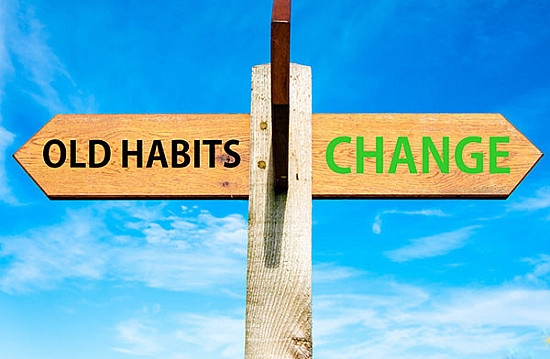
Why Are Bad Habits Hard to Quit?
Bad habits are difficult to quit for the same reason good habits are difficult to build:
repetition changes behavior from conscious action into automatic response.
The difference is that bad habits usually provide faster rewards, lower friction, and stronger emotional reinforcement. Over time, the behavior stops feeling optional. It starts feeling automatic, predictable, and strangely efficient—even when the long-term consequences are clearly negative.
That contradiction confuses people.
They think:
“If I know this is bad for me, why do I keep doing it?”
Because awareness alone does not dismantle a habit loop.
Behavior is not controlled purely by logic. It is controlled by repetition, environment, reward, and emotional conditioning.
And bad habits are often optimized across all four.
Bad Habits Solve Immediate Problems
One reason bad habits are difficult to quit is that they usually provide something useful in the short term.
Not useful long-term.
Useful immediately.
Examples:
-
scrolling relieves boredom
-
procrastination reduces anxiety temporarily
-
overeating provides comfort
-
compulsive checking reduces uncertainty
-
avoidance behaviors create emotional escape
The brain prioritizes immediate relief far more aggressively than distant consequences.
That means a bad habit can survive even when the person fully understands its damage.
Because in the moment, the habit is still functioning as a solution.
\text{Immediate Reward} > \text{Delayed Consequence}
This is one of the core reasons quitting feels difficult: the brain experiences the reward now, while the cost feels abstract and distant.
Repetition Turns Behavior Into Automation
At the beginning, habits require conscious effort.
Over time, repetition compresses that effort.
The brain learns:
-
when the behavior happens
-
what triggers it
-
what reward follows
Eventually, the sequence becomes automatic.
\text{Repeated Behavior} + \text{Consistent Reward} = \text{Automaticity}
This automation is efficient from a neurological perspective. The brain prefers predictable loops because they reduce cognitive load.
That means bad habits are not “active decisions” every time they occur.
Many are partially automatic responses to familiar conditions.
Which is why people often perform them before fully realizing they have started.
The Brain Values Predictability More Than Quality
A surprising truth about habits is that the brain often prefers familiar discomfort over unfamiliar improvement.
Why?
Because predictability feels safe.
A bad habit may be destructive, but it is also:
-
known
-
repeatable
-
emotionally familiar
-
neurologically efficient
Changing behavior introduces uncertainty:
-
What replaces the habit?
-
Will discomfort increase?
-
Will emotional regulation become harder?
The brain interprets uncertainty as risk.
So even harmful behaviors can feel psychologically stable compared to the effort of behavioral change.
Bad Habits Usually Have Lower Friction Than Good Habits
Friction matters more than motivation.
Bad habits are often easy:
-
fast access
-
immediate stimulation
-
minimal preparation
-
no delayed gratification
Good habits usually require:
-
planning
-
effort
-
patience
-
delayed rewards
The behavioral imbalance is obvious.
\text{Low Friction Behavior} = \text{Higher Repetition Probability}
If one behavior is effortless and instantly rewarding while the alternative is effortful and delayed, the brain repeatedly selects the easier path.
Not because the person is weak.
Because the system favors efficiency.
Emotional States Reactivate Old Patterns
Many bad habits are linked to emotional regulation:
-
stress
-
loneliness
-
boredom
-
fatigue
-
overwhelm
This makes them highly resilient.
Even after progress, emotional pressure can reactivate old loops because the brain remembers:
“This behavior reduced discomfort before.”
That memory alone can trigger craving.
This is why people often relapse during:
-
stressful periods
-
sleep deprivation
-
emotional instability
-
major life changes
The habit becomes associated with relief, not just behavior.
Habits Become Embedded in Environment
Bad habits are rarely isolated from surroundings.
They become attached to:
-
locations
-
devices
-
people
-
routines
-
time windows
Examples:
-
checking your phone in bed
-
snacking while watching television
-
procrastinating at a specific desk
-
scrolling during work breaks
Eventually, the environment itself becomes a trigger.
\text{Environmental Cue} + \text{Repetition} = \text{Habit Activation}
This is why quitting often feels easier temporarily in new environments.
The triggers are missing.
But once the original environment returns, the loop reactivates.
The Reward Loop Gets Reinforced Faster Than the Consequences
Bad habits survive because rewards are immediate while consequences are delayed.
For example:
-
scrolling gives instant stimulation
-
unhealthy eating gives instant comfort
-
procrastination gives instant relief
But the consequences:
-
reduced focus
-
health decline
-
stress accumulation
-
lost productivity
arrive slowly and diffusely.
The brain is not optimized for delayed punishment.
It is optimized for immediate reinforcement.
That imbalance makes bad habits neurologically sticky.
Shame Often Makes Bad Habits Worse
People assume guilt helps behavior change.
Sometimes it does temporarily.
But chronic shame often strengthens the loop:
-
behavior occurs
-
guilt increases
-
stress increases
-
habit returns for relief
\text{Habit} + \text{Shame} + \text{Stress} = \text{Reinforced Repetition}
This creates a self-sustaining cycle.
The habit stops being just a behavior problem.
It becomes an emotional coping mechanism.
That is why aggressive self-judgment often fails to produce stable change.
Identity Reinforces Repetition
Over time, repeated habits shape self-perception:
-
“I’m always distracted”
-
“I have no discipline”
-
“I always go back to this”
Identity-based beliefs create behavioral consistency.
The brain prefers actions that align with perceived identity.
So when people internalize the habit as part of who they are, quitting becomes psychologically harder because stopping the behavior feels like violating a familiar self-image.
Quitting Creates Temporary Discomfort
Even harmful habits provide neurological familiarity.
Removing them creates friction:
-
boredom becomes more noticeable
-
emotions feel less regulated
-
stimulation decreases
-
routines feel empty
This transition period is often misinterpreted as failure.
But it is usually recalibration.
\text{Reduced Habit Reinforcement} = \text{Temporary Discomfort}
The brain is adjusting to the absence of a previously reliable reward cycle.
That discomfort is normal.
But many people relapse simply to escape it quickly.
A Personal Observation on Why Habits Persist
At one point, I assumed bad habits survived because I had not developed enough discipline.
So I approached the problem aggressively:
-
stricter rules
-
harder resets
-
stronger self-control
The results were temporary.
What eventually became obvious was that the habit itself was deeply supported:
-
the environment triggered it constantly
-
the reward was immediate
-
the friction was almost zero
-
emotional states kept reactivating it
Once those conditions changed, the behavior weakened naturally.
Not instantly.
But predictably.
That experience changed the way I understood habits entirely. Most bad habits are not held in place by weakness. They are held in place by reinforcement systems that quietly make repetition easy.
The Structural Reason Bad Habits Are Hard to Quit
At a systems level, bad habits become difficult to quit when they combine:
-
immediate rewards
-
low friction
-
emotional relief
-
environmental triggers
-
repeated reinforcement
-
identity association
-
automatic execution
\text{Strong Reward} + \text{Low Friction} + \text{Repetition} = \text{Persistent Habit}
The more of these variables that exist simultaneously, the more resistant the habit becomes.
Conclusion: Bad Habits Persist Because They Are Efficient, Not Because You Are Weak
The most important thing to understand is this:
Bad habits are not difficult to quit because you lack intelligence, awareness, or discipline.
They are difficult to quit because they are highly reinforced systems optimized around immediate reward and automatic repetition.
That means lasting change rarely comes from force alone.
It usually requires:
-
reducing triggers
-
increasing friction
-
replacing rewards
-
changing environments
-
interrupting automaticity
-
weakening emotional dependency
Because once the system no longer supports the habit efficiently, the behavior begins to lose momentum.
And over time, what once felt automatic starts to feel less natural, less rewarding, and less necessary.
Not because the habit was “defeated.”
But because the conditions that kept it alive were finally removed.
- Arts
- Business
- Computers
- Jogos
- Health
- Início
- Kids and Teens
- Money
- News
- Personal Development
- Recreation
- Regional
- Reference
- Science
- Shopping
- Society
- Sports
- Бизнес
- Деньги
- Дом
- Досуг
- Здоровье
- Игры
- Искусство
- Источники информации
- Компьютеры
- Личное развитие
- Наука
- Новости и СМИ
- Общество
- Покупки
- Спорт
- Страны и регионы
- World

 English
 Russian
 French
 Spanish
 Portuguese
 Deutsch
 Turkish
 Dutch
Dutch
 Italiano
 Arabic
 Romaian
 Greek
Greek
