
What to do when motivation is gone?
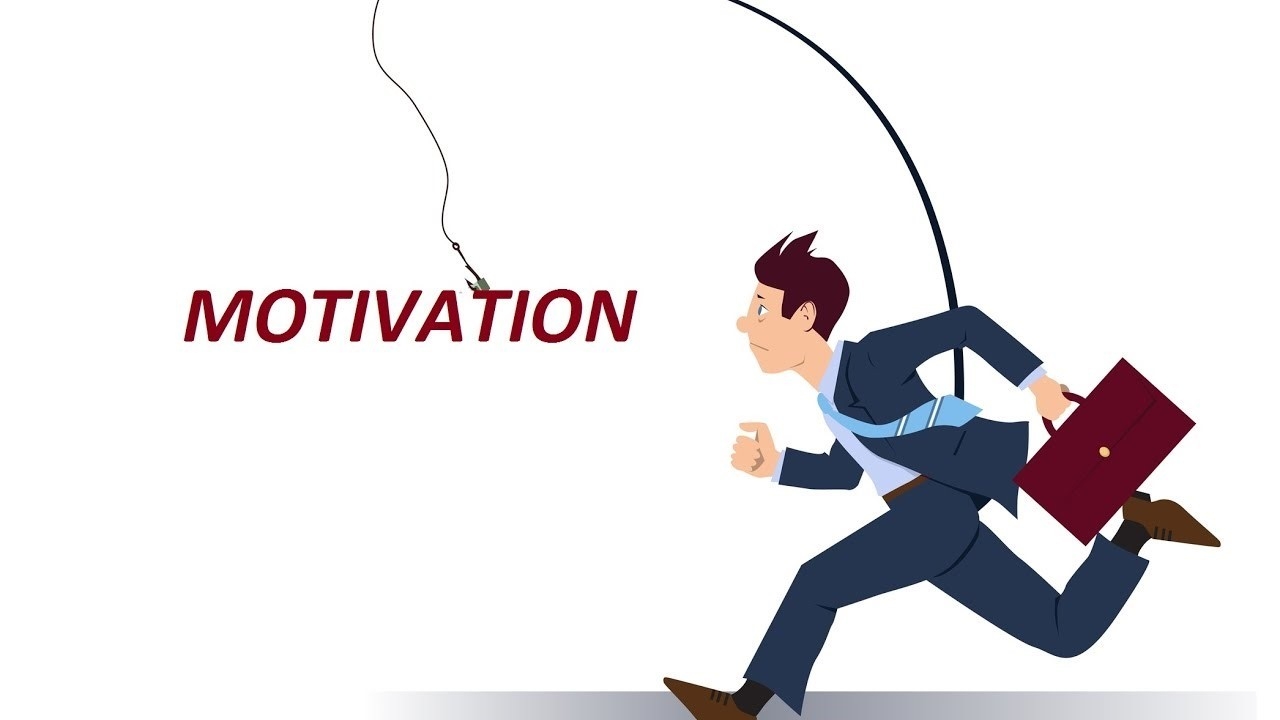
What to Do When Motivation Is Gone?
Most people assume motivation is the engine behind progress.
So when motivation disappears, everything feels unstable:
-
routines collapse
-
habits weaken
-
focus disappears
-
goals feel distant
-
effort feels heavy
The immediate conclusion is usually:
“Something is wrong with me.”
But motivation is not designed to remain constant.
It fluctuates naturally:
-
with stress
-
sleep quality
-
emotional state
-
environment
-
uncertainty
-
cognitive overload
The real problem is not that motivation disappears.
The problem is building systems that require motivation to function.
Motivation Is an Unstable Resource
Motivation feels powerful because it temporarily reduces friction.
During high-motivation periods:
-
starting feels easy
-
effort feels meaningful
-
resistance feels smaller
But those periods are temporary.
\text{Motivation} = \text{Temporary Friction Reduction}
If your routines depend entirely on emotional momentum, consistency becomes unpredictable.
This is why people often make dramatic plans during motivated states and abandon them later under ordinary conditions.
The First Step: Stop Waiting to “Feel Ready”
One of the biggest traps is delaying action until motivation returns:
-
“I’ll start again tomorrow”
-
“I need to get back into the mindset”
-
“I just need inspiration”
But action often creates motivation—not the other way around.
\text{Action} \rightarrow \text{Momentum} \rightarrow \text{Motivation}
Small movement reduces resistance.
Waiting usually increases it.
Because inactivity compounds hesitation.
Reduce the Size of the Task Immediately
When motivation disappears, large tasks become psychologically overwhelming:
-
long workouts
-
deep work sessions
-
major goals
-
aggressive routines
The brain interprets them as high-energy demands.
The solution is not forcing intensity.
It is reducing scale:
-
one page
-
five minutes
-
one email
-
one small action
\text{Lower Task Size} = \text{Lower Psychological Resistance}
The objective is continuation—not optimization.
Focus on Maintaining the Loop
When motivation is gone, trying to perform at peak capacity usually fails.
Instead, prioritize preserving continuity:
-
keep the routine alive
-
maintain the cue
-
perform the smallest viable version
Examples:
-
short workout instead of skipping
-
brief study session instead of none
-
one paragraph instead of abandoning writing entirely
\text{Maintained Repetition} > \text{Interrupted Routine}
Momentum weakens when repetition disappears completely.
Remove Dependence on Emotional State
Many people unknowingly structure behavior around feelings:
-
work when inspired
-
train when energized
-
study when focused
This creates instability because emotions fluctuate constantly.
Systems work differently.
Systems rely on:
-
schedule
-
cues
-
routines
-
environmental structure
\text{Routine-Based Behavior} > \text{Emotion-Based Behavior}
The more behavior depends on structure instead of mood, the more stable it becomes.
Reduce Friction Aggressively
Low motivation amplifies friction:
-
small tasks feel larger
-
preparation feels exhausting
-
decisions feel heavier
So the system must become easier:
-
prepare tools beforehand
-
simplify routines
-
reduce decisions
-
lower expectations temporarily
This is not lowering standards permanently.
It is adapting the system to current energy conditions.
Stop Measuring Yourself Against Peak Performance
One hidden reason motivation collapses further is comparison:
-
comparing current output to past highs
-
expecting maximum productivity constantly
-
treating reduced performance as failure
This creates discouragement loops:
-
low output
-
frustration
-
more avoidance
-
even lower output
\text{Unrealistic Comparison} = \text{Increased Behavioral Resistance}
Low-motivation periods require adaptation, not self-punishment.
Use Environment to Compensate for Low Drive
When internal drive weakens, external structure becomes more important:
-
dedicated workspace
-
visible reminders
-
distraction reduction
-
automatic routines
Environment reduces the need for constant self-control.
This matters because low motivation reduces cognitive resistance capacity.
Rebuild Momentum Through Completion
Motivation often returns after progress becomes visible.
That means completion matters:
-
finishing small tasks
-
checking off routines
-
restoring movement
The brain responds strongly to completion signals because they create perceived progress.
Even tiny wins help restore behavioral momentum.
\text{Small Completion Signals} = \text{Momentum Restoration}
This is why minimal action is usually better than waiting for a perfect restart.
Understand That Motivation Often Follows Clarity
Sometimes motivation disappears because the system itself is unclear:
-
too many goals
-
undefined priorities
-
cognitive overload
-
conflicting expectations
The brain resists ambiguity.
Clarity reduces friction:
-
one priority
-
one next action
-
one immediate objective
Complexity drains motivation faster than difficulty.
Protect Sleep, Energy, and Recovery
Not all motivation problems are psychological.
Some are physiological:
-
sleep deprivation
-
overstimulation
-
burnout
-
cognitive exhaustion
-
chronic stress
No productivity strategy compensates effectively for depleted energy systems.
\text{Low Recovery} = \text{Reduced Behavioral Capacity}
Sometimes the solution is not forcing output.
It is restoring capacity.
A Personal Observation on Losing Motivation
At one point, I treated motivation loss as evidence that I had become lazy or undisciplined.
So I responded by trying to force higher output.
The result was predictable:
-
more resistance
-
more avoidance
-
more frustration
What actually helped was reducing scale and protecting continuity:
-
smaller actions
-
lower friction
-
fixed routines
-
less emotional negotiation
Once the system stopped demanding peak energy every day, consistency became much easier to maintain.
The important realization was this:
motivation is unreliable, but structure can remain stable even when motivation disappears.
The Structural Formula for Low-Motivation Periods
At a systems level, consistency during low motivation depends on:
-
reduced task size
-
lower friction
-
stable routines
-
preserved repetition
-
environmental support
-
realistic expectations
-
momentum through small wins
\text{Low Friction} + \text{Small Action} + \text{Consistency} = \text{Momentum Recovery}
When these conditions exist, progress can continue even without strong emotional drive.
Conclusion: Motivation Is Helpful, But Systems Matter More
The biggest mistake people make is believing that motivation should always be present.
It will not be.
And if your progress depends entirely on feeling motivated, consistency will always remain fragile.
The solution is not becoming permanently inspired.
It is building systems that still function when inspiration disappears.
That means:
-
reducing friction
-
shrinking tasks
-
preserving routines
-
lowering dependence on mood
-
maintaining continuity through small actions
Because once the system becomes stable enough, progress no longer depends on emotional intensity.
And when motivation eventually returns—as it usually does—it strengthens a structure that never fully stopped moving.
- Arts
- Business
- Computers
- Παιχνίδια
- Health
- Κεντρική Σελίδα
- Kids and Teens
- Money
- News
- Personal Development
- Recreation
- Regional
- Reference
- Science
- Shopping
- Society
- Sports
- Бизнес
- Деньги
- Дом
- Досуг
- Здоровье
- Игры
- Искусство
- Источники информации
- Компьютеры
- Личное развитие
- Наука
- Новости и СМИ
- Общество
- Покупки
- Спорт
- Страны и регионы
- World

 English
 Russian
 French
 Spanish
 Portuguese
 Deutsch
 Turkish
 Dutch
Dutch
 Italiano
 Arabic
 Romaian
 Portuguese (Brazil)
