
What skills are most valuable today?
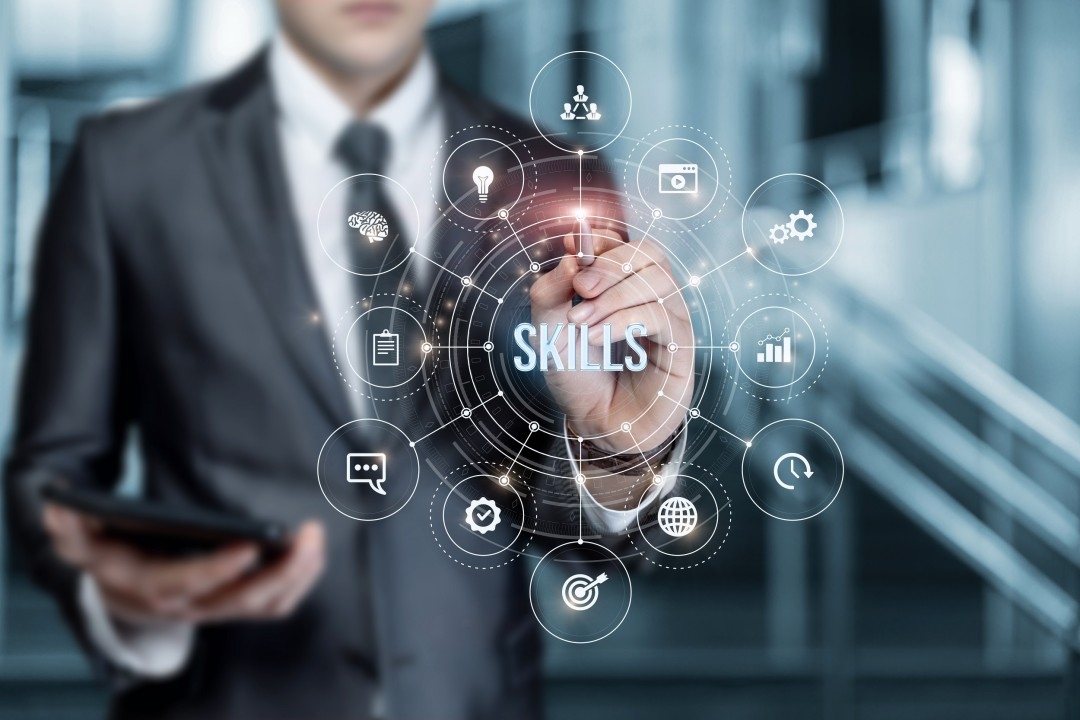
What Skills Are Most Valuable Today?
A few years ago, I sat across from a founder who had built a remarkably successful company.
Sharp mind. Technical background. Impressive track record.
Halfway through our conversation, he said something unexpected:
“The skills that got me here are becoming less important every year.”
That sentence stuck with me because it captured the central tension of modern work:
The value of a skill is no longer determined only by how difficult it is.
It’s determined by:
-
how adaptable it is
-
how transferable it is
-
how resistant it is to automation
-
how effectively it compounds across environments
And that changes the equation dramatically.
Because many people are still optimizing for skills that made sense in a previous economic era:
-
static expertise
-
narrow specialization
-
procedural execution
-
predictable workflows
Meanwhile, the environment has shifted toward ambiguity, speed, communication, and adaptation.
So when people ask:
“What skills are most valuable today?”
what they’re really asking is:
“What capabilities remain useful when the environment keeps changing?”
That is the better question.
The Most Valuable Skills Are Multipliers
Some skills improve only one narrow area.
Others improve everything they touch.
The second category matters far more long term.
These are multiplier skills:
-
communication
-
learning ability
-
strategic thinking
-
emotional regulation
-
adaptability
-
decision-making
-
persuasion
Why are these so powerful?
Because they amplify other capabilities.
A technically skilled person who communicates poorly remains limited.
A moderately skilled person with exceptional communication and adaptability often creates disproportionate influence.
\text{Multiplier Skills} = \text{Amplified Overall Capability}
That amplification effect matters more than people realize.
Communication Is Still Undervalued
Communication remains one of the highest leverage skills available.
And yet many people treat it as secondary.
Which is strange when you consider how much modern work depends on:
-
explaining ideas
-
influencing decisions
-
reducing confusion
-
aligning teams
-
navigating conflict
-
building trust
Poor communication creates friction everywhere:
-
unclear expectations
-
repeated mistakes
-
weak leadership
-
stalled execution
Meanwhile, clear communicators accelerate environments.
What Strong Communication Actually Looks Like
It is not just:
-
speaking confidently
-
sounding intelligent
-
presenting well
Strong communication means:
-
clarity under pressure
-
concise explanation
-
active listening
-
emotional awareness
-
adaptability to audience
That combination becomes extraordinarily valuable because complexity keeps increasing while attention keeps shrinking.
Adaptability Has Become a Core Survival Skill
There was a time when stability rewarded rigid expertise.
Today, conditions evolve too quickly.
Industries shift.
Tools change.
Platforms disappear.
AI automates routine work.
Market expectations mutate constantly.
People who resist adaptation eventually become trapped by their own previous competence.
\text{Adaptability} = \text{Long-Term Relevance}
Adaptability matters because knowledge expires faster than before.
The ability to learn continuously now outranks the ability to memorize static information.
Learning How to Learn Is a Meta-Skill
One of the most valuable capabilities today is accelerated learning.
Not intelligence alone.
Learning agility.
People who learn efficiently can repeatedly acquire new competencies as environments change.
This creates enormous leverage because modern careers increasingly involve reinvention.
The strongest learners typically:
-
seek feedback quickly
-
tolerate beginner discomfort
-
experiment frequently
-
adjust rapidly after mistakes
And importantly:
they separate identity from competence.
That matters because many people stop learning the moment learning threatens their self-image.
Emotional Regulation Is Quietly Becoming Elite-Level
This one surprises people.
But emotional regulation increasingly separates high performers from everyone else.
Why?
Because modern environments generate continuous cognitive pressure:
-
information overload
-
constant communication
-
uncertainty
-
social comparison
-
performance demands
People who cannot regulate emotional responses often lose clarity under stress.
Meanwhile, emotionally regulated individuals:
-
think more clearly
-
recover faster
-
communicate better
-
make stronger decisions
\text{Emotional Regulation} = \text{Higher Decision Stability}
This is not softness.
It is operational stability under pressure.
Strategic Thinking Matters More Than Raw Output
There is growing economic value in knowing:
-
what matters
-
what does not
-
where leverage exists
-
which actions create disproportionate results
That is strategy.
And strategy becomes increasingly important in high-noise environments.
Many people stay busy.
Far fewer stay effective.
The distinction matters.
Because output without prioritization often creates exhaustion instead of progress.
Technical Skills Still Matter—But Alone They’re Fragile
Technical competence remains valuable:
-
programming
-
engineering
-
analytics
-
design
-
data interpretation
-
systems thinking
But technical skill without adaptability becomes vulnerable.
This is especially true when automation increasingly handles routine execution.
The most durable professionals combine:
-
technical depth
-
communication ability
-
strategic thinking
-
collaborative intelligence
That combination is difficult to replace because it integrates human judgment with technical execution.
Creativity Is Becoming More Important, Not Less
People often assume automation reduces the value of creativity.
In many cases, the opposite is happening.
Routine production becomes automated.
Original thinking becomes differentiated.
Creative skill now includes:
-
idea synthesis
-
unconventional problem solving
-
narrative framing
-
conceptual innovation
-
pattern connection
\text{Automation of Routine Work} = \text{Higher Value for Creative Thinking}
The ability to generate useful non-obvious insights is increasingly rare.
And rarity creates value.
Attention Management Is a Modern Competitive Advantage
One of the least discussed but most important skills today is sustained attention.
Modern systems constantly fragment focus:
-
notifications
-
endless feeds
-
multitasking
-
algorithmic stimulation
People who can maintain concentration gain disproportionate advantages because deep work has become increasingly uncommon.
Focus is valuable precisely because distraction is everywhere.
Relationship Building Remains Irreplaceable
Technology changes quickly.
Human trust does not.
The ability to build strong professional relationships continues to create:
-
opportunities
-
collaboration
-
mentorship
-
influence
-
resilience during uncertainty
And this goes beyond networking tactics.
Real relationship skill involves:
-
reliability
-
listening
-
reciprocity
-
trustworthiness
-
emotional intelligence
People consistently underestimate how much career growth depends on social credibility.
A Comparison Worth Paying Attention To
| Skill Category | Short-Term Value | Long-Term Value | Automation Resistance |
|---|---|---|---|
| Routine Technical Execution | Moderate | Declining | Low |
| Communication | High | Very High | High |
| Emotional Regulation | Moderate | Extremely High | Very High |
| Strategic Thinking | High | Extremely High | High |
| Adaptability | High | Critical | Very High |
| Deep Focus | Increasing | Very High | High |
| Creative Problem Solving | High | Very High | High |
| Learning Agility | Extremely High | Critical | Very High |
| Collaboration | High | Very High | High |
| Static Memorization | Declining | Weak | Low |
The pattern becomes obvious quickly.
The most valuable skills increasingly involve:
-
judgment
-
adaptation
-
synthesis
-
communication
-
human complexity
Not merely procedural repetition.
My Own Lesson About Valuable Skills
For a long time, I believed technical competence alone would create opportunities.
And technical ability absolutely matters.
But over time, a different pattern became impossible to ignore.
The people who advanced fastest were often not the smartest in the room technically.
They were the people who could:
-
communicate clearly
-
adapt quickly
-
stay calm under pressure
-
learn continuously
-
work effectively with others
In other words, they reduced friction wherever they went.
That realization changed how I thought about growth entirely.
Because the highest leverage skills were often the least flashy ones.
The Most Valuable Skills Compound Together
Skills rarely operate independently.
They interact.
For example:
-
communication improves leadership
-
emotional regulation improves decision-making
-
focus improves learning speed
-
adaptability improves career resilience
\text{Combined Skills} = \text{Compounding Professional Leverage}
This compounding effect is why balanced capability often outperforms narrow brilliance.
A person with multiple complementary skills becomes dramatically more effective across environments.
The Future Rewards Flexible Thinkers
The modern economy increasingly rewards people who can:
-
interpret ambiguity
-
learn rapidly
-
integrate information
-
navigate complexity
-
collaborate across disciplines
Static expertise still matters.
But static expertise alone is no longer sufficient protection against rapid change.
The future belongs less to people who know one thing perfectly forever.
And more to people who can repeatedly evolve as conditions shift.
Conclusion: The Most Valuable Skills Help You Adapt Faster Than the Environment Changes
When people ask which skills matter most today, they often expect a list of technical tools or trending platforms.
But the truly durable skills are broader than that.
They are the capabilities that remain useful across industries, technologies, and changing conditions:
-
communication
-
adaptability
-
emotional regulation
-
strategic thinking
-
creativity
-
learning agility
-
focus
-
relationship building
These skills matter because they compound.
They improve not just one task, but your ability to navigate uncertainty itself.
And uncertainty is no longer occasional.
It is structural.
The people who thrive moving forward will not necessarily be the people with the most static knowledge.
They will be the people most capable of evolving without losing effectiveness when the rules change again.
Because they always will.
- Arts
- Business
- Computers
- Jogos
- Health
- Início
- Kids and Teens
- Money
- News
- Personal Development
- Recreation
- Regional
- Reference
- Science
- Shopping
- Society
- Sports
- Бизнес
- Деньги
- Дом
- Досуг
- Здоровье
- Игры
- Искусство
- Источники информации
- Компьютеры
- Личное развитие
- Наука
- Новости и СМИ
- Общество
- Покупки
- Спорт
- Страны и регионы
- World

 English
 Russian
 French
 Spanish
 Portuguese
 Deutsch
 Turkish
 Dutch
Dutch
 Italiano
 Arabic
 Romaian
 Greek
Greek