
What is ESG (Environmental, Social, Governance)?
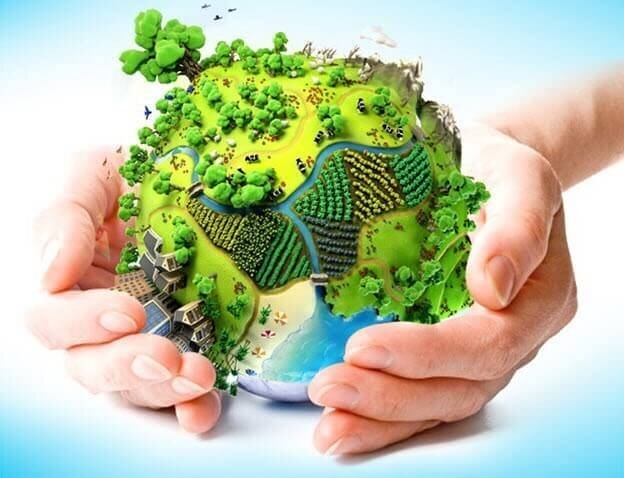
What ESG Really Means When the Earth Is on the Balance Sheet
There is a peculiar ritual in modern capitalism. A company can poison a river, erase a forest, underpay workers, manipulate regulators, and still be praised for “creating shareholder value.” The applause comes quarterly. The consequences arrive seasonally—through floods, heat, migration, lawsuits, distrust, and the invisible exhaustion of people who carry systems on their backs.
ESG emerged from that fracture.
Not as salvation. Not as ideology. Certainly not as marketing jargon, though it has been stretched thin by consultants eager to laminate morality into PowerPoint slides. ESG began as a quieter proposition: What if investors measured the health of a company the way ecologists study a forest—through relationships, resilience, feedback loops, and long-term viability?
Three letters. Environmental. Social. Governance.
Simple enough to print on an annual report. Complex enough to unsettle an economic order built on extraction.
ESG Is Not About Virtue
This is the first misunderstanding worth clearing from the table.
ESG is not philanthropy wearing a tailored suit. It is not a corporation planting ten trees after leveling a mountain. It is not an executive buying carbon offsets while flying private between climate conferences. Those spectacles belong to public relations.
ESG, at its most rigorous, is an attempt to quantify risk and responsibility simultaneously.
The environmental dimension asks a blunt question: How does a company interact with the living systems that make commerce possible in the first place?
The social dimension asks another: How does it treat people—not in advertising campaigns, but in supply chains, warehouses, factories, call centers, and communities?
Governance examines power itself. Who makes decisions? Who benefits? Who is accountable when harm occurs?
The acronym sounds bureaucratic because bureaucracy often arrives after catastrophe. Food safety laws followed contamination. Securities regulations followed fraud. Labor protections followed exploitation. ESG is, in part, the market attempting to calculate damage before the collapse rather than after it.
Which is why the debate surrounding ESG has become so heated. It touches the oldest fault line in economics: whether profit is the purpose of business or merely one outcome of doing something useful without destroying the conditions that allow usefulness to exist.
The “E” — Environmental
Walk through any industrial district before dawn. You can smell the mathematics.
Natural gas. Diesel. Solvents. Heat.
Every product carries a hidden biography written in extraction. Copper mined in Chile. Palm oil from Indonesia. Cotton irrigated in drought-prone regions. Lithium pulled from salt flats. The modern economy behaves as though nature were both infinite and silent.
It is neither.
Environmental metrics attempt to measure the material footprint of business activity. Carbon emissions receive the most attention, but ESG’s environmental lens is broader and more revealing than climate alone.
It includes:
-
Greenhouse gas emissions
-
Water use and contamination
-
Waste management
-
Biodiversity loss
-
Deforestation
-
Energy efficiency
-
Supply chain impacts
-
Air pollution
-
Resource depletion
A manufacturing company that dumps untreated chemicals into groundwater may still post exceptional quarterly profits. ESG asks whether those profits are artificially inflated because the company externalized costs onto ecosystems and future generations.
That distinction matters.
For decades, balance sheets ignored the atmosphere entirely. You could burn fossil fuels freely while storms intensified elsewhere. Accounting systems treated ecological stability as economically irrelevant, which is akin to building a home while pretending gravity is optional.
I learned this firsthand years ago while visiting a textile facility in Southeast Asia. The factory manager proudly described efficiency improvements: faster dyeing processes, lower operating costs, increased production. Then we walked behind the building.
A river moved slowly beside the property, thick with chemical runoff. Children were fishing downstream.
The manager saw productivity. The villagers saw sickness. ESG exists because both realities belong in the same ledger.
Environmental Metrics Commonly Used
| Metric | What It Measures | Why Investors Care |
|---|---|---|
| Carbon Emissions (Scope 1, 2, 3) | Direct and indirect greenhouse gases | Regulatory risk, climate exposure |
| Water Usage | Consumption and contamination | Scarcity risk, operational resilience |
| Waste Diversion Rate | Recycling and landfill reduction | Efficiency and compliance |
| Renewable Energy Adoption | Clean energy integration | Long-term energy stability |
| Biodiversity Impact | Ecosystem disruption | Legal, reputational, and supply risks |
The challenge, of course, is honesty.
Companies can manipulate environmental narratives with astonishing creativity. A corporation may announce “net-zero ambitions” while expanding fossil fuel infrastructure. Another may highlight recyclable packaging while relying on exploitative extraction elsewhere in the supply chain.
The phenomenon has acquired its own vocabulary: greenwashing.
And greenwashing thrives wherever metrics become theater rather than accountability.
The “S” — Social
Factories do not suffer burnout. People do.
The social dimension of ESG examines the human consequences of enterprise. Not as sentimentality. As structural reality.
A company dependent on underpaid labor, unsafe conditions, or discriminatory practices is not stable. It is merely delaying the invoice.
Social factors include:
-
Employee safety
-
Diversity and inclusion
-
Labor standards
-
Community impact
-
Human rights protections
-
Customer privacy
-
Data security
-
Pay equity
-
Worker retention
-
Supply chain ethics
For much of industrial history, labor was viewed as interchangeable machinery. Replaceable. Disposable. The language itself revealed the mindset: human resources.
Yet organizations are biological systems disguised as corporate structures. Trust matters. Belonging matters. Psychological safety matters. People who feel invisible eventually disengage. Communities that feel exploited eventually resist.
One of the more revealing shifts in business over the past decade has been the recognition that culture carries financial weight. Toxic workplaces lose talent. Abusive supply chains trigger consumer backlash. Data breaches erode trust faster than advertising campaigns can restore it.
Social instability becomes economic instability.
Consider apparel manufacturing. Consumers increasingly ask where garments are made, who stitched them, whether wages were fair, whether factories are safe. This scrutiny intensified after tragedies like the Rana Plaza collapse, where more than 1,100 workers died inside an unsafe building producing clothing for global brands.
That catastrophe was not an isolated failure. It was a mirror.
The social pillar of ESG attempts to pull those hidden realities into visibility before disaster forces attention.
The Social Cost of Ignoring Workers
There is an old assumption in finance that labor protections reduce profitability. Sometimes they do—temporarily. But exploitation often creates brittle systems. High turnover, lawsuits, strikes, reputational damage, and declining morale carry enormous hidden costs.
I once spoke with an operations director at a logistics company who quietly admitted that employee exhaustion had become their largest inefficiency. Not fuel prices. Not equipment maintenance. Human depletion.
Workers were quitting faster than the company could train replacements.
The spreadsheets measured labor as expense. Reality measured it as fragility.
The “G” — Governance
Governance is the least glamorous part of ESG, which is precisely why it may be the most important.
Governance determines whether power remains accountable or mutates into entitlement.
This category examines:
-
Board independence
-
Executive compensation
-
Shareholder rights
-
Anti-corruption policies
-
Transparency
-
Regulatory compliance
-
Ethical oversight
-
Audit integrity
-
Political lobbying disclosures
When governance fails, the consequences spread quickly.
Fraud scandals. Corruption. Manipulated accounting. Insider favoritism. Executive excess.
History offers no shortage of examples. The collapse of Enron was not merely an accounting failure. It was a governance failure rooted in arrogance, opacity, and incentives detached from reality.
Governance asks whether leadership structures encourage stewardship or extraction.
A company may publish inspiring sustainability goals while simultaneously rewarding executives exclusively for short-term stock performance. That contradiction matters because incentives eventually overpower mission statements.
Culture follows compensation more faithfully than slogans.
Governance Indicators
| Governance Area | Strong Practice | Weak Practice |
|---|---|---|
| Board Structure | Independent oversight | Insider-dominated board |
| Executive Pay | Linked to long-term performance | Excessive short-term incentives |
| Transparency | Clear disclosures | Opaque reporting |
| Ethics Policies | Enforced accountability | Symbolic compliance |
| Shareholder Rights | Accessible voting structures | Concentrated executive control |
Governance, at its core, is about whether institutions can tell themselves the truth.
Without that capacity, environmental and social commitments become ornamental.
Why Investors Care About ESG
For decades, traditional investing focused primarily on financial statements. Revenue. Profit. Debt. Margins.
But markets eventually encountered a difficult reality: environmental collapse, social instability, and corruption have economic consequences.
Wildfires disrupt supply chains. Drought affects agriculture. Labor disputes halt production. Scandals erase billions in valuation overnight.
ESG emerged because risk expanded beyond accounting categories.
Large institutional investors began recognizing that climate volatility, inequality, and governance failures were not peripheral concerns. They were financially material.
Firms like BlackRock and organizations such as the United Nations pushed ESG frameworks into mainstream finance, arguing that long-term value creation requires sustainable systems.
Critics, meanwhile, accuse ESG of politicizing investment decisions or enabling corporate hypocrisy.
Both criticisms contain truth.
Some ESG ratings are inconsistent. Some corporations exploit ESG language without meaningful change. Certain funds advertise sustainability while holding environmentally destructive assets.
The inconsistency reveals an important fact: ESG is still evolving. Its standards remain fragmented. Measurement systems vary. Data quality differs dramatically across industries and regions.
In other words, ESG is imperfect because the systems it attempts to measure are themselves imperfect.
ESG Versus Sustainability
The terms are often used interchangeably, but they are not identical.
Sustainability is the broader philosophy. ESG is the measurement framework.
Sustainability asks:
How should humans live within ecological limits?
ESG asks:
How can organizations quantify and disclose their environmental, social, and governance impacts?
One is moral and ecological in scope. The other operationalizes those concerns into metrics investors and regulators can evaluate.
The distinction matters because numbers alone cannot produce wisdom.
A corporation may improve its ESG score while continuing practices fundamentally incompatible with planetary stability. Metrics can illuminate reality, but they can also reduce living systems into abstractions digestible to finance.
The map is not the forest.
The Criticism ESG Cannot Escape
Some activists argue ESG does too little.
Some politicians argue it does too much.
That tension reveals its peculiar position in contemporary culture. ESG sits between capitalism and accountability, trying to persuade markets to price consequences that markets historically ignored.
Its critics on the left see compromise.
Its critics on the right see intrusion.
Meanwhile, companies navigate reporting frameworks, investors chase standardized metrics, and consultants build empires translating ethics into spreadsheets.
There is irony here. The same economic machinery that accelerated ecological destabilization is now attempting to engineer solutions through disclosure protocols and risk models.
Will it work?
Partially, perhaps.
But ESG alone cannot solve structural overconsumption, ecological overshoot, or inequality. It is not designed to replace public policy, civic action, or cultural transformation. It is a tool—useful in places, inadequate in others.
A thermometer is valuable. It is not medicine.
The Larger Question Beneath ESG
The deeper question ESG raises is rarely spoken aloud.
What is a corporation for?
If business exists solely to maximize short-term shareholder returns, then forests become inventory, workers become cost centers, and rivers become disposal systems.
But if enterprise is understood as participation within a living economy—nested inside ecosystems, communities, and democratic institutions—then responsibility ceases to be optional.
The economy is not separate from nature. It is wholly owned by it.
That sentence changes everything.
Because the atmosphere does not negotiate with quarterly earnings reports. Oceans do not respond to branding campaigns. Soil fertility cannot be replaced by optimism. Eventually, every abstraction collides with physics.
ESG is one attempt—imperfect, uneven, sometimes performative—to force modern commerce into conversation with reality.
Not ideology. Reality.
And perhaps that is why the acronym provokes such discomfort. It asks businesses to acknowledge something industrial civilization spent centuries avoiding:
The cost of doing business has never disappeared. It was merely transferred elsewhere—into air, water, labor, silence, and time.
- Arts
- Business
- Computers
- Games
- Health
- Home
- Kids and Teens
- Money
- News
- Personal Development
- Recreation
- Regional
- Reference
- Science
- Shopping
- Society
- Sports
- Бизнес
- Деньги
- Дом
- Досуг
- Здоровье
- Игры
- Искусство
- Источники информации
- Компьютеры
- Личное развитие
- Наука
- Новости и СМИ
- Общество
- Покупки
- Спорт
- Страны и регионы
- World

 Russian
 French
 Spanish
 Portuguese
 Deutsch
 Turkish
 Dutch
Dutch
 Italiano
 Arabic
 Romaian
 Portuguese (Brazil)
 Greek
Greek