
What is the best way to practice?
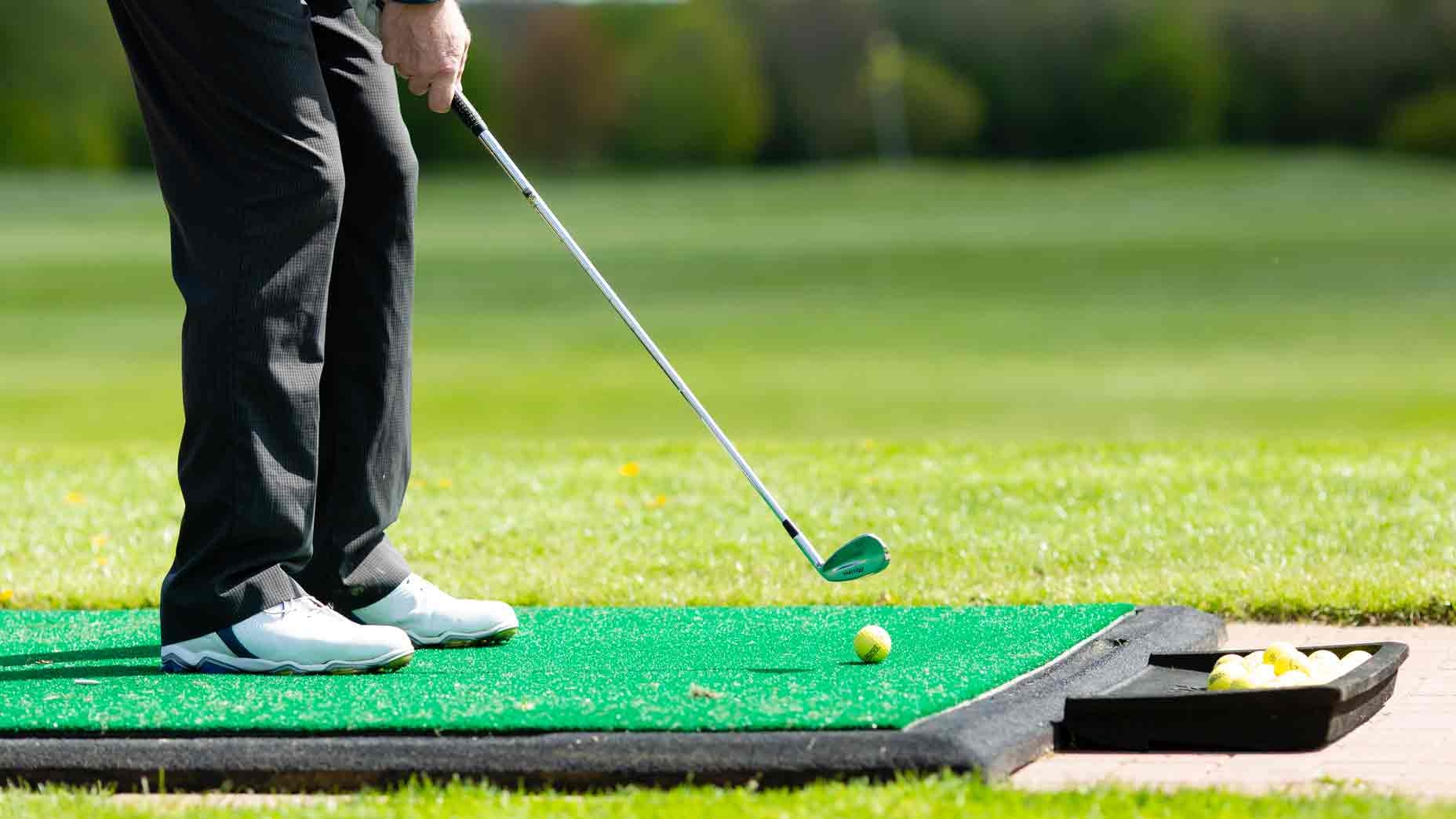
What Is the Best Way to Practice?
Most people assume practice automatically creates improvement.
It doesn’t.
Practice can just as easily reinforce inefficiency, stabilize mistakes, or create the illusion of progress without meaningful growth.
That’s the uncomfortable truth hiding underneath a lot of effort:
repetition alone is not enough.
The quality of practice determines whether time compounds into skill—or disappears into habit loops that never evolve.
And once you realize that, the question changes completely.
Not:
“How much should I practice?”
But:
“What kind of practice actually produces adaptation?”
That is the real question.
The Core Misunderstanding: Practice Is Not Performance
Many people confuse practicing with performing.
Performance is executing what you already know.
Practice is deliberately operating near the edge of what you cannot yet do consistently.
Those are very different states.
Performance prioritizes:
-
efficiency
-
reliability
-
outcome quality
Practice prioritizes:
-
correction
-
experimentation
-
error exposure
-
adaptation
\text{Practice} \neq \text{Performance}
This distinction matters because people often spend most of their time repeating comfortable behaviors instead of challenging weak points.
That feels productive.
But growth slows dramatically inside comfort.
The Best Practice Is Deliberate, Not Mindless
Mindless repetition creates familiarity.
Deliberate practice creates improvement.
The difference is attention.
Deliberate practice includes:
-
focused objectives
-
immediate feedback
-
targeted correction
-
measurable adjustment
\text{Deliberate Practice} = \text{Focused Repetition} + \text{Feedback}
Without feedback, repetition can simply automate errors.
Which explains why some people plateau despite years of experience.
Experience alone does not guarantee refinement.
Practice Should Be Slightly Uncomfortable
One of the clearest signs of effective practice is controlled difficulty.
Not overwhelming difficulty.
Not effortless repetition.
The best practice happens near the boundary of current ability.
\text{Optimal Practice Zone} = \text{Manageable Challenge}
If practice feels too easy:
-
adaptation slows
-
attention decreases
-
growth stabilizes prematurely
If practice feels impossibly difficult:
-
feedback becomes noisy
-
motivation collapses
-
learning efficiency drops
The goal is productive strain—not chaos.
Short Feedback Loops Accelerate Improvement
The faster you discover what went wrong, the faster you improve.
This is why elite performers often seek:
-
coaching
-
immediate correction
-
video review
-
measurable data
-
rapid iteration
\text{Shorter Feedback Loops} = \text{Faster Adaptation}
Delayed feedback weakens learning because the brain struggles to connect action with consequence after too much time passes.
Immediate feedback sharpens adjustment.
Repetition Matters—But Precision Matters More
People often focus on repetition count:
-
hours practiced
-
sessions completed
-
streaks maintained
Those matter.
But precision matters more.
Ten highly attentive repetitions often outperform hundreds of distracted ones.
Why?
Because attention determines whether the brain registers:
-
error patterns
-
movement efficiency
-
conceptual misunderstandings
-
subtle adjustments
Practice without attention becomes mechanical.
Practice with attention becomes transformative.
The Best Practice Is Highly Specific
General practice creates vague results.
Specific practice creates measurable progress.
Instead of:
-
“I’ll work on writing”
effective practice sounds like:
-
“I’ll improve transitions between ideas”
-
“I’ll shorten unnecessary sentences”
-
“I’ll strengthen argument structure”
Specificity sharpens adaptation.
\text{Specific Focus} = \text{Higher Practice Efficiency}
The brain learns faster when the target is clear.
Isolation Before Integration
Many people try to improve complex performance all at once.
This slows progress because too many variables compete simultaneously.
Strong practice often isolates components first:
-
one movement
-
one technique
-
one subskill
-
one pattern
Then reintegrates them later.
For example:
-
musicians isolate difficult passages
-
athletes isolate mechanics
-
writers isolate structure or clarity
-
speakers isolate pacing or tone
Breaking complexity into trainable units accelerates learning dramatically.
Frequency Beats Occasional Intensity
A common mistake is relying on rare, extreme effort:
-
marathon study sessions
-
exhausting practice days
-
bursts of overtraining
But adaptation responds strongly to consistent exposure.
\text{Consistent Practice} > \text{Occasional Intense Effort}
Frequent repetition:
-
strengthens retention
-
improves automaticity
-
stabilizes patterns
Long gaps weaken continuity.
Rest Is Part of Practice
This surprises people.
But improvement often happens between sessions, not only during them.
The brain consolidates learning during recovery:
-
sleep
-
downtime
-
spacing between repetitions
Overloading without recovery reduces adaptation quality.
\text{Practice} + \text{Recovery} = \text{Skill Consolidation}
Rest is not interruption.
It is part of the learning system.
Measurement Accelerates Improvement
If progress is invisible, adjustment becomes difficult.
Strong practice includes measurable indicators:
-
speed
-
accuracy
-
consistency
-
retention
-
quality under pressure
Measurement creates feedback clarity.
Without it, people often rely on emotion to evaluate progress—and emotion is unreliable.
Mistakes Are Diagnostic Tools
Many people emotionally resist mistakes during practice.
But mistakes are not interruptions to learning.
They are the learning signal.
\text{Mistakes} = \text{Adaptation Information}
The key is not avoiding mistakes.
It is analyzing them:
-
why did this happen?
-
what pattern caused it?
-
what adjustment changes the outcome?
This transforms errors from discouragement into data.
Environment Shapes Practice Quality
Good practice environments reduce unnecessary friction:
-
fewer distractions
-
prepared materials
-
focused time blocks
-
clear objectives
Poor environments fragment attention and weaken learning efficiency.
People often underestimate how strongly environment influences consistency and focus.
A Personal Observation on Practice
At one point, I believed improvement came mostly from volume.
So I tried longer sessions.
More repetition.
More effort.
But eventually I noticed something strange:
I was getting tired faster than I was improving.
The breakthrough came when I shifted toward:
-
shorter focused sessions
-
immediate correction
-
isolated weaknesses
-
slower, more attentive repetition
Suddenly, less time produced better results.
Not because I worked less hard.
But because the practice itself became more precise.
The Structural Formula for Effective Practice
At a systems level, the best practice includes:
-
deliberate focus
-
manageable difficulty
-
immediate feedback
-
repeated correction
-
consistent exposure
-
measurable progress
-
adequate recovery
\text{Focused Repetition} + \text{Feedback} + \text{Recovery} = \text{Efficient Skill Growth}
The goal is not maximum effort.
It is maximum adaptation per unit of effort.
Conclusion: The Best Practice Is Designed, Not Random
Effective practice is not about grinding endlessly.
It is about structuring repetition in a way that continuously exposes and corrects weaknesses.
That means:
-
practicing deliberately instead of mechanically
-
seeking feedback quickly
-
focusing narrowly
-
embracing manageable difficulty
-
prioritizing consistency over intensity
Because improvement is not produced by time alone.
It is produced by attention applied repeatedly under corrective conditions.
And once practice becomes intentional instead of automatic, progress stops feeling mysterious.
It becomes predictable.
- Arts
- Business
- Computers
- Games
- Health
- Home
- Kids and Teens
- Money
- News
- Personal Development
- Recreation
- Regional
- Reference
- Science
- Shopping
- Society
- Sports
- Бизнес
- Деньги
- Дом
- Досуг
- Здоровье
- Игры
- Искусство
- Источники информации
- Компьютеры
- Личное развитие
- Наука
- Новости и СМИ
- Общество
- Покупки
- Спорт
- Страны и регионы
- World

 Russian
 French
 Spanish
 Portuguese
 Deutsch
 Turkish
 Dutch
Dutch
 Italiano
 Arabic
 Romaian
 Portuguese (Brazil)
 Greek
Greek