
How to Track Customer Behavior Without Losing Sight of the Human Behind the Data
A few years ago, I sat in a meeting where someone proudly announced that the company now had “complete visibility” into customer behavior.
The room nodded approvingly.
Dashboards glowed across large screens. Heatmaps pulsed with color-coded certainty. Funnels displayed abandonment percentages with mathematical precision. Someone used the phrase “full-funnel behavioral intelligence,” which sounded impressive in the moment and faintly dystopian afterward.
Then a customer interview contradicted nearly everything the data team assumed.
The analytics suggested users abandoned checkout because pricing felt too high.
In reality, customers were confused by shipping timelines buried halfway down the page.
Same outcome. Entirely different explanation.
That moment exposed something important: tracking customer behavior is not the same thing as understanding customers.
Businesses increasingly collect extraordinary amounts of behavioral information. Clicks, scrolls, sessions, purchases, dwell time, engagement patterns, navigation paths — modern companies monitor consumers with a level of observational detail that would have seemed absurdly invasive twenty years ago.
And yet many businesses still misunderstand why customers behave the way they do.
Because data reveals movement.
Interpretation reveals meaning.
The distinction matters more than most analytics dashboards admit.
What Does Tracking Customer Behavior Actually Mean?
At its simplest, customer behavior tracking refers to collecting and analyzing information about how customers interact with a business across digital and physical touchpoints.
That includes:
- Website visits
- Purchase history
- Email engagement
- Mobile app activity
- Customer support interactions
- Social media behavior
- Product usage patterns
- Checkout abandonment
- Search behavior
The goal is not merely observation.
The goal is prediction.
Businesses track behavior because patterns help answer commercially valuable questions:
- What influences purchases?
- Why do customers leave?
- Which experiences create loyalty?
- Where does friction emerge?
- What increases retention?
Good tracking creates operational clarity.
Bad tracking creates informational hoarding disguised as strategy.
Most Businesses Collect Too Much and Understand Too Little
This is the hidden problem underneath modern analytics culture.
Companies often accumulate behavioral data simply because they can.
Every click becomes measurable. Every interaction becomes quantified. Dashboards multiply endlessly. Reporting layers expand until entire teams spend their days generating performance summaries nobody fully interprets anymore.
Meanwhile, basic customer frustrations remain unresolved.
Tracking without prioritization creates noise.
And noise is dangerous because it creates the illusion of insight while obscuring actual behavioral patterns underneath.
I’ve seen businesses monitor fifty metrics simultaneously while ignoring the single checkout error causing massive revenue leakage.
Complexity impresses internal teams.
Customers experience consequences, not sophistication.
The Main Types of Customer Behavior Data
Not all behavioral data serves the same purpose.
Different categories reveal different forms of customer intent.
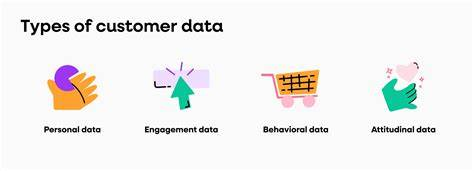
| Data Type | What It Tracks | What It Reveals |
|---|---|---|
| Behavioral Data | Clicks, navigation, browsing | User intent patterns |
| Transactional Data | Purchases, subscriptions, renewals | Buying behavior |
| Engagement Data | Email opens, video views, interactions | Attention levels |
| Demographic Data | Age, location, income estimates | Audience segmentation |
| Psychographic Data | Interests, preferences, values | Motivational drivers |
| Support Data | Complaints, tickets, resolutions | Friction points |
| Device & Technical Data | Browser, device, speed | Experience quality |
Strong customer analysis usually emerges through overlap between categories rather than isolated metrics alone.
Because customers are contextual.
A purchase means something different when combined with browsing hesitation, support requests, or declining engagement patterns.
Website Analytics: The Behavioral Starting Point
For most businesses, website analytics form the foundation of customer tracking.
Platforms like Google Analytics monitor user behavior across websites and apps, revealing:
- Traffic sources
- Session duration
- Exit pages
- User journeys
- Conversion pathways
- Device behavior
- Geographic patterns
Useful information. Incomplete information.
Analytics platforms tell businesses what users did.
They rarely explain why users did it.
That distinction is crucial.
A high bounce rate might indicate irrelevant traffic. Or confusing design. Or weak messaging. Or slow page speed. Or accidental clicks from poorly targeted advertising.
Data interpretation requires restraint.
Otherwise businesses begin constructing confident narratives from ambiguous behavioral signals.
Heatmaps and Session Recordings: Watching Behavior Visually
This is where customer tracking becomes psychologically fascinating.
Tools like Hotjar and Crazy Egg visualize customer interactions through:
- Heatmaps
- Scroll tracking
- Mouse movement analysis
- Session recordings
- Click patterns
Watching real users navigate websites can be deeply humbling.
Businesses often assume navigation feels intuitive because internal teams already understand the interface structure. Customers do not share that familiarity.
I once watched multiple users completely ignore a call-to-action button executives considered “impossible to miss.”
The button was visually prominent.
It was also emotionally irrelevant within the page context.
Behavior exposed the disconnect immediately.
Customer Relationship Management Systems
Behavior tracking becomes far more powerful when interactions connect across time.
That’s where CRM platforms matter.
Tools like HubSpot and Salesforce centralize customer information, allowing businesses to track:
- Purchase history
- Email engagement
- Sales conversations
- Support interactions
- Customer lifecycle stages
- Retention behavior
This longitudinal visibility changes decision-making significantly.
A customer abandoning checkout once means very little in isolation.
A previously loyal customer suddenly reducing engagement across multiple channels? That’s behavior worth investigating.
Patterns matter more than isolated incidents.
Behavioral Segmentation: Why One Audience Is Never Really One Audience
One of the more persistent business delusions involves treating “customers” as a unified category.
They aren’t.
Different users behave differently for different reasons.
Behavioral segmentation groups customers according to actions rather than demographics alone.
For example:
- Frequent buyers
- Cart abandoners
- High-value subscribers
- Seasonal purchasers
- Inactive users
- First-time visitors
- Referral customers
This matters because behavior predicts future behavior more reliably than broad demographic assumptions often do.
A repeat customer who purchases every six weeks behaves differently than a discount-driven buyer appearing only during promotional campaigns.
Treating them identically weakens personalization immediately.
Email Tracking: Useful, Imperfect, and Increasingly Complicated
Email marketing platforms track:
- Open rates
- Click-through rates
- Unsubscribes
- Forwarding behavior
- Engagement timing
Historically, these metrics helped marketers optimize communication strategies.
But privacy changes complicated this ecosystem significantly.
Apple Mail Privacy Protection, for example, disrupted open-rate reliability substantially. Many businesses still discuss email engagement metrics with greater certainty than the underlying data now justifies.
That shift matters.
Because behavioral tracking systems are never static. Platforms evolve. Privacy standards change. Consumer expectations shift.
Tracking methodologies require continuous adaptation.
The Ethics of Tracking Customer Behavior
This conversation cannot remain purely technical anymore.
Customers increasingly understand they are being monitored behaviorally online. The emotional response is mixed.
People appreciate relevance.
They dislike surveillance.
That distinction defines the modern analytics dilemma.
Tracking becomes ethically problematic when:
- Data collection lacks transparency
- Consent feels manipulative
- Information gets sold recklessly
- Personalization becomes intrusive
- Businesses prioritize extraction over usefulness
Consumers are not rejecting all data-driven experiences categorically.
They’re rejecting asymmetrical relationships where companies gather extensive behavioral information while offering little clarity in return.
Trust now influences data collection viability directly.
Why Qualitative Research Still Matters
Behavioral tracking alone creates dangerous blind spots.
Data can identify patterns.
It cannot fully explain emotional context.
This is why interviews, surveys, usability testing, and customer conversations remain essential despite increasingly sophisticated analytics systems.
I learned this lesson painfully years ago.
An ecommerce company I worked with became obsessed with reducing checkout abandonment. Analytics suggested shipping fees caused hesitation. Endless pricing experiments followed.
Nothing improved meaningfully.
Then customer interviews revealed the actual issue: delivery estimates felt unreliable. Customers worried gifts wouldn’t arrive on time.
The pricing wasn’t the friction.
Uncertainty was.
No dashboard had captured that nuance clearly.
Predictive Analytics: The Future of Behavior Tracking
Modern customer tracking increasingly revolves around prediction rather than observation alone.
AI-driven systems now attempt to forecast:
- Purchase likelihood
- Churn risk
- Customer lifetime value
- Product preferences
- Engagement decline
- Subscription cancellation probability
Some predictions are impressively accurate.
Others become absurdly overconfident.
Prediction systems work best when businesses recognize probabilities rather than certainties. Human behavior remains volatile, emotional, and situational in ways algorithms cannot always anticipate cleanly.
People change unexpectedly.
That unpredictability matters.
The Most Important Customer Behaviors to Track
Not every metric deserves equal attention.
The strongest behavioral tracking systems prioritize signals directly tied to business outcomes and customer experience quality.
Usually, that includes:
Conversion Behavior
What actions lead to purchases or signups?
Retention Patterns
What behaviors precede customer churn?
Engagement Depth
Are users interacting meaningfully or merely browsing passively?
Friction Points
Where do customers hesitate, abandon, or become confused?
Support Trends
What recurring complaints signal systemic experience issues?
Repeat Purchase Cycles
How frequently do satisfied customers return?
Tracking should simplify strategic understanding.
Not overwhelm teams with statistical clutter.
Why Businesses Misinterpret Customer Behavior
One of the most common analytics failures comes from confusing correlation with causation.
A customer viewing multiple pricing pages before purchasing might signal price sensitivity.
Or caution.
Or comparison shopping.
Or organizational approval processes.
Or simple curiosity.
Behavioral data rarely explains itself automatically.
Humans rush toward narrative certainty because ambiguity feels uncomfortable operationally. Executives want explanations. Teams want confidence. Reports want conclusions.
But customer behavior often contains overlapping motivations simultaneously.
The smartest analysts stay slightly skeptical of clean explanations.
Conclusion: Customer Tracking Is Really About Paying Attention Properly
Businesses often discuss customer behavior tracking as though it’s fundamentally about technology.
It isn’t.
At its core, it’s about attention.
Careful attention.
The ethical tension surrounding behavioral tracking exists because businesses now possess unprecedented observational power. The question is no longer whether companies can monitor customer behavior extensively.
They can.
The real question is whether they interpret that information responsibly, intelligently, and proportionally.
Because customers are not simply datasets generating monetizable patterns.
They are people navigating uncertainty, distraction, habit, frustration, curiosity, and limited attention spans simultaneously.
Tracking behavior well means respecting that complexity rather than flattening customers into optimization variables.
And ironically, businesses that remember the human behind the metrics usually interpret behavior more accurately anyway.
Not because empathy replaces data.
Because it gives data context.
Without context, customer tracking becomes remarkably sophisticated guesswork.
- Arts
- Business
- Computers
- Игры
- Health
- Главная
- Kids and Teens
- Деньги
- News
- Personal Development
- Recreation
- Regional
- Reference
- Science
- Shopping
- Society
- Sports
- Бизнес
- Деньги
- Дом
- Досуг
- Здоровье
- Игры
- Искусство
- Источники информации
- Компьютеры
- Личное развитие
- Наука
- Новости и СМИ
- Общество
- Покупки
- Спорт
- Страны и регионы
- World

 English
 French
 Spanish
 Portuguese
 Deutsch
 Turkish
 Dutch
Dutch
 Italiano
 Arabic
 Romaian
 Portuguese (Brazil)
 Greek
Greek
