
How to build leadership skills?
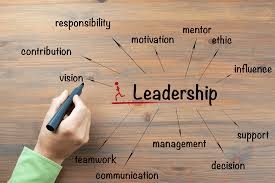
How to Build Leadership Skills?
Leadership is one of those concepts that gets overloaded with mythology.
People picture:
-
charisma
-
authority
-
bold speeches
-
decisive command
And while those traits can exist in leadership, they are not the foundation of it.
In practice, leadership is far less theatrical.
It is closer to a set of repeatable behaviors that help other people perform better than they would alone.
That’s the core shift most people miss.
Leadership is not about being in charge.
It is about increasing the effectiveness of a group.
And once you adopt that lens, the question changes.
Not:
“How do I become a leader?”
But:
“How do I consistently make people and systems more effective?”
Reframe Leadership as a Skill, Not a Position
A common misunderstanding is that leadership begins when you receive a title.
Manager.
Team lead.
Director.
But titles are permission structures, not skill guarantees.
Some of the strongest leadership behaviors appear long before formal authority:
-
organizing group effort
-
clarifying confusion
-
helping others decide
-
reducing friction in teamwork
\text{Leadership} = \text{Influence Without Reliance on Authority}
If influence only works when authority is present, it’s management by position.
Leadership starts when influence works even without it.
Start With Clarity: Leaders Reduce Ambiguity
Most group failure is not caused by lack of effort.
It is caused by lack of clarity.
People are often working hard on:
-
different priorities
-
different interpretations
-
different assumptions
Leadership begins by reducing that divergence.
Ask:
-
What are we actually trying to achieve?
-
What does success look like?
-
What matters most right now?
Clarity is not decoration.
It is coordination infrastructure.
Make Decisions Easier for Others
A large part of leadership is cognitive load reduction.
When people hesitate, it is often because:
-
options are unclear
-
consequences are uncertain
-
priorities conflict
Leaders help by structuring decisions:
-
what matters most
-
what can be ignored
-
what should happen next
\text{Team Efficiency} \propto \frac{1}{\text{Decision Friction}}
The less time people spend deciding what to do, the more time they spend doing it.
Learn to Listen Before You Direct
Many early leaders make a predictable mistake:
They speak before they understand.
They assume leadership is about providing answers.
But often, the better first move is understanding:
-
what people are actually struggling with
-
what constraints exist
-
what information is missing
-
what assumptions are being made
Listening is not passive.
It is diagnostic.
You cannot improve a system you do not understand.
Replace Control With Alignment
A weak form of leadership tries to control behavior directly.
A stronger form aligns incentives, clarity, and context so that the right behavior becomes natural.
Instead of:
“Do this exactly this way.”
Effective leaders aim for:
“Here’s what we’re trying to achieve, and here’s why this approach works.”
Alignment scales.
Control does not.
\text{Alignment} > \text{Control}
The more aligned people are, the less micromanagement is needed.
Give Better Context, Not Just Instructions
Instructions tell people what to do.
Context explains why it matters.
Without context:
-
compliance is mechanical
-
understanding is shallow
-
adaptability is limited
With context:
-
people make better independent decisions
-
fewer clarifications are needed
-
ownership increases
Leadership improves when people can reason without constant supervision.
Take Responsibility for Clarity, Not Just Execution
A subtle but important shift:
Many people believe their job is to “do their part.”
Leaders expand that responsibility to:
-
ensuring others understand
-
identifying confusion early
-
clarifying expectations continuously
If a team fails due to misunderstanding, leadership responsibility does not disappear.
It intensifies.
Practice Giving Feedback That Improves Behavior
Feedback is one of the highest-leverage leadership tools.
But only when it is:
-
specific
-
timely
-
actionable
Weak feedback:
“Good job.”
Strong feedback:
“Your explanation helped the team decide faster because it clarified the constraint early.”
The goal is not praise or criticism.
It is behavior improvement.
\text{Feedback Quality} = \text{Behavior Change Potential}
If feedback does not change future behavior, it is incomplete.
Learn to Manage Energy, Not Just Tasks
Many leadership systems focus on task allocation.
But performance is also driven by:
-
fatigue
-
motivation
-
cognitive load
-
stress
Effective leaders notice when:
-
workload becomes unsustainable
-
priorities conflict
-
recovery is needed
Because overloading a system reduces long-term output.
Build Trust Through Consistency
Trust is rarely created by single actions.
It is built through repeated patterns:
-
following through
-
communicating clearly
-
admitting uncertainty when appropriate
-
being predictable in behavior
\text{Trust} = \text{Consistency Over Time}
People trust what they can reliably predict.
Stop Trying to Be the Smartest Person in the Room
A common leadership insecurity is the need to be the primary source of intelligence.
But effective leadership is not about having all answers.
It is about:
-
asking better questions
-
extracting knowledge from the group
-
organizing expertise
-
removing blockers
Sometimes the best leadership move is to step back so others can step forward.
Learn to Operate Through Systems, Not Heroics
Teams that depend on hero-level effort are fragile.
Sustainable leadership builds systems:
-
repeatable processes
-
clear communication channels
-
predictable decision paths
-
shared understanding of priorities
\text{System Reliability} > \text{Individual Heroics}
Strong leaders reduce dependency on exceptional moments.
A Personal Observation About Leadership
At first glance, leadership looks like visibility.
The person speaking.
The person deciding.
The person directing.
But over time, a different pattern becomes clear.
The most effective leaders often do less obvious work:
-
clarifying confusion before it spreads
-
preventing unnecessary work
-
making decisions easier for others
-
improving system flow quietly
Their impact is not always loud.
But it compounds.
And it is often visible only when they are absent.
Common Leadership Development Approaches Compared
| Approach | Short-Term Impact | Long-Term Impact |
|---|---|---|
| Giving Orders | High compliance | Low ownership |
| Micromanagement | Immediate control | Low scalability |
| Clear Communication | High | Very High |
| Building Trust | Moderate | Very High |
| Delegation Practice | Moderate | High |
| Feedback Loops | High | Very High |
| System Design | Moderate | Very High |
| Emotional Reactivity | High volatility | Low stability |
| Alignment Focus | High | Very High |
Leadership effectiveness increases when reliance shifts from authority to structure.
The Structural Formula for Leadership Skills
Leadership capability typically emerges from:
-
clarity creation
-
alignment building
-
trust development
-
feedback quality
-
system thinking
-
responsibility ownership
\text{Leadership} = \text{Clarity} + \text{Alignment} + \text{Trust}
Not charisma.
Not control.
Clarity, alignment, and trust over time.
Conclusion: Leadership Is a Coordination Skill
Many people misunderstand leadership as personality-driven influence.
But in practice, leadership is a coordination discipline.
It is the ability to:
-
reduce confusion
-
improve decision flow
-
align effort toward shared outcomes
-
increase group effectiveness
And the surprising truth is this:
You do not need a title to start building leadership skills.
You need moments where other people’s work becomes clearer, easier, and more effective because you were involved.
Leadership is not something you wait to be given.
It is something you practice through how you interact with people and problems today.
And over time, those small acts of clarity, alignment, and trust compound into something far more powerful than authority alone ever could.
- Arts
- Business
- Computers
- الألعاب
- Health
- الرئيسية
- Kids and Teens
- مال
- News
- Personal Development
- Recreation
- Regional
- Reference
- Science
- Shopping
- Society
- Sports
- Бизнес
- Деньги
- Дом
- Досуг
- Здоровье
- Игры
- Искусство
- Источники информации
- Компьютеры
- Личное развитие
- Наука
- Новости и СМИ
- Общество
- Покупки
- Спорт
- Страны и регионы
- World

 English
 Russian
 French
 Spanish
 Portuguese
 Deutsch
 Turkish
 Dutch
Dutch
 Italiano
 Romaian
 Portuguese (Brazil)
 Greek
Greek
