
What Are the Advantages of Cloud Infrastructure?
Infrastructure has never been particularly glamorous.
Customers do not choose a company because its servers are well organized. Investors rarely ask about storage arrays during earnings calls. Most employees give little thought to the networks, databases, and computing resources quietly powering their workday.
Yet infrastructure influences nearly everything.
Growth. Innovation. Customer experience. Operational resilience. Profitability.
For decades, organizations built these foundations themselves. They purchased servers, leased data center space, installed networking equipment, and assembled teams responsible for maintaining it all. It was expensive, time-consuming, and often surprisingly inflexible.
Then cloud infrastructure altered the equation.
Not overnight. Not through dramatic headlines. Rather, through a gradual realization that businesses could access computing resources in a fundamentally different way.
The conversation has since evolved beyond technology.
Today, cloud infrastructure is often discussed as a strategic business capability.
Which raises an important question:
What are the advantages of cloud infrastructure?
The answer extends far beyond cost savings.
In fact, focusing solely on cost may obscure the most valuable benefits altogether.
Cloud Infrastructure Explained
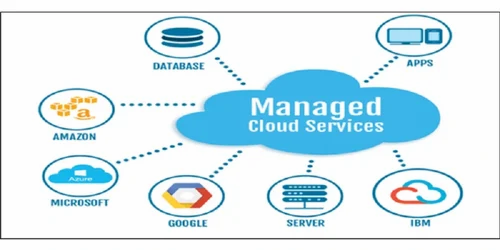
At its core, cloud infrastructure refers to computing resources delivered through cloud providers rather than maintained entirely on-premises.
These resources commonly include:
- Virtual servers
- Data storage
- Networking capabilities
- Databases
- Security services
- Backup and recovery systems
Instead of purchasing physical hardware, organizations access resources as needed.
That distinction sounds technical.
Its implications are profoundly commercial.
Infrastructure transforms from an owned asset into a flexible service.
And flexibility changes behavior.
The Most Overlooked Advantage: Freedom From Prediction
Business planning has an uncomfortable relationship with forecasting.
Executives predict customer demand.
Marketing teams estimate campaign performance.
Technology departments project future infrastructure requirements.
Sometimes these forecasts prove accurate.
Often they do not.
I once worked with an organization preparing for what leadership expected to be moderate growth. Infrastructure investments were sized accordingly. Then a successful product launch generated demand that exceeded expectations by a substantial margin.
What had seemed like prudent planning quickly became a limitation.
Additional resources required procurement approvals, vendor negotiations, installation schedules, and configuration work.
Customers, unfortunately, were not interested in infrastructure timelines.
The lesson stayed with me.
The challenge was not insufficient infrastructure.
The challenge was assuming future demand could be predicted with precision.
Cloud infrastructure reduces that dependency on forecasting.
Resources can expand when demand rises and contract when demand falls.
Organizations spend less time predicting the future and more time responding to reality.
Scalability Without the Traditional Constraints
Scalability is frequently cited as a cloud advantage.
The reason is simple.
It matters.
Traditional infrastructure often forces organizations to purchase capacity based on anticipated peak demand.
The result is familiar.
Either infrastructure is underutilized most of the year, or it becomes overwhelmed during periods of increased activity.
Neither outcome is ideal.
Cloud infrastructure introduces elasticity.
Computing resources scale dynamically according to workload requirements.
For organizations experiencing:
- Seasonal demand fluctuations
- Rapid growth
- Unpredictable traffic patterns
- Global expansion
This flexibility can be extraordinarily valuable.
Capacity becomes responsive rather than fixed.
Faster Deployment Changes Business Dynamics
Infrastructure procurement has historically been measured in weeks or months.
Cloud infrastructure operates on different timelines.
Resources can often be deployed within minutes.
That speed produces consequences beyond IT departments.
Product launches accelerate.
Development cycles shorten.
Testing environments become easier to create.
Innovation occurs more frequently.
A new business initiative no longer waits for hardware procurement.
The infrastructure is already available.
Organizations simply activate what they need.
The difference may appear operational.
In practice, it often becomes competitive.
Cost Efficiency Through Resource Optimization
Cost reduction remains one of the most frequently discussed cloud benefits.
Yet the conversation deserves nuance.
Cloud infrastructure does not automatically guarantee lower spending.
What it often provides is greater efficiency.
Traditional infrastructure requires organizations to purchase hardware regardless of actual utilization rates.
Cloud environments align costs more closely with consumption.
Businesses pay for resources they use rather than resources they might eventually need.
This model creates several financial advantages:
- Reduced capital expenditures
- Lower hardware maintenance costs
- Improved budget flexibility
- Better alignment between expenses and demand
- Faster return on technology investments
The key distinction is that cloud infrastructure changes spending patterns.
Sometimes costs decrease.
Almost always, spending becomes more adaptable.
Improved Business Continuity and Disaster Recovery
Disaster recovery tends to be appreciated most after a disruption occurs.
Unfortunately, that realization often arrives late.
Building resilient infrastructure independently requires significant investment.
Redundant systems.
Backup facilities.
Replication technologies.
Recovery procedures.
The list grows quickly.
Cloud infrastructure simplifies many of these requirements.
Providers frequently offer geographically distributed environments, automated backup capabilities, and built-in redundancy mechanisms.
Organizations gain access to resilience features that might otherwise require substantial internal investment.
The result is not merely improved recovery.
It is improved confidence.
Confidence that operations can continue when unexpected events occur.
Security Resources Beyond Internal Capabilities
Security discussions surrounding cloud infrastructure are rarely straightforward.
Some organizations initially hesitate to place critical workloads in external environments.
Others assume cloud providers automatically eliminate security concerns.
Neither perspective captures the full picture.
The reality is more balanced.
Major cloud providers invest heavily in:
- Threat monitoring
- Security research
- Access controls
- Encryption technologies
- Compliance certifications
- Physical infrastructure protection
Most individual organizations cannot match those investments independently.
At the same time, cloud security operates through shared responsibility.
Providers secure the infrastructure.
Customers secure their applications, identities, configurations, and data.
When managed effectively, cloud infrastructure can significantly strengthen security capabilities.
Supporting Innovation at Scale
Innovation frequently depends on access.
Access to computing resources.
Access to development environments.
Access to experimentation opportunities.
Historically, infrastructure limitations constrained these activities.
Cloud infrastructure reduces those barriers.
Development teams can provision environments rapidly.
Data scientists can access high-performance computing resources.
Organizations can test ideas without major upfront investments.
This shift creates an interesting effect.
Experimentation becomes less expensive.
And when experimentation becomes less expensive, organizations tend to do more of it.
Not every initiative succeeds.
That is entirely acceptable.
Innovation rarely depends on avoiding failure.
It depends on reducing the cost of trying.
Global Reach Without Global Infrastructure
International expansion once required significant infrastructure commitments.
Companies entering new markets frequently needed local facilities, networking resources, and technical support capabilities.
Cloud infrastructure simplifies that process considerably.
Organizations can deploy workloads in multiple regions without constructing physical facilities in each location.
Applications move closer to users.
Performance improves.
Expansion accelerates.
This advantage is particularly relevant for:
- Software companies
- E-commerce businesses
- Media organizations
- Financial service providers
- Multinational enterprises
Infrastructure becomes globally available without becoming globally owned.
Comparing Cloud Infrastructure and Traditional Infrastructure
The differences become more apparent when examined side by side.
| Factor | Cloud Infrastructure | Traditional Infrastructure |
|---|---|---|
| Upfront Cost | Low | High |
| Scalability | On-demand | Hardware-limited |
| Deployment Speed | Minutes | Weeks or months |
| Maintenance | Reduced hardware responsibility | Full responsibility |
| Geographic Reach | Global | Facility-dependent |
| Disaster Recovery | Built-in options | Separate investment required |
| Resource Utilization | Flexible | Often overprovisioned |
| Hardware Refresh Cycles | Provider-managed | Organization-managed |
| Innovation Speed | Faster experimentation | Slower provisioning |
| Cost Structure | Operational expense | Capital expenditure |
The table reveals a recurring theme.
Many cloud advantages stem from removing constraints.
Less waiting.
Less forecasting.
Less hardware management.
Less rigidity.
The technology matters.
The reduction in friction may matter even more.
Why Startups and Enterprises Both Embrace the Cloud
One of the more fascinating aspects of cloud infrastructure is its appeal across vastly different organizations.
Startups value flexibility.
They can access enterprise-grade infrastructure without major capital investments.
Resources scale as the business grows.
Large enterprises value adaptability.
Complex environments become easier to modernize. Global operations become easier to support. Innovation initiatives become easier to execute.
The motivations differ.
The outcome often looks remarkably similar.
Both groups gain access to infrastructure aligned with changing business requirements.
The Hidden Advantage: Redirecting Attention
Perhaps the greatest advantage of cloud infrastructure is rarely included in technical specifications.
Attention.
Traditional infrastructure consumes it.
Hardware procurement requires it.
Maintenance demands it.
Capacity planning absorbs it.
Cloud infrastructure reduces many of these burdens.
Organizations spend less time managing infrastructure and more time focusing on products, customers, and growth opportunities.
That shift is difficult to measure precisely.
Yet it may generate more value than any individual technical feature.
Because attention is finite.
Every hour devoted to maintaining infrastructure is an hour unavailable for innovation.
Conclusion: The Greatest Advantage Is Adaptability
The cloud infrastructure conversation often begins with technology.
Servers.
Storage.
Networks.
Virtual machines.
Yet the most meaningful advantages have little to do with hardware itself.
Cloud infrastructure provides adaptability.
It allows organizations to scale without excessive forecasting. Expand without excessive investment. Innovate without excessive delay.
The technology is important.
The flexibility it creates is even more important.
That is why cloud infrastructure continues to reshape business operations across industries.
Not because companies suddenly stopped caring about infrastructure.
But because they realized infrastructure works best when it adapts to business needs rather than forcing businesses to adapt to infrastructure limitations.
And that may be the most powerful advantage of all.
- Arts
- Business
- Computers
- Spellen
- Health
- Home
- Kids and Teens
- Money
- News
- Personal Development
- Recreation
- Regional
- Reference
- Science
- Shopping
- Society
- Sports
- Бизнес
- Деньги
- Дом
- Досуг
- Здоровье
- Игры
- Искусство
- Источники информации
- Компьютеры
- Личное развитие
- Наука
- Новости и СМИ
- Общество
- Покупки
- Спорт
- Страны и регионы
- World

 English
 Russian
 French
 Spanish
 Portuguese
 Deutsch
 Turkish
 Italiano
 Arabic
 Romaian
 Portuguese (Brazil)
 Greek
Greek
