
What Is the Difference Between IaaS, PaaS, and SaaS?
Cloud computing is often discussed as though it were a single destination.
A company moves to the cloud.
An application runs in the cloud.
Data lives in the cloud.
The language feels tidy. Convenient, even.
The reality is considerably messier.
Behind the broad label of "cloud computing" sits a spectrum of service models, each offering a different balance of control, responsibility, flexibility, and convenience. This distinction matters because many cloud decisions succeed or fail based on a surprisingly simple question:
Who manages what?
That question sits at the heart of Infrastructure as a Service (IaaS), Platform as a Service (PaaS), and Software as a Service (SaaS).
At first glance, the three models appear closely related.
They share infrastructure.
They share cloud delivery mechanisms.
They often share providers.
Yet their purpose, audience, and business impact differ dramatically.
Choosing between them is not merely a technology decision.
It is an operational decision.
A strategic decision.
In some cases, a cultural decision.
The organizations that understand these distinctions tend to extract far more value from cloud investments than those that treat every cloud service as interchangeable.
Because while all three models belong to the same ecosystem, they solve fundamentally different problems.
The Simplest Way to Understand Cloud Service Models
Imagine building a house.
You could purchase land and manage every aspect of construction yourself.
You could hire specialists to provide a prepared structure and focus on customization.
Or you could rent a fully furnished property and simply move in.
The cloud follows a similar progression.
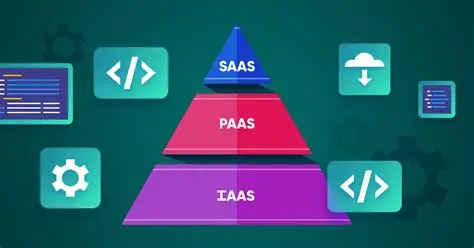
IaaS offers infrastructure.
PaaS offers infrastructure plus development platforms.
SaaS offers finished software.
Each step reduces management responsibilities.
Each step increases convenience.
Neither approach is universally superior.
The best choice depends on what an organization is trying to accomplish.
What Is IaaS?
Infrastructure as a Service provides fundamental computing resources through the cloud.
Organizations gain access to:
- Virtual servers
- Storage systems
- Networking resources
- Load balancers
- Security services
The provider manages the underlying physical infrastructure.
Customers manage operating systems, applications, configurations, and workloads.
Think of IaaS as renting the foundation and framework while remaining responsible for everything built on top.
Why Organizations Choose IaaS
IaaS appeals to businesses seeking maximum flexibility.
It allows organizations to:
- Deploy custom applications
- Configure environments freely
- Control operating systems
- Manage security policies
- Scale infrastructure dynamically
The tradeoff is responsibility.
Greater control typically means greater management obligations.
Typical IaaS Use Cases
Common examples include:
- Enterprise applications
- Disaster recovery environments
- Development and testing systems
- Website hosting
- Data analytics platforms
Organizations that need infrastructure-level control often gravitate toward IaaS.
What Is PaaS?
Platform as a Service occupies the middle ground.
The provider manages not only infrastructure but also much of the software environment required to develop and deploy applications.
Developers focus primarily on code.
The platform handles much of the surrounding complexity.
Resources commonly include:
- Runtime environments
- Databases
- Middleware
- Development tools
- Deployment frameworks
PaaS reduces operational burdens while preserving application-level flexibility.
Why Organizations Choose PaaS
Development teams often prefer PaaS because it accelerates software delivery.
Rather than spending time configuring servers, developers can concentrate on building features.
The platform abstracts much of the infrastructure management.
Productivity increases.
Complexity decreases.
Typical PaaS Use Cases
Common scenarios include:
- Web application development
- API deployment
- Mobile application backends
- Rapid software prototyping
- Continuous integration workflows
PaaS prioritizes development speed over infrastructure control.
That distinction is crucial.
What Is SaaS?
Software as a Service represents the most complete cloud offering.
The provider manages virtually everything.
Infrastructure.
Platforms.
Applications.
Updates.
Maintenance.
Users simply access the software through a browser or application interface.
The customer consumes functionality rather than managing technology.
Why Organizations Choose SaaS
Convenience.
Simplicity.
Speed.
These factors explain much of SaaS's popularity.
Organizations can begin using sophisticated software without purchasing hardware, installing applications, or maintaining infrastructure.
The provider assumes responsibility for operational management.
Typical SaaS Use Cases
Examples include:
- Customer relationship management systems
- Collaboration platforms
- Email services
- Accounting software
- Human resources applications
For many organizations, SaaS represents the fastest route to business capability.
The Core Difference: Responsibility
Discussions about IaaS, PaaS, and SaaS frequently become technical.
The real distinction is managerial.
Who is responsible for the various layers of technology?
As cloud services evolve, responsibility shifts progressively toward the provider.
The more responsibility transferred, the less operational complexity remains for the customer.
That transfer creates both advantages and limitations.
Comparing IaaS, PaaS, and SaaS
| Feature | IaaS | PaaS | SaaS |
|---|---|---|---|
| Infrastructure Management | Provider | Provider | Provider |
| Operating System Management | Customer | Provider | Provider |
| Middleware Management | Customer | Provider | Provider |
| Application Development | Customer | Customer | Provider |
| Application Management | Customer | Customer | Provider |
| Customization Level | High | Moderate | Limited |
| Deployment Speed | Moderate | Fast | Immediate |
| Technical Expertise Required | High | Medium | Low |
| Operational Responsibility | High | Medium | Low |
| Typical Users | IT Teams | Developers | Business Users |
The table reveals a pattern.
As convenience increases, control decreases.
As control increases, responsibility grows.
Neither outcome is inherently positive or negative.
The appropriate balance depends on business objectives.
Why IaaS Remains Essential
Despite the popularity of SaaS and PaaS, IaaS remains critically important.
Some organizations require extensive customization.
Others operate highly specialized applications.
Certain regulatory environments demand granular control.
IaaS supports these needs.
It provides flexibility without requiring ownership of physical infrastructure.
Organizations gain cloud scalability while preserving significant operational authority.
Why Developers Love PaaS
Developers often encounter a frustrating reality.
Writing software is only part of software delivery.
Infrastructure configuration, deployment processes, monitoring, and maintenance consume substantial time.
PaaS addresses this challenge.
It removes much of the operational overhead surrounding application development.
The result is greater focus on innovation.
Less energy spent managing servers.
More energy spent creating value.
For fast-moving development teams, that difference can be substantial.
Why SaaS Dominates Business Software
Most businesses are not seeking infrastructure.
Many are not even seeking platforms.
They are seeking outcomes.
Communication.
Collaboration.
Sales management.
Financial reporting.
Customer support.
SaaS delivers these capabilities directly.
The model removes technical complexity from the equation.
Organizations access functionality immediately.
Adoption becomes faster.
Operational burdens decline.
The widespread popularity of SaaS reflects a broader trend.
Businesses increasingly prioritize results over ownership.
The Lesson I Learned About Cloud Service Models
Several years ago, I observed a company embarking on a cloud modernization initiative.
Leadership initially focused on selecting a provider.
The conversation centered on technology features.
Storage options.
Compute resources.
Performance benchmarks.
Yet as the project evolved, a different question emerged.
How much responsibility did the organization actually want?
The answer transformed the entire strategy.
Some workloads migrated to IaaS because customization was essential.
Development teams adopted PaaS to accelerate application delivery.
Business departments embraced SaaS for everyday operations.
The final environment incorporated all three models.
The lesson was surprisingly simple.
Organizations rarely need a single cloud model.
They need the right model for the right purpose.
That realization often marks the difference between cloud adoption and cloud optimization.
Can Organizations Use All Three?
Absolutely.
In fact, many do.
Modern cloud environments frequently combine:
- SaaS for business applications
- PaaS for software development
- IaaS for specialized infrastructure
The models complement one another.
They are not competitors.
They are layers within a broader cloud strategy.
This hybrid approach allows organizations to balance flexibility, efficiency, and operational simplicity.
How to Choose Between IaaS, PaaS, and SaaS
The decision often comes down to priorities.
Choose IaaS If:
- You require extensive customization
- You need infrastructure-level control
- You manage specialized workloads
- You have strong technical teams
Choose PaaS If:
- Development speed matters
- You want less infrastructure management
- Your focus is application creation
- You need scalable development environments
Choose SaaS If:
- You want immediate functionality
- Customization requirements are limited
- Operational simplicity is a priority
- Business outcomes matter more than technical control
The right answer depends on context.
There is no universal winner.
Conclusion: The Cloud Is Really About Responsibility
Many discussions frame IaaS, PaaS, and SaaS as technology categories.
That perspective is incomplete.
At their core, these service models represent different approaches to responsibility.
IaaS gives organizations control.
PaaS gives developers productivity.
SaaS gives users convenience.
Each model answers the same fundamental question differently:
Who should manage the technology?
The cloud's evolution has not eliminated infrastructure.
It has redistributed responsibility for managing it.
Some organizations benefit from maximum control.
Others benefit from maximum simplicity.
Most benefit from a combination of both.
And that may be the most important insight of all.
The future of cloud computing is unlikely to belong exclusively to IaaS, PaaS, or SaaS.
It belongs to organizations capable of selecting the right level of responsibility for each challenge they face.
Because in cloud computing, success is rarely determined by the platform itself.
It is determined by how wisely responsibility is assigned.
- Arts
- Business
- Computers
- Jogos
- Health
- Início
- Kids and Teens
- Money
- News
- Personal Development
- Recreation
- Regional
- Reference
- Science
- Shopping
- Society
- Sports
- Бизнес
- Деньги
- Дом
- Досуг
- Здоровье
- Игры
- Искусство
- Источники информации
- Компьютеры
- Личное развитие
- Наука
- Новости и СМИ
- Общество
- Покупки
- Спорт
- Страны и регионы
- World

 English
 Russian
 French
 Spanish
 Deutsch
 Turkish
 Dutch
Dutch
 Italiano
 Arabic
 Romaian
 Portuguese (Brazil)
 Greek
Greek