
What Resources Are Included in IaaS?
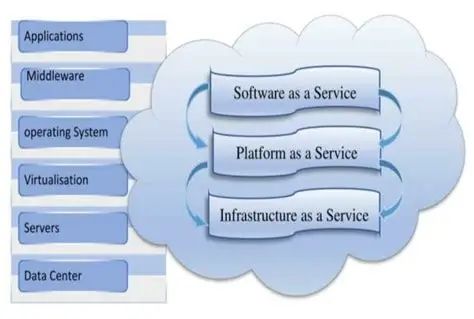
Ask someone unfamiliar with cloud computing what Infrastructure as a Service (IaaS) provides, and the answer is usually predictable.
Servers.
Virtual servers, perhaps.
Computing power delivered through the cloud.
Technically, that answer isn't wrong.
It is simply incomplete.
Dangerously incomplete.
Because reducing IaaS to virtual machines is a bit like describing a modern city as a collection of roads. The roads matter. Nothing moves without them. Yet roads alone do not explain how the city functions.
The same principle applies to cloud infrastructure.
Beneath every application, website, database, and digital service sits an ecosystem of interconnected resources working together. Compute capacity may grab the headlines, but networking, storage, security, monitoring, automation, and management services often determine whether a cloud deployment succeeds or struggles.
This distinction matters because many organizations approach cloud adoption with a narrow understanding of what they're actually purchasing.
They think they're renting servers.
In reality, they're gaining access to an entire infrastructure framework.
And understanding the resources included in IaaS is often the first step toward using it effectively.
Understanding IaaS Beyond Virtual Machines
Infrastructure as a Service delivers foundational IT resources through the cloud.
Instead of purchasing physical hardware, organizations access infrastructure components on demand.
These resources typically include:
- Compute power
- Storage systems
- Networking services
- Security controls
- Monitoring tools
- Backup capabilities
- Automation features
Collectively, these components create the environment necessary to run applications and manage workloads.
What makes IaaS compelling isn't simply the availability of these resources.
It's the ability to consume them when needed, scale them dynamically, and avoid the operational burden of maintaining underlying hardware.
The infrastructure becomes accessible without becoming a physical responsibility.
Compute Resources: The Foundation of IaaS
When most people think about IaaS, they think about compute resources.
For good reason.
Compute forms the core of cloud infrastructure.
Virtual Machines
Virtual machines (VMs) are among the most common compute resources included in IaaS environments.
These software-defined servers function much like physical servers.
They run operating systems.
Host applications.
Process workloads.
Support business operations.
The difference is that they exist within a virtualized environment rather than on dedicated hardware owned by the customer.
Organizations can typically choose:
- CPU configurations
- Memory allocations
- Operating systems
- Geographic deployment regions
This flexibility allows businesses to tailor infrastructure to specific requirements.
Specialized Compute Options
Modern IaaS platforms frequently extend beyond standard virtual machines.
Organizations may access:
- GPU-enabled instances
- High-memory servers
- Compute-optimized configurations
- AI and machine learning infrastructure
These options support increasingly complex workloads without requiring specialized hardware investments.
Storage Resources: The Silent Workhorse
Applications generate data.
Businesses generate data.
Customers generate data.
Infrastructure without storage has very limited value.
This is why storage services represent a critical component of IaaS environments.
Object Storage
Object storage is designed for large volumes of unstructured data.
Common use cases include:
- Media files
- Backups
- Archives
- Website assets
It offers scalability, durability, and cost efficiency.
Block Storage
Block storage functions similarly to traditional hard drives.
Applications often use it for:
- Databases
- Operating systems
- Transactional workloads
Performance and consistency are key advantages.
File Storage
File storage supports shared file systems accessible by multiple users or applications.
Organizations frequently use it for:
- Team collaboration
- Shared documents
- Enterprise applications
Different storage models serve different purposes.
Together, they create a flexible data infrastructure.
Networking Resources: The Infrastructure Behind Connectivity
Applications rarely operate in isolation.
Systems communicate.
Users connect.
Data moves continuously.
Networking resources make these interactions possible.
Virtual Networks
IaaS providers typically offer virtual private networks that allow organizations to create isolated environments within the cloud.
These environments resemble traditional corporate networks but exist entirely in software.
Subnets
Subnets divide networks into manageable segments.
This improves organization, performance, and security.
Load Balancers
Load balancers distribute traffic across multiple resources.
Rather than overwhelming a single server, requests are spread intelligently across available infrastructure.
The result is improved availability and performance.
Internet Gateways
Internet gateways enable communication between cloud resources and external users.
Without them, applications remain inaccessible.
Networking may lack the visibility of compute resources, yet it frequently determines overall user experience.
Security Resources: Built Into Modern IaaS
Security has become one of the most significant components of cloud infrastructure.
Today's IaaS platforms typically include extensive security capabilities.
Identity and Access Management (IAM)
IAM systems control who can access resources and what actions they can perform.
Permissions become granular.
Access becomes manageable.
Risk decreases.
Encryption Services
Most cloud providers offer encryption capabilities for:
- Data at rest
- Data in transit
- Backup environments
Encryption helps protect sensitive information from unauthorized access.
Security Groups and Firewalls
Organizations can define rules governing network traffic.
These controls help restrict unnecessary exposure.
Security becomes programmable rather than purely physical.
Compliance Support
Many providers support regulatory requirements through built-in compliance frameworks and certifications.
This simplifies governance efforts for organizations operating in regulated industries.
Comparing Core IaaS Resources
| Resource Category | Purpose | Common Use Cases | Business Value |
|---|---|---|---|
| Compute | Processing workloads | Applications, websites, databases | Scalability and flexibility |
| Object Storage | Store unstructured data | Backups, media files | Durability and cost efficiency |
| Block Storage | High-performance storage | Databases, operating systems | Performance consistency |
| File Storage | Shared file access | Collaboration, enterprise apps | Accessibility |
| Virtual Networks | Infrastructure connectivity | Application communication | Control and segmentation |
| Load Balancers | Traffic distribution | High-availability systems | Reliability |
| IAM | Access management | User permissions | Security |
| Monitoring Tools | Performance visibility | Infrastructure management | Operational insight |
| Backup Services | Data protection | Disaster recovery | Business continuity |
| Automation Services | Resource orchestration | Scaling, deployments | Efficiency |
The table reveals an important reality.
IaaS is not a single resource.
It is an ecosystem.
Monitoring and Observability Resources
Infrastructure visibility has become increasingly important.
Cloud environments can grow rapidly.
Without monitoring, complexity becomes difficult to manage.
Metrics Collection
Monitoring services typically track:
- CPU utilization
- Memory consumption
- Network activity
- Storage performance
These insights help teams identify issues before users experience them.
Logging Services
Logs provide detailed records of system activity.
Organizations use them for:
- Troubleshooting
- Auditing
- Security investigations
Alerting Systems
Automated alerts notify teams when infrastructure behavior deviates from expectations.
Response times improve.
Operational risk decreases.
Monitoring transforms infrastructure from a black box into a measurable system.
Backup and Disaster Recovery Resources
Infrastructure failures occur.
Human errors occur.
Cybersecurity incidents occur.
Preparation matters.
Most IaaS platforms include resources that support resilience.
Snapshot Services
Snapshots create point-in-time copies of systems and storage volumes.
Recovery becomes faster and more precise.
Replication Services
Data can be replicated across multiple regions or availability zones.
This improves redundancy.
Recovery Environments
Organizations can establish standby environments that accelerate recovery during disruptions.
These capabilities significantly reduce the complexity of disaster preparedness.
Automation Resources: The Hidden Advantage
One of the most powerful resources in IaaS is often the least discussed.
Automation.
Infrastructure increasingly operates through software.
Infrastructure as Code
Teams can define environments using code rather than manual configuration.
Consistency improves.
Errors decline.
Deployments accelerate.
Auto Scaling
Resources automatically expand or contract based on demand.
Applications remain responsive without constant oversight.
Automated Provisioning
New environments can be deployed rapidly and consistently.
Operational efficiency increases.
Automation transforms infrastructure management from a reactive process into a proactive one.
The Lesson I Learned About Resource Planning
Several years ago, I worked with an organization preparing to migrate critical applications into a cloud environment.
Early planning discussions focused almost entirely on compute capacity.
How many virtual machines would be required?
How much memory was necessary?
What CPU configurations should be selected?
Reasonable questions.
Yet they represented only a fraction of the infrastructure picture.
As implementation progressed, networking requirements became increasingly important.
Security policies required refinement.
Storage architecture demanded careful consideration.
Monitoring capabilities proved essential during testing.
The project ultimately succeeded, but it reinforced a valuable lesson.
Cloud infrastructure is never just about servers.
The supporting resources often determine whether the environment performs effectively, remains secure, and scales successfully.
Ignoring those resources creates risk.
Understanding them creates opportunity.
Why the Breadth of Resources Matters
The true value of IaaS emerges from integration.
Compute resources connect to storage systems.
Networking services support application delivery.
Security controls protect workloads.
Monitoring tools provide visibility.
Automation drives efficiency.
Individually, each component solves a specific problem.
Collectively, they create a complete infrastructure platform.
This breadth explains why cloud adoption has accelerated across industries.
Organizations gain access to capabilities that once required substantial investment and operational complexity.
Resources become available on demand.
Infrastructure becomes adaptable.
Technology becomes easier to align with business objectives.
Conclusion: IaaS Is an Infrastructure Ecosystem, Not a Server Rental
It is tempting to view Infrastructure as a Service as little more than virtual machines delivered through the cloud.
The simplicity of that explanation makes it attractive.
It also makes it misleading.
Modern IaaS platforms include far more than compute power.
They provide storage systems, networking frameworks, security services, monitoring tools, backup capabilities, and automation resources.
Each component plays a distinct role.
Each contributes to operational success.
And together, they form an ecosystem capable of supporting everything from small business applications to global enterprise workloads.
The organizations that gain the most value from IaaS understand this broader picture.
They do not see cloud infrastructure as rented hardware.
They see it as a collection of interconnected resources designed to create flexibility, resilience, and scalability.
That perspective changes how infrastructure is planned.
More importantly, it changes what infrastructure can achieve.
- Arts
- Business
- Computers
- Jeux
- Health
- Domicile
- Kids and Teens
- Argent
- News
- Personal Development
- Recreation
- Regional
- Reference
- Science
- Shopping
- Society
- Sports
- Бизнес
- Деньги
- Дом
- Досуг
- Здоровье
- Игры
- Искусство
- Источники информации
- Компьютеры
- Личное развитие
- Наука
- Новости и СМИ
- Общество
- Покупки
- Спорт
- Страны и регионы
- World

 English
 Russian
 Spanish
 Portuguese
 Deutsch
 Turkish
 Dutch
Dutch
 Italiano
 Arabic
 Romaian
 Portuguese (Brazil)
 Greek
Greek
