
Who is Daniel Kahneman?
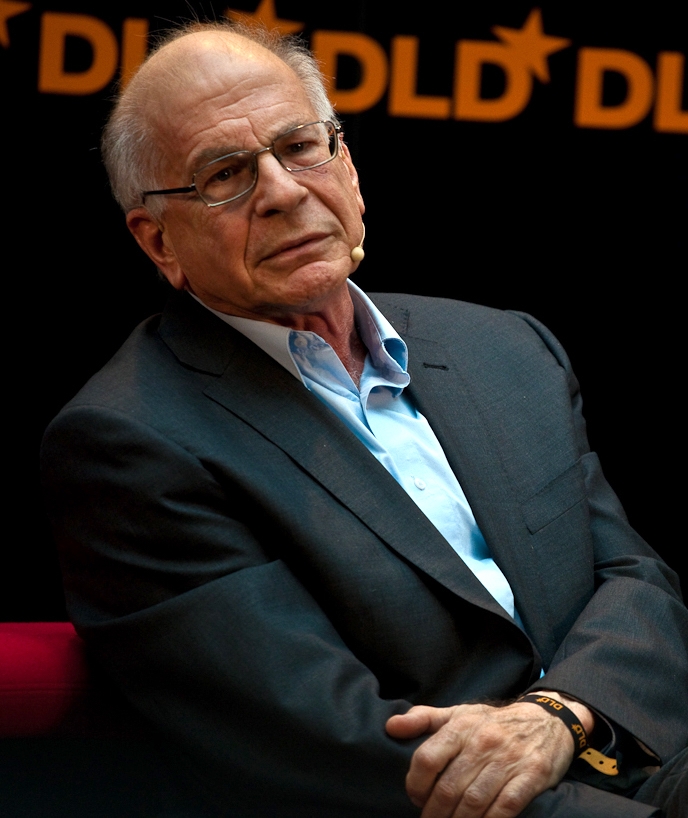
Who Is Daniel Kahneman?
The Question Behind the Question
Most biographies begin with a date, a place, a résumé of achievements.
This one begins differently.
A young soldier in the 1940s is tasked with evaluating whether his peers are suitable for leadership roles. He observes them briefly—sometimes for only a few minutes—and then writes down his impressions.
He feels confident in his judgments.
Later, he discovers something uncomfortable: his predictions are no better than chance.
Yet he remains convinced of them.
That tension—between confidence and accuracy—does not disappear with experience. It deepens.
And it eventually becomes the foundation of one of the most influential ideas in modern social science.
Daniel Kahneman is the psychologist who showed that human judgment is not only fallible, but predictably so.
To understand him is to understand a shift in how we think about thinking itself.
A Life Between Two Worlds
Daniel Kahneman was born in 1934 in Tel Aviv, though his early life unfolded across Europe during a period of profound instability.
His childhood was shaped by displacement, uncertainty, and the experience of watching human behavior under pressure. These early conditions would later echo in his scientific curiosity: not what people say they believe, but how they behave when stakes are real and information is incomplete.
After moving to what would become Israel, he studied psychology and mathematics. The combination mattered. Psychology gave him questions. Mathematics gave him structure.
Most importantly, it gave him skepticism toward intuition dressed up as certainty.
The Soldier Who Questioned Judgment
One of Kahneman’s earliest professional experiences came in the Israeli Defense Forces, where he was assigned to evaluate recruits for leadership potential.
The process seemed systematic. Candidates were observed in group exercises. Evaluators formed impressions. Predictions were made about who would succeed as officers.
Kahneman followed the procedure carefully. He trusted the method. He trusted his own judgment.
Then he checked the outcomes.
There was almost no correlation between predicted performance and actual performance.
The discovery was not dramatic in appearance. No one collapsed. No system immediately changed.
But something subtle shifted in his thinking.
He later described realizing that confidence and correctness were often unrelated—that the feeling of knowing was not the same as knowing.
This idea would not remain confined to military assessments. It would become a lens through which to examine nearly all human judgment.
The Collaboration That Changed Economics
Kahneman’s most important intellectual partnership began with fellow psychologist Amos Tversky.
Together, they asked a deceptively simple question: how do people actually make decisions under uncertainty?
The answer, they found, was not consistent with classical economic theory.
People relied on mental shortcuts.
They substituted easy questions for difficult ones.
They were influenced by framing, context, and emotional salience.
They made errors—but not random ones.
The errors were systematic.
This distinction is crucial.
Random mistakes are noise.
Systematic mistakes are structure.
And structure can be studied.
The Discovery of Heuristics and Biases
One of Kahneman and Tversky’s most influential contributions was the identification of heuristics—mental shortcuts used to simplify complex judgments.
These shortcuts are not flaws in a trivial sense. They are efficient tools for navigating uncertainty.
But they come with predictable distortions.
For example:
-
People estimate likelihood based on how easily examples come to mind (availability heuristic)
-
People rely heavily on initial reference points when making judgments (anchoring)
-
People prefer information that confirms existing beliefs (confirmation bias)
These patterns suggested something radical:
Human intuition is not a window into truth.
It is a system with built-in distortions.
And those distortions are consistent enough to model.
Prospect Theory: A New View of Decision-Making
Traditional economics assumed that people evaluate outcomes based on final states of wealth or utility.
Kahneman and Tversky proposed something different: people evaluate outcomes relative to a reference point.
This became known as prospect theory.
One of its most important insights is loss aversion: losses feel more powerful than equivalent gains.
Losing $100 hurts more than gaining $100 feels good.
This asymmetry explains behaviors that classical theory struggled to account for:
-
Investors holding losing stocks too long
-
Consumers avoiding risky but beneficial choices
-
Individuals over-insuring against unlikely risks
Prospect theory did not reject rationality entirely. It redefined it.
Human beings were not irrational.
They were predictably sensitive to framing and reference points.
Two Systems of Thought
Later in his career, Kahneman synthesized decades of research into a broader framework of cognition.
He described two modes of thinking:
-
System 1: fast, automatic, intuitive
-
System 2: slow, deliberate, analytical
System 1 generates impressions effortlessly. It is what allows us to recognize faces, read emotions, and navigate familiar environments without conscious effort.
System 2 requires attention and energy. It is responsible for complex reasoning, calculation, and self-correction.
The key insight is not that one system is better than the other.
It is that System 1 often speaks first—and System 2 often accepts its conclusions without scrutiny.
Much of human error, in this view, arises not from lack of intelligence, but from insufficient questioning of intuition.
The Illusion of Understanding
One of Kahneman’s most unsettling contributions is the idea that people systematically overestimate their understanding of the world.
We construct coherent stories from incomplete information.
We interpret randomness as pattern.
We believe we understand causality even when we are observing noise.
This creates what he called an illusion of understanding.
The world feels more predictable than it actually is.
And confidence often increases with narrative coherence, not accuracy.
This insight has profound implications for fields ranging from investing to politics to medicine.
Expertise does not eliminate the illusion.
It often refines it.
A Personal Reflection on Confidence and Error
At one point, while studying decision-making, I noticed something uncomfortable in my own reasoning.
When I understood a topic poorly, I hesitated.
When I understood it moderately well, I became confident.
But when I understood it deeply, I sometimes became aware of just how uncertain everything remained.
Confidence, it seemed, did not increase linearly with knowledge.
It often peaked at intermediate understanding.
That pattern aligns closely with Kahneman’s work.
The mind prefers coherent stories over accurate uncertainty.
And coherence can arrive before truth.
Why Kahneman Moved Economics
Kahneman’s work eventually extended beyond psychology into economics.
This shift was not accidental.
Economic theory relies heavily on assumptions about rational decision-making.
But if those assumptions are systematically violated, then economic models need revision.
His collaboration with Tversky helped establish behavioral economics as a discipline.
It showed that economic behavior cannot be fully understood without psychology.
In 2002, Kahneman was awarded the Nobel Prize in Economic Sciences for this work—a rare recognition of psychological research in economics.
The award reflected not just individual achievement, but a shift in intellectual boundaries.
Economics had begun to incorporate the study of human error.
The Central Idea: Humans Are Not Broken Calculators
A misunderstanding sometimes arises about Kahneman’s work.
It is tempting to interpret it as saying that humans are irrational or flawed.
That is not the point.
The more precise claim is that human cognition is adapted for efficiency, not optimization.
We are not designed to compute probabilities like machines.
We are designed to make decisions under uncertainty with limited time and information.
The tools we use—intuition, heuristics, emotion—are not bugs.
They are adaptations.
They simply operate under constraints that sometimes produce error.
Kahneman’s contribution was to make those errors visible, systematic, and measurable.
The Lasting Impact
Today, Kahneman’s ideas influence:
-
Public policy design
-
Financial regulation
-
Medical decision-making
-
Marketing and consumer behavior
-
Artificial intelligence research
-
Organizational behavior
The concept of “nudging” in policy, for example, is directly rooted in his work: small changes in choice architecture can significantly influence behavior without restricting freedom.
In business, understanding cognitive bias has become central to product design and user experience.
In finance, behavioral insights help explain market anomalies that classical models cannot fully resolve.
In everyday life, his ideas provide a vocabulary for understanding why people—including ourselves—make decisions they later question.
Conclusion: A Study of Thinking Itself
To ask “Who is Daniel Kahneman?” is to ask more than a biographical question.
It is to ask how we know what we know.
Kahneman’s work does not remove intuition from human life. It explains it.
It does not eliminate error. It makes error visible.
And perhaps most importantly, it replaces a comforting assumption—that judgment is reliable by default—with a more demanding one:
Judgment must be examined, because it is shaped by forces we do not always see.
In that sense, Kahneman did not simply study decision-making.
He changed how decision-making is understood.
And once that shift occurs, it becomes difficult to look at ordinary judgment in quite the same way again.
- Arts
- Business
- Computers
- Jeux
- Health
- Domicile
- Kids and Teens
- Argent
- News
- Personal Development
- Recreation
- Regional
- Reference
- Science
- Shopping
- Society
- Sports
- Бизнес
- Деньги
- Дом
- Досуг
- Здоровье
- Игры
- Искусство
- Источники информации
- Компьютеры
- Личное развитие
- Наука
- Новости и СМИ
- Общество
- Покупки
- Спорт
- Страны и регионы
- World

 English
 Russian
 Spanish
 Portuguese
 Deutsch
 Turkish
 Dutch
Dutch
 Italiano
 Arabic
 Romaian
 Portuguese (Brazil)
 Greek
Greek