
What is consumer psychology?
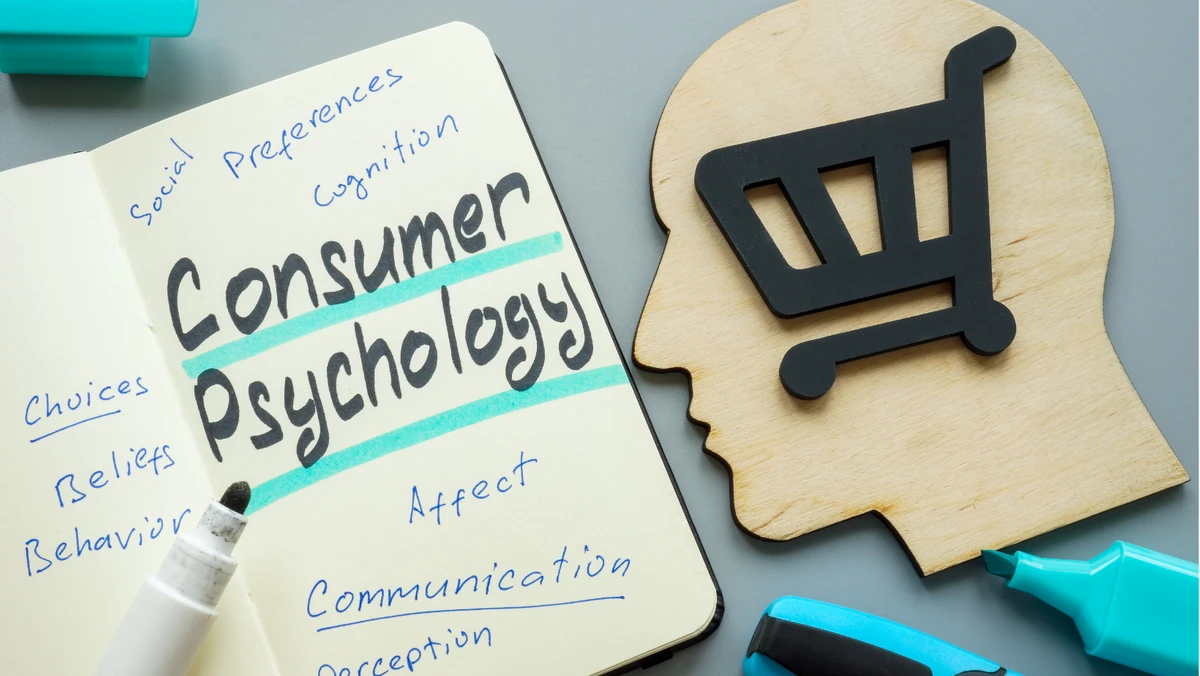
What Is Consumer Psychology?
The Discipline That Lives Inside Everyday Choices
A person walks into a store intending to buy shampoo.
They leave with shampoo, a discounted candle, and a snack they did not plan for.
Nothing in that moment violated logic. No external force removed their autonomy. No rule was broken.
And yet, something important happened beneath the surface of that decision.
Consumer psychology is the study of that “something.”
It asks a simple question with a complicated answer: why do people choose what they choose when they buy things?
Consumer Psychology Is Not About Products. It Is About Minds in Context
At first glance, it may seem like consumer psychology is about advertising, branding, or pricing.
Those are only surface expressions.
At its core, consumer psychology studies how human cognition behaves under market conditions:
-
Limited attention
-
Emotional fluctuation
-
Social comparison
-
Cognitive shortcuts
-
Environmental influence
Consumers are not passive recipients of marketing.
They are decision-makers operating under constraints.
The Shift From Rational Models to Behavioral Reality
Traditional economic models assume that consumers:
-
Have stable preferences
-
Evaluate all available information
-
Make consistent choices
-
Optimize utility
Behavioral research shows something different.
Preferences can shift based on:
-
Framing
-
Mood
-
Context
-
Defaults
-
Social cues
This shift is central to modern consumer psychology.
It moves the question from “What should a rational consumer do?” to “What do real consumers actually do?”
Attention: The Scarce Resource
Consumer psychology begins with attention.
Not money.
Not preference.
Attention determines what enters the decision process at all.
People cannot evaluate what they do not notice.
Markets compete not only for spending power, but for cognitive visibility.
This leads to:
-
Visual design strategies
-
Recommendation systems
-
Notification-based engagement
-
Salience-driven marketing
Attention is the gateway to choice.
Emotion as a Decision Engine
Consumers rarely evaluate products in a purely analytical state.
Instead, they experience:
-
Excitement
-
Trust
-
Anxiety
-
Comfort
-
Desire
These emotional states shape perceived value.
A product feels different depending on emotional context.
Consumer psychology shows that emotion is not a disruption of decision-making.
It is part of the decision-making system.
Mental Shortcuts: How Complexity Becomes Manageable
Consumers do not compute optimal solutions for every purchase.
Instead, they rely on heuristics:
-
“Higher price means higher quality”
-
“Most popular options are safer”
-
“Familiar brands are more reliable”
These shortcuts reduce cognitive load.
They are efficient, but not always accurate.
Consumer psychology studies how these shortcuts form and when they lead to systematic bias.
Framing: How Presentation Changes Perception
The same product can appear more or less attractive depending on how it is described.
Examples:
-
“$10 per month” vs “$120 per year”
-
“90% success rate” vs “10% failure rate”
-
“Save $50” vs “Pay $50 less”
Nothing changes materially.
But perception shifts.
Consumer psychology treats framing as a core mechanism of influence.
It operates before rational evaluation begins.
Social Influence: Buying as a Shared Behavior
Consumers do not act in isolation.
They observe others.
They adjust accordingly.
This produces:
-
Trends
-
Viral products
-
Herd behavior
-
Reputation-based trust
Social proof—such as reviews, ratings, and popularity indicators—reduces uncertainty.
When people are unsure, they substitute personal evaluation with collective behavior.
A Personal Observation on Consumer Behavior
At one point, I noticed that my own purchasing decisions were often less about need and more about timing.
The same product felt unnecessary when I was focused.
But during moments of fatigue or distraction, it felt reasonable.
Nothing about the product changed.
What changed was cognitive state.
This revealed something important: consumer psychology is not only about persuasion from the outside.
It is also about internal variation in attention and emotion.
Cognitive Load and Decision Fatigue
Every decision consumes mental energy.
As choices accumulate, cognitive resources decline.
This leads to:
-
Simplified decision-making
-
Increased reliance on defaults
-
Greater susceptibility to impulse buying
Consumer psychology studies how environments are structured to either reduce or exploit cognitive load.
Complexity does not always produce better decisions.
It often produces faster, less deliberate ones.
The Role of Memory and Association
Consumers do not evaluate products in isolation.
They evaluate them through memory:
-
Past experiences
-
Brand associations
-
Emotional recall
-
Familiarity
A brand is not just information.
It is a network of associations built over time.
Consumer psychology examines how these associations influence present decisions, often without conscious awareness.
Why Consumer Psychology Matters
Consumer psychology is not only descriptive.
It is explanatory.
It helps understand:
-
Why people overpay for certain products
-
Why preferences change over time
-
Why marketing works even when consumers are skeptical
-
Why “irrational” choices are consistent across populations
It bridges the gap between economic theory and observed behavior.
Conclusion: Choice Happens Before Choice Is Recognized
Consumer psychology reveals that purchasing decisions are not single moments of rational evaluation.
They are processes shaped by attention, emotion, memory, framing, and social influence.
By the time a consumer feels they have “decided,” much of the decision has already been shaped by factors operating outside awareness.
In that sense, consumer psychology is not just the study of buying behavior.
It is the study of how human minds navigate choice in environments designed around them.
- Arts
- Business
- Computers
- Παιχνίδια
- Health
- Κεντρική Σελίδα
- Kids and Teens
- Money
- News
- Personal Development
- Recreation
- Regional
- Reference
- Science
- Shopping
- Society
- Sports
- Бизнес
- Деньги
- Дом
- Досуг
- Здоровье
- Игры
- Искусство
- Источники информации
- Компьютеры
- Личное развитие
- Наука
- Новости и СМИ
- Общество
- Покупки
- Спорт
- Страны и регионы
- World

 English
 Russian
 French
 Spanish
 Portuguese
 Deutsch
 Turkish
 Dutch
Dutch
 Italiano
 Arabic
 Romaian
 Portuguese (Brazil)