
How many cognitive biases are there?
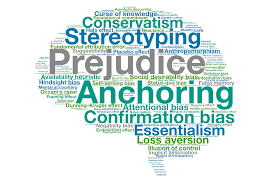
How Many Cognitive Biases Are There?
The Question That Sounds Precise but Isn’t
A student of decision-making opens a list of cognitive biases.
Availability bias. Anchoring. Confirmation bias. Loss aversion. Framing. Overconfidence.
The list continues.
Then expands.
Then branches.
At some point, the question naturally arises: how many cognitive biases are there?
It feels like a question that should have an answer. A number. A boundary.
But cognitive biases are not a closed catalog.
They are a growing taxonomy of predictable patterns in human judgment.
And taxonomies of behavior do not behave like tables in mathematics.
They behave like maps drawn over evolving terrain.
There Is No Fixed Number Because There Is No Fixed Boundary
The first difficulty is conceptual.
A cognitive bias is defined as a systematic deviation from a normative standard of reasoning.
But this definition raises immediate ambiguity:
-
What counts as a distinct bias?
-
When does a variation become a new category?
-
When is a bias a special case of another?
For example:
-
Is “confirmation bias” one phenomenon or many related tendencies?
-
Is “availability bias” separate from memory-based distortions more generally?
-
Is “loss aversion” a bias, a preference, or a structural feature of valuation?
The boundaries are not natural.
They are drawn.
And different researchers draw them differently.
A Taxonomy That Grows With Observation
Unlike physical categories in nature, cognitive biases are identified through observation of behavior.
As new contexts are studied, new patterns emerge.
This creates a dynamic system:
-
Laboratory experiments reveal structured deviations
-
Field studies reveal context-specific variants
-
Cross-cultural research reveals differences in expression
Each layer adds complexity rather than closure.
As a result, the “number” of cognitive biases depends on how finely one chooses to classify them.
The Core Set vs The Expanding Periphery
Despite the lack of a fixed number, it is useful to distinguish between two layers.
1. Core biases (widely replicated)
A relatively stable set appears across most psychological research:
-
Anchoring
-
Availability heuristic
-
Confirmation bias
-
Loss aversion
-
Framing effects
-
Overconfidence
-
Representativeness heuristic
These are robust, repeatedly observed, and widely accepted.
They form the backbone of behavioral economics and cognitive psychology.
2. Peripheral and derivative biases
Beyond the core lies a much larger and less stable set:
-
Domain-specific biases
-
Context-dependent distortions
-
Variations of existing heuristics
-
Naming refinements of broader patterns
For example:
-
“Negativity bias” may be considered a variant of loss sensitivity
-
“Status quo bias” overlaps with inertia and default effects
-
“Omission bias” relates to responsibility attribution under uncertainty
Whether these are separate biases or special cases depends on theoretical framing.
Why the List Keeps Growing
The number of named cognitive biases increases for structural reasons.
1. New contexts reveal new patterns
As researchers study:
-
Markets
-
Health decisions
-
Digital behavior
-
Social networks
They find new systematic deviations.
These are often labeled as new biases, even if they share underlying mechanisms with existing ones.
2. Re-description creates new categories
Sometimes a known pattern is re-expressed in a new domain.
A bias in financial decision-making may be reframed in medical decisions or online behavior.
Each re-description can produce a new label, even if the cognitive mechanism is similar.
3. Human behavior is high-dimensional
Cognition is not a small system with a few predictable errors.
It is a complex interaction of:
-
Attention
-
Memory
-
Emotion
-
Social context
-
Environmental structure
Each interaction can generate distinct observable distortions.
The more dimensions we examine, the more “biases” we can name.
A Personal Observation on Classification
At one point, while working through different behavioral patterns, I noticed something subtle.
As the list of biases grew, it became less useful to think in terms of enumeration.
The distinction between “new bias” and “variant of an existing bias” often depended more on naming than on substance.
Two phenomena could be described separately in literature, yet share a common mechanism when examined closely.
Anchoring, for example, appears in many guises depending on context—but often traces back to the influence of initial reference points on judgment.
This suggested that the question was not how many biases exist.
But how many underlying mechanisms produce them.
From Lists to Families of Mechanisms
A more useful way to understand cognitive biases is to group them into families:
-
Attention-based biases (what we notice shapes what we believe)
-
Memory-based biases (what we recall shapes what we estimate)
-
Emotion-based biases (feelings shape valuation)
-
Social biases (others’ behavior shapes our judgment)
-
Contextual biases (presentation shapes interpretation)
Under this view, the dozens or hundreds of named biases collapse into a smaller set of cognitive principles.
The proliferation of names reflects surface diversity, not necessarily deep diversity.
Why the Exact Number Does Not Matter
The question assumes that enumeration is meaningful.
But in cognitive science, explanatory power matters more than count.
Knowing that there are:
-
50 biases
-
100 biases
-
or 200 biases
does not significantly improve understanding unless one understands:
-
how they arise
-
how they interact
-
and what mechanisms generate them
A small set of principles often explains more than a long list of labels.
Why Humans Prefer Lists Anyway
There is an irony in the question itself.
The mind prefers discrete categories.
It prefers:
-
Lists over continua
-
Names over mechanisms
-
Boundaries over gradients
This preference is itself a cognitive feature.
It reduces complexity into manageable units.
So the question “how many cognitive biases are there?” reflects a deeper cognitive tendency to seek closure in systems that are inherently open-ended.
Conclusion: Not a Number, but a Structure
There is no definitive count of cognitive biases.
Not because the field is incomplete, but because the object of study is not discrete.
Cognitive biases are:
-
Emergent patterns of judgment
-
Context-dependent distortions
-
Repeated outcomes of constrained cognition
They multiply as observation expands, but they also compress when viewed through underlying mechanisms.
The meaningful question is not how many there are.
It is how they arise, and why the mind produces them so reliably.
The answer is not a number.
It is a structure.
- Arts
- Business
- Computers
- Jogos
- Health
- Início
- Kids and Teens
- Money
- News
- Personal Development
- Recreation
- Regional
- Reference
- Science
- Shopping
- Society
- Sports
- Бизнес
- Деньги
- Дом
- Досуг
- Здоровье
- Игры
- Искусство
- Источники информации
- Компьютеры
- Личное развитие
- Наука
- Новости и СМИ
- Общество
- Покупки
- Спорт
- Страны и регионы
- World

 English
 Russian
 French
 Spanish
 Deutsch
 Turkish
 Dutch
Dutch
 Italiano
 Arabic
 Romaian
 Portuguese (Brazil)
 Greek
Greek