
How does fear affect markets?
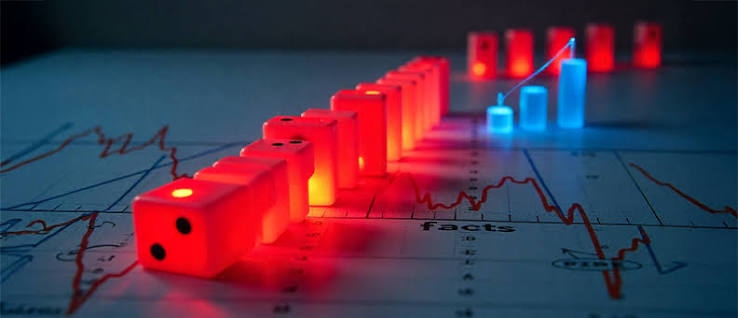
How Does Fear Affect Markets?
When Perception Moves Faster Than Fundamentals
A financial market begins to fall.
At first, the decline is small.
Then it accelerates.
News headlines become more cautious.
Investors start checking prices more frequently.
Soon, selling increases not only because of new information, but because of what others appear to believe.
Fear spreads through the system.
Not as a single event, but as a chain reaction of perception and behavior.
Fear Is a Response to Uncertainty, Not Just Loss
In markets, fear does not require actual loss.
It often emerges from uncertainty about future outcomes.
When investors cannot confidently predict what will happen next, they begin to reassess risk.
This reassessment changes behavior:
-
Reducing exposure
-
Selling assets
-
Increasing cash holdings
Fear is not only emotional.
It is also anticipatory.
It responds to possible future outcomes, not just present conditions.
Price Declines Amplify Emotional Signals
Market prices are continuous feedback signals.
When prices fall, they are interpreted as information.
But they are also interpreted emotionally.
A decline can signal:
-
Increased risk
-
Negative expectations
-
Loss of collective confidence
Even when fundamentals remain unchanged, falling prices can reinforce fear.
The signal becomes self-reinforcing.
Herd Behavior Turns Individual Fear into Collective Movement
Fear in markets is rarely isolated.
It spreads socially.
Investors observe others selling and interpret it as information.
This leads to herd behavior:
-
“If others are exiting, there must be a reason”
-
“I should reduce risk as well”
The behavior of others becomes a cue for action.
As more participants respond, the signal strengthens further.
This feedback loop can accelerate market movements.
Availability Bias Intensifies Risk Perception
Recent negative events become highly accessible in memory.
A recent crash, bankruptcy, or financial crisis becomes mentally vivid.
This makes similar outcomes feel more likely than they statistically are.
Availability bias causes fear to expand beyond immediate conditions.
What is easily recalled feels more probable.
Loss Aversion Drives Rapid Exits
Loss aversion plays a central role in fear-driven selling.
Investors experience losses more intensely than equivalent gains.
As prices fall:
-
The desire to avoid further loss increases
-
Risk tolerance decreases
-
Selling becomes more likely
This can lead to decisions that prioritize avoiding pain over long-term strategy.
Volatility Feeds Emotional Instability
Markets that fluctuate rapidly increase emotional load.
Each price movement becomes a potential signal.
This creates a cycle of attention:
-
Frequent checking of prices
-
Heightened sensitivity to small changes
-
Emotional reactions to short-term noise
Volatility does not only reflect uncertainty.
It amplifies emotional response to uncertainty.
Fear and Liquidity Preference
During periods of fear, investors often shift toward liquidity.
Cash or low-risk assets feel safer because they preserve optionality.
This leads to:
-
Capital moving out of riskier assets
-
Increased demand for stability
-
Reduced market participation
Liquidity becomes psychologically valuable, not just economically useful.
Panic Selling as a Feedback Loop
In extreme cases, fear produces self-reinforcing cycles.
Declining prices → fear increases → more selling → further declines
This loop is driven by:
-
Emotional reaction to loss
-
Social reinforcement of risk perception
-
Reduced confidence in recovery
Once activated, the loop can accelerate rapidly.
A Personal Observation on Market Sentiment
At one point, while observing market behavior during periods of volatility, a pattern became noticeable.
Price movements alone were not the primary driver of behavior.
It was the interpretation of those movements.
The same decline could be viewed as temporary fluctuation or structural failure, depending on prevailing sentiment.
Once fear became dominant, even neutral information was often interpreted pessimistically.
The emotional context reshaped meaning.
Fear Reduces Risk-Taking Capacity
Fear does not only lead to selling.
It also reduces willingness to take new risks.
Investors become more conservative:
-
Delaying entry points
-
Reducing portfolio exposure
-
Avoiding uncertainty altogether
This contraction of risk appetite can persist even after conditions stabilize.
Why Fear Spreads Faster Than Confidence
Negative information tends to spread more quickly than positive information.
This is partly because:
-
Threats require immediate attention
-
Losses are more emotionally salient than gains
-
Uncertainty is interpreted as risk
As a result, fear often propagates faster than optimism in financial systems.
Conclusion: Fear as a System-Level Force
Fear in markets is not simply an individual emotion.
It is a collective response shaped by uncertainty, memory, and social interaction.
It influences:
-
Perception of risk
-
Interpretation of price changes
-
Willingness to hold or sell assets
-
Speed of market movements
Markets do not move only on data.
They move on interpretation of data under emotional conditions.
Fear is one of the strongest forces shaping that interpretation.
Understanding it does not eliminate its influence.
But it explains why markets can shift rapidly even when underlying fundamentals change slowly or not at all.
- Arts
- Business
- Computers
- الألعاب
- Health
- الرئيسية
- Kids and Teens
- مال
- News
- Personal Development
- Recreation
- Regional
- Reference
- Science
- Shopping
- Society
- Sports
- Бизнес
- Деньги
- Дом
- Досуг
- Здоровье
- Игры
- Искусство
- Источники информации
- Компьютеры
- Личное развитие
- Наука
- Новости и СМИ
- Общество
- Покупки
- Спорт
- Страны и регионы
- World

 English
 Russian
 French
 Spanish
 Portuguese
 Deutsch
 Turkish
 Dutch
Dutch
 Italiano
 Romaian
 Portuguese (Brazil)
 Greek
Greek