
What is global trade?
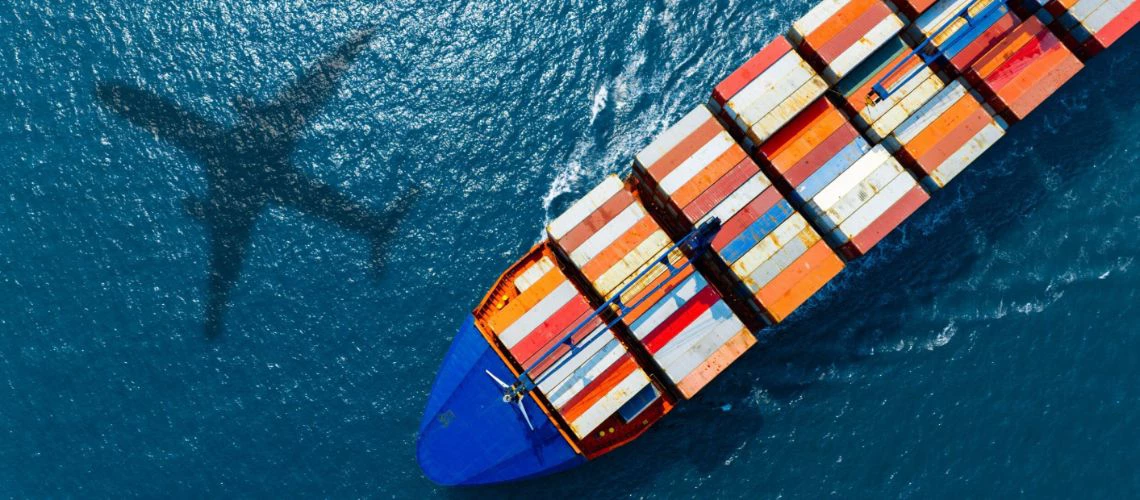
What Is Global Trade?
The Most Important Business Conversation Happens Before Anyone Speaks
Walk into a retail store in America. Pick up a coffee mug. Turn it over.
You might find clay sourced in one country, manufacturing completed in another, packaging produced somewhere else, and shipping coordinated through a port thousands of miles away. A simple object sitting quietly on a shelf may have crossed oceans, currencies, languages, and legal systems before reaching your hand.
That's global trade.
And if you think global trade is merely governments negotiating tariffs or giant corporations moving containers across the Pacific, you're missing the real story.
Global trade is one of humanity's most ambitious cooperative projects. It's the mechanism that allows nations to specialize, businesses to scale, consumers to access products they otherwise couldn't afford, and developing economies to participate in wealth creation. It is commerce operating without regard for geographic boundaries.
The remarkable part? Most people interact with global trade dozens of times every day without realizing it.
The phone in your pocket. The shirt on your back. The coffee in your cup. The car in your driveway.
None of these products exist in their current form without a global network of suppliers, manufacturers, transportation companies, financiers, and entrepreneurs working across continents.
Understanding global trade isn't just an academic exercise. It's understanding how the modern economy actually functions.
Defining Global Trade
At its core, global trade is the exchange of goods and services between countries.
A nation sells products or services to another nation through exports. It purchases products or services from another nation through imports.
Simple definition.
Massive implications.
When Germany exports automobiles, Japan exports machinery, Brazil exports agricultural products, and the United States exports software and financial services, they are participating in global trade.
But the modern version goes much deeper than shipping finished goods.
Today's global trade includes:
-
Raw materials
-
Manufactured products
-
Digital services
-
Intellectual property
-
Financial services
-
Technology licensing
-
Professional consulting
-
Entertainment content
An architect in Chicago designing a building in Dubai is participating in global trade.
A software developer in India building code for a company in Texas is participating in global trade.
A farmer in Argentina selling soybeans to China is participating in global trade.
The marketplace has become worldwide.
Why Countries Trade in the First Place
Here's a question that cuts straight to the heart of economics.
Why doesn't every country simply produce everything it needs?
Because that would be incredibly inefficient.
Some countries possess natural advantages. Others have technological advantages. Some have abundant labor. Others have capital, infrastructure, or specialized expertise.
Trade allows each participant to focus on what it does best.
Economists call this comparative advantage.
The phrase sounds technical. The concept isn't.
Imagine one country can produce wheat exceptionally well because of fertile land and favorable weather. Another country excels at manufacturing medical equipment because of advanced engineering capabilities.
Instead of each country attempting to do both jobs poorly, they specialize and trade.
Everyone gains.
Consumers get better products. Businesses become more efficient. Economic output increases.
This principle has powered commerce for centuries.
The tools have changed. The logic hasn't.
The Evolution of Global Trade
Human beings have always traded.
Ancient merchants carried spices across deserts. Traders moved silk across Asia. Ships transported precious metals, textiles, and agricultural goods between continents.
Yet modern global trade operates on a scale that would have been unimaginable even fifty years ago.
Consider the transformation.
Container shipping dramatically reduced transportation costs.
Commercial aviation accelerated delivery times.
The internet eliminated communication barriers.
Digital payments simplified international transactions.
Advanced logistics systems created visibility across supply chains.
As these innovations accumulated, distance became less important.
A company headquartered in New York could source components from Vietnam, manufacture products in Mexico, market them in Europe, and serve customers worldwide.
The world didn't become smaller.
It became more connected.
The Global Trade Engine: How It Actually Works
Global trade functions through a network of interconnected participants.
Manufacturers produce goods.
Suppliers provide inputs.
Shipping companies move products.
Banks facilitate payments.
Governments establish regulations.
Ports process cargo.
Technology platforms coordinate information.
Every participant plays a role.
Consider a smartphone.
Rare earth minerals may originate in Africa.
Semiconductors might be designed in America and manufactured in Asia.
Assembly could occur in China or India.
Distribution may happen through Europe and North America.
Retail sales occur globally.
Thousands of companies contribute to a single finished product.
That's not complexity for complexity's sake.
It's specialization at scale.
A Comparison of Domestic and Global Trade
| Factor | Domestic Trade | Global Trade |
|---|---|---|
| Geographic Reach | Within one country | Across multiple countries |
| Currency Exposure | Single currency | Multiple currencies |
| Regulatory Environment | One legal framework | Multiple legal systems |
| Transportation Distance | Relatively short | Often intercontinental |
| Customer Base | National market | Worldwide market |
| Supply Chain Complexity | Lower | Significantly higher |
| Growth Potential | Limited by local demand | Expanded global demand |
| Risk Factors | Local economic conditions | Economic, political, and currency risks |
The table reveals something important.
Global trade creates greater complexity.
But it also creates greater opportunity.
Businesses willingly accept additional challenges because access to international markets can dramatically expand revenue potential.
The Lesson I Learned About Scale
Early in my business career, I became fascinated by a pattern that repeated itself over and over.
Companies that thought locally often hit ceilings.
Companies that thought globally frequently discovered entirely new levels of growth.
I remember visiting businesses that initially viewed themselves as regional players. They sold to nearby customers, sourced from familiar suppliers, and rarely looked beyond their immediate geography.
Then something changed.
They found a supplier overseas that reduced costs.
Or they discovered a foreign market eager for their products.
Or they realized their expertise solved problems far beyond their home territory.
Suddenly the address on the headquarters building mattered less than the size of the opportunity.
The lesson was simple: markets are often much larger than they appear.
Global trade rewards businesses willing to think beyond their own borders.
The Benefits of Global Trade
Lower Costs for Consumers
Competition across borders generally increases efficiency.
When businesses can source materials and products from multiple countries, they often reduce production costs.
Consumers frequently benefit through lower prices.
Greater Product Variety
Without global trade, consumer choice would be dramatically narrower.
Fresh produce, electronics, automobiles, pharmaceuticals, and countless other products reach markets through international exchange.
Variety isn't a luxury.
It's a direct outcome of interconnected economies.
Economic Growth
Exports create jobs.
Imports support businesses.
Investment flows encourage development.
Trade contributes significantly to economic expansion in both developed and emerging markets.
Innovation and Knowledge Transfer
Ideas travel alongside products.
Companies learn from international competitors.
Technologies spread.
Best practices cross borders.
Innovation accelerates when information moves freely.
The Criticisms and Challenges
A serious discussion of global trade requires acknowledging its challenges.
Not every outcome is positive.
Some industries face intense foreign competition.
Certain workers experience job displacement when production shifts abroad.
Supply chains can become vulnerable to disruptions.
Political tensions can affect trade relationships.
Currency fluctuations create uncertainty.
Environmental concerns emerge when products travel long distances.
These challenges are real.
The debate is rarely about whether trade creates value overall.
The debate is about how benefits and costs are distributed.
That's an important distinction.
Trade Deficits, Trade Surpluses, and Public Debate
Few topics generate more confusion than trade balances.
A trade surplus occurs when a country exports more than it imports.
A trade deficit occurs when imports exceed exports.
Many people assume surpluses are automatically good and deficits automatically bad.
Reality is more nuanced.
A growing economy may import heavily because consumers and businesses have strong purchasing power.
A trade deficit can coexist with economic strength.
Likewise, a surplus alone doesn't guarantee prosperity.
Context matters.
The underlying productivity, investment environment, and economic structure often matter far more than a single trade statistic.
Numbers tell stories.
The challenge is understanding which story they're actually telling.
Global Trade in the Digital Economy
One of the most significant developments of the last twenty years is that trade increasingly involves services rather than physical goods.
Software.
Cloud computing.
Streaming content.
Online education.
Financial technology.
Professional consulting.
These industries export value without shipping containers.
A software company can reach customers in dozens of countries instantly.
A designer can work with clients worldwide.
A creator can build a global audience from a laptop.
Trade has expanded beyond ports and factories.
It now travels through fiber-optic cables.
That shift is reshaping the global economy.
Why Global Trade Matters More Than Ever
Economic growth today depends on connectivity.
Businesses depend on suppliers they may never meet in person.
Consumers depend on products produced thousands of miles away.
Investors depend on international capital flows.
Governments depend on trade relationships to support prosperity.
The interconnectedness can sometimes feel uncomfortable.
It introduces dependencies.
It creates complexity.
But complexity is often the price of scale.
And global trade is fundamentally about scale.
It allows nations and businesses to participate in markets larger than themselves.
That capability has transformed living standards across the world.
The Real Question Isn't Whether Trade Exists
The conversation surrounding global trade often becomes emotional.
Jobs.
Politics.
National interests.
Economic competition.
All important topics.
But beneath the headlines sits a simple reality.
People trade because trade creates value.
They always have.
The merchant crossing a desert centuries ago and the logistics executive coordinating thousands of containers today are participating in the same basic human activity: exchanging what they have for what someone else needs.
Global trade is not merely an economic system.
It is a reflection of specialization, ambition, and cooperation on a planetary scale.
The real question isn't whether global trade should exist.
The real question is how nations, businesses, and citizens adapt to a world where economic opportunity no longer stops at a border.
Those who understand that reality tend to see possibilities others miss.
And in business, seeing possibilities before everyone else is often where the biggest opportunities begin.
- Arts
- Business
- Computers
- Oyunlar
- Health
- Home
- Kids and Teens
- Money
- News
- Personal Development
- Recreation
- Regional
- Reference
- Science
- Shopping
- Society
- Sports
- Бизнес
- Деньги
- Дом
- Досуг
- Здоровье
- Игры
- Искусство
- Источники информации
- Компьютеры
- Личное развитие
- Наука
- Новости и СМИ
- Общество
- Покупки
- Спорт
- Страны и регионы
- World

 English
 Russian
 French
 Spanish
 Portuguese
 Deutsch
 Dutch
Dutch
 Italiano
 Arabic
 Romaian
 Portuguese (Brazil)
 Greek
Greek