
How do governments influence behavior?
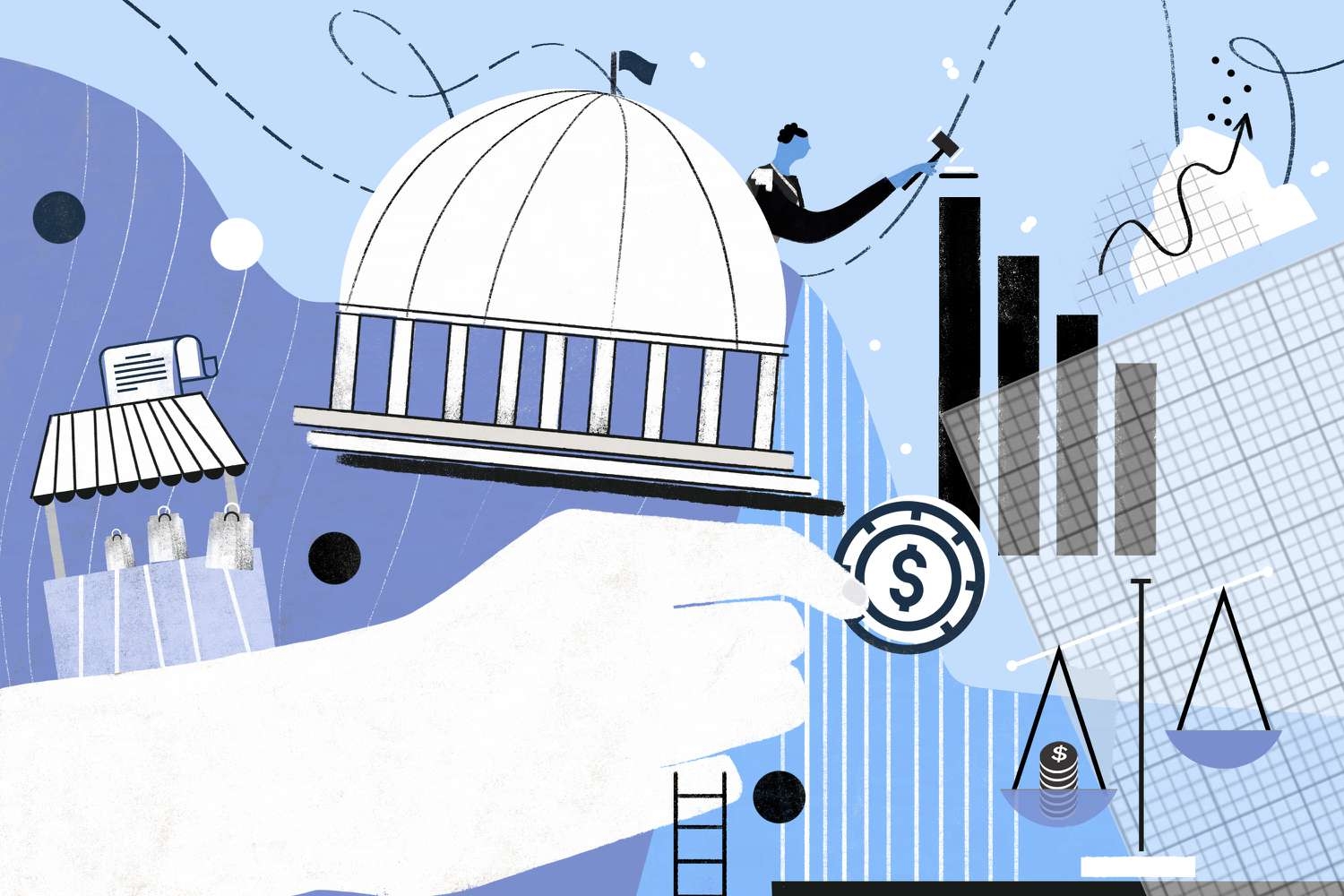
How Do Governments Influence Behavior?
The Sign You Barely Noticed
Several years ago, I found myself slowing down as I approached a pedestrian crossing.
Nothing unusual about that.
What caught my attention was why I slowed down.
There was no police officer nearby. No traffic camera that I could see. No visible threat of punishment. Yet my behavior changed before I consciously considered the decision.
A sign.
A painted line.
A subtle narrowing of the road.
The environment had communicated a message, and I responded almost automatically.
The experience reminded me of a truth that behavioral economists have spent decades uncovering: governments influence behavior constantly, and much of that influence occurs outside conscious awareness.
When people think about government influence, they often imagine laws, regulations, taxes, and enforcement. These certainly matter. Yet they represent only part of the story.
Governments shape behavior through incentives, social norms, information, defaults, infrastructure, education, architecture, and expectations. Sometimes they command. Sometimes they persuade. Sometimes they simply rearrange the environment in ways that alter choices.
The fascinating question is not whether governments influence behavior.
They inevitably do.
The more interesting question is how.
And perhaps even more important: why do certain methods work so remarkably well?
To answer that question, we must begin with a simple observation about human psychology.
People do not respond to reality directly.
They respond to their perception of reality.
That distinction creates enormous opportunities for influence.
Why Governments Need to Influence Behavior
Every government faces collective challenges.
Public health.
Transportation.
Environmental protection.
Tax collection.
National security.
Education.
Economic stability.
None of these goals can be achieved through individual action alone.
A functioning society depends on coordinated behavior.
Consider vaccination programs.
The effectiveness of a vaccine depends not only on individual decisions but also on widespread participation.
Similarly, traffic systems function because millions of people follow common rules.
Tax systems operate because enough citizens comply.
Environmental policies depend on large-scale behavioral adjustments.
Government influence, therefore, is not merely an exercise of authority.
It is a mechanism for coordinating collective action.
The challenge lies in determining how that coordination occurs.
The Traditional Tools of Influence
Historically, governments relied on a relatively straightforward toolkit.
Laws and Regulations
The most visible form of influence involves rules.
Certain actions become mandatory.
Others become prohibited.
Speed limits.
Building codes.
Environmental regulations.
Consumer protections.
These rules shape behavior by defining permissible conduct.
The mechanism is clear.
Compliance becomes the expected outcome because noncompliance carries consequences.
Enforcement
Rules alone are insufficient.
Governments reinforce behavior through enforcement.
Fines.
Inspections.
Audits.
Legal penalties.
The expectation of punishment influences decisions before violations occur.
Interestingly, behavioral research suggests that the perception of enforcement often matters more than enforcement itself.
People respond to what they believe might happen.
Not merely to what actually happens.
Taxation
Taxes influence behavior by changing economic incentives.
Higher taxes on cigarettes often reduce smoking.
Taxes on alcohol can affect consumption.
Carbon taxes attempt to alter environmental behavior.
The logic is simple.
When costs increase, demand often declines.
Yet human behavior frequently proves more complicated than economic models predict.
People do not evaluate costs objectively.
They interpret them psychologically.
The Behavioral Revolution in Public Policy
For much of the twentieth century, policymakers assumed that information and incentives were sufficient.
If people understood the facts and faced appropriate incentives, they would make optimal decisions.
Reality proved less cooperative.
People ignored information.
They procrastinated.
They misunderstood probabilities.
They delayed beneficial actions.
They acted against their own stated interests.
Behavioral economics emerged partly in response to these puzzles.
Researchers such as Daniel Kahneman, Amos Tversky, and later Richard Thaler demonstrated that decision-making contains predictable biases.
These biases created a new possibility.
Instead of fighting human psychology, governments could design policies around it.
This shift transformed public policy.
The Rise of Nudges
One of the most influential developments involved the concept of the nudge.
A nudge alters behavior without eliminating freedom of choice.
No coercion.
No prohibition.
No mandate.
Simply a change in the way choices are presented.
Consider retirement savings.
Many workers intend to enroll in savings plans.
Yet enrollment requires effort.
Forms must be completed.
Decisions must be made.
The result is often delay.
Governments and employers discovered that automatic enrollment dramatically increased participation.
Individuals remained free to opt out.
Most simply did not.
The policy succeeded because it worked with human inertia rather than against it.
This insight reshaped modern policymaking.
How Governments Shape Behavior Through Choice Architecture
Every decision occurs within an environment.
Someone designs that environment.
Someone chooses the defaults.
Someone decides which information receives emphasis.
Someone determines the sequence of options.
Behavioral economists call this choice architecture.
Governments influence behavior by shaping that architecture.
Default Settings
Defaults possess extraordinary power.
Many people accept preselected options.
Not because they carefully evaluated them.
Because changing them requires effort.
Examples include:
-
Retirement plan enrollment
-
Organ donation registration
-
Healthcare enrollment programs
-
Tax filing systems
A default often appears neutral.
It rarely is.
Simplification
Complexity discourages action.
Governments increasingly simplify forms, applications, and procedures.
When processes become easier, participation often increases.
The behavioral lesson is straightforward.
Friction affects behavior.
Sometimes dramatically.
Timely Reminders
People frequently fail to act because they forget.
Text messages reminding citizens about taxes, court appearances, vaccinations, or benefits applications often improve compliance.
The intervention appears trivial.
Its effects can be surprisingly large.
Information as a Behavioral Tool
Governments devote enormous resources to information campaigns.
The assumption seems obvious.
Better-informed citizens make better decisions.
Sometimes they do.
Sometimes they do not.
Behavioral economics revealed a complication.
Information alone often fails to change behavior.
People filter information through emotions, beliefs, habits, and cognitive biases.
The presentation of information frequently matters as much as the information itself.
Framing Effects
Imagine two health messages.
The first states:
"90% of patients survive."
The second states:
"10% of patients die."
The statistics are identical.
Yet responses differ.
Governments increasingly recognize that framing influences public reactions.
The human mind responds not only to facts but also to context.
Risk Communication
Public health agencies routinely communicate risks.
How risks are described influences behavior significantly.
People fear dramatic but unlikely dangers.
They often underestimate common but serious threats.
Effective communication requires understanding these psychological tendencies.
Social Norms: The Invisible Force
Human beings are profoundly social.
We observe others.
We compare ourselves to others.
We imitate others.
Governments frequently use this tendency.
Messages such as:
"Most citizens pay their taxes on time."
Or:
"Most households in your neighborhood conserve energy."
These statements do more than provide information.
They establish norms.
People often adjust behavior to align with perceived social expectations.
This influence can occur without coercion or financial incentives.
The desire for conformity is powerful.
Sometimes more powerful than policymakers expect.
Comparing Government Influence Mechanisms
| Method | Primary Mechanism | Freedom of Choice | Cost to Government | Typical Behavioral Impact |
|---|---|---|---|---|
| Laws | Restriction | Limited | Moderate | High |
| Fines | Punishment | Preserved | Moderate | High |
| Taxes | Financial Incentives | Preserved | Low to Moderate | Moderate to High |
| Subsidies | Rewards | Preserved | High | Moderate |
| Public Information Campaigns | Knowledge | Fully Preserved | Moderate | Variable |
| Nudges | Choice Architecture | Fully Preserved | Low | Moderate |
| Social Norm Messaging | Peer Influence | Fully Preserved | Low | Moderate |
| Infrastructure Design | Environmental Influence | Fully Preserved | High | Long-Term High |
The table highlights an important reality.
Governments possess multiple avenues for influence.
No single method dominates every situation.
Different challenges require different tools.
Infrastructure: The Most Overlooked Influence
People often underestimate the behavioral power of physical environments.
Governments shape behavior through infrastructure decisions.
Road design affects driving behavior.
Public transit systems affect transportation choices.
Parks influence physical activity.
Bike lanes alter commuting patterns.
Urban planners understand a subtle principle.
Behavior frequently follows convenience.
If public transportation is accessible, usage increases.
If sidewalks are safe and connected, walking becomes more common.
Infrastructure does not merely accommodate behavior.
It creates behavior.
The distinction is crucial.
Education and Cultural Influence
Governments influence behavior through education systems as well.
Education transmits knowledge.
It also transmits norms.
Civic expectations.
Social values.
Historical narratives.
Cultural assumptions.
This influence unfolds gradually.
Its effects often emerge over decades rather than months.
Unlike taxes or regulations, educational influence operates through internalization.
People adopt beliefs and behaviors because they become part of their worldview.
This process is slower.
Its effects may be deeper.
The Lesson I Learned About Compliance
I once completed a government-related administrative process that required multiple forms.
The original instructions were confusing.
Several sections felt unnecessarily complex.
I postponed completion repeatedly.
Not because I opposed the requirement.
Not because I lacked motivation.
Simply because the process felt burdensome.
Months later, the agency redesigned the forms.
Instructions became clearer.
Requirements appeared more obvious.
Completion took a fraction of the time.
My behavior changed immediately.
The experience highlighted a lesson behavioral economists emphasize repeatedly.
What appears to be resistance is often friction.
What appears to be indifference is often confusion.
Governments sometimes assume citizens require stronger incentives.
In reality, they may simply require better design.
That lesson applies surprisingly often.
Public Health: A Master Class in Behavioral Influence
Few domains illustrate government influence more clearly than public health.
Public health campaigns attempt to shape:
-
Smoking behavior
-
Alcohol consumption
-
Exercise habits
-
Nutrition choices
-
Vaccination uptake
-
Disease prevention
Governments rarely rely on a single method.
Instead, they combine multiple approaches.
Taxes increase costs.
Warning labels alter perception.
Advertising restrictions reduce exposure.
Educational campaigns provide information.
Behavioral nudges simplify desired actions.
The result is a layered strategy.
Each intervention influences behavior through a different psychological pathway.
Together, they can produce meaningful change.
When Government Influence Fails
Not all interventions succeed.
Some fail spectacularly.
Behavioral economics offers several explanations.
Ignoring Human Psychology
Policies often assume idealized decision-making.
Real people are distracted, emotional, and imperfect.
Policies that ignore these realities frequently underperform.
Excessive Complexity
Complex programs reduce participation.
People abandon processes they find confusing.
Misaligned Incentives
Individuals respond to incentives, but not always as expected.
Poorly designed incentives can create unintended consequences.
Loss of Trust
Influence depends heavily on credibility.
Citizens who distrust institutions may reject messages regardless of their accuracy.
Trust functions as behavioral infrastructure.
Without it, many interventions become less effective.
The Ethical Question
Every discussion of government influence eventually reaches an uncomfortable question.
How much influence is too much?
Democratic societies generally accept certain forms of influence.
Traffic laws.
Public health campaigns.
Educational programs.
Consumer protections.
Yet concerns arise when influence becomes less visible.
Should governments use behavioral insights to guide choices?
If so, who determines the desired outcomes?
Critics worry about manipulation.
Supporters argue that influence is unavoidable.
Someone must design forms.
Someone must set defaults.
Someone must determine how information is presented.
The debate ultimately concerns transparency and accountability.
Not influence itself.
Influence exists regardless.
The question is how it should be exercised.
Conclusion: The Architecture of Everyday Life
Most citizens imagine government influence as something obvious.
A law passed.
A tax imposed.
A regulation announced.
Behavioral economics reveals a broader reality.
Governments influence behavior through countless small decisions that rarely attract attention.
A form design.
A reminder message.
A default option.
A road layout.
A nutritional label.
A public campaign.
A social norm.
Individually, these influences appear minor.
Collectively, they shape societies.
The most profound insight may be that behavior is rarely determined solely by personal preference. Context matters. Incentives matter. Presentation matters. Environment matters.
Governments understand this increasingly well.
The most effective policymakers often recognize that people are neither perfectly rational nor hopelessly irrational. They are predictably human.
That recognition changes everything.
It transforms governance from a system concerned exclusively with rules into a system concerned with behavior.
And once behavior becomes the focus, a remarkable possibility emerges.
The most powerful government influence is not always the loudest.
It is often the influence citizens barely notice at all.
- Arts
- Business
- Computers
- Jeux
- Health
- Domicile
- Kids and Teens
- Argent
- News
- Personal Development
- Recreation
- Regional
- Reference
- Science
- Shopping
- Society
- Sports
- Бизнес
- Деньги
- Дом
- Досуг
- Здоровье
- Игры
- Искусство
- Источники информации
- Компьютеры
- Личное развитие
- Наука
- Новости и СМИ
- Общество
- Покупки
- Спорт
- Страны и регионы
- World

 English
 Russian
 Spanish
 Portuguese
 Deutsch
 Turkish
 Dutch
Dutch
 Italiano
 Arabic
 Romaian
 Portuguese (Brazil)
 Greek
Greek