
What is “nudge theory”?
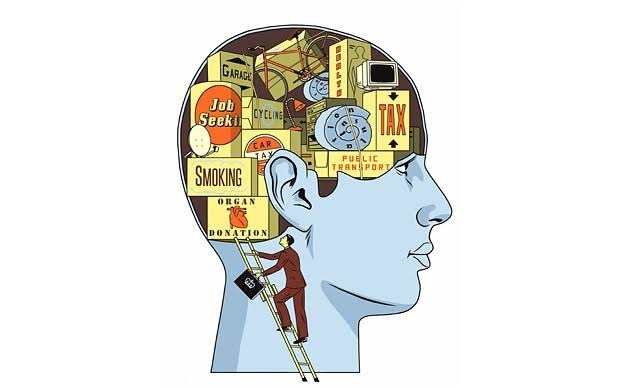
What Is “Nudge Theory”?
The Fly in the Urinal
One of the most famous lessons in behavioral economics began with a fly.
Not a real fly.
A small image of one.
Airport officials at Amsterdam Schiphol Airport noticed a recurring problem in men's restrooms. Cleaning costs were high because many users missed the intended target. The solution did not involve stricter rules, surveillance, fines, or lengthy educational campaigns.
Instead, designers placed a tiny image of a fly inside each urinal.
Men instinctively aimed at it.
Spillage reportedly declined dramatically.
The intervention cost almost nothing.
Yet behavior changed.
The story has become famous because it captures something profoundly important about human decision-making. People often imagine behavior as the result of deliberate choices. We weigh options. We evaluate consequences. We decide.
Reality is messier.
Small details matter.
A surprising amount.
The position of a button. The wording of a message. The order of choices on a form. The default option already selected.
These seemingly trivial factors influence decisions every day.
Nudge theory emerged from the recognition that human behavior is not shaped solely by incentives and information. It is also shaped by context.
And once we understand that context influences choices, a provocative possibility appears.
What if environments could be designed to help people make better decisions?
That question sits at the heart of nudge theory.
Defining Nudge Theory
Nudge theory is a concept in behavioral economics that proposes that people's decisions can be influenced predictably through subtle changes in the way choices are presented, without restricting freedom of choice.
The theory gained widespread attention through the work of Richard Thaler and Cass Sunstein, particularly through their influential book, Nudge.
Their central argument was remarkably simple.
People frequently make decisions that conflict with their own long-term interests.
They save too little.
They eat poorly.
They procrastinate.
They underestimate risks.
They overreact to short-term emotions.
Traditional economics often struggled to explain these patterns because it assumed relatively rational decision-making.
Behavioral economics began with a different assumption.
Humans are intelligent.
Humans are capable.
Humans are also predictably imperfect.
Nudge theory attempts to work with those imperfections rather than ignoring them.
The Intellectual Foundation of Nudge Theory
To understand nudge theory, we must first understand why it became necessary.
For decades, economists relied heavily on the concept of Homo Economicus—the rational economic actor.
This hypothetical individual:
-
Possesses complete information.
-
Evaluates alternatives objectively.
-
Consistently maximizes utility.
-
Maintains stable preferences.
The model proved useful.
Yet actual human behavior repeatedly violated its predictions.
People purchased extended warranties that made little financial sense.
They delayed retirement savings.
They held losing investments too long.
They feared rare dangers while ignoring common risks.
Researchers such as Daniel Kahneman and Amos Tversky demonstrated that these errors were not random.
They followed systematic patterns.
Humans relied on mental shortcuts.
These shortcuts simplified decision-making.
They also introduced predictable biases.
Nudge theory emerged directly from this intellectual revolution.
The Core Principle: Choice Architecture
Every decision occurs within an environment.
Someone designs that environment.
Someone determines:
-
Which options appear first.
-
Which information is emphasized.
-
Which defaults are selected.
-
How alternatives are framed.
Behavioral economists refer to this structure as choice architecture.
The term sounds technical.
The idea is straightforward.
Imagine entering a cafeteria.
Fruit appears at eye level.
Desserts occupy a lower shelf.
Both options remain available.
Yet fruit consumption increases.
Nothing was banned.
Nothing was mandated.
The architecture changed.
The probabilities changed.
Choice architecture recognizes that decisions never occur in a vacuum.
Context matters.
Often more than people realize.
What Qualifies as a Nudge?
Not every influence is a nudge.
The distinction matters.
A true nudge must preserve freedom of choice.
Individuals remain free to reject the suggested behavior.
Consider these examples:
Nudge
Automatic enrollment in a retirement plan with the option to opt out.
Not a Nudge
Mandatory retirement contributions with no alternative.
Nudge
Displaying healthy foods prominently in a cafeteria.
Not a Nudge
Banning unhealthy foods entirely.
Nudge
Sending reminders about tax deadlines.
Not a Nudge
Increasing penalties for late payment.
The difference lies in coercion.
Nudges steer.
They do not force.
Why Nudges Work
Nudge theory succeeds because it aligns with how people actually think.
Not how economists once assumed they think.
Several psychological mechanisms play a central role.
Default Bias
People tend to accept default options.
Changing a default requires effort.
Effort creates friction.
Friction discourages action.
As a result, default settings often exert enormous influence.
Loss Aversion
Research consistently demonstrates that losses feel larger than equivalent gains.
People work harder to avoid losing something than to acquire something new.
Nudges frequently leverage this tendency.
Present Bias
Immediate rewards receive disproportionate attention.
Future benefits often appear distant and abstract.
Nudges can make future consequences more visible.
Social Norms
Humans are deeply influenced by others.
Information about peer behavior frequently alters individual behavior.
A message stating that most citizens pay taxes on time often increases compliance.
The effect emerges not from enforcement but from social influence.
Comparing Traditional Policy and Nudge Theory
| Policy Approach | Freedom of Choice | Mechanism | Cost to Individuals | Example |
|---|---|---|---|---|
| Regulation | Limited | Restriction | Potentially High | Smoking bans |
| Taxation | Preserved | Financial Incentives | Moderate to High | Tobacco taxes |
| Subsidies | Preserved | Financial Rewards | Low to Moderate | Renewable energy credits |
| Education Campaigns | Fully Preserved | Information | None | Health awareness programs |
| Nudges | Fully Preserved | Choice Architecture | Minimal | Automatic enrollment |
The table highlights why policymakers became interested in nudges.
They often produce meaningful behavioral change at relatively low cost.
More importantly, they preserve individual autonomy.
At least in theory.
That caveat becomes important later.
The Retirement Savings Miracle
Perhaps no example illustrates nudge theory better than retirement savings.
For years, employers struggled to increase participation in retirement plans.
Workers generally understood the benefits.
Many intended to enroll.
Yet participation remained lower than expected.
Behavioral economists identified the culprit.
Inertia.
Enrollment required action.
Forms had to be completed.
Decisions had to be made.
Many employees postponed enrollment indefinitely.
The solution was astonishingly simple.
Automatic enrollment.
Employees were enrolled by default and could opt out at any time.
Participation rates surged.
Nothing about financial literacy changed.
Nothing about incentives changed.
Only the default changed.
The implications were profound.
A small adjustment to choice architecture altered behavior on a massive scale.
Nudge Theory in Public Health
Governments quickly recognized the potential applications.
Public health became a natural testing ground.
Healthcare decisions often involve complexity.
People forget appointments.
Delay screenings.
Ignore preventive care.
Fail to take medications consistently.
Nudges offered a practical solution.
Reminder Messages
Simple text reminders improve attendance rates and medication adherence.
Vaccination Appointments
Automatically scheduled appointments increase participation compared with systems requiring active registration.
Nutritional Labeling
Visible calorie information can influence food choices.
These interventions appear modest.
Their cumulative impact can be substantial.
The Personal Lesson That Changed My Perspective
Several years ago, I attempted to establish a daily reading habit.
The objective seemed straightforward.
Read twenty pages every evening.
Nothing ambitious.
Yet I repeatedly failed.
Not because I disliked reading.
Not because I lacked motivation.
Books remained on a shelf across the room.
Television remained within easy reach.
One day, I moved a book onto the table beside my chair.
The television remote went into a drawer.
That small environmental adjustment altered my behavior dramatically.
Reading became easier.
Television became slightly less convenient.
The difference felt trivial.
The results did not.
The experience taught me something that nudge theory emphasizes repeatedly.
Behavior often reflects environments more than intentions.
People frequently attribute outcomes to discipline.
Sometimes design deserves the credit.
Government Adoption of Nudge Theory
Governments around the world have embraced behavioral insights.
Specialized behavioral units emerged in numerous countries.
Their mission was straightforward.
Apply behavioral science to public policy.
These teams examined questions such as:
-
How can tax compliance be improved?
-
How can energy consumption be reduced?
-
How can healthcare participation increase?
-
How can government services become easier to access?
The solutions often involved surprisingly small changes.
Simplified forms.
Improved reminders.
Revised wording.
Adjusted defaults.
The interventions rarely attracted headlines.
Their effectiveness often exceeded expectations.
The Business World and Nudges
Businesses quickly recognized the commercial implications.
Today, nudges appear throughout modern commerce.
Online Shopping
Recommended products appear prominently.
The placement influences purchasing behavior.
Subscription Services
Automatic renewals capitalize on inertia.
Product Design
Applications guide users toward desired actions through interface design.
Checkout Processes
Additional products appear at carefully selected moments.
Every element reflects choice architecture.
Businesses understand a principle that behavioral economists documented repeatedly.
Presentation influences decisions.
Sometimes dramatically.
The Criticism of Nudge Theory
Despite its popularity, nudge theory has critics.
Some concerns are practical.
Others are philosophical.
Is It Manipulation?
Critics argue that nudges may influence behavior without explicit awareness.
The concern is understandable.
If environments shape choices, who decides how environments should be designed?
Who Defines "Better" Decisions?
A nudge assumes a preferred outcome.
Someone determines that outcome.
Critics question whether governments or institutions should possess that authority.
Limited Impact
Some researchers argue that nudges can produce modest effects but cannot solve deep structural problems.
A reminder may improve savings behavior.
It cannot eliminate poverty.
A healthier cafeteria layout may influence food choices.
It cannot solve systemic health disparities.
These criticisms deserve attention.
Behavioral economics is powerful.
It is not omnipotent.
Libertarian Paternalism: The Strange Philosophy Behind Nudge Theory
One of the most intriguing concepts associated with nudge theory is libertarian paternalism.
The phrase initially appears contradictory.
Libertarianism emphasizes freedom.
Paternalism involves guidance.
How can both coexist?
The answer lies in preserving choice while influencing outcomes.
People remain free to choose.
Yet institutions design environments intended to promote welfare.
Supporters view this as a practical compromise.
Critics view it as paternalism disguised as freedom.
The debate continues because both sides raise valid concerns.
What Nudge Theory Reveals About Human Nature
The deepest significance of nudge theory extends beyond public policy.
It challenges assumptions about ourselves.
Most individuals believe their decisions arise primarily from conscious reasoning.
Behavioral research paints a more complicated picture.
Small contextual details matter.
Defaults matter.
Order matters.
Framing matters.
Convenience matters.
Social norms matter.
These influences operate continuously.
Often invisibly.
The realization can be uncomfortable.
People prefer to see themselves as independent decision-makers.
Nudge theory suggests that independence is more fragile than we imagine.
Conclusion: The Most Powerful Influences Are Often Invisible
The enduring power of nudge theory lies not in any particular policy.
It lies in a broader insight about human behavior.
People do not simply choose.
They choose within environments.
Those environments shape attention.
They shape perception.
They shape effort.
They shape outcomes.
A fly in a urinal.
A retirement form with a preselected box.
A reminder message arriving at the right moment.
A healthier option positioned at eye level.
Each appears insignificant.
Each alters behavior.
And when millions of decisions are involved, small alterations become large consequences.
The most provocative lesson of nudge theory is not that people can be influenced.
That has always been obvious.
The provocative lesson is that influence often requires surprisingly little force.
A carefully designed environment can accomplish what rules, incentives, and persuasion sometimes cannot.
This realization forces us to reconsider a cherished assumption.
Perhaps our choices reveal less about who we are and more about the environments in which those choices occur.
Nudge theory does not eliminate personal responsibility.
It does, however, remind us that behavior is rarely produced by willpower alone.
Context matters.
Often more than we care to admit.
And once that truth becomes visible, it becomes difficult to stop noticing the countless nudges quietly shaping everyday life.
- Arts
- Business
- Computers
- Oyunlar
- Health
- Home
- Kids and Teens
- Money
- News
- Personal Development
- Recreation
- Regional
- Reference
- Science
- Shopping
- Society
- Sports
- Бизнес
- Деньги
- Дом
- Досуг
- Здоровье
- Игры
- Искусство
- Источники информации
- Компьютеры
- Личное развитие
- Наука
- Новости и СМИ
- Общество
- Покупки
- Спорт
- Страны и регионы
- World

 English
 Russian
 French
 Spanish
 Portuguese
 Deutsch
 Dutch
Dutch
 Italiano
 Arabic
 Romaian
 Portuguese (Brazil)
 Greek
Greek