
How do social media platforms use psychology?
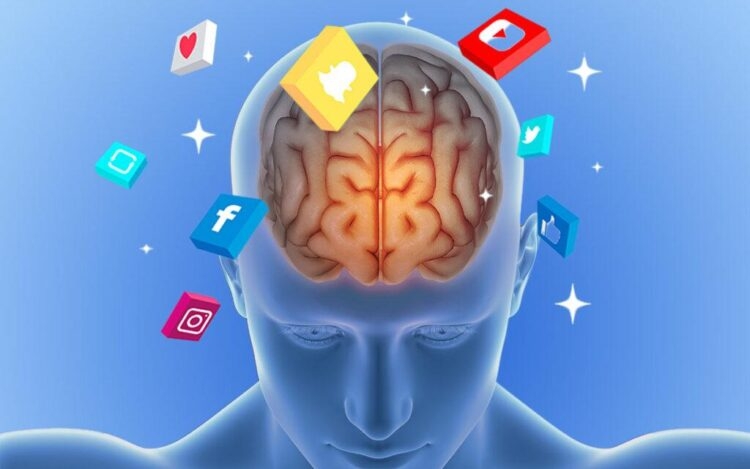
How Do Social Media Platforms Use Psychology?
A feed never really ends.
It only pauses where you stop looking.
Then it waits.
Quietly.
For your return.
There is something simple here. Almost invisible.
And yet it shapes behavior more than most people realize.
A finger moves.
A swipe.
A scroll.
Nothing dramatic. No decision that feels like a decision.
Still, something is happening underneath.
Attention is being trained.
Not forced.
Trained.
And once attention learns a rhythm, behavior follows.
H2 — Attention Is the First Instrument
Before anything else, there is attention.
Not thought. Not belief. Not opinion.
Attention.
Social media platforms begin here because everything depends on it.
Where attention goes, energy follows.
Where energy follows, time disappears.
These systems are built to hold attention in motion.
Not to stop it.
To keep it flowing.
A feed is not a list.
It is a current.
And currents do not ask permission.
They move.
H3 — The Loop Begins Quietly
A post appears.
It does not announce itself as important.
It simply arrives.
A face. A headline. A sound. A gesture.
The mind responds before language forms.
This is the opening.
Fast. Automatic. Unexamined.
Psychology calls it system one.
But it feels simpler than that.
It feels like instinct.
The platforms are designed around this instant.
Not the reflection that comes after.
The instant before reflection.
H2 — Variable Reward: The Engine Beneath the Feed
There is a pattern that appears again and again in behavior science.
Not every action produces a reward.
Some do.
Some don’t.
And the timing is irregular.
Unpredictable.
This is powerful.
Because unpredictability creates anticipation.
Anticipation pulls attention forward.
A message might be there.
Or not.
A like might appear.
Or not.
A comment.
A notification.
Or silence.
The mind keeps checking.
Not because it is told to.
Because it has learned that something good might appear.
This is not persuasion.
It is conditioning.
H2 — Social Validation as Currency
A post is not just content.
It is a signal.
A signal about identity.
About belonging.
About worth.
Likes.
Shares.
Comments.
These are not neutral numbers.
They are feedback loops.
Soft signals of acceptance.
Or absence.
The absence is louder than the presence.
This is important.
Platforms do not need to explicitly tell users they are being evaluated.
Users infer it.
Naturally.
Continuously.
And once behavior becomes tied to evaluation, behavior begins to shift.
Subtly at first.
Then structurally.
H2 — The Infinite Scroll: No Natural Endpoints
In older systems, there were endings.
A page ended.
A book closed.
A show finished.
A stop point existed.
Social feeds remove that.
There is no natural closure.
Only continuation.
The mind prefers completion.
But completion is removed.
So attention drifts forward.
One more post.
Then another.
Then another.
Not because each one is essential.
But because stopping requires a decision.
Continuing does not.
H2 — Identity Construction Through Feedback
Over time, something deeper happens.
Users begin to adjust what they show.
Not consciously at first.
But gradually.
They learn what receives attention.
They repeat it.
The feed reflects it back.
And identity becomes shaped by response.
Not intention.
What gets reinforced becomes more visible.
What does not fade.
This creates a feedback loop between expression and approval.
And in that loop, identity becomes partially externalized.
Not fully.
But enough to matter.
H3 — The Platform Learns You Too
There is another layer.
Often ignored.
The system is also learning.
Not just what you like.
But how you behave.
How long you pause.
Where your eyes stop.
What you return to.
What you skip.
Each gesture is a signal.
Not loud.
But cumulative.
Over time, the system builds a model.
A prediction of attention.
Not personality in the human sense.
But pattern.
And patterns can be optimized.
H2 — Comparison Table: Psychological Mechanisms in Social Media Platforms
| Psychological Mechanism | How It Works | Platform Implementation | Effect on Behavior |
|---|---|---|---|
| Variable Reward | Unpredictable reinforcement strengthens habit loops | Likes, comments, notifications | Compulsive checking |
| Social Validation | Feedback from others influences self-perception | Likes, shares, follower counts | Identity shaping |
| Infinite Scroll | Removes natural stopping cues | Endless feeds | Extended engagement |
| Attention Capture | Stimuli trigger rapid orientation | Notifications, autoplay video | Reduced intentional focus |
| Algorithmic Reinforcement | Systems learn behavior patterns | Personalized feeds | Filtered reality |
| FOMO (Loss Sensitivity) | Fear of missing updates or status | Stories, disappearing content | Frequent re-checking |
| Social Comparison | Users evaluate themselves relative to others | Highlighted achievements | Emotional fluctuation |
| Intermittent Novelty | New stimuli interrupt boredom | Trending content, refresh cycles | Habit reinforcement |
H2 — The Role of Emotion: Subtle, Constant
Emotion is not added to social media.
It is extracted.
Then amplified.
A reaction is more likely than reflection.
Anger spreads quickly.
So does humor.
So does awe.
Emotion travels faster than analysis.
This is not accidental.
Emotion increases engagement.
Engagement increases time.
Time increases data.
Data improves prediction.
The system tightens its understanding.
Not through persuasion.
Through repetition of emotional response.
H2 — The Feed as Mirror and Distortion
A feed reflects behavior.
But not neutrally.
It reflects what holds attention longest.
This matters.
Because what holds attention is not always what is most meaningful.
It is what is most engaging.
These are not the same thing.
Over time, the feed becomes a shaped reflection.
Not of reality.
But of responsiveness.
What reacts strongly gets shown more.
What does not react fades away.
The mirror begins to lean.
H3 — The Quiet Shift in Perception
At first, nothing feels different.
Just content.
Just scrolling.
But gradually, expectations shift.
Users begin to expect novelty.
Then intensity.
Then immediacy.
Slower forms of experience feel less compelling.
Books feel long.
Conversations feel slower.
Silence feels heavier.
Not because they changed.
But because comparison has changed.
H2 — Dopamine Loops Without the Myth
There is a common misunderstanding.
That social media is simply about dopamine hits.
That is too simple.
The reality is more subtle.
Dopamine is not pleasure.
It is anticipation.
The system is built less around satisfaction.
More around prediction.
What might come next.
This is why refresh behavior persists.
Not for what is seen.
But for what might appear.
The mind is drawn forward.
Not satisfied backward.
H2 — Platform Design as Behavioral Architecture
Design is not neutral here.
It structures behavior.
Buttons, colors, spacing, timing.
Each element reduces friction in some directions.
Increases it in others.
A like button simplifies approval.
A share button simplifies amplification.
A notification badge creates unresolved tension.
None of these require instruction.
They operate silently.
Once learned, they disappear into habit.
H3 — When Habit Replaces Choice
At a certain point, users no longer decide to open an app.
They open it without deciding.
The gesture precedes awareness.
This is the threshold where psychology becomes infrastructure.
Behavior becomes automatic.
And automation is efficient.
But also opaque.
Hard to see.
Hard to question.
H2 — My Lesson About Attention
There was a period where I noticed something small.
I would reach for my phone without intention.
Not boredom exactly.
Not curiosity.
Something closer to reflex.
I began tracking it.
Not formally.
Just noticing.
Each time, the action felt slightly earlier than thought.
As if thought was following the movement, not preceding it.
That was the key detail.
The sequence had inverted.
The hand moved first.
The mind explained later.
That observation changed how I understand these systems.
Not as tools I use.
But as environments I enter.
H2 — Emotional Amplification Loops
Certain content travels faster than others.
Not because it is more accurate.
But because it is more emotionally efficient.
Surprise.
Outrage.
Admiration.
Humor.
These compress attention.
They reduce hesitation.
Platforms recognize this.
And optimize for it.
Not intentionally in the human sense.
But through feedback systems.
What performs well gets amplified.
What does not gets buried.
Over time, emotional extremes become more visible than emotional nuance.
H2 — Comparison as Default State
One of the most consistent psychological patterns in social media is comparison.
Not always explicit.
Often implicit.
A life shown.
A moment captured.
A success displayed.
Another life appears beside it.
And comparison happens automatically.
The mind does not ask permission.
It evaluates.
This evaluation is rarely symmetrical.
It favors highlight over context.
Moment over process.
Result over struggle.
And this distorts perception of normal experience.
H2 — The Illusion of Passive Consumption
Scrolling feels passive.
But it is not.
It is constant micro-decision-making.
Pause.
Skip.
Engage.
Return.
Each action trains the system.
Each action trains the user.
Over time, the boundary between consumer and participant blurs.
Users are not only receiving content.
They are shaping it.
Through attention itself.
H2 — Can This Be Resisted?
The question often arises.
Can awareness reduce influence?
Yes.
But partially.
Awareness introduces space.
A gap between impulse and action.
In that gap, choice can reappear.
But the system is designed to minimize that gap.
So resistance is not a single act.
It is a practice of noticing.
Again and again.
Without expectation of perfection.
H2 — The Ethical Undercurrent
These systems are not simple.
They connect people.
They create expression.
They allow voice.
They also organize attention at scale.
And wherever attention is organized, behavior follows.
The ethical question is not whether influence exists.
It does.
The question is how consciously it is applied.
And how clearly it is understood.
H2 — Conclusion: Attention Is the Real Product
At surface level, social media appears to be about connection.
Sharing.
Communication.
Expression.
Underneath, another layer exists.
Attention is the resource.
Everything else is structure around it.
The psychology is not hidden.
It is visible in patterns of behavior.
Checking.
Scrolling.
Returning.
Reacting.
These are not random acts.
They are shaped responses to carefully tuned environments.
The most important shift is not technological.
It is perceptual.
To see that attention is not simply given.
It is guided.
Sometimes gently.
Sometimes relentlessly.
And once this is seen clearly, something changes.
Not the system.
But the relationship to it.
A little more space appears between impulse and action.
A small pause.
Enough to notice the pattern before it completes itself.
And that pause is where agency quietly returns.
Not fully.
Not permanently.
But enough to matter.
- Arts
- Business
- Computers
- Giochi
- Health
- Home
- Kids and Teens
- Money
- News
- Personal Development
- Recreation
- Regional
- Reference
- Science
- Shopping
- Society
- Sports
- Бизнес
- Деньги
- Дом
- Досуг
- Здоровье
- Игры
- Искусство
- Источники информации
- Компьютеры
- Личное развитие
- Наука
- Новости и СМИ
- Общество
- Покупки
- Спорт
- Страны и регионы
- World

 English
 Russian
 French
 Spanish
 Portuguese
 Deutsch
 Turkish
 Dutch
Dutch
 Arabic
 Romaian
 Portuguese (Brazil)
 Greek
Greek