
What are the characteristics of creative thinkers?
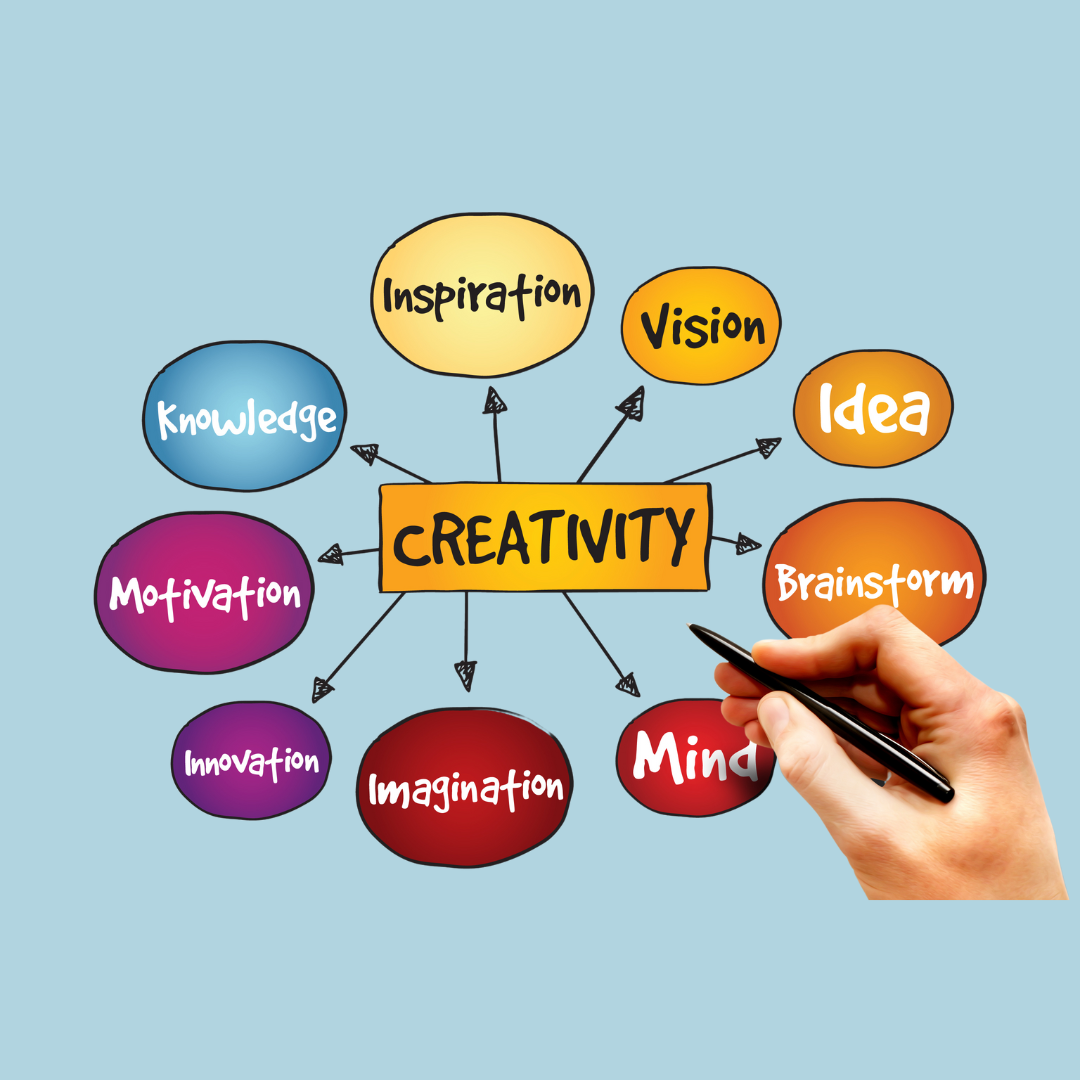
What Are the Characteristics of Creative Thinkers?
The Moment They Don’t Rush to Answer
There is a specific kind of pause that creative thinkers inhabit.
Not hesitation born of confusion.
Not uncertainty that blocks action.
Something subtler.
A refusal to finalize meaning too quickly.
When most people encounter a question, the mind moves toward closure almost immediately:
-
categorize it
-
compare it
-
assign it
-
finish it
Creative thinkers do something different.
They allow the question to remain open a little longer than necessary.
Not indefinitely.
Just long enough for something else to appear.
A second angle.
A missed detail.
A different framing.
That small delay changes everything.
Because in that space before closure, perception is still moving.
Creative Thinking Is Not a Trait. It Is a Relationship.
There is a temptation to describe creative thinkers as a distinct type of person.
As if creativity were a fixed attribute.
Something you either have or don’t.
But observation suggests something more fluid.
Creative thinking is not a possession.
It is a relationship with uncertainty.
Some people resist ambiguity.
Others lean toward it.
Creative thinkers are not free of discomfort.
They are more willing to remain inside it without immediate resolution.
That willingness shapes everything else.
A Table of Behavioral Differences
| Dimension | Conventional Thinker | Creative Thinker |
|---|---|---|
| Response to uncertainty | Reduce it quickly | Explore it first |
| Relationship to rules | Follow unless necessary | Question before accepting |
| Handling of ideas | Finalize early | Keep fluid longer |
| Perception of problems | Fixed definitions | Reframable structures |
| Attention style | Narrow and task-focused | Wide and associative |
| Comfort with ambiguity | Low tolerance | High tolerance |
| Decision speed | Fast closure | Delayed closure when useful |
| View of failure | Avoidance | Informational value |
These are not opposites.
They are tendencies.
And they shift depending on context.
But patterns emerge.
They Notice What Doesn’t Fit
Creative thinkers are sensitive to misalignment.
Not dramatic misalignment.
Subtle inconsistencies.
Things that are almost right—but not quite.
A sentence that sounds correct but feels slightly off.
A system that works but creates unnecessary friction.
A solution that solves the problem but introduces a new tension elsewhere.
Most people overlook these signals.
They prioritize completion over refinement.
Creative thinkers do not ignore completion.
But they are more willing to question whether completion is enough.
That sensitivity is often the beginning of change.
They Trust Observation Over Premature Explanation
There is a natural impulse to explain quickly.
To make sense of what is seen.
To assign meaning before ambiguity accumulates.
Creative thinkers resist this impulse.
They observe longer than they interpret.
Not because they reject interpretation.
But because premature interpretation can limit what is seen.
Once something is labeled, perception narrows.
Creative thinkers delay labeling.
Not forever.
Just long enough for more data to arrive.
They Are Comfortable With Incomplete Ideas
One of the defining characteristics is tolerance for incompletion.
Most thinking aims toward resolution.
A finished idea.
A clear answer.
A stable conclusion.
Creative thinkers can hold ideas before they are finished.
Not as abstraction.
But as active material.
An idea in development is not yet useful in a conventional sense.
It is not ready to be judged.
It is still forming its own structure.
Creative thinkers allow that process to continue without forcing it into early definition.
A Personal Observation About Letting Ideas Stay Unfinished
There was a time when I would try to refine ideas immediately.
If something appeared interesting, I would attempt to clarify it right away.
Define it.
Structure it.
Make it usable.
But something changed when I stopped doing that too quickly.
Some ideas, left alone, continued evolving without active effort.
Connections formed that were not visible in the initial moment.
What seemed vague began to organize itself over time.
The shift was subtle.
But important.
Not every idea improves under immediate pressure to become complete.
Some ideas need space before they can reveal their structure.
They Listen More Than They Assert
Creative thinkers often appear quiet in group settings.
Not withdrawn.
Not disengaged.
Attentive.
They are more interested in what is being revealed than in what is being defended.
This does not mean they lack conviction.
It means conviction arrives later in the process.
After more input has been absorbed.
After more angles have been seen.
Listening, in this sense, is not passive.
It is a form of gathering structure.
They Treat Constraints as Creative Material
Where others see limitation, creative thinkers often see structure.
Constraints are not obstacles.
They are shaping forces.
Without constraints, ideas remain diffuse.
With constraints, direction appears.
-
limited time
-
limited tools
-
limited space
-
limited rules
These conditions force decisions that would otherwise remain abstract.
Creative thinkers do not avoid constraints.
They work inside them until form appears.
They Are Sensitive to Subtle Differences
Creative thinking often depends on noticing small distinctions.
Not large contrasts.
Fine variations:
-
tone shifts
-
structural tension
-
timing differences
-
unexpected relationships between elements
Where others see similarity, creative thinkers often see variation.
This sensitivity allows them to adjust early, before problems become visible at scale.
They Do Not Rush to Optimize
Optimization is powerful.
It increases efficiency.
Reduces waste.
Improves performance.
But optimization assumes the problem is already correctly defined.
Creative thinkers sometimes delay optimization.
Not because efficiency is unimportant.
But because definition itself may still be incomplete.
Optimizing the wrong structure creates precision in the wrong direction.
So they ask first:
Is this the right thing to refine?
They Are Willing to Be Wrong Early
Many people avoid early mistakes.
Creative thinkers often do not.
Early wrongness is treated as information.
Not identity.
An idea can be tested without being defended.
A direction can be explored without commitment.
This reduces pressure on correctness and increases exploration range.
The goal is not to be right immediately.
The goal is to see more possibilities before deciding.
They Shift Between Zoomed-In and Zoomed-Out Thinking
Creative thinkers move fluidly between detail and structure.
When zoomed in:
-
texture matters
-
small inconsistencies matter
-
precision matters
When zoomed out:
-
pattern matters
-
relationship matters
-
direction matters
Many problems arise when a thinker stays locked at one level.
Creative thinkers shift perspective deliberately.
Not as technique.
But as necessity.
Different questions require different distances.
They Notice Energy, Not Just Form
Beyond structure and logic, creative thinkers often respond to something less defined:
-
momentum
-
tension
-
resonance
-
imbalance
These are not purely analytical signals.
They are perceptual ones.
Something feels alive or flat.
Working or stuck.
Moving or static.
This sensitivity often guides decisions before rational justification appears.
They Are Not Attached to Their First Interpretation
First interpretations are powerful.
They arrive quickly.
They feel certain.
Creative thinkers do not necessarily reject them.
But they do not treat them as final.
They allow space for reinterpretation.
Because initial perception is often shaped by:
-
context
-
expectation
-
familiarity
-
emotional state
What feels obvious at first may shift with time.
A Table of Creative Behaviors in Practice
| Situation | Common Response | Creative Thinker Response |
|---|---|---|
| Ambiguous problem | Define quickly | Observe longer |
| Unexpected result | Correct immediately | Investigate structure |
| Weak idea | Discard | Explore variations |
| Conflict in process | Resolve fast | Understand tension |
| New input | Filter quickly | Absorb first |
| Familiar pattern | Accept | Question relevance |
This is not about delay.
It is about sequence.
They Value Process Over Premature Outcome
Outcome matters.
But creative thinkers often place equal or greater emphasis on how outcomes are reached.
Because process determines future possibilities.
A rigid process produces predictable results.
A flexible process produces variation.
Creative thinkers optimize for adaptability in the system, not just output in the moment.
Why They Often Appear Slow at First
From the outside, creative thinkers may seem slower to decide.
Less decisive.
Less immediate.
But what looks like delay is often exploration.
They are gathering structure before committing.
Once clarity arrives, decisions can become surprisingly fast.
Because direction has already been mapped internally.
They Are Comfortable With Revision
Revision is not correction.
It is continuation.
Creative thinkers do not treat ideas as finished artifacts once expressed.
They treat them as evolving structures.
Subject to:
-
refinement
-
reframing
-
reduction
-
expansion
Nothing is considered final too early.
They Trust Emergence More Than Control
Control seeks predictability.
Emergence allows structure to form through interaction.
Creative thinkers often rely on emergence:
-
letting ideas interact
-
letting constraints shape direction
-
letting time reveal structure
This does not mean absence of intention.
It means intention without rigidity.
Conclusion: A Different Relationship With What Is Not Yet Known
What are the characteristics of creative thinkers?
They are not defined by what they know.
But by how they relate to what is not yet known.
They:
-
delay closure when needed
-
tolerate ambiguity without rushing it away
-
observe before naming
-
listen before asserting
-
refine without over-defining
-
allow ideas to stay unfinished long enough to evolve
At the center of all of it is a quiet resistance to premature certainty.
Not rejection of clarity.
But respect for the process through which clarity forms.
Creative thinkers are not people who always find answers quickly.
They are people who are willing to stay with the question long enough for better answers to appear.
And that willingness changes what becomes possible.
Not through force.
But through attention that does not rush to end the conversation too soon
- Arts
- Business
- Computers
- الألعاب
- Health
- الرئيسية
- Kids and Teens
- مال
- News
- Personal Development
- Recreation
- Regional
- Reference
- Science
- Shopping
- Society
- Sports
- Бизнес
- Деньги
- Дом
- Досуг
- Здоровье
- Игры
- Искусство
- Источники информации
- Компьютеры
- Личное развитие
- Наука
- Новости и СМИ
- Общество
- Покупки
- Спорт
- Страны и регионы
- World

 English
 Russian
 French
 Spanish
 Portuguese
 Deutsch
 Turkish
 Dutch
Dutch
 Italiano
 Romaian
 Portuguese (Brazil)
 Greek
Greek