
How is creative thinking different from critical thinking?
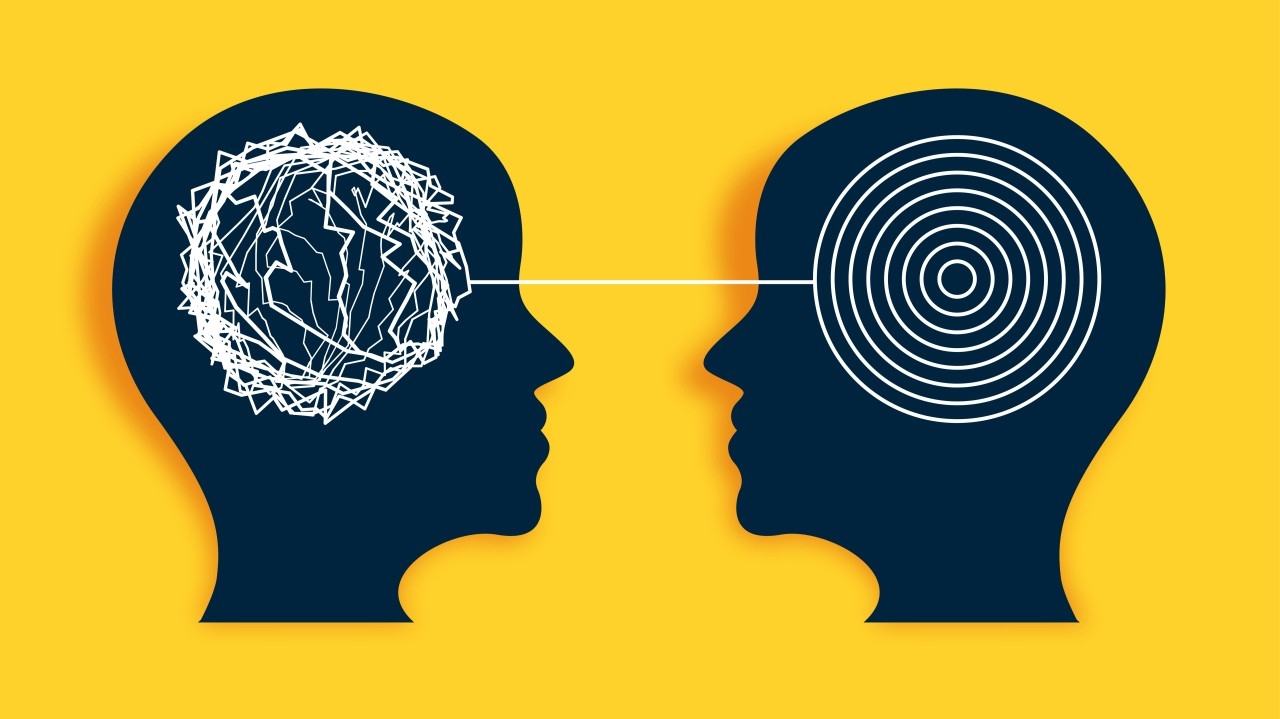
How Is Creative Thinking Different From Critical Thinking?
The Moment Before You Decide
There is a quiet fork in the mind.
It appears before language fully forms.
Before explanation.
Before justification.
A moment where something is still fluid.
Not yet committed to meaning.
One path moves toward expansion.
The other toward refinement.
Most people do not notice the split.
They only notice the outcome:
-
a decision
-
a conclusion
-
a judgment
-
a finished thought
But underneath that outcome are two very different ways of thinking.
Not opposing forces.
But distinct modes.
One generates.
The other evaluates.
And understanding the difference changes how thinking itself is used.
Two Modes, One Mind
Creative thinking and critical thinking are often treated as skills.
But they are better understood as orientations.
Shifts in attention.
Creative thinking asks:
-
What else could this be?
-
What is not yet visible?
-
What happens if we change the frame?
Critical thinking asks:
-
Is this valid?
-
Does this hold up?
-
What is missing or wrong?
One expands possibility.
The other narrows toward clarity.
Both are necessary.
But they operate in different directions.
And confusion arises when they are used at the same moment.
A Table of Core Differences
| Dimension | Creative Thinking | Critical Thinking |
|---|---|---|
| Primary function | Generate possibilities | Evaluate validity |
| Relationship to uncertainty | Engages with it | Reduces it |
| Orientation | Expansion | Refinement |
| Mental movement | Divergent | Convergent |
| Attitude toward ideas | Exploratory | Analytical |
| Time focus | Emerging future | Structured present |
| Error tolerance | High (early stage) | Low (later stage) |
| Outcome goal | Novelty or insight | Accuracy or coherence |
The table is not a hierarchy.
It is a sequence map.
These modes often work best when separated in time.
Not blended.
Creative Thinking Begins Where Definitions Break
Creative thinking often starts with something unstable.
A feeling that the current frame is insufficient.
Not wrong.
Just incomplete.
It resists early closure.
Because closure freezes possibility.
When something is still forming, defining it too quickly reduces what it can become.
Creative thinking protects that early instability long enough for structure to emerge.
Critical Thinking Begins Where Structure Appears
Critical thinking requires something to evaluate.
A claim.
A model.
A decision.
A formed idea.
Without structure, critical thinking has nothing to do.
It cannot assess what is still fluid.
It depends on boundaries being present.
Where creative thinking asks “what could this become?”, critical thinking asks “what is this actually?”
It is a shift from possibility to constraint.
From opening to filtering.
Why They Often Conflict
These two modes can interfere with each other when used simultaneously.
Creative thinking is fragile.
It requires openness.
Critical thinking introduces evaluation pressure.
Even subtle evaluation can collapse exploration.
An idea under immediate critique tends to:
-
narrow prematurely
-
conform to expectations
-
lose unusual connections
On the other hand, uncritical thinking produces noise:
-
weak ideas
-
unfounded assumptions
-
incoherent structures
The tension is not a problem.
It is a signal that both modes are active at the wrong time.
A Personal Observation About Premature Judgment
There was a period when I would evaluate ideas as soon as they appeared.
Not harshly.
But quickly.
A reflex toward refinement.
If something seemed unclear, I would try to correct it immediately.
Shape it into something coherent.
What I noticed over time was subtle.
Some ideas stopped evolving before they had the chance to reveal their deeper structure.
Not because they were weak.
But because they were judged too early.
When I later allowed ideas to remain unresolved longer, something different happened.
They developed internal relationships I had not initially seen.
The lesson was simple.
Evaluation too early can limit discovery.
Not by rejecting ideas.
But by freezing them.
Creative Thinking: Expanding the Space of Possibility
Creative thinking does not begin with answers.
It begins with space.
Space where multiple interpretations can coexist.
Where contradictions are allowed.
Where structure is not yet fixed.
This mode is sensitive to:
-
new combinations
-
unusual connections
-
overlooked patterns
-
latent possibilities
It is not concerned with correctness.
It is concerned with emergence.
Critical Thinking: Reducing the Space to What Works
Critical thinking performs a different function.
It compresses.
It tests.
It eliminates inconsistency.
It asks:
-
Is this logically sound?
-
Does this align with evidence?
-
Where does it fail?
This mode is essential for turning ideas into usable structures.
Without it, creativity remains ungrounded.
But without creativity, critical thinking has nothing meaningful to refine.
Why Timing Matters More Than Ability
A common misunderstanding is that creative and critical thinking are traits.
Some people “are creative.”
Others “are analytical.”
But in practice, both modes exist in everyone.
The difference is timing.
When they are applied.
Creative thinking is most useful when:
-
the problem is not yet defined
-
assumptions are unclear
-
possibilities are unexplored
Critical thinking is most useful when:
-
a structure exists
-
a decision is required
-
coherence matters
Confusing timing leads to dysfunction:
-
premature criticism kills ideas
-
unfiltered creation produces chaos
The Mind as a Switch, Not a Blend
It is tempting to imagine creative and critical thinking operating simultaneously.
But they often function more like a switch than a blend.
One mode takes precedence.
Then the other.
Creative mode expands.
Critical mode selects.
If both operate at once, the system can stall:
-
ideas are generated and immediately dismissed
-
exploration is constrained before it begins
-
thinking becomes circular
Separation creates clarity.
The Emotional Tone of Each Mode
Creative thinking feels open.
Sometimes uncertain.
Sometimes expansive.
There is a sense of “not yet knowing.”
Critical thinking feels precise.
Focused.
Sometimes restrictive.
There is a sense of “getting it right.”
These emotional tones influence behavior more than logic does.
People often avoid creative thinking because uncertainty feels uncomfortable.
Or avoid critical thinking because judgment feels limiting.
Both reactions distort balance.
Why Critical Thinking Can Block Creativity
Critical thinking is excellent at detecting flaws.
But creativity requires tolerance for imperfection in early stages.
If evaluation happens too early:
-
weak ideas are discarded before they develop
-
unconventional ideas are filtered out prematurely
-
exploration becomes constrained by existing frameworks
The system becomes efficient at producing what already works.
But less capable of producing what is new.
Why Creative Thinking Without Critique Becomes Fragile
The opposite imbalance also fails.
Without critical thinking:
-
ideas remain untested
-
assumptions go unchallenged
-
structure fails under pressure
-
novelty does not translate into usefulness
Creative thinking alone expands possibilities.
But does not ensure viability.
A Simple Model of Sequence
A useful way to understand the relationship is sequential:
-
Creative thinking expands possibilities
-
Critical thinking refines selection
-
Creative thinking iterates again if needed
-
Critical thinking stabilizes the result
The mistake is collapsing steps into one.
Each requires a different cognitive posture.
Why Experts Separate the Two Without Saying It
In skilled practice, these modes are often separated intuitively:
-
writers draft before editing
-
designers sketch before refining
-
scientists hypothesize before testing
-
musicians improvise before structuring
The separation is rarely explicit.
But it is embedded in process.
When it disappears, output often becomes constrained.
Why Critical Thinking Needs Raw Material
Critical thinking cannot operate in abstraction.
It needs something to evaluate.
Without creative input:
-
analysis becomes repetitive
-
judgment becomes reactive
-
thinking narrows to known categories
Creativity feeds critical thinking.
It provides variation.
Without variation, evaluation has nothing new to examine.
Why Creative Thinking Needs Boundaries
Creative thinking without structure can drift.
Boundaries are not restrictions.
They are form-giving forces.
Constraints:
-
focus attention
-
sharpen decisions
-
define direction
Without constraints, possibility remains unshaped.
Too open to resolve.
The Hidden Dependency Between the Two
Creative thinking depends on eventual critique to become useful.
Critical thinking depends on prior creativity to have something meaningful to refine.
They are not separate disciplines.
They are interdependent stages of a single process:
how ideas move from potential to clarity.
Conclusion: Two Ways of Seeing One World
What is the difference between creative thinking and critical thinking?
It is not intelligence.
It is not skill.
It is orientation.
Creative thinking expands what can be seen.
Critical thinking determines what is valid within what is seen.
One opens.
One closes.
One explores.
One evaluates.
Both are necessary for understanding and shaping complex reality.
But they must be allowed to operate in sequence, not collision.
Because when they are confused, thinking becomes unstable:
ideas are judged before they exist,
or accepted without question after they form.
When they are separated, something more useful appears.
A rhythm.
First, the space expands.
Then, it takes shape.
Then, it is refined.
And the quality of thought depends less on intensity—and more on knowing which mode to inhabit at which moment.
That distinction is subtle.
But it changes everything about how ideas are formed, tested, and brought into the world.
- Arts
- Business
- Computers
- Spellen
- Health
- Home
- Kids and Teens
- Money
- News
- Personal Development
- Recreation
- Regional
- Reference
- Science
- Shopping
- Society
- Sports
- Бизнес
- Деньги
- Дом
- Досуг
- Здоровье
- Игры
- Искусство
- Источники информации
- Компьютеры
- Личное развитие
- Наука
- Новости и СМИ
- Общество
- Покупки
- Спорт
- Страны и регионы
- World

 English
 Russian
 French
 Spanish
 Portuguese
 Deutsch
 Turkish
 Italiano
 Arabic
 Romaian
 Portuguese (Brazil)
 Greek
Greek