
How do I overcome creative block?
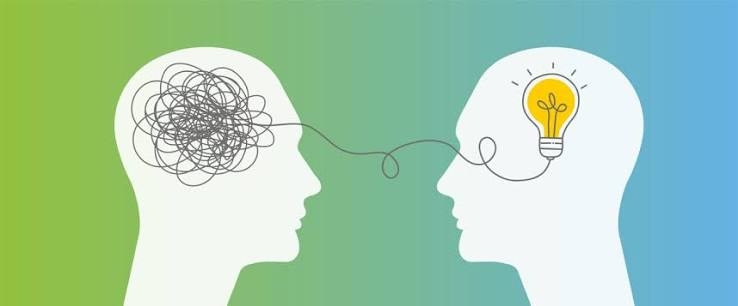
How Do I Overcome Creative Block?
The First Misunderstanding: Creative Block Is Not Absence
Creative block feels like something has disappeared.
Ideas. Flow. Access.
A blank space where movement used to be.
But when you look closely, something else is happening.
It is not absence.
It is interference.
A narrowing of perception so tight that only familiar patterns remain visible—and those patterns no longer feel useful.
The system is still producing.
But it is producing the same thing repeatedly.
And repetition mistaken for emptiness becomes frustration.
Creative Block Is a Condition, Not a State of Failure
Most people treat creative block as a personal malfunction.
A breakdown of ability.
But in practice, it is usually a shift in conditions:
-
too much internal pressure
-
too much self-monitoring
-
too much repetition of familiar ideas
-
too little perceptual variation
-
too much immediate judgment
None of these reduce intelligence.
They reduce openness.
And openness is where new ideas form.
A Table: Flow State vs Creative Block
| Dimension | Flow State | Creative Block |
|---|---|---|
| Attention | Wide, receptive | Narrow, self-referential |
| Internal pressure | Low | High |
| Judgment timing | Delayed | Immediate |
| Idea variation | High | Repetitive |
| Emotional tone | Curiosity | Frustration |
| Perception | Fresh | Familiar loops |
| Output quality | Emergent | Stalled or recycled |
The difference is not creativity.
It is accessibility.
The Core Insight: You Are Not Empty, You Are Overloaded
When ideas stop flowing, it rarely means nothing is there.
More often, it means too much is there at once:
-
expectations
-
memories of past work
-
fear of repetition
-
pressure to perform
-
internal critique
This creates noise.
And noise masks signal.
The work is not to add more thinking.
It is to reduce interference.
A Personal Observation About Forced Output
There was a period when I tried to push through creative block directly.
Sit down.
Force ideas.
Stay longer.
Work harder.
At first, it felt responsible.
But something consistent emerged.
The output was predictable.
Not wrong.
Just constrained.
The same structures appeared again and again.
When I later stopped forcing and instead changed the conditions around thinking—movement, input, timing—the ideas returned differently.
Not because I created them.
But because I stopped obstructing them.
The First Shift: Remove Pressure to Produce
Pressure compresses thinking.
It forces early closure.
Instead of exploration, the mind moves toward completion.
When pressure drops, something changes:
-
attention expands
-
judgment slows
-
associations reappear
The paradox is simple:
Ideas return when they are no longer demanded.
The Second Shift: Change Physical State
Thinking is not separate from the body.
It is shaped by it.
When the body is static, thinking often becomes static.
Movement introduces variation:
-
walking
-
stretching
-
changing environments
-
working with hands
These shifts alter rhythm.
And rhythm influences thought structure more than most people realize.
The Third Shift: Break the Familiar Input Loop
Creative block is often reinforced by repetitive input:
-
same sources
-
same references
-
same mental categories
The mind begins to echo itself.
To interrupt this:
-
switch mediums
-
switch topics
-
switch sensory focus
-
introduce unrelated material
Not to inspire.
But to destabilize repetition.
A Table: Repetitive Input vs Diverse Input
| Aspect | Repetitive Input | Diverse Input |
|---|---|---|
| Idea variety | Low | High |
| Cognitive flexibility | Reduced | Increased |
| Pattern recognition | Static | Adaptive |
| Perception | Narrow | Expanded |
| Creativity | Stalled | Reactivated |
Creativity does not disappear.
It becomes trapped in repetition.
The Fourth Shift: Delay Judgment Completely
One of the strongest causes of creative block is early evaluation.
An idea appears.
It is immediately labeled:
-
not good enough
-
already done
-
too simple
-
not original
That moment collapses possibility.
The practice is not to eliminate judgment.
But to delay it.
Long enough for ideas to evolve before they are fixed.
The Fifth Shift: Reintroduce Low-Stakes Thinking
When everything feels important, nothing flows.
High stakes compress attention.
To reverse this:
-
make ideas irrelevant temporarily
-
write without purpose
-
sketch without direction
-
explore without outcome
This reduces internal surveillance.
And without surveillance, thinking expands.
The Sixth Shift: Work With Constraints Instead of Against Them
When block appears, unlimited freedom often makes it worse.
Too many directions.
No structure.
Constraints restore shape:
-
only 10 words per idea
-
only questions allowed
-
only reduce, never add
-
only describe without naming
Constraints do not restrict creativity.
They focus perception.
And focus reveals structure.
The Seventh Shift: Return Without Expectation
Sometimes the most effective move is to revisit old ideas.
Not to fix them.
Not to improve them.
But to observe them differently.
When expectation is removed:
-
new connections appear
-
forgotten pathways emerge
-
overlooked details surface
The idea has not changed.
But perception has.
A Personal Observation About Returning After Distance
There have been moments when I stepped away from a problem completely.
No thinking about it.
No pressure.
Just distance.
And when I returned later, something unexpected happened.
The problem felt different.
Not solved.
But reorganized.
What was unclear became structured.
Not through effort.
But through time and reduced interference.
The Eighth Shift: Separate Thinking From Output
One of the most important distinctions:
Thinking is not producing.
When they are combined, block intensifies.
Because every thought is evaluated before it forms.
Separating them restores flow:
-
think freely
-
record without editing
-
evaluate later
This restores psychological space.
And space is where ideas emerge.
The Ninth Shift: Introduce Random Disruption
When thinking becomes too predictable, introduce something unrelated:
-
a random word
-
an unfamiliar image
-
a different discipline
-
an unexpected constraint
This forces the mind to build new connections.
Not through logic.
But through association.
A Table: Controlled Thinking vs Disrupted Thinking
| Dimension | Controlled Thinking | Disrupted Thinking |
|---|---|---|
| Predictability | High | Low |
| Idea originality | Limited | Expanded |
| Cognitive rigidity | Strong | Reduced |
| Association range | Narrow | Wide |
| Emotional tone | Frustration | Curiosity |
| Output novelty | Low | High |
Disruption does not create ideas.
It breaks repetition.
Why Creative Block Feels Personal but Isn’t
Creative block often feels like identity failure.
But it is not identity.
It is a temporary configuration of attention.
Change the configuration, and the experience changes.
Nothing about capability disappears.
Only access shifts.
The Tenth Shift: Accept That Nothing Needs to Happen Immediately
Urgency is one of the strongest inhibitors of creativity.
It forces premature resolution.
When urgency is removed:
-
thinking expands
-
pressure drops
-
associations reappear
Nothing is lost by waiting.
Something is often gained.
Conclusion: Creative Block Is Not Something You Break Through. It Is Something That Dissolves When Conditions Change
How do I overcome creative block?
Not by forcing ideas.
Not by increasing effort.
Not by pushing through resistance.
But by changing the conditions that produce resistance in the first place.
By:
-
reducing pressure
-
changing input
-
introducing movement
-
delaying judgment
-
separating thinking from output
-
working within constraints
-
revisiting without expectation
-
allowing disruption
-
removing urgency
-
increasing space for perception
Because creative block is not a wall.
It is a narrowing.
And when that narrowing relaxes, even slightly, something returns.
Not something new being created.
But something already present becoming accessible again.
Ideas do not arrive because they are forced.
They arrive because interference stops blocking them.
And in that cleared space, thinking begins again—not as effort, but as flow.
- Arts
- Business
- Computers
- Giochi
- Health
- Home
- Kids and Teens
- Money
- News
- Personal Development
- Recreation
- Regional
- Reference
- Science
- Shopping
- Society
- Sports
- Бизнес
- Деньги
- Дом
- Досуг
- Здоровье
- Игры
- Искусство
- Источники информации
- Компьютеры
- Личное развитие
- Наука
- Новости и СМИ
- Общество
- Покупки
- Спорт
- Страны и регионы
- World

 English
 Russian
 French
 Spanish
 Portuguese
 Deutsch
 Turkish
 Dutch
Dutch
 Arabic
 Romaian
 Portuguese (Brazil)
 Greek
Greek