
How do creativity and problem-solving work together?
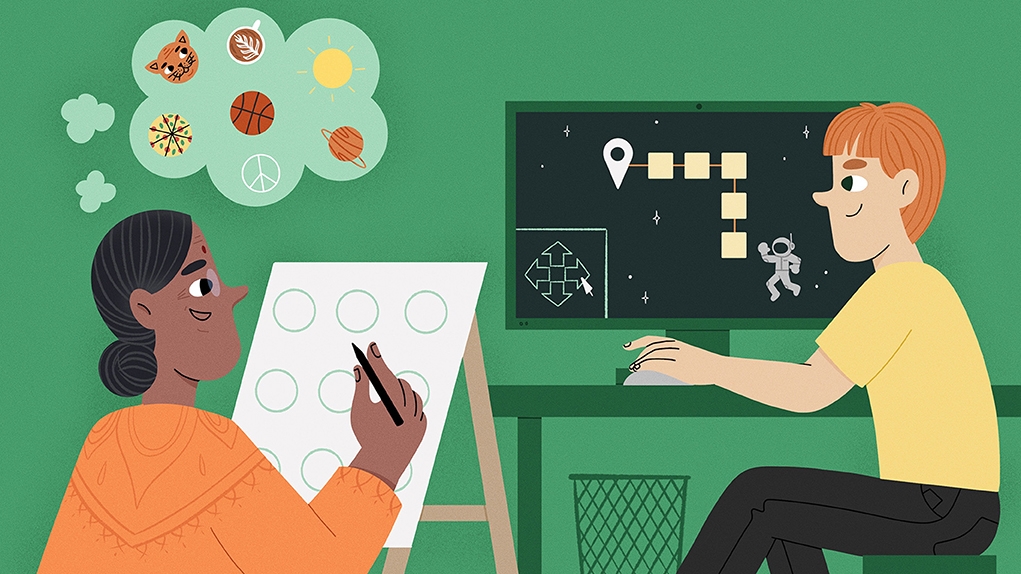
How Do Creativity and Problem-Solving Work Together?
A locked door sits in front of two people.
The first person studies the lock.
Measures it.
Examines its mechanism.
Searches for the correct key.
The second person looks around the room.
They wonder whether the wall beside the door can be moved.
Whether a window exists.
Whether the door even needs to be opened.
One person is solving the problem.
The other is redefining it.
The remarkable thing is that the greatest breakthroughs usually require both.
Human beings often separate creativity and problem-solving into different categories. Creativity belongs to artists. Problem-solving belongs to engineers. Creativity feels imaginative. Problem-solving feels practical.
Yet this distinction collapses under closer examination.
Every meaningful problem demands some degree of creativity.
Every meaningful act of creativity solves some kind of problem.
The inventor faces a technical challenge.
The entrepreneur faces a market challenge.
The musician faces an expressive challenge.
The scientist faces an intellectual challenge.
Different arenas.
Same underlying process.
A gap exists between what is and what could be.
Creativity and problem-solving work together to close that gap.
One generates possibilities.
The other transforms possibilities into outcomes.
Understanding this relationship reveals why some people repeatedly discover breakthroughs while others remain trapped inside familiar patterns.
The False Divide Between Creativity and Problem-Solving
Most people imagine creativity as spontaneous inspiration.
A lightning strike.
A flash of brilliance.
An unexpected gift from somewhere beyond conscious thought.
Problem-solving receives a different image.
Logic.
Structure.
Analysis.
Methodical effort.
Reality is more interesting.
Creativity is often a form of problem-solving.
Problem-solving is often a form of creativity.
The distinction exists mostly because the problems differ.
When a composer struggles to finish a melody, that is a problem.
When a physician searches for a diagnosis, that is a problem.
When a startup attempts to reach customers, that is a problem.
The methods vary.
The objective remains constant.
Finding a path where none currently exists.
This is why some of history's greatest innovators moved effortlessly between artistic and technical domains.
They understood something fundamental.
Every challenge contains an opportunity for imagination.
What Is Creativity, Really?
Creativity is the ability to produce ideas that are both novel and useful.
The second part matters.
Novelty alone is not enough.
Randomness is easy.
Value is harder.
Creativity becomes meaningful when originality creates improvement.
When something works better.
Feels deeper.
Solves faster.
Connects more effectively.
Creative thinking asks questions like:
-
What if we're looking at this incorrectly?
-
What assumptions are limiting us?
-
What alternatives have we ignored?
-
What happens if unrelated concepts combine?
These questions expand possibility.
They widen the search area.
They create room for discovery.
Creativity's role is not to guarantee answers.
Its role is to generate options.
Without options, progress becomes impossible.
What Is Problem-Solving?
Problem-solving is the process of moving from an undesirable state to a desirable one.
A problem exists.
A solution does not.
The objective is to bridge the distance between them.
Problem-solving typically involves:
-
Identifying the issue
-
Understanding constraints
-
Generating possible solutions
-
Evaluating alternatives
-
Implementing action
-
Measuring results
Notice something important.
Generating possible solutions sits directly in the middle of the process.
That step depends heavily on creativity.
The quality of solutions depends on the quality of possibilities available.
A person who can imagine only one solution has little flexibility.
A person who can imagine twenty possesses options.
Creativity increases the size of the solution space.
Problem-solving selects from within it.
Creativity vs Problem-Solving: Understanding Their Roles
| Dimension | Creativity | Problem-Solving |
|---|---|---|
| Primary Purpose | Generate possibilities | Resolve challenges |
| Focus | Exploration | Resolution |
| Thinking Style | Divergent | Convergent |
| Core Question | "What could work?" | "What will work?" |
| Relationship to Rules | Challenges them | Works within or around them |
| Risk Level | High | Variable |
| Strength | Innovation | Execution |
| Weakness | Can lack practicality | Can become narrow |
| Outcome | New ideas | Implemented solutions |
| Best Environment | Ambiguity | Clear objectives |
| Success Measure | Originality and value | Effectiveness and results |
| Contribution | Expands options | Selects and applies options |
The distinction is useful.
The separation is not.
The strongest thinkers move between these modes continuously.
Why Creativity Improves Problem-Solving
Imagine trying to escape a maze.
A purely analytical approach examines known pathways carefully.
A creative approach wonders whether climbing over the maze is allowed.
That difference changes everything.
Creativity introduces alternative perspectives.
It reveals hidden opportunities.
It challenges assumptions that others accept automatically.
Many difficult problems persist because people keep solving them the same way.
The process becomes repetitive.
Predictable.
Circular.
Creativity interrupts the loop.
It introduces novelty into systems that have become rigid.
This is often where breakthroughs emerge.
Not from working harder.
From seeing differently.
Creativity Reveals Invisible Assumptions
Most problems contain assumptions hiding beneath the surface.
Assumptions become dangerous because they rarely announce themselves.
People treat them as facts.
Creativity questions them.
For example:
A business may assume customers want more features.
A creative thinker wonders whether customers want fewer.
A teacher may assume learning requires more information.
A creative thinker wonders whether learning requires less.
The breakthrough often appears when someone challenges the assumption nobody noticed.
Why Problem-Solving Strengthens Creativity
The relationship works both ways.
Creativity needs direction.
Without constraints, imagination can become endless.
Endless possibilities create paralysis.
Problem-solving provides focus.
A clear challenge channels creative energy toward useful outcomes.
Many great works emerged because limitations forced innovation.
Budget constraints.
Technical constraints.
Time constraints.
Physical constraints.
These obstacles frequently become catalysts for creative breakthroughs.
The challenge itself becomes a source of inspiration.
Limitations force the mind to search deeper.
A Lesson I Learned About Difficult Problems
Several years ago, I encountered a project that refused to move forward.
Every meeting produced the same conversation.
The same analysis.
The same conclusions.
The same frustrations.
Everyone involved was intelligent.
Everyone worked hard.
Yet nothing changed.
Eventually someone suggested an experiment.
Not a solution.
Just an experiment.
The idea seemed unusual.
Almost unrelated to the problem.
Still, we tried it.
Within days, entirely new possibilities appeared.
The obstacle hadn't been a lack of effort.
It hadn't even been a lack of knowledge.
The obstacle was a lack of perspective.
We were solving within a framework that needed replacement.
That experience taught me something I continue to see repeatedly.
The hardest problems often require new viewpoints before they require new answers.
Creativity creates the viewpoint.
Problem-solving develops the answer.
The Four Stages Where Creativity Supports Problem-Solving
Stage 1: Defining the Problem
Many people assume problems are obvious.
They aren't.
Often the greatest challenge is identifying the real issue.
Symptoms disguise causes.
Surface-level difficulties conceal deeper patterns.
Creative thinking helps reframe problems.
Instead of asking:
"How do we improve sales?"
A creative thinker might ask:
"Why are customers disengaged?"
Or:
"What if we're targeting the wrong audience entirely?"
A better question often produces a better solution.
Stage 2: Generating Possibilities
This is creativity's most obvious contribution.
Potential solutions are explored.
New approaches emerge.
Unconventional ideas receive attention.
Quantity matters initially.
Judgment comes later.
Many breakthrough solutions begin as ideas that appear strange.
Early criticism often destroys possibilities before they mature.
Stage 3: Evaluating Solutions
At this stage, analytical problem-solving becomes increasingly important.
Ideas are tested.
Feasibility is assessed.
Risks are identified.
Resources are considered.
Creativity generates candidates.
Problem-solving determines viability.
Stage 4: Adapting During Implementation
Implementation rarely proceeds perfectly.
Unexpected obstacles emerge.
New constraints appear.
Creative thinking becomes valuable again.
Adjustments must be made.
Alternative paths must be discovered.
Flexibility becomes essential.
How Great Innovators Combine Both Skills
Consider the patterns behind major innovations.
A challenge appears.
A possibility emerges.
The possibility gets tested.
Refined.
Expanded.
Repeated.
This cycle continues until something useful exists.
Innovation rarely arrives fully formed.
It evolves.
Creativity initiates movement.
Problem-solving sustains it.
The process resembles sculpting.
Creativity provides the raw material.
Problem-solving removes what doesn't belong.
The final result depends on both.
Common Mistakes That Block Creative Problem-Solving
Mistake #1: Seeking Answers Too Quickly
People often rush toward solutions.
Speed feels productive.
Yet premature answers can lock thinking into narrow pathways.
Sometimes spending more time exploring possibilities creates better outcomes.
Mistake #2: Overvaluing Logic
Logic is powerful.
But logic operates within existing assumptions.
When assumptions are flawed, logic may simply optimize the wrong direction.
Creativity helps identify alternative starting points.
Mistake #3: Treating Creativity as Random
Creativity is not chaos.
It can be practiced.
Developed.
Refined.
Many organizations mistakenly view creativity as unpredictable rather than trainable.
Mistake #4: Separating Imagination From Execution
Ideas gain value only when implemented.
Creative thinking and practical action must remain connected.
Otherwise potential remains unrealized.
How Organizations Benefit From Creative Problem-Solving
The most successful organizations recognize that innovation is fundamentally a problem-solving activity.
Every improvement solves something.
A customer frustration.
An operational inefficiency.
A communication gap.
A technical limitation.
Creative cultures encourage:
-
Experimentation
-
Diverse perspectives
-
Curiosity
-
Constructive questioning
-
Calculated risk-taking
Problem-solving cultures encourage:
-
Accountability
-
Measurement
-
Evaluation
-
Execution
-
Continuous improvement
The strongest organizations combine both.
Exploration without execution creates waste.
Execution without exploration creates stagnation.
Developing Creative Problem-Solving Skills
The ability can be strengthened intentionally.
Expose Yourself to Different Domains
New perspectives generate new solutions.
Read broadly.
Study unfamiliar subjects.
Explore ideas outside your expertise.
Innovation often emerges at intersections.
Practice Reframing Problems
Instead of accepting a problem statement immediately, ask:
-
What is the deeper issue?
-
What assumptions exist?
-
What would the opposite approach look like?
Reframing expands possibilities.
Separate Creation From Evaluation
Generate ideas first.
Critique later.
Mixing both stages weakens creativity.
Embrace Experiments
Not every idea requires certainty.
Small experiments often reveal information impossible to obtain through analysis alone.
Action becomes a source of learning.
The Future Belongs to Creative Problem-Solvers
Many routine tasks are becoming automated.
Information is increasingly accessible.
Computational power continues expanding.
Yet one capability remains exceptionally valuable.
The ability to navigate uncertainty through imagination and action.
Problems evolve.
Industries change.
Technology transforms expectations.
People who can generate fresh possibilities while solving practical challenges will continue creating disproportionate value.
The future rewards adaptability.
Adaptability depends on creativity.
Creativity becomes useful when connected to problem-solving.
Together, they form one of the most important skill combinations available.
Conclusion: The Door Nobody Sees
When people think about problem-solving, they often imagine finding the right key.
The correct answer.
The proven method.
The established path.
Sometimes that works.
Sometimes it doesn't.
The most difficult challenges often require something different.
A willingness to question whether the door itself matters.
A willingness to search for a window.
Or build a bridge.
Or redesign the room entirely.
That is where creativity enters.
Not as decoration.
Not as entertainment.
Not as a luxury reserved for artists.
Creativity is a practical force.
It expands possibility when conventional thinking reaches its limits.
Problem-solving then transforms those possibilities into reality.
One imagines alternatives.
The other makes them useful.
Together they create progress.
Every invention.
Every breakthrough.
Every meaningful improvement.
At some point, someone encountered a problem and refused to see it the way everyone else did.
That moment of reimagining changed everything.
The solution did not appear because creativity replaced problem-solving.
The solution appeared because creativity and problem-solving worked together.
One opened the door.
The other walked through it.
- Arts
- Business
- Computers
- Jocuri
- Health
- Home
- Kids and Teens
- Money
- News
- Personal Development
- Recreation
- Regional
- Reference
- Science
- Shopping
- Society
- Sports
- Бизнес
- Деньги
- Дом
- Досуг
- Здоровье
- Игры
- Искусство
- Источники информации
- Компьютеры
- Личное развитие
- Наука
- Новости и СМИ
- Общество
- Покупки
- Спорт
- Страны и регионы
- World

 English
 Russian
 French
 Spanish
 Portuguese
 Deutsch
 Turkish
 Dutch
Dutch
 Italiano
 Arabic
 Portuguese (Brazil)
 Greek
Greek