
Design thinking
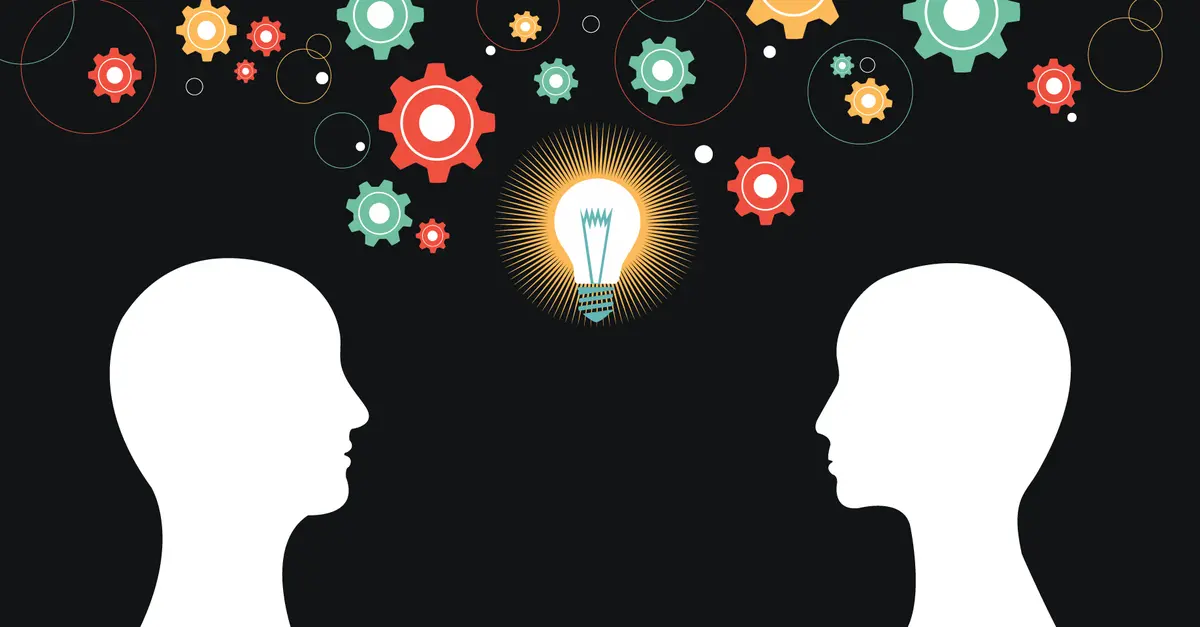
Design Thinking: The Art of Solving the Right Problem
A man walks into a hardware store.
He says he needs a drill.
Most businesses hear the request and sell him a drill.
A designer hears something different.
The designer asks why.
The man says he needs to hang a picture.
Again, the designer asks why.
Eventually a deeper truth emerges.
The man doesn't want a drill.
He doesn't even want a hole.
He wants a home that feels complete.
A small distinction.
A massive difference.
This is where design thinking begins.
Not with products.
Not with technology.
Not with features.
With people.
With curiosity.
With the willingness to look beneath the obvious answer and ask a more difficult question:
What problem are we actually trying to solve?
Many organizations become obsessed with solutions.
Design thinking becomes obsessed with understanding.
The distinction sounds subtle.
It changes everything.
Because remarkable solutions rarely emerge from solving the wrong problem efficiently.
They emerge from understanding the right problem deeply.
What Is Design Thinking?
Design thinking is a human-centered approach to problem-solving that prioritizes empathy, experimentation, observation, and iteration.
At its core, design thinking asks a simple question:
How can we create something that genuinely improves the human experience?
The answer requires more than analysis.
It requires imagination.
Observation.
Adaptability.
Curiosity.
Design thinking combines analytical rigor with creative exploration.
It encourages people to understand users deeply before attempting solutions.
Instead of beginning with assumptions, it begins with questions.
Instead of seeking certainty immediately, it embraces discovery.
The process appears structured.
The mindset remains fluid.
Why Traditional Problem-Solving Often Falls Short
Many organizations solve problems backward.
A challenge appears.
A solution is proposed.
Resources are allocated.
Implementation begins.
Only later does someone discover the original assumption was flawed.
The solution worked.
The problem was wrong.
This happens surprisingly often.
Products fail because customers never wanted them.
Policies fail because they address symptoms rather than causes.
Innovations fail because they solve issues people do not actually have.
Design thinking interrupts this pattern.
It slows down the beginning.
So the ending becomes stronger.
Traditional Thinking vs Design Thinking
| Traditional Problem-Solving | Design Thinking |
|---|---|
| Begins with assumptions | Begins with observation |
| Focuses on efficiency | Focuses on human needs |
| Seeks answers quickly | Seeks understanding first |
| Relies heavily on expertise | Relies on empathy and insight |
| Avoids uncertainty | Embraces exploration |
| Linear process | Iterative process |
| Solution-centered | Human-centered |
| Risk reduction through planning | Risk reduction through testing |
| Assumes needs | Discovers needs |
| Measures outputs | Measures experiences |
The difference is philosophical.
One asks:
"How do we solve this?"
The other asks:
"What exactly is this?"
The Origins of Design Thinking
Design thinking emerged from the recognition that designers approached problems differently.
Rather than beginning with constraints, they began with people.
Rather than optimizing existing systems immediately, they explored possibilities.
This mindset expanded beyond design professions.
Business leaders adopted it.
Educators adopted it.
Healthcare systems adopted it.
Entrepreneurs adopted it.
The reason is simple.
Human problems rarely fit neatly inside spreadsheets.
They involve emotions.
Behaviors.
Motivations.
Frustrations.
Experiences.
Design thinking provides tools for navigating complexity.
The Five Stages of Design Thinking
Most frameworks describe five interconnected stages:
-
Empathize
-
Define
-
Ideate
-
Prototype
-
Test
The stages appear sequential.
Reality is messier.
Movement occurs in multiple directions.
Learning creates loops.
Discovery creates revisions.
Iteration becomes essential.
Stage One: Empathize
Empathy sits at the heart of design thinking.
Not sympathy.
Not agreement.
Understanding.
The objective is seeing the world through another person's perspective.
What do they experience?
What frustrates them?
What motivates them?
What obstacles do they face?
Observation becomes crucial.
Listening becomes crucial.
Assumptions become dangerous.
Many organizations skip empathy.
Design thinkers begin there.
Why Empathy Matters
People frequently struggle to articulate their needs.
What they say and what they do are not always identical.
Observation reveals gaps.
The richest insights often emerge from watching behavior rather than collecting opinions.
Empathy transforms abstract audiences into real human beings.
And real understanding creates better solutions.
Stage Two: Define
After gathering insights, patterns emerge.
Needs become visible.
Challenges become clearer.
The objective is framing the problem correctly.
This stage may be the most important.
A poorly defined problem produces weak solutions.
A well-defined problem creates possibilities.
The quality of the question often determines the quality of the answer.
Stage Three: Ideate
Now creativity enters the process.
Ideas expand.
Possibilities multiply.
Assumptions weaken.
Judgment temporarily steps aside.
The objective is exploration.
Not perfection.
Many organizations generate too few ideas.
Design thinking encourages abundance before evaluation.
Quantity increases the likelihood of quality.
Stage Four: Prototype
Ideas become tangible.
Not perfect.
Not complete.
Visible.
Testable.
Real.
A prototype can be simple.
A sketch.
A model.
A wireframe.
A simulation.
The goal is learning.
Not impressing.
Design thinking values feedback over speculation.
Stage Five: Test
Testing reveals reality.
Assumptions meet evidence.
Users interact with solutions.
Unexpected insights emerge.
Weaknesses become visible.
Opportunities appear.
Testing is not the end.
It is another beginning.
The results often send teams back toward earlier stages.
Iteration continues.
Improvement follows.
The Power of Human-Centered Thinking
Design thinking succeeds because it focuses relentlessly on people.
Organizations frequently become distracted by internal priorities.
Processes.
Metrics.
Systems.
Structures.
All important.
None sufficient.
A product exists for users.
A service exists for customers.
A solution exists for people.
Design thinking continuously redirects attention toward this reality.
The human experience becomes the north star.
A Lesson I Learned About Design Thinking
Several years ago, I worked on a project that appeared straightforward.
The team possessed expertise.
Resources.
Data.
A clear objective.
Solutions emerged quickly.
Everyone felt confident.
Then we spoke extensively with the people affected by the project.
Everything changed.
Problems we considered important barely mattered to them.
Issues we had ignored dominated their experience.
The assumptions guiding the project collapsed almost immediately.
At first, this felt frustrating.
Months of thinking suddenly appeared incomplete.
Later, it felt liberating.
Because understanding replaced guessing.
The lesson stayed with me.
The smartest solution in the world becomes irrelevant if it solves the wrong problem.
Why Design Thinking Encourages Better Innovation
Innovation is frequently misunderstood.
People imagine invention.
Technology.
Complexity.
Novelty.
Design thinking offers a different perspective.
Innovation often means improving experiences.
Reducing friction.
Increasing accessibility.
Simplifying interactions.
Meeting unmet needs.
The breakthrough may appear revolutionary.
Its foundation is often empathy.
The strongest innovations solve human problems elegantly.
Not merely technical problems.
Design Thinking and Creativity
Creativity plays a central role within design thinking.
Yet creativity here serves a purpose.
The objective is not originality for its own sake.
The objective is usefulness.
Creative thinking expands possibilities.
Design thinking channels those possibilities toward meaningful outcomes.
The combination is powerful.
Imagination without understanding becomes speculation.
Understanding without imagination becomes limitation.
Together they create innovation.
Common Misconceptions About Design Thinking
Misconception #1: It Is Only for Designers
Design thinking applies to nearly any field.
Business.
Education.
Healthcare.
Technology.
Leadership.
Public policy.
The methodology transcends professions.
Misconception #2: It Replaces Analysis
Design thinking complements analysis.
Data remains valuable.
Research remains valuable.
Strategy remains valuable.
Design thinking simply introduces human understanding into the equation.
Misconception #3: It Is Unstructured
The process appears flexible.
It remains disciplined.
Observation.
Definition.
Ideation.
Testing.
Iteration.
Structure guides creativity.
Why Prototypes Matter So Much
Many organizations attempt to perfect ideas privately.
Months pass.
Years pass.
Then reality arrives.
Reality often disagrees.
Prototyping accelerates learning.
Mistakes become visible earlier.
Insights emerge faster.
Resources are preserved.
The philosophy is simple:
Fail small.
Learn quickly.
Improve continuously.
The prototype becomes a conversation between ideas and reality.
The Role of Curiosity
Design thinking thrives on curiosity.
Curiosity asks questions others overlook.
Curiosity notices details others ignore.
Curiosity challenges assumptions.
Without curiosity, empathy weakens.
Discovery declines.
Innovation stagnates.
The strongest design thinkers remain perpetual students.
Interested in people.
Interested in behavior.
Interested in possibility.
Curiosity becomes a competitive advantage.
Why Design Thinking Works in Uncertainty
Many traditional approaches assume clarity exists.
Design thinking assumes clarity must be discovered.
This distinction becomes increasingly valuable when challenges are ambiguous.
Complex systems.
Changing markets.
Evolving customer expectations.
Unpredictable environments.
Design thinking provides a framework for learning while moving.
Rather than demanding certainty, it embraces exploration.
Design Thinking Beyond Business
Although frequently discussed in business contexts, design thinking extends much further.
Parents use it.
Teachers use it.
Community leaders use it.
Individuals use it.
Any situation involving human needs can benefit from design thinking.
The principles remain remarkably consistent.
Listen deeply.
Observe carefully.
Question assumptions.
Experiment thoughtfully.
Improve continuously.
Simple concepts.
Powerful consequences.
The Future Belongs to Human-Centered Problem Solvers
Technology continues evolving.
Automation continues expanding.
Information continues multiplying.
Yet one capability remains exceptionally valuable.
Understanding people.
The ability to identify unmet needs.
Interpret human behavior.
Design meaningful experiences.
Generate creative solutions.
These capabilities become increasingly important as complexity increases.
Design thinking develops exactly these skills.
Not merely for organizations.
For individuals.
For leaders.
For creators.
For anyone attempting to improve the world around them.
Conclusion: Stop Solving Problems So Quickly
This may be the most valuable lesson design thinking offers.
Slow down.
Not forever.
At the beginning.
Before rushing toward answers.
Before implementing solutions.
Before committing resources.
Pause long enough to understand.
Observe.
Listen.
Question.
Empathize.
The temptation to solve quickly is powerful.
The desire to appear decisive is understandable.
Yet many failures begin with certainty.
Many breakthroughs begin with curiosity.
Design thinking reminds us that people rarely need more solutions.
They need better solutions.
Solutions rooted in understanding.
Solutions shaped by empathy.
Solutions refined through experimentation.
The future does not belong exclusively to those with the fastest answers.
It belongs to those willing to ask deeper questions.
Because the most transformative innovations often emerge from a simple realization.
The problem we thought we were solving was never the real problem at all.
And once that truth becomes visible, entirely new possibilities appear.
- Arts
- Business
- Computers
- Jocuri
- Health
- Home
- Kids and Teens
- Money
- News
- Personal Development
- Recreation
- Regional
- Reference
- Science
- Shopping
- Society
- Sports
- Бизнес
- Деньги
- Дом
- Досуг
- Здоровье
- Игры
- Искусство
- Источники информации
- Компьютеры
- Личное развитие
- Наука
- Новости и СМИ
- Общество
- Покупки
- Спорт
- Страны и регионы
- World

 English
 Russian
 French
 Spanish
 Portuguese
 Deutsch
 Turkish
 Dutch
Dutch
 Italiano
 Arabic
 Portuguese (Brazil)
 Greek
Greek